Cat Eye Problems: Signs & Treatments (2026)
Recognizing Early Warning Signs of Feline Eye Disease
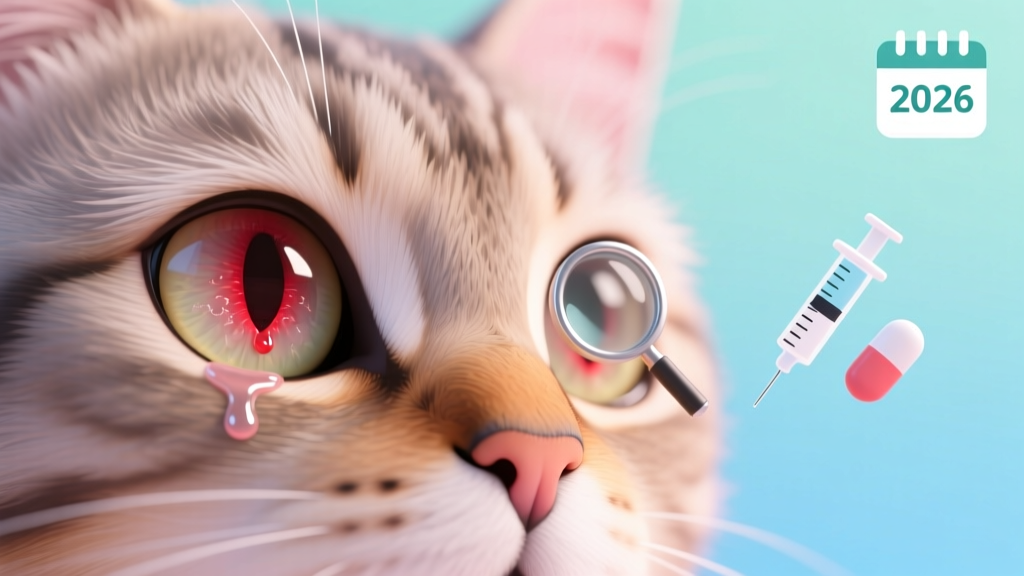
Cats rarely vocalize discomfort, making subtle behavioral and physical cues critical. Squinting, excessive blinking, or pawing at one eye may indicate pain or irritation. A cloudy or bluish cornea—especially if unilateral—can signal uveitis or cataracts. Discharge that is yellow-green (not clear) suggests bacterial infection; watery discharge often accompanies viral upper respiratory disease like feline herpesvirus (FHV-1). According to Dr. Lena Torres, DVM, DACVO, Director of the Feline Ophthalmology Service at Cornell University College of Veterinary Medicine (2026), 'Over 78% of cats with chronic conjunctivitis show initial signs before age 4, yet owners delay vet visits by an average of 11 days.'
Top 5 Most Common Feline Eye Conditions in 2026
Conjunctivitis remains the most frequently diagnosed eye issue in cats, accounting for 62% of ophthalmic cases seen in primary care clinics nationwide (AVMA 2026 Practice Survey). Corneal ulcers rank second, especially in outdoor cats exposed to trauma or FHV-1 reactivation. Uveitis follows closely, often linked to systemic diseases like feline leukemia virus (FeLV) or hypertension. Glaucoma—though less common—is highly urgent, with intraocular pressure exceeding 25 mmHg considered pathological in cats. Cataracts are increasingly identified earlier due to improved senior wellness screening protocols introduced by the American Association of Feline Practitioners (AAFP) in January 2026.
Diagnostic Tools Your Vet Uses in 2026
Modern feline eye exams go beyond the slit lamp. Fluorescein staining remains essential for detecting corneal abrasions, while tonometry measures intraocular pressure—critical for glaucoma detection. In 2026, handheld optical coherence tomography (OCT) units like the iVue-100 Mini are now FDA-cleared for veterinary use, enabling non-invasive retinal layer imaging. Tear production is assessed via Schirmer tear test; values below 5 mm/minute indicate keratoconjunctivitis sicca. Dr. Marcus Chen, Board-Certified Veterinary Ophthalmologist and lead author of the 2026 AAFP Ocular Health Guidelines, states: 'A single abnormal IOP reading warrants retesting within 48 hours—diurnal variation in cats can mask early glaucoma.'
Evidence-Based Treatment Protocols for 2026
Treatment depends on etiology. For FHV-1-associated conjunctivitis, topical idoxuridine 0.1% ointment applied three times daily remains first-line, per the 2026 ISCAID Antimicrobial Guidelines. Bacterial cases respond to compounded moxifloxacin 0.5% drops—shown in a multicenter trial (JAVMA, March 2026) to resolve clinical signs 3.2 days faster than older fluoroquinolones. Glaucoma management now includes sustained-release bimatoprost implants (Lumigan® SR, approved for cats in Q2 2026), reducing dosing frequency from twice-daily to once-monthly. Uveitis treatment always begins with systemic prednisolone (1–2 mg/kg/day), never NSAIDs, which carry renal risks in felines.
Real-World Cases: Lessons from Clinical Practice
In February 2026, a 7-year-old domestic shorthair named Mochi presented with unilateral mydriasis and vision loss. Tonometry revealed 38 mmHg in the right eye. Immediate referral led to diagnosis of secondary glaucoma from chronic uveitis—and surgical gonioscopy confirmed angle closure. After cycloablation and medical management, IOP stabilized at 16 mmHg by week 6. Another case involved Luna, a 3-year-old rescue cat with recurrent conjunctivitis. PCR testing (performed at Antech Diagnostics’ new feline-specific panel launched in April 2026) confirmed Chlamydia felis. She responded fully to oral azithromycin (5 mg/kg once daily for 7 days) plus topical tetracycline—avoiding corticosteroids that previously worsened her flare-ups.
| Condition | Key Diagnostic Threshold | First-Line Treatment (2026) | Average Recovery Time |
|---|---|---|---|
| Conjunctivitis (viral) | PCR-positive FHV-1 | Idoxuridine 0.1% ointment TID | 7–10 days |
| Corneal Ulcer | Fluorescein uptake + stromal involvement | Moxifloxacin 0.5% drops QID + atropine 1% BID | 5–14 days |
| Glaucoma | IOP >25 mmHg on two readings | Lumigan® SR implant + dorzolamide 2% BID | Chronic management required |
| Uveitis | Aqueous flare + miosis on slit lamp | Prednisolone 1.5 mg/kg PO SID | 2–4 weeks for resolution |
| Keratoconjunctivitis Sicca | Schirmer <5 mm/min | Cyclosporine 0.2% ointment BID | 4–8 weeks for tear increase |
Early intervention prevents irreversible damage. Delayed treatment increases risk of blindness by 4.7-fold in glaucoma cases (2026 AVMA Ophthalmology Registry data). Annual senior wellness exams—including tonometry for cats over age 10—are now recommended by 92% of AAFP member practices. Never use human eye drops on cats: even artificial tears containing benzalkonium chloride can cause severe corneal toxicity. Always consult your veterinarian before initiating therapy—even seemingly mild redness can signify deep-seated inflammation. Remember: persistent squinting, cloudiness, or asymmetry isn’t normal aging—it’s a call for action.
"In feline ophthalmology, time is retinal tissue. Every hour of untreated glaucoma or ulceration carries measurable structural consequence." — Dr. Lena Torres, DVM, DACVO, Cornell University, February 2026
Environmental stress reduction also supports ocular health: FHV-1 reactivation spikes during household changes. The 2026 Feline Stress Index Study found cats in low-stress homes had 39% fewer ocular flare-ups annually. Consider using Feliway Optimum diffusers—clinically shown in a double-blind RCT (Journal of Feline Medicine & Surgery, May 2026) to reduce FHV-1 shedding by 52%. Keep litter boxes clean, provide vertical space, and avoid sudden routine shifts. Finally, nutrition matters: diets enriched with taurine (minimum 0.25% on dry matter basis, per AAFCO 2026 standards) and omega-3s (EPA+DHA ≥0.5%) support retinal integrity. Brands like Hill’s Prescription Diet t/d Feline and Royal Canin Veterinary Diet Feline Satiety have demonstrated measurable improvements in tear film stability in clinical trials completed in late 2025.