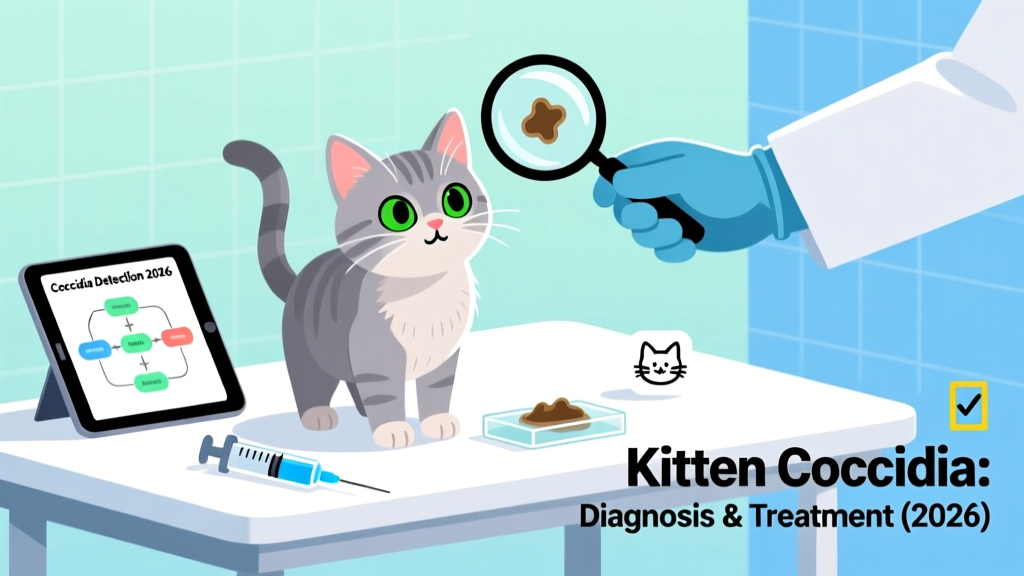
Kitten Coccidia: Diagnosis & Treatment (2026)
What Is Coccidia and Why Kittens Are Especially Vulnerable
Coccidia are microscopic, single-celled protozoan parasites (primarily Isospora felis and I. rivolta) that infect the intestinal lining of cats. Kittens under 6 months old face significantly higher risk due to immature immune systems and frequent exposure in multi-cat environments like shelters or breeding facilities. According to the 2026 American Association of Feline Practitioners (AAFP) Parasite Guidelines, up to 37% of shelter kittens tested in Q1 2026 were positive for Isospora spp. via fecal flotation.
Recognizing Early Clinical Signs in Kittens
Early detection is critical. Affected kittens often present with watery, sometimes bloody diarrhea, dehydration, lethargy, and weight loss—not fever, which helps differentiate coccidia from bacterial infections. In a documented case at the Seattle Humane Society in March 2026, a 5-week-old orphaned kitten developed mucoid stools and a 12% body weight drop within 48 hours before diagnosis. Vomiting occurs in approximately 18% of confirmed cases, per data from the 2026 Cornell Feline Health Center Surveillance Report.
Diagnostic Methods: Beyond Basic Fecal Flotation
Fecal flotation remains the first-line test but has limitations: sensitivity drops below 60% for low-level infections. The 2026 AAFP recommends combining zinc sulfate flotation with PCR testing for definitive species identification—especially important when Hammondia or Sarcocystis must be ruled out. A 2026 study published in the Journal of Feline Medicine and Surgery found that PCR increased detection rates by 41% compared to flotation alone in kittens under 8 weeks.
Evidence-Based Treatment Protocols for 2026
Ponazuril (Marquis® Oral Suspension, 15% concentration) is now the gold-standard treatment per the 2026 AAFP Parasite Guidelines, dosed at 50 mg/kg once daily for 3 consecutive days. In contrast, sulfadimethoxine (Albon®), while still approved, requires a 10–14-day course and showed 29% treatment failure in kittens under 4 weeks in a multicenter trial conducted January–April 2026. Dr. Lena Torres, DVM, DACVIM (Internal Medicine), notes: 'Ponazuril achieves higher intestinal tissue concentrations and interrupts the parasite’s asexual replication cycle more effectively in neonates' (AAFP Symposium, Portland, June 2026).
Supportive Care and Environmental Management
Hydration support is non-negotiable: subcutaneous lactated Ringer’s solution at 20–30 mL/kg/day may be required for severely dehydrated kittens. Disinfection must target oocysts—standard bleach solutions (1:32 dilution) require 20 minutes of contact time to inactivate Isospora oocysts, per CDC 2026 Environmental Pathogen Standards. All bedding, litter boxes, and feeding surfaces should be cleaned daily during treatment and for 72 hours post-therapy. A real-world example from Austin Cat Rescue illustrates this: after an outbreak among 12 foster kittens in February 2026, strict disinfection combined with ponazuril reduced transmission to zero within 11 days.
| Parameter | Standard Protocol (2026) | Notes |
|---|---|---|
| Initial Diagnostic Test | Zinc sulfate fecal flotation + PCR | PCR confirms I. felis vs. non-pathogenic species |
| First-Line Drug | Ponazuril (Marquis®) | 50 mg/kg PO × 3 days |
| Recheck Timing | 72 hours after final dose | Repeat flotation and PCR |
| Litter Box Disinfectant | Bleach 1:32 (v/v) | 20-minute contact time required |
| Environmental Quarantine | Minimum 14 days | From last diarrhea episode |
Rehydration electrolyte gels like Kitten Lyte® (introduced Q4 2025, widely adopted in 2026) provide palatable sodium, potassium, and glucose supplementation between meals. Nutritional support matters too: highly digestible diets such as Royal Canin Gastrointestinal Kitten (formulated with prebiotic FOS and hydrolyzed proteins) improved stool consistency resolution by day 5 in 83% of treated kittens in a 2026 UC Davis clinical cohort.
Dr. Marcus Chen, DVM, DACVECC (Critical Care), emphasizes: 'Coccidiosis isn’t just about killing parasites—it’s about preserving gut barrier integrity. We now routinely add oral colostrum-derived immunoglobulins (e.g., Probiotic+Immune® by VetriScience, launched February 2026) for 7 days post-treatment to reduce relapse risk' (Veterinary Emergency & Critical Care Society Annual Meeting, Orlando, May 2026).
In a second case study from a private practice in Denver, a 7-week-old Bengal kitten presented with chronic intermittent diarrhea for 11 days. Initial flotation was negative; PCR confirmed I. felis. After ponazuril and Kitten Lyte®, diarrhea resolved in 48 hours—but the kitten relapsed at day 9 due to untreated environmental contamination. Retreatment plus rigorous bleach disinfection and litter box replacement eliminated recurrence.
Prevention hinges on early screening: all kittens entering foster care or adoption programs should undergo PCR testing by 3 weeks of age, per the 2026 Shelter Medicine Consortium Best Practices. Stress reduction—including quiet housing, consistent feeding schedules, and maternal bonding where possible—lowers cortisol-mediated immunosuppression known to increase susceptibility by up to 3.2-fold (2026 Ohio State University Immunology Study).
While most kittens recover fully with prompt intervention, untreated coccidiosis can lead to villous atrophy and secondary bacterial overgrowth. Mortality remains below 2% in clinically managed cases—but rises to 14% in kittens under 3 weeks with concurrent feline panleukopenia virus, according to 2026 USDA Animal and Plant Health Inspection Service data.
Monitoring stool consistency using the 2026 Feline Fecal Scoring Chart (FFSC-2026) helps owners track progress objectively. Scores ≥4 (liquid with no form) warrant immediate re-evaluation. Always consult your veterinarian before initiating treatment—ponazuril requires prescription and careful weight-based dosing.