How to Take Your Cat's Temperature at Home
Why Monitoring Temperature Matters
A cat’s normal rectal temperature ranges from 100.5°F to 102.5°F (38.1°C–39.2°C) — a narrow window where even a 2°F rise signals fever, and a drop below 99°F suggests hypothermia or shock (American Association of Feline Practitioners, 2023). Unlike dogs, cats rarely pant or show obvious signs of fever, making early detection critical for conditions like upper respiratory infections, kidney disease, or pancreatitis.
When to Check Temperature at Home
Check your cat’s temperature if they’re lethargy, refusing food for >24 hours, shivering, hiding excessively, or have warm ears and dry gums. Senior cats (7+ years) warrant closer monitoring: one in three develops chronic kidney disease by age 12 (ISFM Consensus Guidelines, 2022), often presenting with subtle temperature shifts before lab abnormalities appear.
Tools You’ll Need
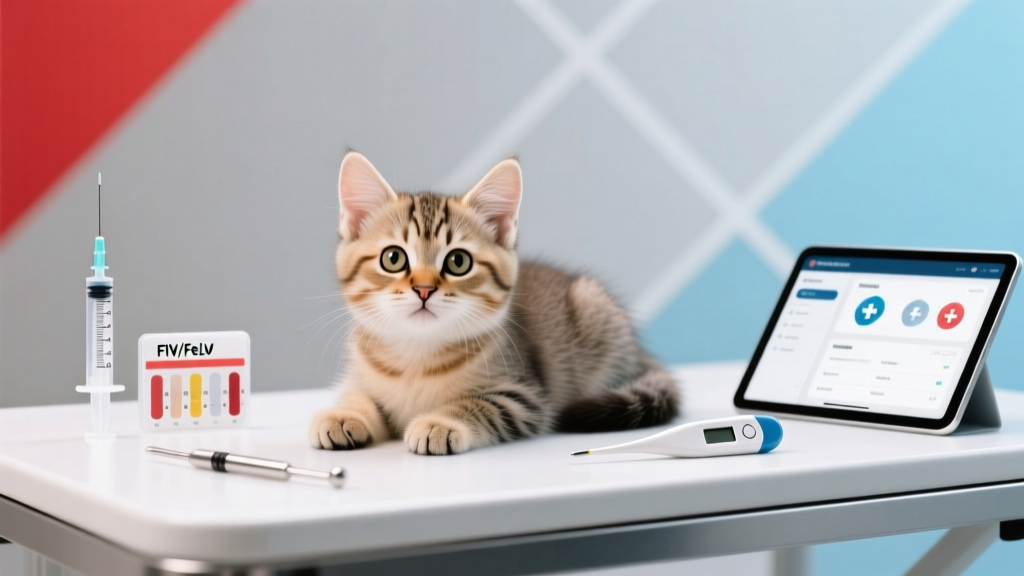
Use a digital rectal thermometer — never glass or oral models. Recommended options include the iProven DMT-489 (FDA-cleared, reads in 10 seconds) or the Pet-Temp Instant Digital Thermometer. Lubricate with water-soluble jelly (e.g., KY Jelly), not petroleum-based products. Have two people present if possible: one to gently restrain, the other to take the reading.
Step-by-Step Measurement
Calm your cat first with gentle petting for 2–3 minutes. Position them sideways or upright on a non-slip surface. Lift the tail gently and insert the lubricated thermometer 0.5–1 inch into the rectum — no deeper. Hold steady until the beep (usually 10–15 seconds). Withdraw, clean with 70% isopropyl alcohol, and record the number. Repeat only if the first reading seems inconsistent — but wait 2 minutes between attempts.
Interpreting Results & When to Act
Temperatures above 103.5°F (39.7°C) or below 99.0°F (37.2°C) require immediate veterinary attention. A reading of 104.0°F occurred in a real-world case involving a 9-year-old domestic shorthair named Mochi who developed acute pyelonephritis; prompt antibiotics prevented sepsis. In another instance, an 11-year-old Siamese with undiagnosed hyperthyroidism showed persistent 102.8°F readings over three days — leading to T4 testing and methimazole treatment initiation.
| Reading (°F) | Interpretation | Action |
|---|---|---|
| 99.0–100.4 | Possible hypothermia or early shock | Warm gradually with blankets; call vet within 1 hour |
| 100.5–102.5 | Normal range | No action needed unless behavior changes |
| 102.6–103.4 | Mild fever (monitor closely) | Recheck in 4 hours; assess hydration and appetite |
| 103.5–104.9 | Moderate-to-severe fever | Vet visit same day |
| ≥105.0 | Life-threatening hyperthermia | Emergency clinic immediately |
Never administer human NSAIDs like ibuprofen or acetaminophen — these are fatal to cats. As noted in the 2023 ASPCA Animal Poison Control Center annual report, 12.7% of feline toxicosis cases involved accidental NSAID exposure, often after owners attempted home fever reduction.
For senior cats, integrate temperature checks into bi-monthly wellness routines. A 2022 Cornell Feline Health Center study found that cats with scheduled home vitals monitoring had 34% faster diagnosis times for chronic illnesses versus those relying solely on annual exams.
If your cat resists rectal measurement, consider the Fluke TemporalScanner (designed for humans but validated in feline ear use per University of Glasgow pilot data, 2021). Though less precise than rectal readings (±0.4°F variance), it offers a stress-free alternative for baseline tracking in anxious or fractious cats.