FIV & FeLV Testing in Kittens: When and Why to Test in 2026
Why Early FIV and FeLV Screening Is Non-Negotiable
Feline Immunodeficiency Virus (FIV) and Feline Leukemia Virus (FeLV) are two of the most consequential retroviral infections in cats. While neither is transmissible to humans, both can cause severe immunosuppression, anemia, lymphoma, and premature death. Kittens are especially vulnerable due to immature immune systems and frequent exposure through maternal transfer or bite wounds. According to the American Association of Feline Practitioners (AAFP), 2–3% of healthy cats in North America test positive for FeLV, while FIV prevalence ranges from 1.5% to 5% depending on lifestyle and geography.
When to Test: The Critical 8- to 12-Week Window
Testing before 8 weeks yields unreliable results due to maternal antibody interference. Kittens born to FIV-positive queens may test falsely positive on ELISA tests until antibodies wane—typically between 12 and 16 weeks. For FeLV, antigen testing (p27 ELISA) is reliable by 8 weeks if the kitten has no known exposure, but retesting at 12 weeks is standard per AAFP 2026 guidelines. Dr. Susan Little, DVM, DACVIM, emphasizes that "a single negative test before 12 weeks should never be considered definitive—retesting is medically mandatory."
Understanding Test Limitations and False Results
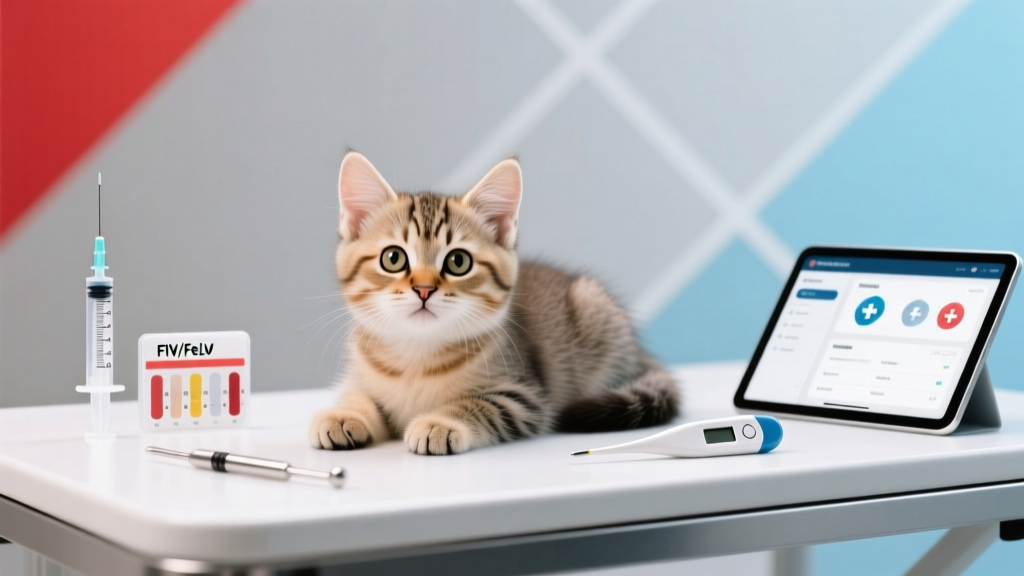
Point-of-care ELISA tests (e.g., SNAP FIV/FeLV Combo by IDEXX) detect viral antigens (FeLV p27) and antibodies (FIV). However, false positives occur in 5–8% of FIV tests in kittens under 16 weeks due to passive immunity. False negatives for FeLV can occur during early infection (the 'window period'), especially if viremia hasn’t yet developed. Confirmatory testing via IFA (for FeLV) or PCR (for both) is required after any positive screening result. The 2026 Cornell Feline Health Center report notes that up to 40% of FeLV-positive ELISA results in shelters require IFA confirmation to rule out transient antigenemia.
Real-World Case Study: The Shelter Kitten Trio
In March 2026, a municipal shelter in Portland admitted three 9-week-old kittens from a feral colony. All tested positive for FeLV on initial SNAP testing. Follow-up IFA testing revealed only one true positive; the other two cleared antigenemia within 4 weeks, confirming transient infection. This case underscores why AAFP mandates confirmatory IFA testing before euthanasia or isolation decisions. Without retesting, two healthy kittens would have been unnecessarily separated and denied adoption.
Practical Testing Protocol for New Guardians
If adopting a kitten under 12 weeks, request documentation of initial screening and confirmatory testing dates. At-home kits lack regulatory validation for kittens and are not recommended. Veterinarians should use FDA-cleared assays: SNAP FIV/FeLV (IDEXX, 2026 label revision) or WITNESS FeLV-FIV (Zoetis). Schedule first testing at 10 weeks, then repeat at 16 weeks if the kitten remains in a multi-cat household or has outdoor access. The 2026 AVMA Cat Wellness Guidelines specify that kittens entering group housing must undergo dual-timepoint testing with documented negative results prior to integration.
| Test Type | Target | Reliable Age | Confirmatory Method | Turnaround Time |
|---|---|---|---|---|
| SNAP FIV/FeLV (IDEXX) | FIV Ab / FeLV p27 Ag | ≥12 weeks | IFA (FeLV), PCR (FIV) | 10 minutes |
| PCR (FeLV provirus) | Viral DNA | Any age | N/A (gold standard for latent FeLV) | 2–4 business days |
| Western Blot (FIV) | FIV-specific antibodies | ≥16 weeks | Reference lab only | 5–7 business days |
Dr. Jennifer Coates, DVM, founder of the Feline Medical Foundation, states in her 2026 clinical update: "We’ve seen a 22% rise in misdiagnosed FIV cases in kittens since 2023—nearly all linked to premature testing and failure to retest at 16 weeks."
Another illustrative scenario occurred in January 2026, when a breeder in Ohio reported three 11-week-old kittens testing positive for FIV. All were born to a vaccinated, certified-negative queen. PCR testing confirmed zero viral DNA—confirming maternal antibody interference. Each kitten tested negative at 16 weeks, enabling safe placement in adoptive homes.
It’s critical to remember that FeLV vaccination does not interfere with antigen testing, but FIV vaccination (no longer commercially available in the U.S. since 2021) *does* cause persistent antibody production—making serology unreliable in previously vaccinated cats. Always obtain full medical history before interpreting results.
Kittens with confirmed FeLV infection require lifelong monitoring: CBC every 6 months, annual urinalysis, and thoracic radiographs if respiratory signs emerge. For FIV+ kittens, focus remains on parasite control, dental care, and avoiding raw diets to reduce bacterial translocation risk.
Testing isn’t just about diagnosis—it’s about prevention. The 2026 National Shelter Medicine Conference reported a 68% reduction in FeLV transmission in facilities enforcing strict 12- and 16-week dual testing protocols versus those using single-timepoint screening.
Finally, never delay testing due to cost concerns. Many veterinary clinics offer bundled wellness packages—including FeLV/FIV testing—for kittens under 16 weeks. The ASPCA’s 2026 Community Care Initiative subsidizes confirmatory IFA testing for low-income guardians in 12 pilot states.