Cat Behavior Changes When Dehydrated: 7 Early Signs
Why Your Cat’s ‘Normal’ Behavior Might Be Screaming for Water
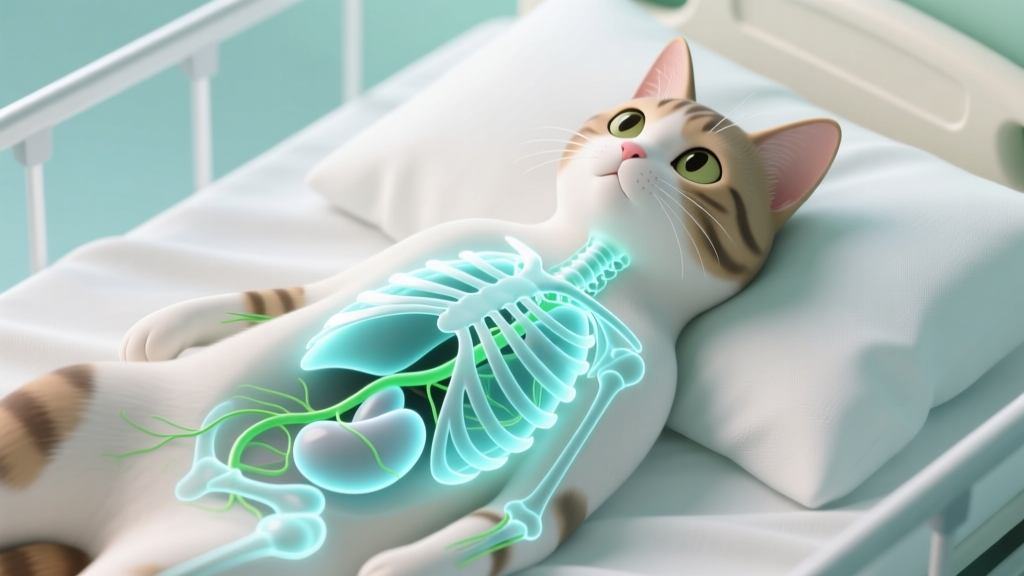
Do cats behavior change for hydration? Absolutely—and those changes are among the most under-recognized early warnings of serious health decline in felines. Unlike dogs, cats evolved as desert-adapted hunters who conserve water efficiently, making them masters at hiding thirst until dehydration is already moderate to severe. By the time you notice lethargy or dry gums, your cat may have lost 5–8% of total body water—a clinically significant deficit that stresses kidneys, heart, and digestion. What’s more alarming? A 2023 study in the Journal of Feline Medicine and Surgery found that 68% of cats diagnosed with acute kidney injury had exhibited at least three subtle behavioral shifts in the 48–72 hours prior—yet over half of owners dismissed them as ‘just acting weird.’ This isn’t about quirks—it’s about physiology whispering before it shouts.
What Behavioral Shifts Actually Signal Dehydration?
It’s critical to distinguish true dehydration-related behavior from stress, aging, or environmental triggers. Veterinarians trained in feline internal medicine emphasize that dehydration-induced changes follow a predictable pattern: they emerge rapidly (within 12–36 hours), escalate progressively, and reverse quickly with appropriate rehydration—not just water access. Below are the seven most clinically validated behavioral markers, ranked by onset speed and diagnostic weight:
- Reduced grooming intensity or frequency — Often the very first sign. A normally fastidious cat may skip licking paws, leave matted fur around the neck, or groom only in short, distracted bursts. Why? Grooming requires energy and saliva production—both compromised when extracellular fluid volume drops.
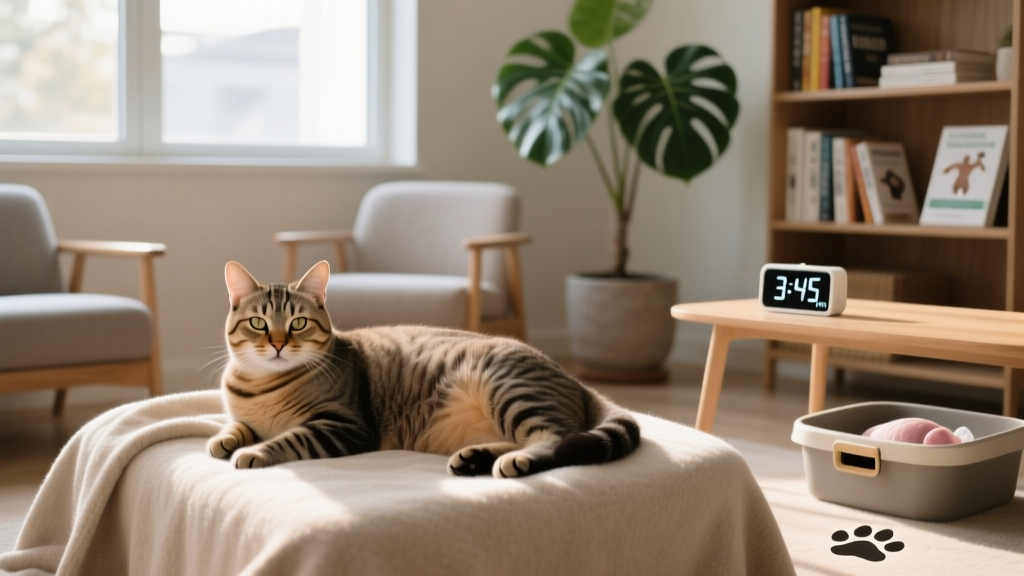
- Increased resting time + reluctance to jump or climb — Not just ‘sleeping more,’ but a distinct loss of spring and coordination. Dr. Lena Torres, DVM, DACVIM (Internal Medicine), explains: ‘Muscle fatigue from electrolyte imbalance hits cats faster than humans. That hesitation before leaping onto the windowsill? It’s often low potassium and sodium—not laziness.’
- Withdrawal from social interaction—even with trusted humans — Sudden avoidance of petting, hiding during usual lap-time, or turning away when called. This isn’t ‘moodiness’; it’s neurologic dampening caused by reduced cerebral perfusion.
- Decreased vocalization or unusual quietness — Especially notable in typically chatty breeds like Siamese or Bengals. A sudden silence lasting >24 hours warrants immediate assessment.
- Altered litter box habits: less frequent urination AND smaller clumps — Many owners focus only on urine volume, but the consistency of clumping tells more. Dehydrated urine is highly concentrated, forming dense, compact clumps that resist breaking apart—even with scooping. A 2022 Cornell Feline Health Center audit found this was the single most consistent behavioral correlate across 192 dehydrated cats.
- Increased panting or open-mouth breathing at rest — Rare in healthy cats. When observed without heat stress or exertion, it signals compensatory respiratory effort due to metabolic acidosis from poor renal perfusion.
- ‘Staring off’ episodes or delayed blink reflex — A subtle but telling neurological cue. Observe your cat when you gently wave a finger near—but not touching—their face. A hydrated cat blinks within 0.8 seconds. Delayed (>1.5 sec) or absent blinking correlates strongly with serum osmolality >320 mOsm/kg (a key dehydration biomarker).
How to Assess Hydration Status at Home—Beyond the ‘Skin Tent Test’
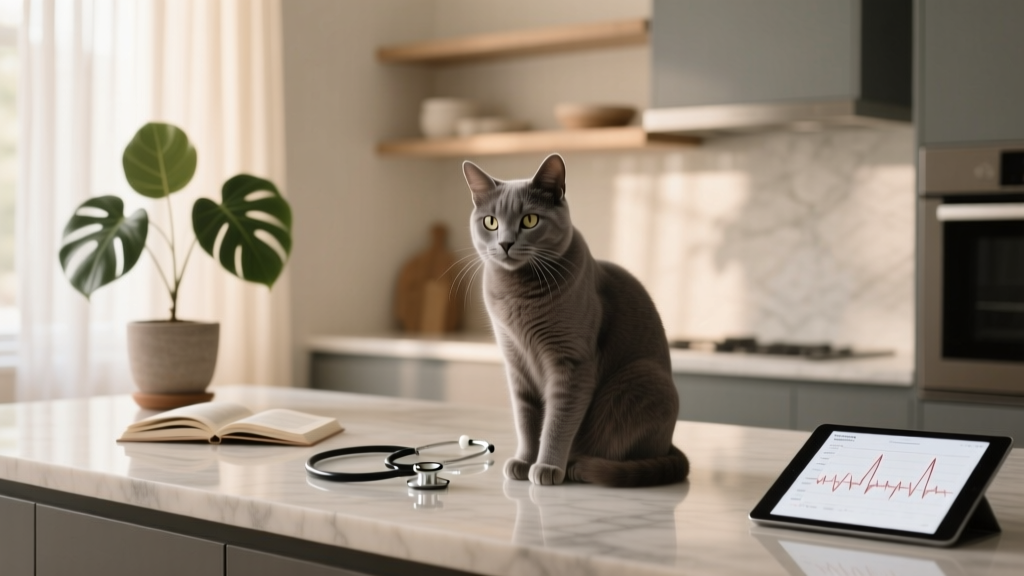
The outdated ‘skin tent test’ (lifting scruff and watching how fast it snaps back) is notoriously unreliable in overweight, geriatric, or chronically ill cats—and gives false reassurance in up to 40% of cases, per the American Association of Feline Practitioners (AAFP) 2022 Clinical Guidelines. Instead, use this validated 4-point observational protocol developed by the International Society of Feline Medicine (ISFM):
- Eyes: Look for sunken appearance or dull corneas. Gently press your fingertip against the lower eyelid—hydrated eyes feel taut and springy; dehydrated ones feel ‘doughy’ and recessed.
- Gums: Press firmly with your thumb for 2 seconds, then release. Capillary refill time (CRT) should be ≤1.5 seconds. >2 seconds = concern; >3 seconds = urgent.
- Saliva: Lift the lip and touch the gumline with clean finger. Hydrated saliva feels slick and coats easily. Dehydrated saliva is sticky, stringy, or absent.
- Behavioral triad: Combine the three earliest signs above (grooming decline + social withdrawal + litter box clump density). If ≥2 are present for >18 hours, assume clinical dehydration—even if skin elasticity appears normal.
A real-world case illustrates its power: Maya, a 9-year-old domestic shorthair, began skipping her evening ‘lap session’ and left a single, marble-sized clump in her box for two mornings. Her owner used the ISFM protocol and found CRT = 2.4 sec and sticky gums. A vet visit revealed 7% dehydration and early-stage chronic kidney disease—caught 4 months earlier than typical diagnosis timelines. Early intervention with subcutaneous fluids and wet-food transition stabilized her creatinine for 18 months.
Hydration Strategies That Actually Work—And Why Most Fail
Simply adding a water fountain or switching to ‘premium’ dry food won’t resolve behavioral dehydration cues—because they ignore the root cause: cats don’t drink to thirst the way humans do. Their evolutionary drive is to get moisture from prey, not free water. According to Dr. Tony Buffington, Professor Emeritus of Veterinary Clinical Sciences at Ohio State, ‘A cat eating only dry food must drink ~2.5x more water daily than a wet-food-fed cat to maintain balance—and their natural instinct doesn’t trigger that volume.’
Effective hydration hinges on three pillars: palatability, predictability, and passive intake.
- Palatability: Add warm (not hot) bone broth (low-sodium, no onion/garlic) or tuna water to meals—studies show cats consume 37% more liquid when flavor-matched to food.
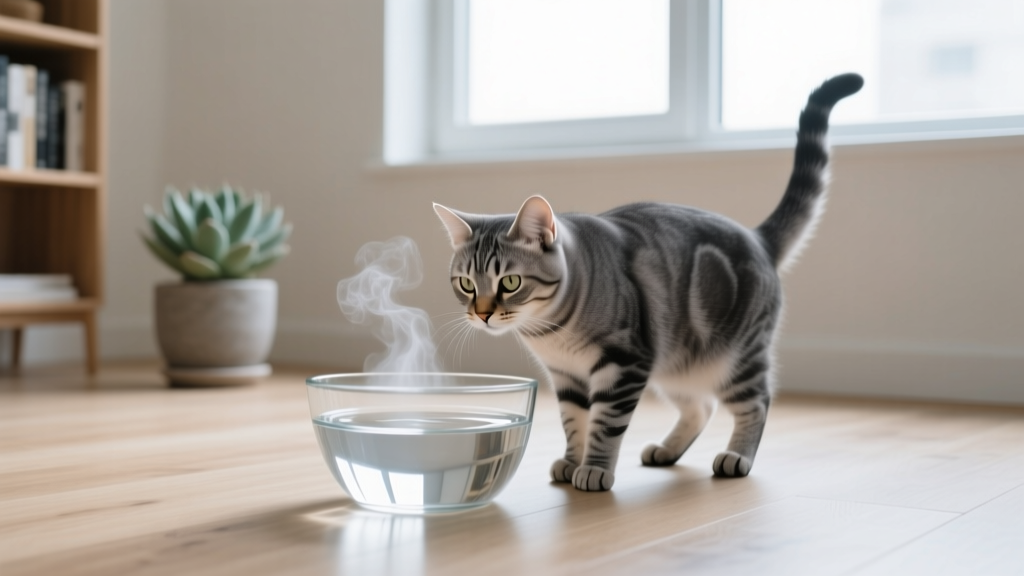
- Predictability: Place 3+ shallow, wide bowls (ceramic or stainless steel) in quiet, low-traffic zones—not next to food or litter. Cats avoid drinking where they eat or eliminate due to ancestral predator-avoidance wiring.
- Passive intake: Transition gradually to ≥70% of calories from moisture-rich sources (canned, pouched, or rehydrated freeze-dried). Even 50% wet food increases daily water intake by 110 mL on average (University of California, Davis, 2021).
Crucially—never force water via syringe unless directed by a vet. Stress-induced aversion can create lifelong water phobia. One owner reported her cat refusing all bowls for 6 weeks after a traumatic syringe attempt, requiring behaviorist-guided retraining.
When Behavioral Changes Demand Immediate Veterinary Care
Not all behavioral shifts require ER-level urgency—but certain combinations signal systemic compromise. Use this decision table to triage:
| Behavioral Cluster | Time Threshold | Recommended Action | Risk Level |
|---|---|---|---|
| Gum stickiness + CRT >2.5 sec + no urination in 18 hrs | Any duration | ER visit within 2 hours | Critical (renal ischemia risk) |
| Open-mouth breathing + disorientation + vomiting | >30 minutes | Immediate transport—call clinic en route | Critical (metabolic crisis) |
| Grooming decline + social withdrawal + small clumps × 3 days | 72+ hours | Vet appointment within 24 hrs (not ‘next week’) | High (early CKD/UTI likely) |
| Mild lethargy + slightly slower blink reflex | <24 hrs | Home assessment + vet consult if persists >36 hrs | Moderate (monitor closely) |
| Occasional panting on hot day + normal appetite | <1 hr, resolves with cooling | Environmental adjustment only | Low (likely thermoregulation) |
Note: Geriatric cats (11+ years), those with known kidney disease, diabetes, or hyperthyroidism, and post-surgical patients should be evaluated at the first sign of any behavioral shift—not after thresholds are met. Their compensation reserves are significantly diminished.
Frequently Asked Questions
Can dehydration cause aggression or hissing in cats?
Yes—but it’s rarely primary aggression. More commonly, it manifests as irritability: flinching at touch, growling when picked up, or swatting when approached. This stems from generalized discomfort, muscle cramping, and altered neurotransmitter function (particularly GABA and serotonin modulation). A 2020 study in Frontiers in Veterinary Science documented increased cortisol and decreased tryptophan metabolites in dehydrated cats, directly correlating with touch sensitivity. Always rule out dehydration before labeling behavior as ‘territorial’ or ‘personality-based.’
My cat drinks from the faucet—is that enough hydration?
Not necessarily. While faucet-drinking indicates some instinctual preference for moving water, volume matters more than source. Track intake: place a measured amount (e.g., 100 mL) in a marked bowl beside the sink for 24 hours. If less than 40 mL remains consumed, she’s likely still under-hydrated—especially if eating dry food. Also note: many ‘faucet drinkers’ only take 5–10 quick licks per session, totaling <15 mL/day. Optimal intake for a 10-lb cat is 180–220 mL/day from all sources.
Will increasing water intake reverse kidney damage?
No—but it dramatically slows progression. Chronic dehydration concentrates urine, increasing crystal formation and tubular damage. Consistent hydration maintains glomerular filtration rate (GFR) and reduces proteinuria. A landmark 5-year longitudinal study (2018–2023) showed cats on wet-food diets had 58% slower decline in symmetric dimethylarginine (SDMA) levels—a gold-standard kidney biomarker—versus dry-food cohorts, even with pre-existing Stage 2 CKD.
Is there a blood test to confirm dehydration-related behavior?
Not directly—but serum BUN:creatinine ratio, hematocrit (HCT), total protein (TP), and serum osmolality are highly sensitive indicators. A BUN:Cr >20:1 with normal creatinine suggests prerenal dehydration. HCT >45% in a non-dehydrated-appearing cat is a red flag. Your vet may also run a urine specific gravity (USG); values >1.035 in a cat not on diuretics strongly indicate concentration from water conservation. These tests contextualize behavior—not replace observation.
Can anxiety mimic dehydration behaviors?
Partially—but key differentiators exist. Anxiety-driven withdrawal usually includes dilated pupils, flattened ears, and hyper-vigilance (scanning, freezing). Dehydration-related withdrawal features slow blinks, droopy eyelids, and muscle relaxation—not tension. Grooming decline in anxiety is often replaced by over-grooming (barbering); in dehydration, grooming stops entirely. When in doubt, perform the ISFM 4-point assessment—it’s designed to separate physiological from psychological drivers.
Common Myths About Cat Hydration and Behavior
- Myth 1: “Cats will drink when they’re thirsty.” Reality: Their thirst mechanism activates only after significant fluid loss (≥5% body weight)—far later than humans (≥2%). By then, organ stress has begun.
- Myth 2: “If my cat eats wet food, hydration isn’t a concern.” Reality: Wet food helps, but many commercial ‘pate’ formulas contain only 70–75% moisture—below the 78% found in natural prey. Plus, palatability fatigue, kidney insufficiency reducing taste perception, or dental pain can cause reduced intake without obvious signs.
Related Topics (Internal Link Suggestions)
- Early Kidney Disease in Cats — suggested anchor text: "signs of early kidney disease in cats"
- Best Wet Cat Foods for Hydration — suggested anchor text: "top moisture-rich cat foods vet-recommended"
- Feline Urinary Tract Health — suggested anchor text: "how to prevent UTIs in cats naturally"
- Cat Behavior Changes with Age — suggested anchor text: "normal vs. concerning senior cat behavior"
- Subcutaneous Fluids at Home — suggested anchor text: "how to give cat sub-q fluids safely"
Conclusion & Next Step
Do cats behavior change for hydration? Unequivocally yes—and those changes are precise, measurable, and actionable long before traditional ‘sick cat’ symptoms appear. Ignoring them isn’t just missing a clue; it’s delaying care for conditions that respond best to early intervention. Your next step isn’t waiting for ‘more signs.’ Tonight, run the ISFM 4-point assessment. Tomorrow, photograph your cat’s litter box clumps for two days and compare density. And within 72 hours, schedule a wellness visit mentioning *exactly* which behavioral shifts you’ve noted—vets prioritize concerns described with objective detail. Hydration isn’t about water bowls. It’s about listening to what your cat’s behavior is saying—and answering before the message becomes an emergency.