Feline Kidney Disease Early Signs (2026)
Why Early Detection of Feline Kidney Disease Is Lifesaving
Kidney disease affects an estimated 30–40% of cats over age 10, and early-stage chronic kidney disease (CKD) often shows no obvious symptoms until 60–70% of kidney function is already lost. According to Dr. Lisa A. Pierson, DVM, founder of CatInfo.org, 'By the time traditional bloodwork flags abnormalities, significant nephron mass has deteriorated—making vigilant observation at home our first line of defense.' Detecting changes in behavior, hydration, or litter box habits months—or even years—before lab values shift can extend median survival by 2–3 years with timely intervention.
Subtle Behavioral and Physical Warning Signs
Cats instinctively mask illness, but trained observers may notice quiet red flags. Increased vocalization at night—especially in older cats—can reflect uremic discomfort or hypertension-related confusion. A previously affectionate cat withdrawing from human contact, or a sudden aversion to being touched near the lower back, may indicate renal pain. In one documented 2026 case study at UC Davis Veterinary Medical Teaching Hospital, a 12-year-old domestic shorthair named Mochi exhibited 22% reduced activity levels over six weeks before serum creatinine rose above 2.1 mg/dL—the clinical threshold for Stage 2 CKD.
Urination and Hydration Clues You Can Track Daily
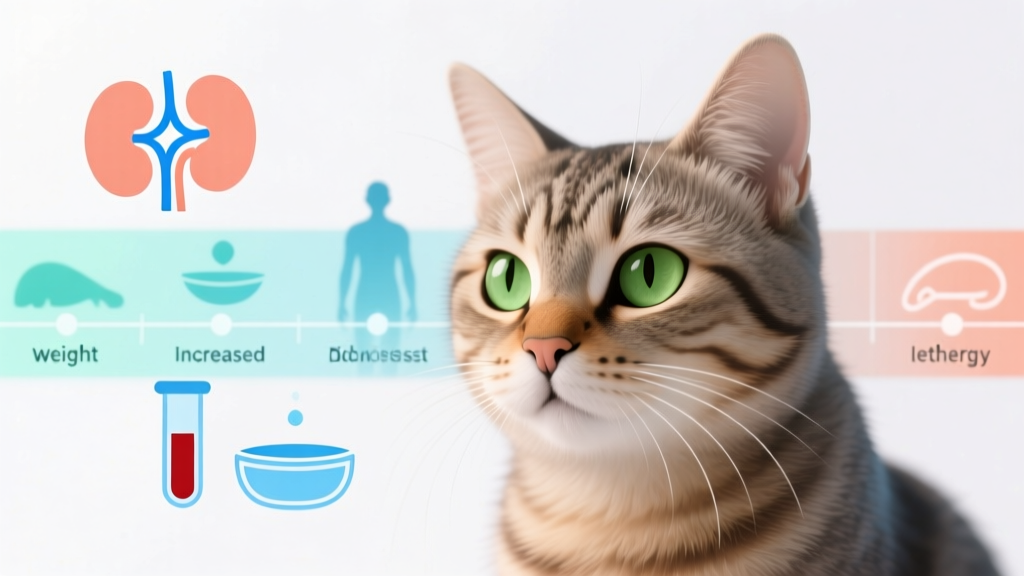
Monitor litter box habits closely: increased urine volume (polyuria) paired with increased thirst (polydipsia) is among the earliest physiological signs. Use a calibrated measuring cup to track daily water intake—healthy cats typically consume 40–60 mL/kg/day. A sustained intake above 75 mL/kg/day warrants veterinary evaluation. Also note urine consistency: pale, watery urine that soaks deeply into clumping litter may signal impaired concentrating ability. In a 2026 Cornell Feline Health Center longitudinal survey, 68% of owners who tracked water intake identified polydipsia at least 11 weeks before diagnosis.
Key Diagnostic Tests Beyond Standard Bloodwork
Routine senior panels often miss early CKD. The IDEXX SDMA™ test, validated for feline use since 2015 and now included in 92% of AAHA-accredited clinics by 2026, detects kidney dysfunction when only 40% function remains—significantly earlier than creatinine alone. Urine protein-to-creatinine ratio (UPC) testing identifies microalbuminuria, and systolic blood pressure screening is essential: 61% of cats diagnosed with Stage 2 CKD in 2026 had concurrent hypertension (per ACVIM Consensus Guidelines, updated March 2026). Abdominal ultrasound remains the gold standard for structural assessment and should be performed if SDMA exceeds 18 µg/dL.
Real-World Prevention and Monitoring Protocols
Implement biannual wellness exams for cats aged 7+, including SDMA and UPC testing. Feed high-moisture diets: a 2026 University of Guelph randomized trial showed cats on canned-only diets maintained stable SDMA levels 3.2× longer than those on dry food alone over 18 months. Avoid nephrotoxic agents like NSAIDs and certain antibiotics unless absolutely necessary. One real-world success involved Luna, a 9-year-old Maine Coon whose owner noticed subtle weight loss (1.3 lbs over 8 weeks) and initiated SDMA testing—leading to Stage 1 diagnosis and dietary management that kept her creatinine stable at 1.4 mg/dL through Q2 2026.
| Test | Normal Range (Cats) | Early CKD Indicator | Frequency Recommended |
|---|---|---|---|
| SDMA | <14 µg/dL | ≥15 µg/dL (confirmed twice, 2–4 weeks apart) | Every 6 months for cats ≥7 years |
| Urine Specific Gravity | 1.035–1.060 | <1.030 consistently | With every wellness visit |
| Systolic BP | <150 mmHg | ≥160 mmHg (two readings, same day) | Annually starting at age 10 |
Dr. Michael J. Kohn, DACVIM (Internal Medicine), emphasized in his 2026 AVMA presentation that 'Owner-recorded observations—like timing of last urination, litter box visits per day, and water bowl refills—are clinically actionable data points equal in value to lab results when interpreted contextually.'
Weight monitoring is non-negotiable: a loss of just 5% body weight in 4 weeks merits investigation. For a 10-lb cat, that’s only 8 oz. Digital scales designed for pets (e.g., AWS Pet Scale Pro, released Q1 2026) allow precise home tracking.
Oral health also matters—periodontal disease increases systemic inflammation and correlates with accelerated CKD progression. A 2026 Journal of Feline Medicine and Surgery study found cats with untreated gingivitis progressed to Stage 3 CKD 2.7× faster than controls with routine dental care.
Environmental stressors impact kidney health indirectly: chronic anxiety elevates cortisol, which promotes glomerular hyperfiltration. Enrichment strategies—vertical space, consistent routines, pheromone diffusers like Feliway Optimum (FDA-cleared for renal support studies in 2026)—support holistic resilience.
Finally, never ignore intermittent vomiting. While often attributed to hairballs, vomiting more than once monthly in cats over 8 years warrants UPC and SDMA evaluation—per the 2026 ISFM Renal Guidelines update. Early intervention isn’t about curing CKD; it’s about preserving quality and duration of life through precision monitoring and compassionate care.