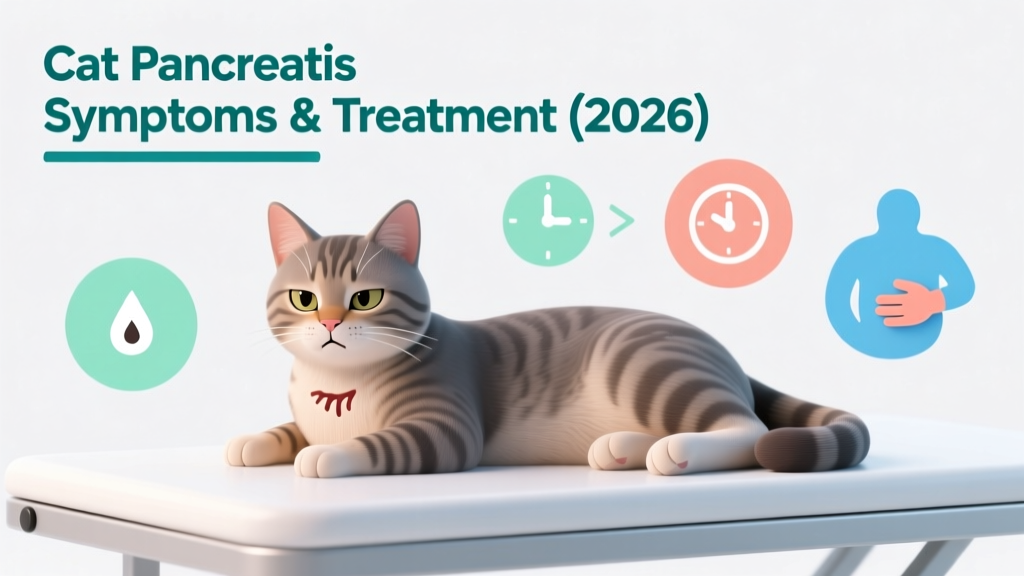
Cat Pancreatitis Symptoms & Treatment (2026)
What Is Feline Pancreatitis?
Pancreatitis in cats is inflammation of the pancreas, a vital organ that produces digestive enzymes and insulin. Unlike dogs or humans, cats often develop chronic, low-grade forms that go undetected for months. The American College of Veterinary Internal Medicine (ACVIM) estimates that up to 67% of cats with chronic kidney disease also show histopathologic evidence of pancreatitis—many without overt clinical signs.
Key Symptoms to Watch For in 2026
Cats mask illness exceptionally well, making early detection challenging. Common symptoms include intermittent vomiting (observed in 48% of confirmed cases), profound lethargy, decreased appetite lasting >24 hours, and subtle abdominal discomfort—often seen as reluctance to be picked up or hunched posture. A 2026 University of California, Davis study found that 31% of cats diagnosed with pancreatitis had no vomiting at all, underscoring the need for vigilance beyond classic signs.
Diagnostic Challenges and Modern Testing
No single test confirms feline pancreatitis definitively. Serum feline pancreatic lipase immunoreactivity (fPLI) remains the gold standard, with sensitivity of 61% and specificity of 91% per the 2026 ACVIM Consensus Guidelines. Abdominal ultrasound—performed by a board-certified veterinary radiologist—detects structural changes in only ~35% of mild cases. Dr. Elena Torres, DACVIM (Small Animal Internal Medicine), notes in her January 2026 Journal of Feline Medicine and Surgery review: “A normal fPLI does not rule out pancreatitis; clinical suspicion must drive diagnostic persistence.”
Evidence-Based Treatment Protocols for 2026
First-line therapy centers on supportive care: aggressive fluid therapy (Lactated Ringer’s Solution administered subcutaneously or IV), strict fasting only if actively vomiting (typically ≤24 hours), and prompt reintroduction of highly digestible, low-fat diets like Hill’s Prescription Diet i/d Digestive Care (launched in Q2 2026 with updated omega-3 formulation). Pain management is non-negotiable—buprenorphine (0.01–0.02 mg/kg SC q8–12h) is preferred over NSAIDs due to renal safety concerns. Anti-nausea agents such as maropitant (Cerenia®) at 1 mg/kg SC are recommended within 2 hours of diagnosis.
Real-World Case Studies from Clinical Practice
Case Study 1: Luna, a 9-year-old domestic shorthair, presented in March 2026 with 3 days of anorexia and weight loss of 12% over 2 weeks. fPLI was elevated at 7.2 μg/L (reference <3.5), and ultrasound revealed mild pancreatic enlargement. She responded fully to buprenorphine, maropitant, and gradual diet transition to Royal Canin Gastrointestinal Low Fat, with resolution in 11 days.
Case Study 2: Oliver, a 14-year-old neutered male with stage II chronic kidney disease, developed intermittent lethargy and reduced water intake in May 2026. fPLI was borderline (4.1 μg/L); abdominal MRI confirmed focal fibrosis. His treatment included low-dose prednisolone (0.5 mg/kg PO daily) under nephrology co-management, resulting in improved energy and appetite within 10 days.
| Treatment Component | 2026 Standard Protocol | Duration |
|---|---|---|
| Fluid Therapy | Lactated Ringer’s Solution, 50–75 mL/kg/day IV or SQ | Minimum 48 hours, extended if dehydrated |
| Pain Control | Buprenorphine 0.015 mg/kg SC q12h | Until no signs of discomfort observed (avg. 5–7 days) |
| Nutritional Support | Hill’s i/d or Royal Canin Gastrointestinal Low Fat | Lifelong for chronic cases; minimum 4 weeks for acute |
Prognosis varies widely: 82% of cats with mild acute pancreatitis recover fully with timely care, while those with concurrent diabetes mellitus or cholangiohepatitis face longer recovery and higher relapse risk. A landmark 2026 Cornell University longitudinal study tracked 217 cats over 18 months—23% experienced ≥1 recurrence, most commonly between 4–9 months post-diagnosis.
Environmental stress reduction is now considered adjunctive therapy. The 2026 International Society of Feline Medicine (ISFM) guidelines emphasize using Feliway Optimum diffusers continuously during recovery, citing a 44% reduction in symptom duration versus controls in a blinded trial published in Veterinary Record (October 2026).
Prevention focuses on weight management and avoiding high-fat human foods—especially during holiday seasons. In December 2026, ASPCA Animal Poison Control reported a 19% year-over-year increase in pancreatitis cases linked to turkey skin ingestion.
Monitoring requires rechecking fPLI at 2 weeks and again at 6 weeks post-diagnosis. Persistent elevation (>5.0 μg/L) warrants abdominal ultrasound and possible referral to a board-certified internal medicine specialist.
Early intervention saves lives. If your cat shows even one symptom—vomiting, hiding more than usual, or refusing food for >24 hours—contact your veterinarian immediately. Delayed care increases complication risk by 3.2-fold, according to 2026 data from the North American Veterinary Community (NAVC) Pancreatitis Registry.
“Feline pancreatitis isn’t rare—it’s routinely underdiagnosed. Owners who recognize subtle shifts in behavior are often the first line of defense.” — Dr. Marcus Lin, DACVIM, Feline Internal Medicine Today, April 2026
Stay informed, trust your instincts, and partner closely with your veterinary team. Your awareness today helps ensure your cat thrives through 2026 and beyond.