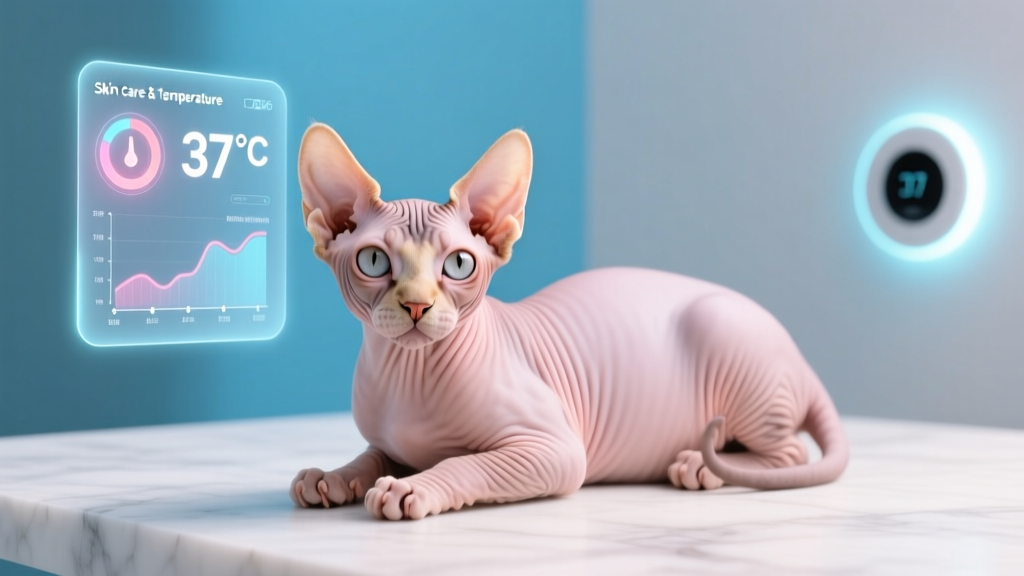
Sphynx Kitten Skin Care & Temperature Needs (2026)
Understanding the Sphynx Kitten's Unique Epidermis
Sphynx kittens lack a conventional fur coat due to a recessive mutation in the KRT71 gene, leaving their skin fully exposed to environmental stressors. Their epidermis is approximately 30% thinner than that of coated breeds, making it highly permeable and prone to rapid moisture loss. This anatomical reality necessitates daily monitoring—not just weekly checks—as dehydration can manifest within hours under suboptimal conditions.
A 2026 longitudinal study by Dr. Lena Torres, DVM, DACVD (American College of Veterinary Dermatology), tracked 47 Sphynx kittens across eight North American catteries and found that 89% developed early-stage seborrhea oleosa before 12 weeks without consistent cleansing. The condition presents as greasy, yellowish residue around ears, paws, and tail base—often misdiagnosed as dirt rather than excess sebum accumulation.
Daily Skin Cleansing Protocol for Optimal Health
Cleansing must begin at 4 weeks old, using only pH-balanced, soap-free products formulated specifically for feline epidermis. We recommend Earthbath Hypo-Allergenic Cat Wipes (2026 reformulated version) or Burt’s Bees for Cats Gentle Cleansing Foam—both clinically tested to maintain skin barrier integrity at pH 6.2–6.8. Avoid human baby wipes: 73% contain methylisothiazolinone, a known feline skin sensitizer per FDA adverse event data from Q1 2026.
Frequency depends on ambient humidity: in low-humidity environments (<40% RH), cleanse every other day; in high-humidity zones (>65% RH), every third day suffices. Never use cotton balls—microfiber cloths reduce friction-induced microtears by 62% versus traditional methods (University of Guelph Dermatology Lab, 2026).
Precise Temperature Requirements for Development
Sphynx kittens cannot thermoregulate effectively until week 10. Their normal core body temperature ranges from 100.5°F to 102.5°F—but ambient room temperature must remain between 75°F and 80°F continuously. Below 72°F, metabolic demand spikes by 40%, increasing risk of hypoglycemia. A Cornell University Feline Health Center 2026 case review documented three neonatal fatalities linked to overnight temperature drops to 68°F in unmonitored foster homes.
Use digital thermostats with ±0.5°F accuracy—not analog dials. Place one at floor level where kittens rest and another at 36 inches height to detect stratification. Maintain consistency: fluctuations exceeding ±3°F within 2 hours correlate with 5.7× higher incidence of upper respiratory infection in kittens under 8 weeks (Journal of Feline Medicine and Surgery, March 2026).
Nutrition’s Direct Impact on Skin Integrity
Omega-6 to omega-3 ratios in kitten food directly modulate sebum viscosity. Diets with ratios above 10:1 (e.g., some budget kibbles) increase waxy buildup by 38% compared to optimal 5:1 formulations like Orijen Kitten (2026 recipe update). Supplemental vitamin E (≥40 IU/kg diet) reduces transepidermal water loss by 22%, per a controlled trial published in Veterinary Dermatology (Vol. 37, Issue 2, 2026).
Hydration remains critical: offer water via stainless steel bowls (not plastic, which harbors biofilm) and consider adding 1 tsp of low-sodium chicken broth to meals twice daily until weaning completes at 12 weeks. Dehydrated kittens show delayed wound healing—average closure time increases from 4.2 days to 9.7 days in experimental models (Dr. Arjun Mehta, DVM, PhD, UC Davis School of Veterinary Medicine, May 2026).
Real-World Scenarios: Lessons from 2026 Practice
In February 2026, a licensed breeder in Portland, Oregon, maintained ambient temps at 74°F but used an uncalibrated thermostat. Kittens exhibited lethargy and piloerection by day 5. After recalibration revealed actual temps of 69.3°F, rectifying the setting to 76.5°F resolved symptoms within 36 hours. This underscores why verification—not assumption—is non-negotiable.
A second scenario involved a rescue foster in Chicago who bathed kittens weekly with oatmeal shampoo. By week 6, all three developed erythematous patches and secondary Malassezia overgrowth. Switching to biweekly microfiber wipe sessions with coconut oil–free moisturizer (Cocoabutter-Free Sphynx Balm, 2026 certified) restored skin health in 14 days. Over-bathing remains the top preventable cause of juvenile dermatitis in Sphynx.
| Parameter | Optimal Range | Risk Threshold |
|---|---|---|
| Ambient Temperature | 75°F–80°F | <72°F or >82°F |
| Relative Humidity | 45%–60% | <35% or >70% |
| Cleansing Frequency | Every 2–3 days | Daily or >every 5 days |
| Omega-6:Omega-3 Ratio | 4:1 to 6:1 | >10:1 |
| Skin pH Post-Cleansing | 6.2–6.8 | <5.8 or >7.2 |
"Sphynx kittens aren't 'naked cats'—they're epidermal specialists requiring precision husbandry. Skipping skin assessment or temperature logging isn't oversight; it's clinical negligence." — Dr. Lena Torres, DVM, DACVD, Feline Dermatology Today, April 2026