Cymric: Long-Haired Manx Variant
If you’ve ever met a tailless Manx cat and thought, “This is adorable… but what if it came with a plush, flowing coat?”—meet the Cymric (pronounced KIM-rick). Often described as the long-haired Manx variant, the Cymric combines the Manx’s famous tailless silhouette with a soft, double coat that begs for extra cuddles.
Cymrics have a way of winning people over fast. They’re sturdy, bright, and affectionate, and their rounded “bunny hop” gait and expressive eyes make them feel like little woodland creatures living in your home. Whether you’re researching cat breeds, considering a new family companion, or you simply love rare and quirky felines, the Cymric is a breed worth knowing well.
This guide covers everything from Cymric cat history and physical traits to temperament, health, grooming, and what daily life with one is really like.
Breed History and Origin
The Cymric cat’s story is tightly linked to the Isle of Man, where the Manx originated. The Manx’s signature trait—being tailless or short-tailed—comes from a naturally occurring genetic mutation that became common on the island’s relatively closed cat population.
So where does the Cymric fit in? Long-haired kittens occasionally appeared in Manx litters. This longer coat likely entered the gene pool through outcrossing with long-haired cats (historically, long-haired domestic cats were present in Britain and surrounding regions). For years, these fluffy Manx-type cats were often considered “long-haired Manx” rather than a distinct breed.
The name Cymric is derived from “Cymru,” the Welsh name for Wales—an old-fashioned nod to Celtic regions. Despite the Welsh-sounding name, the breed is tied most closely to Manx ancestry. Over time, cat registries began recognizing the Cymric as its own breed (or as a variety of Manx, depending on the organization), with the defining difference being coat length.
- Core lineage: Manx cat bloodline
- Defining feature: same tailless gene as Manx + semi-longhair coat
- Registry status: varies—some registries treat Cymric as a separate breed; others classify it as a Manx division by coat length
Physical Characteristics
The Cymric is the definition of “rounded.” Round head, round eyes, rounded rump—this is a compact, powerful cat wrapped in fluff. Their body shape is similar to the Manx: slightly shorter in the back, with longer hind legs that create that unmistakable rabbit-like hop when they run.
| Feature | What to Expect |
|---|---|
| Size | Medium to medium-large, solid and muscular |
| Weight | Typically 8–13 lb (some may be slightly outside this range) |
| Body type | Compact, sturdy, rounded; heavier feel than they look |
| Legs | Hind legs longer than front legs; strong thighs |
| Coat | Semi-longhair double coat; dense undercoat + longer guard hairs |
| Eyes | Large, round, expressive; eye color often complements coat color |
Coat Texture and Colors
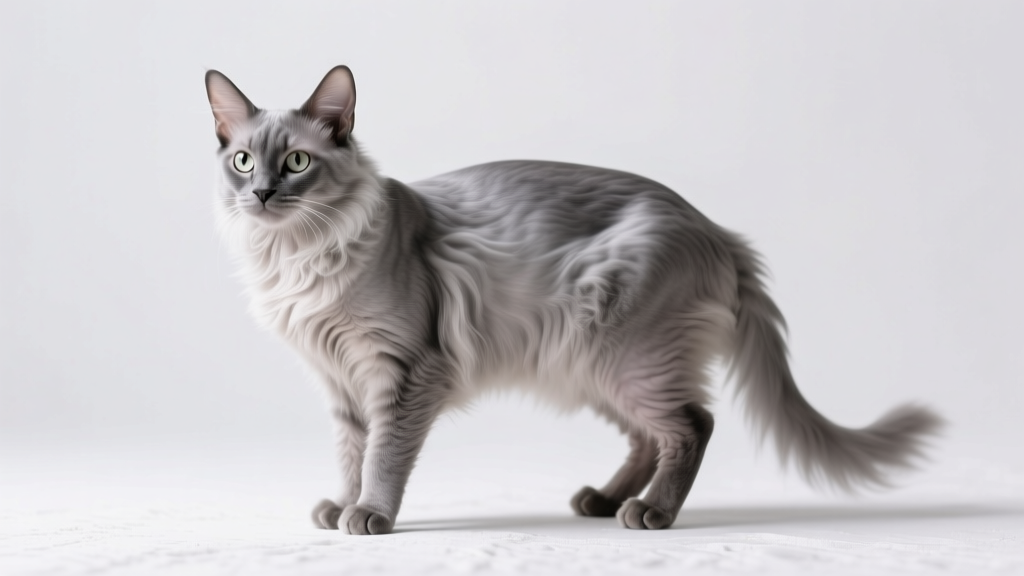
The Cymric’s plush coat is one of its biggest draws. It’s not just “long hair”—it’s a thick, insulating double coat that can feel almost springy. Many have noticeable “britches” (extra fluff on the back legs), a fuller ruff around the neck, and a soft, full tail area even when no tail is present.
Cymric cats can appear in many colors and patterns commonly seen in pedigreed and domestic cats. Availability and acceptance can vary by registry, but you’ll often see:
- Solids: black, blue, white, cream, red
- Tortoiseshell and blue-cream
- Tabbies: classic, mackerel, spotted
- Bi-color and tri-color patterns
The Famous “Tail” (or Lack of One)
Like the Manx, Cymrics come in several tail types. You’ll hear breeders describe them with specific terms:
- Rumpy: no tail at all (a dimple at the base)
- Rumpy-riser: a small rise of bone/cartilage under the fur
- Stumpy: a short tail stub
- Longy: a near-normal tail length (can appear in Manx/Cymric lines)
Many cat associations prize the fully tailless look in show cats, but from a pet owner’s perspective, temperament and health matter most—tail length is simply part of the breed’s fascinating genetics.
Personality and Temperament Traits
The Cymric personality is one of the best parts of living with this breed. They tend to be devoted, people-oriented, and playful without being nonstop wild. Many Cymrics choose a “favorite person,” but they’re generally friendly with the whole household.
Common temperament traits include:
- Affectionate and loyal: likes to be near you, often following from room to room
- Bright and curious: enjoys puzzle toys and learning routines
- Playful with a dash of comedy: quick bursts of zoomies, surprising athleticism
- Calm confidence: many are steady-natured rather than jumpy
- “Dog-like” habits: some enjoy fetch, greeting at the door, and supervising everything
They’re typically good conversationalists, too—often chatting softly rather than loudly. If you want a cat that feels like a true companion (not just a roommate with whiskers), the Cymric is a strong contender.
Health Considerations and Common Issues
Because the Cymric is essentially a long-haired Manx, the most significant health considerations relate to the Manx gene that affects tail/spine development. Responsible breeders work carefully to reduce risk, but it’s still something potential owners should understand.
Potential Health Issues
- Manx syndrome: a range of spinal and neurological issues linked to the tailless gene. Severity varies; symptoms may include mobility problems or bowel/bladder control issues. Signs often appear in kittenhood.
- Spinal/vertebral abnormalities: may occur, especially in very short-tailed or tailless lines.
- Arthritis or joint stress: their unique hind-leg structure and spine can increase wear over time in some individuals.
- Digestive sensitivity: not universal, but some lines may show GI issues related to nerve involvement.
- Obesity risk: their sturdy build can hide extra weight under fluff; keeping them lean supports joint and spine health.
What Good Breeders and Owners Do
- Breed with care (often avoiding risky pairings of two strongly tailless cats, depending on program and ethics)
- Monitor kittens for movement and litter box normality before placement
- Encourage steady exercise and maintain ideal body condition
- Schedule regular veterinary checkups, especially during growth
Many Cymrics live happy, normal lives, but it’s wise to seek a breeder who openly discusses health screening, kitten development, and their approach to reducing Manx-related risks.
Care Requirements (Grooming, Exercise, Diet)
Grooming
That gorgeous Cymric coat is lush, but it doesn’t have to be high drama. The key is consistency—short grooming sessions prevent tangles and keep shedding manageable.
- Brushing: 2–3 times per week; daily during seasonal shedding
- Tools: slicker brush + stainless steel comb (especially for “britches” and belly fluff)
- Bathing: occasional, as needed (some tolerate it surprisingly well)
- Nails/ears/teeth: trim nails every 2–4 weeks, check ears weekly, brush teeth if possible
Exercise and Enrichment
Cymrics are muscular and playful, with bursts of athletic energy. Because they can be prone to weight gain, daily activity is part of keeping them thriving.
- Interactive play: wand toys, ping-pong balls, soft kickers
- Brain work: treat puzzles, clicker training, food-dispensing toys
- Cat furniture: sturdy cat trees, ramps/steps for easy access if jumping seems uncomfortable
- Routine: two to three play sessions a day (even 10 minutes each helps)
Diet
A Cymric’s diet should support lean muscle and a healthy coat. Choose a high-quality food with animal-based protein as a main ingredient, and keep portions appropriate for their frame and activity level.
- Protein-forward meals help maintain that solid physique
- Omega-3 and omega-6 fats can support coat softness and skin health
- Measured feeding often works better than free-feeding for this breed
- Fresh water always—many enjoy fountains
If your Cymric has any digestive quirks, your vet can guide you toward the best diet type (wet vs. dry, sensitive stomach formulas, or fiber balance).
Compatibility with Families, Children, and Other Pets
The Cymric is often a wonderful family cat—especially for homes that enjoy interacting with their pets rather than admiring from afar. Their playful, steady nature can fit nicely into busy households.
- With children: generally patient and affectionate, especially with respectful kids who know how to handle cats gently
- With dogs: can do well with cat-savvy dogs; introductions should be slow and positive
- With other cats: often social, particularly if introduced properly and given enough resources (litter boxes, perches, feeding stations)
Because Cymrics can bond strongly, they may struggle if left alone for long stretches every day. If your schedule is packed, consider adopting two compatible cats or providing extra enrichment to prevent boredom.
Pros and Cons of Owning a Cymric
| Pros | Cons |
|---|---|
| Affectionate, loyal, people-centered companion | Potential Manx-related spinal/neurological health concerns |
| Plush semi-longhair coat and adorable rounded look | Regular grooming needed to prevent mats and manage shedding |
| Playful, smart, often “dog-like” in interaction | Can become bored or lonely without engagement |
| Generally good with families and other pets with proper intro | May be hard to find; reputable breeders can have waitlists |
| Sturdy, robust build; many are calm and confident | Weight gain can sneak up under that thick coat |
FAQ: Cymric Cats
Is a Cymric the same as a Manx?
They’re closely related. The Cymric is essentially the long-haired version of the Manx, sharing the same tailless gene and body type. Some cat registries list them as separate breeds, while others classify Cymric as a coat-length variety of the Manx.
Do all Cymric cats have no tail?
No. Cymrics can be fully tailless (rumpy), have a small rise (rumpy-riser), a short stub (stumpy), or even a longer tail (longy). The tailless look is iconic, but tail type can vary within the same lineage.
Are Cymric cats hypoallergenic?
No cat breed is truly hypoallergenic, and Cymrics have a dense double coat that sheds. If you’re allergy-prone, spend time with the breed first and talk to your allergist. Regular grooming and air filtration can help some households.
How much grooming does a Cymric need?
Plan on brushing 2–3 times per week (more during shedding seasons). Their semi-longhair double coat can mat in friction areas like the belly and back legs, so a quick comb-through goes a long way.
Are Cymric cats good indoor cats?
Yes—Cymrics typically thrive indoors with enrichment. Provide climbing spots, interactive toys, and daily play. Supervised outdoor time in a secure catio or harness setup can be a bonus for curious individuals.
What should I ask a breeder before adopting a Cymric kitten?
Ask about health history in their lines, how they monitor kittens for Manx-related issues, what tail types they breed for, veterinary care provided, and what support they offer after adoption. A good breeder welcomes these questions.
A Warm Goodbye (For Now) to the Fluffy, Tailless Wonder
The Cymric cat is one of those breeds that feels like a secret handshake among cat lovers: a round, powerful little athlete with a plush coat and a tender, loyal heart. If you’re looking for a companion who will play hard, cuddle often, and keep you company with bright-eyed devotion, the Cymric—this wonderful long-haired Manx variant—might be your perfect match.
If you enjoyed this Cymric breed profile, you’re invited to explore more cat breed guides and feline favorites at catloversbase.com.