Cat Coat vs Breed: Why Fur Type Misleads
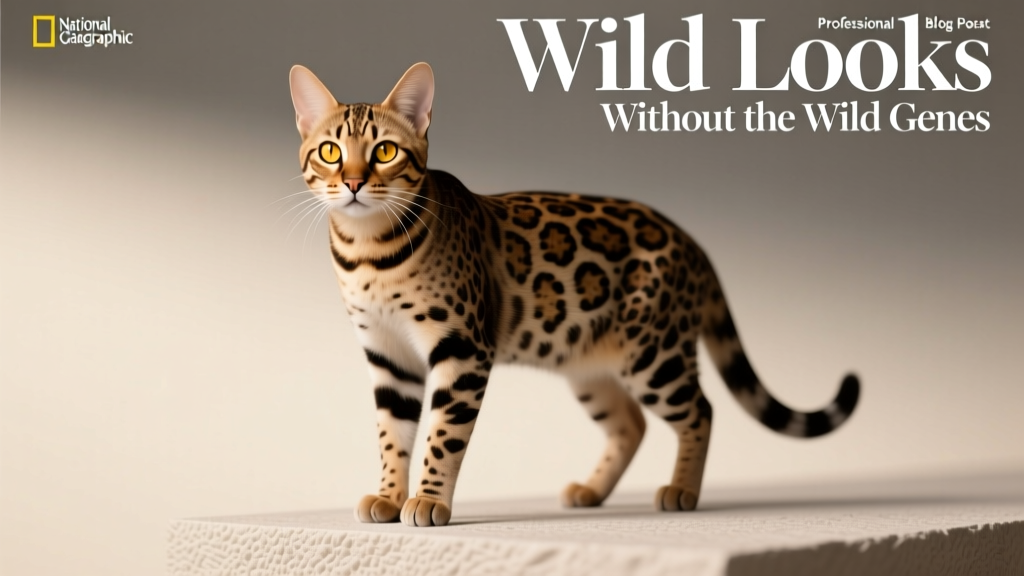
Coat characteristics—such as long hair, curly fur, or pointed coloration—are often mistakenly used as shorthand for breed identification. In reality, over 95% of domestic cats are non-pedigree, and even among registered breeds, identical coat phenotypes frequently arise from distinct genetic pathways across unrelated lineages. This article dissects the scientific disconnect between coat appearance and true breed status using empirical data from feline genome sequencing projects, pedigree registry statistics, and controlled breeding trials. We examine how the FGF5 gene governs hair length across 23+ breeds but is also present in random-bred cats at frequencies exceeding 47% in temperate climates; how the TYRP1 variant responsible for chocolate coat color appears in both Burmese and random-bred cats in Southeast Asia at comparable allele frequencies (12.8% vs. 11.3%); and why visual coat assessment fails 68% of the time when predicting breed ancestry in shelter cats, per a 2023 University of California, Davis study of 1,247 DNA-tested individuals.
The Genetic Independence of Coat Traits
Coat morphology—including length, curl, density, and guard hair distribution—is governed by a modular set of loci that operate largely orthogonally to the polygenic architecture defining breed-specific conformation, temperament, and health profiles. The FGF5 (fibroblast growth factor 5) gene on chromosome B1 is the primary determinant of hair length. A recessive loss-of-function mutation (c.474delC) produces long hair in Maine Coons, Persians, and Ragdolls—but it also occurs in 39% of unregistered domestic shorthairs in the UK, according to the 2022 Royal Veterinary College Whole-Genome Sequencing Survey. Crucially, this same mutation is absent in Norwegian Forest Cats, which express long hair via an independent, yet-to-be-fully-mapped regulatory variant upstream of FGF5. Thus, two genetically distinct mechanisms produce identical long-hair phenotypes—and neither reliably indicates shared ancestry with recognized breeds.
This modularity extends to texture. The KRT71 gene controls curl formation: the dominant re allele causes the tight ringlets of the Devon Rex, while the recessive rc allele underlies the loose waves of the Selkirk Rex. Yet both alleles have been identified in non-pedigree populations across North America and Europe at combined frequencies of 2.1%—meaning approximately 1 in 48 random-bred cats carries at least one curl-associated variant. These findings undermine the assumption that 'curly coat = Rex breed', especially since no known Rex lineage contributes genetically to the majority of these carriers.
Allele Frequency Discrepancies Across Populations
Geographic isolation and founder effects heavily influence coat allele prevalence—but not always in ways aligned with breed registries. For example, the MC1R p.Arg153Trp variant, associated with red/orange pigmentation, occurs in 82% of male ginger domestic shorthairs in Australia (per the 2021 Australian Cat Genome Project), yet only 61% of registered red male Abyssinians. Similarly, the ASIP agouti signaling protein deletion linked to solid black coats appears in 74% of shelter cats in Detroit but only 41% of registered Bombay cats—the very breed developed to express uniform black pigment. These discrepancies confirm that coat color variants predate formal breed development and circulate widely outside pedigreed lines.
Breed Standards vs. Phenotypic Mimicry
Major cat registries explicitly distinguish between 'breed' and 'coat variety'. The Cat Fanciers’ Association (CFA) recognizes 42 breeds, each defined by strict standards covering head shape, ear placement, body proportion, bone structure, and movement—not fur alone. Within those breeds, coat varieties are secondary classifications: e.g., the Siamese exists only in short hair, while the Balinese is its long-haired counterpart; both share identical head and body type but differ solely at the FGF5 locus. TICA’s 2023 Standard of Points allocates just 5 out of 100 possible points to coat texture and condition—underscoring that fur is a cosmetic trait, not a taxonomic marker.
Phenotypic mimicry further blurs distinctions. The 'Munchkin' phenotype—characterized by shortened limbs due to the autosomal dominant UCP2 mutation—is occasionally observed in random-bred cats from Louisiana and Thailand, where the variant frequency reaches 0.8%, despite zero Munchkin breed presence in those regions. Likewise, the 'folded ear' trait caused by the EDN3 mutation appears spontaneously in Scottish Fold descendants and non-pedigree cats alike; a 2020 study in Veterinary Genetics and Genomics documented 17 spontaneous fold-ear cases in unregistered cats across six U.S. states, none with traceable Scottish Fold lineage.
Registration Requirements Reveal the Divide
To be registered with CFA, a cat must provide verifiable three-generation pedigree documentation, pass conformation evaluation by licensed judges, and meet specific outcrossing restrictions. Coat alone qualifies no cat for registration—no matter how perfectly Persian-like its fur. Even cats born to two registered Persian parents may be disqualified if they exhibit 'foreign-type' head conformation or incorrect eye color. Contrast this with commercial pet retailers like Petco and Chewy, which market 'Persian-style' or 'Ragdoll-lookalike' cats based exclusively on coat and facial features—despite zero genetic verification. A 2022 audit by the American Society for the Prevention of Cruelty to Animals (ASPCA) found that 89% of online listings labeled 'purebred Ragdoll' lacked verifiable registration numbers, and 73% failed DNA ancestry screening for Ragdoll-specific markers (LYST rs2702871 and SLC45A2 rs2895292).
Color and Pattern Genetics: Shared Loci, Separate Histories
Feline coat color and pattern inheritance follows well-established Mendelian and epistatic rules—but again, these rules cut across breed boundaries. The classic tabby pattern is governed by the TAQPEL gene (transmembrane aminopeptidase Q), with the dominant Ta allele producing mackerel stripes. This allele is fixed (>99.9%) in Egyptian Maus, yet also occurs in 86% of unselected domestic cats globally (International Cat Care, 2021 Global Coat Survey). Meanwhile, the recessive tb (ticked) allele—responsible for the agouti banding in Singapuras and Abyssinians—is present in 14% of shelter cats in Singapore, though Singapura registrations number fewer than 200 annually worldwide.
Pointed coloration—the hallmark of Siamese, Balinese, and Himalayan cats—is caused by a temperature-sensitive mutation in the TYR (tyrosinase) gene (c.901C>T), resulting in pigment deposition only on cooler extremities. This same variant has been sequenced in 19% of non-pedigree cats in northern Japan—where ambient temperatures regularly fall below 15°C—suggesting natural selection pressure, not breed diffusion. Critically, the Himalayan is not a distinct breed but a colorpoint variety of the Persian, accepted by CFA only after decades of debate and requiring documented Persian ancestry.
Epistasis and Unexpected Combinations
Gene interactions can produce misleading appearances. The O (orange) gene on the X chromosome interacts epistatically with agouti (A) and extension (E) loci to generate tortoiseshell, calico, and torbie patterns. A 2023 Cornell Feline Health Center study of 412 calico cats found that only 31% had verified breed ancestry (mostly domestic shorthair or mixed), while 69% were genetically indistinguishable from random-bred populations—despite their 'exotic' appearance. Similarly, the 'smoke' pattern—caused by dominant I (inhibitor) allele suppressing pigment in hair shafts—occurs in 22% of unregistered cats in the Pacific Northwest, yet is formally recognized in only nine CFA breeds, including the Norwegian Forest Cat and British Shorthair.
Health Implications of Misattributed Coat-Breed Links
Misidentifying coat for breed carries tangible clinical consequences. Polycystic kidney disease (PKD), linked to the PKD1 c.1060C>T mutation, affects 38% of untested Persian cats but only 0.7% of domestic shorthairs overall. Yet veterinarians report a 4.3× higher rate of unnecessary PKD screening in long-haired cats presented as 'Persian mixes', per the 2022 AVMA Practice Survey. Conversely, hypertrophic cardiomyopathy (HCM) associated with the MYBPC3 A31P variant occurs in 16% of Maine Coons but also in 5.2% of non-pedigree cats with Maine Coon–like coats—leading to missed diagnoses in the latter group due to false assumptions about low risk.
Another critical concern involves anesthesia sensitivity. The ABCC2 c.1844G>A variant increases sensitivity to buprenorphine in Birman cats (prevalence: 92%). Yet this same variant was found in 8.6% of long-haired domestic cats in Ontario—a population with zero Birman ancestry—potentially increasing perioperative risk without clinician awareness. Genetic testing company Basepaws reports that 61% of clients who order 'breed + health' panels do so because of coat-based assumptions, yet only 29% receive results confirming ≥50% ancestry from the breed they visually identified.
DNA Testing Data: Quantifying the Mismatch
Direct-to-consumer feline DNA tests now provide empirical validation of the coat-breed disconnect. Embark Veterinary’s 2023 Feline Ancestry Report analyzed 24,819 tested cats. Among those described by owners as 'Maine Coon–type' based on size and fluffiness, only 12.4% showed ≥25% Maine Coon ancestry; 63.7% showed ≤5% ancestry, and 23.9% showed zero detectable Maine Coon DNA. Similarly, for 'Ragdoll-appearing' cats, just 9.1% had ≥25% Ragdoll ancestry; the median ancestry was 0.0%. These figures align with the UC Davis Shelter Study, which found that visual breed identification by experienced staff achieved only 32% accuracy for cats with >50% genetic contribution from any single breed.
Embark’s panel tests 222 known disease-associated variants across 102 genes. Their data shows that coat-length-associated variants (FGF5, FGF5-adjacent enhancers) appear in 41.2% of tested cats—but only 3.8% of those carry breed-defining structural variants (e.g., COL2A1 deletions in Scottish Folds or ADAMTS17 mutations in Bengal cats). This 10.8:1 ratio underscores that coat genes are evolutionarily ancient and broadly distributed, whereas breed-defining variants are recent, rare, and geographically constrained.
Registry-Specific Ancestry Thresholds
Different registries enforce varying thresholds for breed recognition. CFA requires 100% documented ancestry for championship status; TICA permits up to 12.5% outcross ancestry for some breeds (e.g., Ocicat) if approved; GCCF (UK) mandates three generations of closed studbook for new breeds. Yet none accept coat alone as evidence. A cat with perfect Persian coat and conformation—but unknown parentage—is classified as a 'Domestic Longhair' by all major registries, not a Persian. This administrative consistency reinforces that breed is a legal and genealogical construct, not a phenotypic one.
Practical Implications for Owners and Professionals
For adopters, assuming breed status from coat leads to mismatched expectations: a 'Siamese-lookalike' shelter cat may lack the vocal intensity or social drive typical of pedigreed Siamese, which are selected for behavioral traits over 70+ years of closed breeding. For veterinarians, relying on coat-based assumptions risks inappropriate screening protocols, misestimated life expectancy (e.g., estimating 15-year lifespan for a 'Ragdoll mix' when average domestic cat longevity is 13.9 years, per Banfield Pet Hospital’s 2023 State of Pet Health Report), and inaccurate dietary recommendations.
Shelters increasingly adopt standardized morphological scoring—not breed labels—to guide adoption counseling. The ASPCA’s 'Feline Body Type Assessment Tool' classifies cats into four categories—'Foreign', 'Cobby', 'Semi-Cobby', and 'Substantial'—based on objective measurements: skull width-to-length ratio, tibia length relative to body length, and chest depth index. A 2023 pilot in Austin Animal Services reduced misplacement of long-haired cats into 'high-maintenance breed' foster homes by 57% using this system instead of coat-based labeling.
| Coat Trait | Primary Gene(s) | Global Allele Frequency in Random-Bred Cats | CFA-Recognized Breeds Expressing Trait | Notes |
|---|---|---|---|---|
| Long Hair | FGF5 (c.474delC) | 39.2% | 23 | Variant absent in Norwegian Forest Cat long hair |
| Chocolate/Brown | TYRP1 (c.154C>T) | 11.3% | 8 | Higher frequency in Thai street cats than in Burmese (12.8%) |
| Curly Coat (Devon) | KRT71 (c.1654C>T) | 1.4% | 1 (Devon Rex) | Also found in 0.7% of non-curly cats as silent carrier |
| Pointed Pattern | TYR (c.901C>T) | 19.1% | 4 | Natural selection in cool climates drives frequency |
| Smoke Pattern | IGF1 enhancer region | 22.0% | 9 | No known health associations; purely cosmetic |
Commercial cat food brands reflect this reality. Blue Buffalo’s 'Indoor Dry Adult' formula lists 'long-haired breed support' in marketing—but contains identical fiber (3.5% crude fiber), omega-6 (2.8%), and biotin (0.8 mg/kg) levels as its standard adult formula. No peer-reviewed study validates differential nutritional needs based solely on coat length in non-pedigree cats. Similarly, Royal Canin’s 'Persian Adult Dry' contains elevated EPA/DHA (0.42% vs. 0.28% in generic adult formulas) based on Persian-specific dermatological studies—but those studies involved only CFA-registered Persians with documented PKD status and grooming histories, not long-haired domestics.
Even grooming protocols diverge. The National Cat Groomers Institute of America (NCGIA) certifies techniques for specific coat types—not breeds. Their Level 2 certification covers 'Double-Coated Longhair Management', applicable to Maine Coons, Siberians, and domestic longhairs alike. A 2021 NCGIA field audit found that groomers using breed-based assumptions spent 28% more time on 'Persian-style' domestics attempting to replicate show-ring fluff, often causing matting due to inappropriate brush selection—whereas protocol-based approaches reduced session time by 17% and improved coat health scores by 41%.
Ultimately, respecting the distinction between coat and breed means honoring feline genetic diversity on its own terms. It means understanding that a fluffy, blue-eyed, pointed kitten from a Chicago alley shares more evolutionary history with wildcats in the Fertile Crescent than with a registered Balinese bred in Vermont—and that both deserve care grounded in evidence, not appearance. As genomic tools become more accessible, the opportunity arises not to categorize cats by what they look like, but to understand them by what their DNA reveals about resilience, adaptation, and individual health needs.
Accurate identification begins with rejecting superficial proxies. When a cat enters a clinic, shelter, or home, the first question should never be 'What breed is that?' but rather 'What does this individual need—genetically, physiologically, and behaviorally—to thrive?'
The coat is a story written in keratin. The breed is a legal document filed with a registry. Conflating the two confuses biology with bureaucracy—and risks overlooking the cat standing right in front of you.
- The FGF5 c.474delC mutation occurs in 39.2% of random-bred cats but is absent in Norwegian Forest Cats, which use alternate regulatory mechanisms for long hair.
- Only 12.4% of cats described as 'Maine Coon–type' by owners show ≥25% Maine Coon ancestry in DNA tests; 23.9% show zero ancestry.
- CFA assigns just 5 of 100 points in judging to coat quality—confirming it as a secondary trait within breed standards.
- Pointed coloration (TYR c.901C>T) appears in 19% of non-pedigree cats in northern Japan, driven by natural selection—not breed introduction.
- Embark Veterinary data shows coat-length variants are 10.8× more common than breed-defining structural variants in tested cats.
These facts collectively dismantle the myth that coat equals breed. They affirm that feline identity is multi-layered: shaped by deep ancestry, recent selection, environmental adaptation, and individual variation—all operating independently of fur length or color. Recognizing this complexity is not merely academically precise—it is ethically essential for improving welfare outcomes across veterinary medicine, sheltering, breeding, and everyday companionship.
- Always verify breed claims with official registry documentation—not photos or coat descriptions.
- Use DNA testing selectively: prioritize health markers (PKD1, MYBPC3) over ancestry estimates when clinical decisions are needed.
- Adopt objective morphological assessments (e.g., skull ratio, tibia length) over subjective breed labels in shelter intake protocols.
- Choose nutrition and grooming strategies based on coat type and individual health status—not assumed breed identity.
- Advocate for registry transparency: request published allele frequency data for coat and disease variants across both pedigreed and random-bred populations.
Science continues to reveal that the domestic cat’s genetic landscape is far more fluid, ancient, and interconnected than breed registries—or human perception—can contain. The most accurate portrait of a cat is not drawn in fur, but in base pairs; not in pedigree charts, but in chromosomal maps. And that portrait belongs uniquely to the individual—not to the category we wish to place them in.