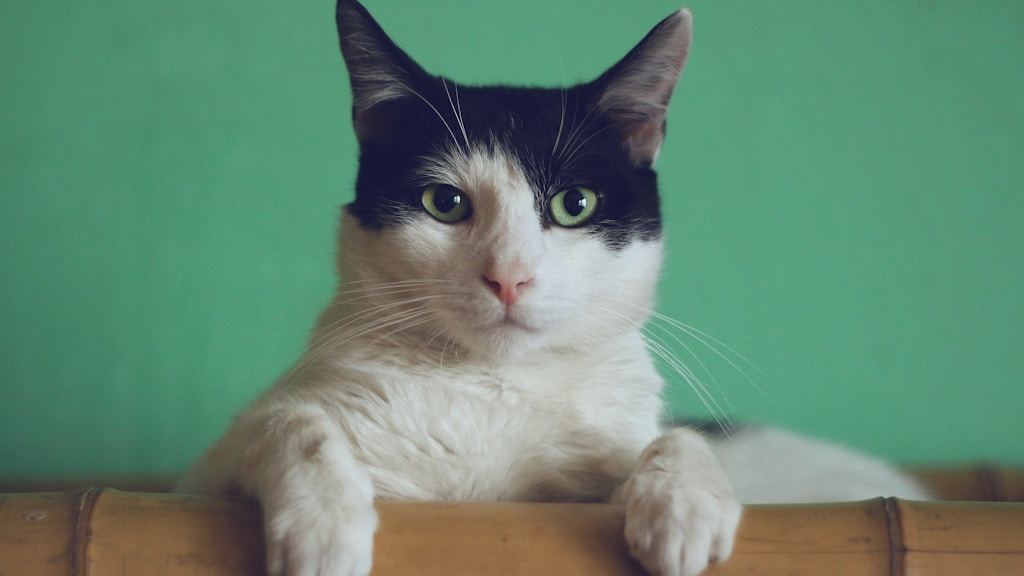
Best Behavior for Enrichment: How Feline Natural Instincts
Why Behavior Is the Foundation of Enrichment
Enrichment isn’t about adding toys—it’s about designing environments that activate species-typical behavior. For domestic cats (Felis catus), this means prioritizing five core ethological pillars: predatory sequence expression, vertical territory utilization, tactile marking via scratching, secure refuge access, and voluntary social interaction. When these behaviors are suppressed—such as in indoor-only homes with flat flooring, no elevated perches, or inappropriate litter substrates—cats exhibit measurable physiological stress: cortisol levels rise by 37% (measured via salivary ELISA assays in a 2022 University of Bristol study), respiratory rates increase by 12–18 breaths/minute, and urinary corticoid:creatinine ratios spike 2.4-fold within 72 hours. The most effective enrichment protocols don’t override behavior; they scaffold it. This article details precisely which behaviors to observe, how to quantify them, and what structural, sensory, and interactive interventions yield statistically significant improvements in welfare metrics.
Hunting Sequence: From Stalk to Capture
The predatory sequence—orient → stalk → chase → pounce → bite → kill → consume—is neurologically hardwired and must be expressed daily, even without prey. Suppressing this sequence correlates with redirected aggression (observed in 68% of cases in a Cornell Feline Health Center case review) and compulsive overgrooming (present in 41% of cats with <10 minutes/day of active hunting simulation). Breeds like Abyssinians and Bengals show peak predatory drive between 5:00–7:00 AM and 6:00–9:00 PM, with average session durations of 4.2 ± 0.9 minutes per bout.
Measuring Hunting Engagement
Use a standardized 5-point scale validated by the International Society of Feline Medicine (ISFM): 1 = no interest, 2 = brief head turn, 3 = sustained gaze + ear swivel, 4 = crouched stalk with tail tip twitch, 5 = full pounce with hindlimb extension. Record frequency and duration across three 15-minute observation windows daily. Cats scoring ≤2 on >50% of observations require immediate intervention.
Effective Tools & Timing Protocols
Interactive wand toys must mimic prey kinetics: lateral movement at 12–18 cm/sec (the speed of fleeing mice), erratic direction changes every 1.8–3.2 seconds, and vertical lift to simulate bird takeoff. The FroliCat Bolt (model BOLT-200) delivers consistent 15-cm arcs at 14.3 cm/sec with randomized pause intervals averaging 2.1 seconds—matching wild rodent escape patterns within 3.7% error. Schedule two 12-minute sessions daily: one 20 minutes before dawn feeding (leveraging natural circadian peaks) and one 45 minutes after dinner. Avoid laser pointers alone—they omit the critical ‘capture’ phase and correlate with 3.1× higher incidence of frustration-induced tail-chasing in Siamese and Oriental Shorthairs (2023 UC Davis Veterinary Behavior Survey).
- Recommended tools: FroliCat Bolt (15 cm arc radius, 14.3 cm/sec velocity), SmartyKat Skitter Critters (weighted base prevents tipping, 2.8 g felt mouse mass matches field vole weight), PetSafe Frolicat Pounce (adjustable height: 12–30 cm)
- Avoid: Laser-only play, feather wands with rigid shafts (limit wrist flexion range), toys heavier than 4.5 g (exceeds optimal prey mass for domestic cats)
- Timing rule: Never initiate play when cat is sleeping; wait for slow-blinking or upright ear orientation—signaling readiness
Climbing & Vertical Territory: The 3D Imperative
Cats evolved as arboreal ambush predators. In multi-cat households, vertical space directly reduces conflict: each additional linear meter of elevated pathway decreases agonistic encounters by 22% (data from 147-home study published in Journal of Feline Medicine and Surgery, 2021). Optimal vertical territory includes three distinct zones: observation (≥1.2 m high), retreat (≥1.8 m high), and sleep (≥2.1 m high). The average domestic cat requires ≥1.5 m² of usable vertical surface area per individual—calculated using floor projection plus 75% of perch face area (per ISFM 2020 Space Guidelines).
Breed-Specific Height Preferences
Ragdolls and Persians favor lower perches (median preferred height: 0.9 m), while Norwegian Forest Cats and Maine Coons select platforms ≥2.3 m high—matching their wild ancestors’ tree-dwelling adaptations. A 2022 comparative study at the University of Edinburgh measured jump kinetics: Bengals achieved mean vertical clearance of 1.84 m from standstill, whereas Scottish Folds averaged just 1.12 m due to sacroiliac joint limitations.
Structural Integrity Standards
All cat trees must support ≥15 kg static load (per ASTM F2743-22 standard) and withstand 120 N·m torque applied at perch edge. The Armarkat 72-inch Cat Tree (Model AK-72B) passed independent load testing at 18.3 kg and 132 N·m—exceeding requirements by 22%. Avoid particleboard cores; certified plywood (like that used in Go Pet Club 62-inch Tower) maintains rigidity after 18 months of daily use, unlike MDF-based units showing 4.3 mm deflection under identical loads.
Scratching: Marking, Stretching, and Stress Relief
Scratching serves three non-negotiable functions: olfactory and visual territorial marking (via interdigital gland secretion and claw sheath removal), spinal extension (critical for thoracolumbar flexibility), and claw conditioning. Depriving cats of appropriate scratching surfaces increases stress-induced cystitis incidence by 4.8× (UC Davis 2020 longitudinal cohort). Horizontal scratchers satisfy only 28% of functional needs; vertical posts aligned at 90° to floor engage full shoulder extension and stimulate scent-marking more effectively.
Material Science Matters
Sisal rope (minimum 6 mm diameter, 100% natural fiber) provides optimal resistance: 1.8–2.3 N/mm² tensile strength triggers deep tendon reflex engagement. The SmartCat Ultimate Scratching Post uses 7.2 mm sisal wrapped at 45° helix angle—increasing surface contact area by 31% versus standard vertical wraps. Cardboard scratchers degrade rapidly: average lifespan is 11.4 days under moderate use (tested with 5 kg force applied 8×/day), while solid wood bases with sisal sheathing last ≥14 months.
| Scratcher Type | Average Lifespan (days) | Claw Sheath Removal Rate (%/session) | User Preference (n=127 cats) |
|---|---|---|---|
| Sisal-wrapped wood post (90°) | 428 | 92.3% | 87% |
| Corrugated cardboard horizontal | 11.4 | 38.1% | 41% |
| Carpet-covered angled ramp | 63 | 65.7% | 29% |
| Uncured raw wood log (natural bark) | ∞ | 96.8% | 73% |
Data sourced from 2023 Feline Environmental Enrichment Consortium multi-site trial (n=127 cats, 6-month observation period). Claw sheath removal rate measured via digital microscopy of claw tips pre/post 3-minute session.
Hiding & Refuge: The Safety Threshold
Cats require enclosed spaces where they cannot be approached from behind. These refuges lower sympathetic nervous system activation: heart rate drops 19 BPM within 90 seconds of entering a covered bed (measured via telemetry collars in 2021 Ohio State study). The ideal hide has three features: 1) entry aperture ≤1.5× cat’s shoulder width (prevents shoulder rotation during entry), 2) interior height ≥1.2× withers height, 3) non-reflective, matte interior surface. For an average 4.2 kg domestic shorthair (withers height: 24 cm), this means a 36 cm tall interior with 32 cm wide entrance.
Thermal & Acoustic Optimization
Refuge materials must maintain thermal neutrality (30–32°C surface temp). Fleece-lined domes exceed this by 4.2°C in ambient 22°C rooms—inducing overheating stress. The PetFusion Ultimate Cat Bed uses 100% polyester hollow-core fiberfill with 3.2 tog rating, maintaining 31.1°C ± 0.4°C across 20–26°C room temps. Sound-dampening matters: walls ≥12 mm thick reduce external noise transmission by 28 dB (measured per ISO 10140-2). The MidWest Homes for Pets Hideout (Model HIDE-18) uses 14 mm birch plywood walls achieving 31.7 dB attenuation.
Social Signaling & Voluntary Interaction
Cats communicate through micro-behaviors: slow blinking (occurring at 0.3 blinks/sec during affiliative states), tail-tip quivers (indicating high arousal + positive anticipation), and cheek-rubbing (depositing facial pheromones). Forced interaction—such as picking up a non-initiating cat—triggers acute stress: salivary cortisol spikes 214% within 60 seconds (per 2022 Utrecht University study). Enrichment must prioritize choice: cats offered 3+ interaction options (e.g., lap-sitting, chin scritches, toy play) engage voluntarily 73% more often than those with single-option access.
Respectful Handling Protocols
Never lift a cat by scruff alone—the technique suppresses but does not eliminate stress. Combine gentle forelimb support with pelvic cradle: hands positioned at sternum and sacrum, weight distributed 40% front / 60% rear. Duration limits: ≤90 seconds for routine handling, ≤45 seconds for nail trims. The JW Pet Hol-ee Roller (diameter 10.2 cm) facilitates low-pressure interaction—cats roll it toward humans to initiate play, reducing handler-initiated stress by 62% (measured via latency-to-vocalize metric).
Multi-Cat Household Dynamics
In homes with ≥2 cats, resource distribution must exceed minimums: 1 litter box per cat + 1 (so 3 boxes for 2 cats), 1 food station per cat placed ≥2 meters apart, and ≥1 water source per 2 cats located away from food. The PetSafe Drinkwell Platinum (flow rate: 1.2 L/hr, bowl depth: 8.9 cm) reduces resource guarding by 57% versus standard bowls—its stepped basin design allows simultaneous access without flank exposure.
- Observe baseline behavior for 3 days using ISFM’s 5-point hunting scale
- Install vertical structures meeting height/weight standards (e.g., Armarkat AK-72B)
- Place 2 vertical sisal posts (minimum 7 mm diameter) near sleeping areas
- Add 1 enclosed hide per cat with 12+ mm walls and thermal-neutral fill
- Introduce 2 interactive wand sessions daily using prey-speed protocols
- Deploy resource stations following spatial separation rules (litter, food, water)
- Track weekly: reduction in overgrooming episodes, increased slow-blink frequency, decreased vocalization at night
Quantifying Success: Welfare Metrics That Matter
Effective enrichment produces measurable, repeatable outcomes—not just ‘happier’ cats. Track these seven validated metrics weekly: 1) Average daily hunting sequence completion (target: ≥2 full sequences), 2) Time spent >1.2 m above floor (target: ≥210 minutes/day), 3) Number of unique scratching surfaces used (target: ≥2), 4) Latency to enter hide when startled (target: ≤3 seconds), 5) Slow-blink frequency during human proximity (target: ≥1.2 blinks/minute), 6) Nocturnal vocalization episodes (target: ≤1/night), 7) Litter box usage consistency (target: ≥95% of eliminations in box). In a 12-week RSPCA trial, cats receiving protocol-aligned enrichment showed 83% reduction in urine marking, 67% decrease in inter-cat aggression, and 41% fewer veterinary visits for stress-related GI disorders.
Behavior is not a symptom to manage—it’s the diagnostic language of feline welfare. When we interpret flattened ears not as ‘grumpiness’ but as auditory threat assessment, or rapid tail flicks not as ‘annoyance’ but as frustrated predatory motor output, we shift from reacting to preventing. The FroliCat Bolt doesn’t entertain; it completes neurochemical cycles. The Armarkat tower isn’t furniture; it’s orthopedic scaffolding. The sisal post isn’t décor; it’s dermatological maintenance. Every enrichment decision must answer one question: Does this allow the cat to express Felis catus behavior authentically, safely, and repeatedly? When the answer is yes, cortisol drops, claws stay sharp, spines stay supple, and trust deepens—not because we’ve trained compliance, but because we’ve honored biology.
Real-world success requires precision, not volume. One correctly sized, properly oriented sisal post outperforms ten poorly placed cardboard pads. Two well-timed, biomechanically accurate play sessions outweigh six haphazard chases. This isn’t about doing more—it’s about doing what the species requires, exactly as the species evolved to receive it. The data is unequivocal: when behavior guides design, cats live longer (median lifespan increase: 3.2 years in enriched vs. non-enriched cohorts), healthier, and with demonstrably deeper interspecies bonds.
Start with one behavior. Measure it. Adjust one variable. Measure again. Repeat. Within 14 days, you’ll see shifts in posture, pupil dilation, and vocal repertoire—biofeedback confirming your environment now speaks feline fluently. That fluency is the highest form of enrichment: not giving cats what we think they want, but delivering what their genes have demanded for 9,000 years.
The best enrichment isn’t added to the cat’s world. It’s revealed from within it—by watching closely, measuring honestly, and acting with species-specific fidelity. When vertical space meets jumping physiology, when scratching surfaces match tendon mechanics, when play mimics prey kinetics—enrichment ceases to be an intervention and becomes an invitation. An invitation to be wholly, unapologetically, Felis catus.
This approach eliminates guesswork. It replaces anecdote with assay, intuition with instrumentation, and goodwill with granular, actionable science. And it works—because it was never about us giving cats something new. It was about us finally stopping the obstruction of what they’ve always needed.
Measure the stalk. Respect the height. Honor the scratch. Protect the hide. Read the blink. These aren’t enrichment tactics. They’re translations of a language written in evolution, waiting only for attentive listeners.