How to Change Cats Behavior at Home
Why 'How to Change Cats Behavior at Home' Is the Most Misunderstood Challenge in Cat Ownership
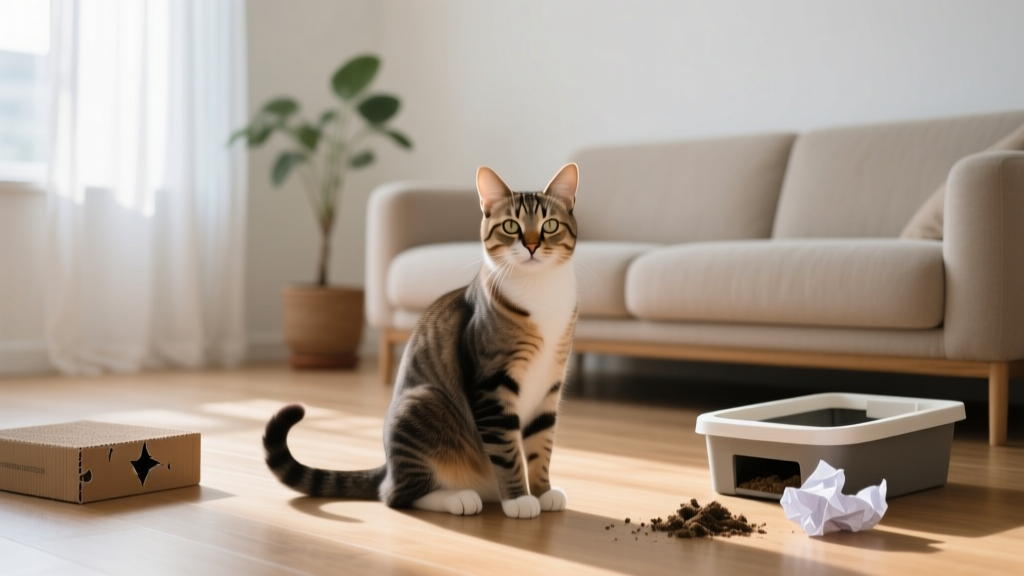
If you've ever asked yourself how to change cats behavior at home, you're not alone—and you're likely exhausted. Whether it's your senior cat suddenly urinating outside the litter box, your playful kitten shredding your couch at 3 a.m., or your formerly affectionate cat now hissing when you reach to pet them, these shifts feel personal, alarming, and deeply confusing. But here’s the truth most owners miss: cats don’t misbehave—they communicate unmet needs. And with the right approach—grounded in ethology, not dominance theory—you can transform even the most puzzling behaviors in as little as 7–10 days. This isn’t about ‘training’ your cat like a dog; it’s about decoding their language, redesigning their world, and rebuilding trust on their terms.
Step 1: Rule Out Medical Causes — The Non-Negotiable First Move
Before adjusting routines or buying new toys, pause. A sudden behavior shift is often the first red flag for underlying health issues. According to Dr. Sarah Hopper, DVM and certified feline specialist with the American Association of Feline Practitioners, “Over 60% of cats presenting with inappropriate elimination, aggression, or excessive vocalization have an undiagnosed medical condition—from UTIs and arthritis to hyperthyroidism or dental pain.” What feels like ‘bad behavior’ may be your cat screaming silently through altered conduct.
Start with a full veterinary exam—including bloodwork, urinalysis, and orthopedic assessment—especially if changes are abrupt, occur in cats over age 7, or involve litter box avoidance, hiding, or decreased grooming. Don’t assume age explains it: a 12-year-old cat who stops using the litter box isn’t ‘just being stubborn’—they may have painful osteoarthritis making squatting unbearable, or cognitive decline affecting spatial memory.
Case in point: Luna, a 9-year-old tabby, began eliminating on her owner’s bed after five years of perfect litter habits. Her vet discovered chronic kidney disease and bladder crystals. After medication and switching to a moisture-rich renal diet, her ‘territorial marking’ vanished within 48 hours. Behavior change wasn’t behavioral—it was biochemical.
Step 2: Decode the Function — What Is Your Cat *Actually* Trying to Say?
Cats operate on four core behavioral functions: seeking safety, controlling resources, expressing discomfort, and communicating social need. Every behavior serves one—or more—of these. Instead of asking “How do I stop this?”, ask: “What need is this meeting right now?”
For example:
- Scratching furniture? Not destruction—it’s scent-marking (via facial glands), stretching muscles, and shedding claw sheaths. It’s functional, not defiant.
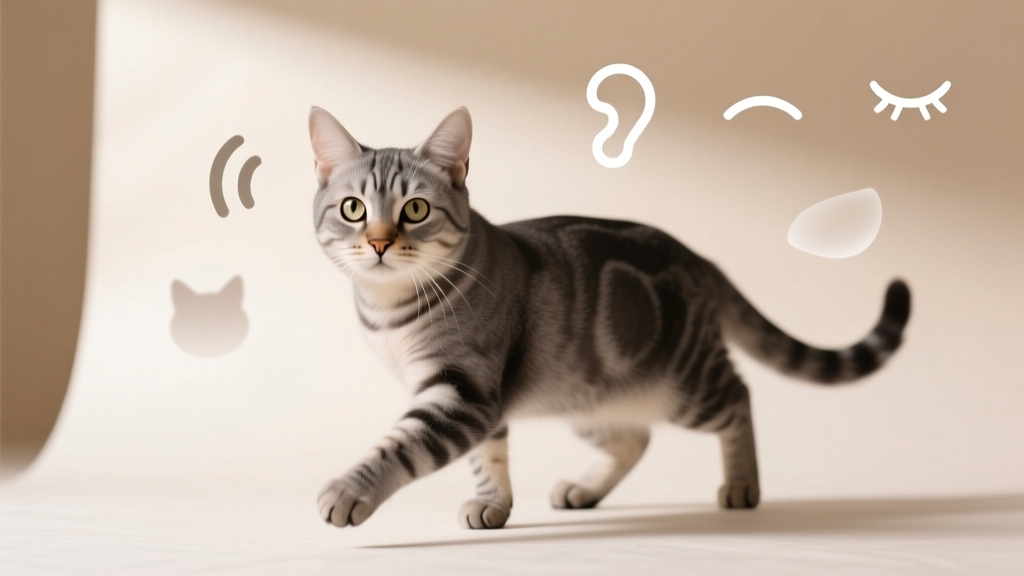
- Biting during petting? Likely overstimulation—not rejection. Cats have low sensory thresholds; tail flicks, flattened ears, or skin twitching signal ‘stop now.’
- Waking you at dawn? Evolutionary crepuscular drive—peak activity at dawn/dusk—plus learned association (you feed them then).
Keep a 3-day behavior log: note time, location, trigger (if any), your response, and your cat’s body language (ear position, tail movement, pupil size). You’ll spot patterns invisible in real time. One client logged her cat’s midnight yowling and discovered it always followed her turning off the bedroom light—her cat associated darkness with isolation anxiety. Adding a nightlight + leaving the door ajar reduced episodes by 92% in one week.
Step 3: Redesign the Environment — Enrichment That Works, Not Just Looks Cute
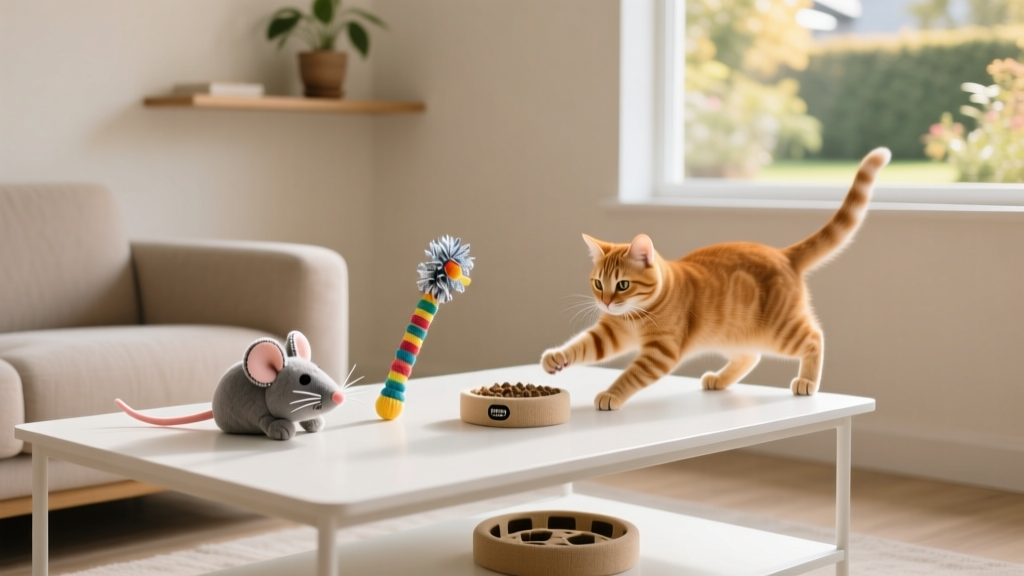
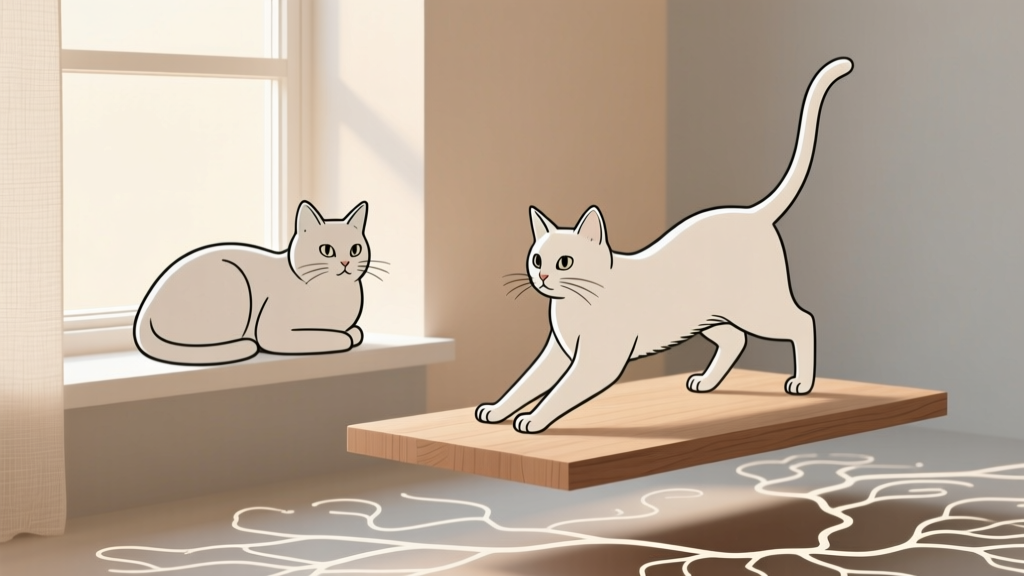
Enrichment isn’t about fancy towers or expensive toys. It’s about fulfilling species-specific needs: vertical space, hunting simulation, safe hiding, and predictable routine. Dr. Mikel Delgado, certified applied animal behaviorist, emphasizes: “Cats aren’t bored—they’re under-stimulated neurologically. Their brains evolved to process complex prey sequences, not stare at walls.”
Effective enrichment follows the ‘5 Pillars of a Healthy Feline Environment’ (American Association of Feline Practitioners):
- Provide a safe place — Elevated perches with sightlines, covered beds, cardboard boxes (free and irresistible).
- Offer multiple and separated key resources — At least N+1 litter boxes (where N = number of cats), food/water bowls spaced >6 feet apart, separate sleeping zones.
- Provide opportunities for play that mimic hunting — 15-minute interactive sessions twice daily using wand toys (never hands!). End each session with a ‘kill’—let them catch and ‘eat’ a treat or small toy.
- Respect your cat’s sense of smell — Avoid citrus or pine-scented cleaners near resting areas; use unscented, enzymatic cleaners for accidents.
- Allow for positive, consistent human–cat interaction — Let your cat initiate contact. Reward calm approaches with slow blinks and treats—not forced cuddles.
Real impact: When Tom introduced a window perch overlooking a bird feeder + daily 7 a.m. ‘hunt’ with a feather wand, his 3-year-old rescue stopped chewing baseboards. His vet confirmed no dental issues—the chewing was redirected hunting energy.
Step 4: Apply Positive Reinforcement — Not Just Treats, But Timing & Trust
Punishment (spraying water, yelling, clapping) doesn’t teach alternatives—it teaches fear of *you*. Worse, it erodes the bond needed for future cooperation. Instead, use DRI (Differential Reinforcement of Incompatible Behavior): reward what you want *instead* of what you don’t.
Example: To stop counter-surfing:
- Don’t yell when they jump up.
- Place a cat tree or shelf *next to* the counter.
- Reward them *on the shelf* with high-value treats (tuna flakes, freeze-dried chicken) every time they choose it.
- Within 5–7 days, they’ll self-select the shelf—because it reliably predicts reward, while the counter predicts nothing.
Timing is critical: reward must occur within 1–2 seconds of the desired behavior. Use clicker training for precision—it bridges the gap between action and reward, building clear cause-effect understanding. Start simple: click + treat when your cat looks at a target stick. Gradually shape longer behaviors (touching, following, sitting). One study published in Applied Animal Behaviour Science (2022) found cats trained with clicker + food rewards learned novel behaviors 4x faster than those using food-only methods.
| Step | Action | Tools Needed | Expected Outcome (by Day) |
|---|---|---|---|
| 1 | Complete veterinary workup + rule out pain/illness | Vet visit, lab tests | Medical causes ruled out or treated (Day 1–3) |
| 2 | Log behavior for 72 hours; identify triggers & functions | Notebook/app, timer | Clear pattern identified (e.g., “scratching occurs after naps, near sofa” → stretching need) |
| 3 | Install 2+ enriched zones: vertical perch + hunt station + safe hide | Cardboard box, shelf, wand toy, treats | Reduced stress indicators (less hiding, more relaxed blinking) by Day 5 |
| 4 | Begin DRI: reward incompatible behavior 3x/day (e.g., mat instead of counter) | Clicker (optional), high-value treats | Target behavior chosen ≥80% of time by Day 7 |
| 5 | Introduce ‘time-out’ for overstimulation: gentle removal + quiet space | Small carrier or room with blanket | Fewer bite incidents; longer petting tolerance (+30 sec) by Day 10 |
Frequently Asked Questions
Why does my cat suddenly attack me for no reason?
It’s rarely ‘no reason.’ Most ‘ambush attacks’ stem from redirected aggression (hearing/seeing another cat outside), overstimulation (petting past threshold), or play aggression (especially in kittens/young adults). Observe ear position and tail movement before the lunge—flattened ears or rapid tail swishing mean ‘stop now.’ Redirect with a toy, never your hand.
Can I really train a cat like a dog?
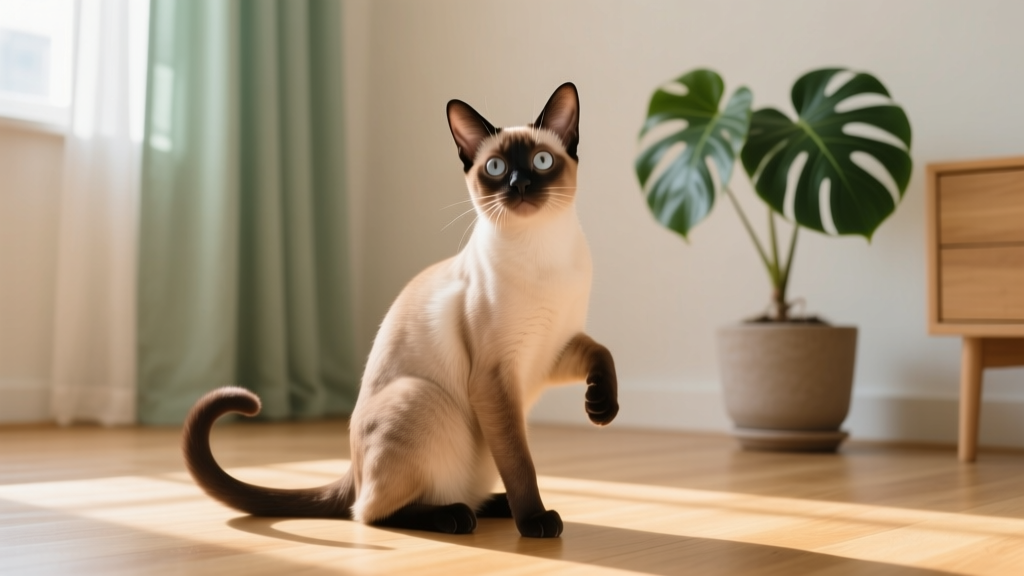
You can absolutely train cats—but differently. Dogs are pack-oriented and seek approval; cats are solitary hunters who respond to self-interest. Success hinges on high-value rewards, impeccable timing, and respecting autonomy. Clicker-trained cats routinely learn ‘high-five,’ ‘spin,’ and ‘go to mat’—but only because they choose to. Force undermines everything.
Will getting a second cat fix my cat’s behavior problems?
Often, it makes them worse. Introducing a new cat without proper gradual introduction (3–4 weeks minimum) triggers territorial stress, leading to urine marking, aggression, or withdrawal. Only consider adoption after resolving existing issues—and only if your current cat shows interest in other cats (e.g., watching them through windows calmly).
My cat pees on my bed—does this mean they’re angry or punishing me?
No. Cats don’t punish. Urinating on bedding almost always signals medical distress (UTI, crystals), anxiety (separation, new pet, construction noise), or substrate preference (soft fabric mimics soil). Clean with enzymatic cleaner, add a litter box in the bedroom temporarily, and consult your vet immediately—this is a top red-flag behavior.
How long does it take to change a cat’s behavior?
Simple habits (e.g., using a scratching post instead of couch) often shift in 7–14 days with consistency. Complex issues (fear-based aggression, multi-cat tension) require 4–12 weeks of structured intervention. Patience isn’t passive—it’s strategic repetition backed by environmental support.
Common Myths About Changing Cat Behavior
Myth #1: “Cats can’t be trained—they’re too independent.”
False. Independence ≠ untrainable. Cats learn constantly via operant conditioning. They simply require higher-value reinforcers (tuna > kibble) and shorter, more frequent sessions. Certified cat behavior consultant Ingrid Johnson confirms: “Every cat I’ve worked with learns—but only when the reward outweighs the effort and the trainer respects their agency.”
Myth #2: “Spraying vinegar or citrus keeps cats off counters.”
Not reliably—and potentially harmful. While some cats dislike citrus scents, many ignore them. Worse, vinegar can damage wood finishes, and strong odors cause respiratory stress. Positive redirection (providing appealing alternatives) works far more consistently and compassionately.
Related Topics (Internal Link Suggestions)
- Understanding Cat Body Language — suggested anchor text: "what your cat's tail flick really means"
- Litter Box Troubleshooting Guide — suggested anchor text: "why cats avoid the litter box (and how to fix it)"
- Best Cat Toys for Mental Stimulation — suggested anchor text: "toys that actually satisfy a cat's hunting instinct"
- Introducing a New Cat Safely — suggested anchor text: "step-by-step cat introduction timeline"
- Senior Cat Behavior Changes — suggested anchor text: "is this dementia or just aging?"
Your Next Step Starts Today — Not Tomorrow
Changing your cat’s behavior at home isn’t about control—it’s about collaboration. You now know the non-negotiable first step (vet check), how to decode their silent language, how to enrich their world meaningfully, and how to reinforce wisely—not punitively. The most powerful tool you hold isn’t a spray bottle or a treat pouch—it’s your observation, consistency, and willingness to meet your cat where they are. Pick one behavior you’d like to shift. Grab your notebook. Log it for 72 hours. Then apply just one step from the table above. Small, science-backed actions compound into profound, lasting change. Your cat isn’t broken—they’re waiting for you to speak their language. Start today.