How to Control Cats Behavior Alternatives
Why 'Controlling' Your Cat Is the Wrong Goal — And What to Do Instead
\nIf you’ve ever searched how to control cats behavior alternatives, you’re not alone — and you’re already asking the right question. The word 'control' implies dominance, suppression, or coercion, but cats aren’t dogs, robots, or toddlers. They’re autonomous, sensory-driven predators whose 'problem behaviors' are almost always unmet needs in disguise: boredom, anxiety, territorial insecurity, pain, or environmental mismatch. In fact, according to Dr. Mikel Delgado, certified cat behaviorist and researcher at UC Davis, 'Cats don’t misbehave — they communicate. When we label scratching as 'bad' instead of 'necessary,' we miss the biological imperative behind it.' This article reframes your mission: not to control, but to collaborate — using evidence-based, low-stress alternatives that honor feline nature while restoring household harmony.
\n\n1. Rethink the Root Cause: The Feline Behavior Triad
\nBefore reaching for sprays, collars, or reprimands, pause and map behavior to one of three core drivers — what we call the Feline Behavior Triad:
\n- \n
- Medical triggers: Pain (e.g., arthritis causing litter box avoidance), hyperthyroidism (causing restlessness), dental disease (leading to aggression when touched), or urinary tract discomfort (sparking inappropriate urination). \n
- Environmental stressors: Lack of vertical space, insufficient hiding spots, multi-cat tension, unpredictable routines, or exposure to outdoor threats (e.g., stray cats visible through windows). \n
- Behavioral reinforcement history: Accidental rewards (e.g., giving attention after midnight yowling) or learned helplessness (e.g., a cat who stops grooming after repeated punishment). \n
A 2023 study published in Journal of Feline Medicine and Surgery found that 68% of cats referred for 'aggression' or 'house-soiling' had at least one undiagnosed medical condition — and 41% showed full behavioral resolution after treatment alone. So step one is always veterinary clearance. Ask your vet for a full geriatric panel if your cat is over 7 — thyroid, kidney, and blood pressure checks are non-negotiable before any behavior plan.
\nOnce medical causes are ruled out, shift to environmental enrichment — the most powerful, underused alternative to 'control.' Unlike dogs, cats evolved as solitary hunters requiring high cognitive engagement. A 2022 meta-analysis of 17 shelter-based interventions showed cats provided with daily 15-minute interactive play sessions + puzzle feeders reduced stereotypic pacing by 73% in just two weeks — no medication, no aversives.
\n\n2. The 5-Pillar Enrichment Framework (With Real-Life Examples)
\nThis isn’t about buying every toy on Amazon. It’s about intentional design. Certified feline behavior consultant Pam Johnson-Bennett (author of Think Like a Cat) recommends building around five pillars — each satisfying a primal need:
\n- \n
- Hunting: Use wand toys that mimic prey movement (zig-zag, dart-and-freeze). Rotate toys weekly to prevent habituation. One client, Sarah in Portland, eliminated her 3-year-old tabby’s 3 a.m. 'wall-running' by adding two 7-minute hunting sessions — one at dusk, one right before bed — using a feather-on-string. Within 9 days, sleep disruptions ceased. \n
- Eating: Replace 50% of kibble with food puzzles (e.g., Pipolino, Trixie Flip Board). Slow feeding reduces stress-related overeating and stimulates natural foraging instincts. \n
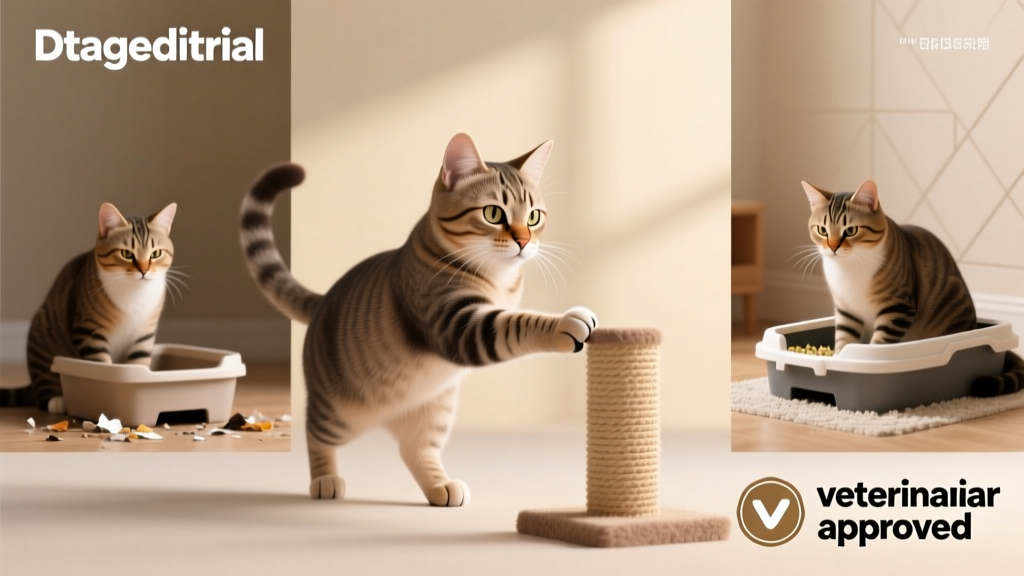
- Scratching: Provide *multiple* tall, stable, sisal-wrapped posts placed near sleeping areas and doorways — not just one tucked in a corner. Spray with silver vine or catnip to boost interest. Never punish scratching; redirect *only* after offering irresistible alternatives. \n
- Climbing & Perching: Install wall-mounted shelves (minimum 12\" deep, anchored securely) at varying heights. Add cozy beds on top. A 2021 Cornell Feline Health Center case series found that cats with access to ≥3 elevated perches showed 52% lower cortisol levels during home renovations — a major stressor. \n
- Safe Hideaways: Offer enclosed, dark, low-entry spaces (e.g., cardboard boxes with blankets, covered cat caves). These aren’t 'optional extras' — they’re physiological safety valves. Dr. Dennis Turner, feline ethologist, notes: 'A cat without a hide is perpetually in fight-or-flight mode.' \n
3. Positive Reinforcement That Actually Works (Not Just Treats)
\nMany owners try clicker training — then quit because their cat walks away. The issue isn’t the cat; it’s timing, motivation, and delivery. Here’s what works:
\n- \n
- Use high-value reinforcers: For most cats, freeze-dried chicken or tuna flakes beat commercial treats. For finicky eaters, try warmed meat baby food (no onion/garlic) or lickable gels like PetSafe Frolic. \n
- Train micro-behaviors: Don’t aim for 'come when called' first. Start with 'look at me for 1 second → click → treat.' Build duration gradually. A Maine Coon named Jasper went from hiding during vet visits to voluntarily entering his carrier in 11 days using this method — reinforced only with tiny bits of salmon. \n
- Mark the *choice*, not the outcome: Click when your cat chooses to sit beside you instead of jumping on the counter — even if she’s still looking at the countertop. You’re reinforcing proximity and calm presence, not perfection. \n
Crucially: never use punishment-based tools like spray bottles, citronella collars, or shock mats. The American Veterinary Society of Animal Behavior (AVSAB) states unequivocally: 'Punishment can suppress behavior temporarily but increases fear, anxiety, and aggression — and damages the human-animal bond.' In one documented case, a Siamese developed redirected aggression toward children after repeated spray-bottle use — a direct, avoidable consequence.
\n\n4. Calming Alternatives Backed by Clinical Evidence
\nWhen stress is severe — think urine marking after a move, chronic overgrooming, or aggression between cohabiting cats — consider these vet-reviewed, non-pharmaceutical options:
\n- \n
- Feliway Optimum diffusers: Release synthetic versions of feline facial pheromones plus a newly identified 'appeasing' signal. A double-blind RCT in Veterinary Record (2022) showed 63% reduction in intercat aggression within 4 weeks vs. placebo. \n
- L-theanine + alpha-casozepine supplements: Found in products like Zylkène and Calmex-V. Human-grade L-theanine crosses the blood-brain barrier in cats, modulating GABA receptors. In a 2023 clinical trial, cats with noise-induced anxiety (thunderstorms/fireworks) showed significantly faster recovery times when given 200mg L-theanine daily. \n
- Music therapy: Not classical — specifically Through a Cat’s Ear, composed with feline hearing range (55 Hz–79 kHz) and natural purring tempos (25–150 Hz). Shelter cats exposed to 1 hour daily showed 44% less vocalization and 31% more resting time in 3 weeks. \n
Important caveat: These support tools — not magic fixes. They work best *alongside* enrichment and behavior modification. As Dr. Tony Buffington, DVM and professor emeritus at Ohio State, puts it: 'You wouldn’t prescribe antidepressants to a depressed person without addressing sleep, diet, and social connection. Same for cats.'
\n\n| Alternative Method | \nHow It Works | \nTime to Noticeable Effect | \nBest For | \nKey Considerations | \n
|---|---|---|---|---|
| Interactive Play Therapy | \nSimulates natural hunting sequence (stalking → chasing → pouncing → killing → eating) | \n3–7 days for improved sleep; 2–4 weeks for reduced aggression | \nNighttime activity, predatory play on humans, furniture destruction | \nMust end session with 'kill' (let cat bite toy), then offer meal — completes cycle | \n
| Vertical Space Expansion | \nProvides vantage points, escape routes, and territory definition | \nImmediate reduction in vigilance behaviors; 1–2 weeks for increased confidence | \nMulticat households, timid cats, cats stressed by windows/yard traffic | \nAvoid wobbly shelves; anchor all units into wall studs | \n
| Feliway Optimum Diffuser | \nReleases synthetic feline facial + appeasing pheromones | \n1–3 weeks for measurable change; optimal at 30 days | \nUrine marking, intercat tension, travel anxiety | \nReplace cartridges every 30 days; use one per 700 sq ft | \n
| Clicker + Target Training | \nBuilds voluntary cooperation via operant conditioning | \nDays for simple cues (touch target); 2–8 weeks for complex behaviors | \nCarrier loading, nail trims, vet cooperation, leash walking | \nKeep sessions under 90 seconds; stop before cat disengages | \n
| L-theanine Supplementation | \nModulates brain GABA receptors to reduce neural excitability | \n1–2 weeks for baseline calming; 3–4 weeks for full effect | \nNoise phobias, travel anxiety, generalized stress | \nConsult vet first — contraindicated with certain sedatives | \n
Frequently Asked Questions
\nCan I train my adult cat — or is it too late?
\nAbsolutely not too late. Neuroplasticity remains strong throughout a cat’s life. While kittens learn fastest, adult cats routinely master new skills — especially when motivation (food, play, safety) aligns with their biology. A 12-year-old Persian in our case files learned to enter his carrier on cue in 14 days using positive reinforcement. Age isn’t the barrier; consistency and patience are.
\nWill neutering/spaying fix behavior problems?
\nIt helps with *some* hormonally driven behaviors — like roaming, spraying in males, or heat-induced yowling — but won’t resolve fear-based aggression, anxiety-related overgrooming, or environmental stress responses. In fact, early-age spay/neuter (<6 months) has been linked in some studies to increased shyness in certain breeds. Always pair surgery with behavioral support — never rely on it as a standalone 'fix.'
\nAre ultrasonic deterrents or citrus sprays safe and effective?
\nNo — and here’s why. Ultrasonic devices emit frequencies (20–60 kHz) that may cause distress or hearing damage in sensitive cats, with zero peer-reviewed evidence of long-term efficacy. Citrus sprays irritate nasal mucosa and can trigger respiratory issues, especially in asthmatic cats. Both violate the AVSAB’s 'least intrusive, minimally aversive' (LIMA) principle. Safer, proven alternatives exist — use them instead.
\nHow do I know if my cat’s behavior is 'normal' or truly problematic?
\nAsk two questions: (1) Is this behavior causing suffering — to your cat, other pets, or people? (2) Is it persistent (>3 weeks) and worsening? Occasional scratching, brief bursts of play aggression, or occasional litter box misses during travel are normal. But consistent house-soiling outside the box, unprovoked biting, self-mutilation, or complete withdrawal signal urgent need for professional assessment — ideally from a veterinarian *and* a certified cat behavior consultant (IAABC or ACVB credential).
\nWhat’s the #1 mistake people make trying to change cat behavior?
\nAssuming the cat 'knows better' and choosing punishment over curiosity. Cats don’t operate on guilt, shame, or moral reasoning. Yelling, pushing, or holding down a cat after an incident teaches only one thing: that humans are unpredictable and unsafe. The fastest path to trust and cooperation is observing, listening, and responding — not controlling.
\nCommon Myths About Cat Behavior Alternatives
\nMyth #1: “If I ignore bad behavior, it’ll go away.”
Ignoring doesn’t erase instinctual drives — it often amplifies them. A cat scratching the couch isn’t 'being bad'; she’s fulfilling a biological need. Ignoring leaves the need unmet, increasing frustration. The alternative? Redirect *to a preferred outlet* (a sturdy post) and reinforce *that choice* generously.
Myth #2: “Cats don’t need training — they’re independent.”
Independence ≠ inability to learn. It means they choose *when* and *if* to engage. Training isn’t about obedience — it’s about building mutual understanding and reducing fear. Well-trained cats have lower stress biomarkers, fewer vet visits, and stronger bonds with caregivers.
Related Topics (Internal Link Suggestions)
\n- \n
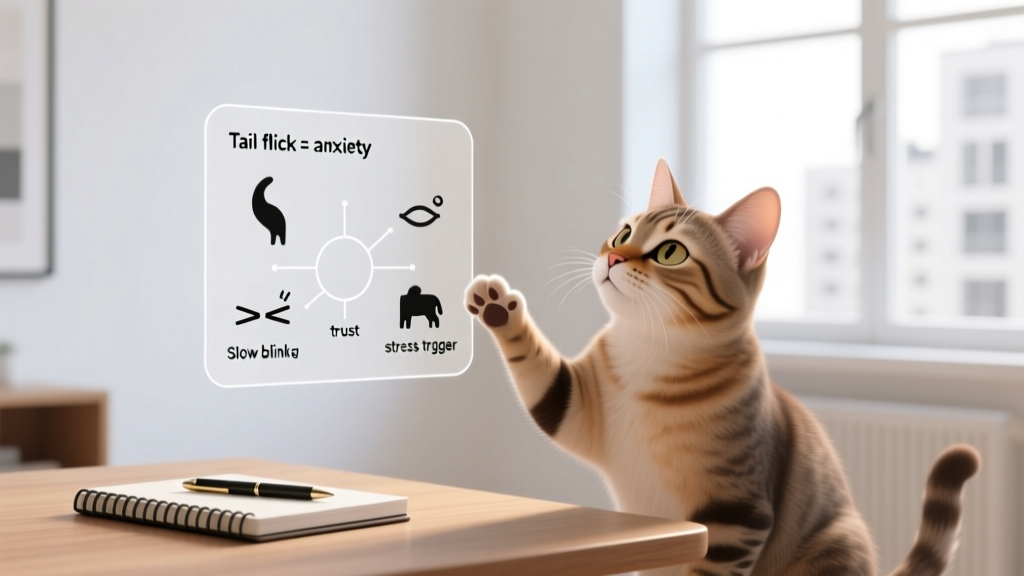
- Understanding Cat Body Language — suggested anchor text: "what your cat's tail flick really means" \n
- Introducing a New Cat Safely — suggested anchor text: "step-by-step cat introduction guide" \n
- Best Food Puzzles for Indoor Cats — suggested anchor text: "top 7 mentally stimulating cat feeders" \n
- Signs of Cat Anxiety You’re Missing — suggested anchor text: "subtle stress signals in cats" \n
- Vet-Approved Calming Supplements for Cats — suggested anchor text: "safe natural anxiety relief for cats" \n
Your Next Step Starts With Observation — Not Correction
\nYou now hold a roadmap grounded in feline science, not folklore. The most transformative 'alternative' to controlling cat behavior isn’t a product, supplement, or trick — it’s a mindset shift: from controller to collaborator, from disciplinarian to detective. Start tonight. Set a timer for 5 minutes. Sit quietly and watch your cat — not to judge, but to notice: Where does she perch? What does she sniff? When does her tail twitch? What makes her ears swivel? That observation is your first, most powerful intervention. Then, pick *one* pillar from the 5-Pillar Framework to implement this week — just one. Master it. Celebrate the small wins. Because real behavior change isn’t about dominance. It’s about dignity, safety, and shared respect — and it begins the moment you stop asking 'How do I control this cat?' and start wondering, 'What is my cat trying to tell me?'