Cat Paw Pulling at Your Shirt: Attention Signal
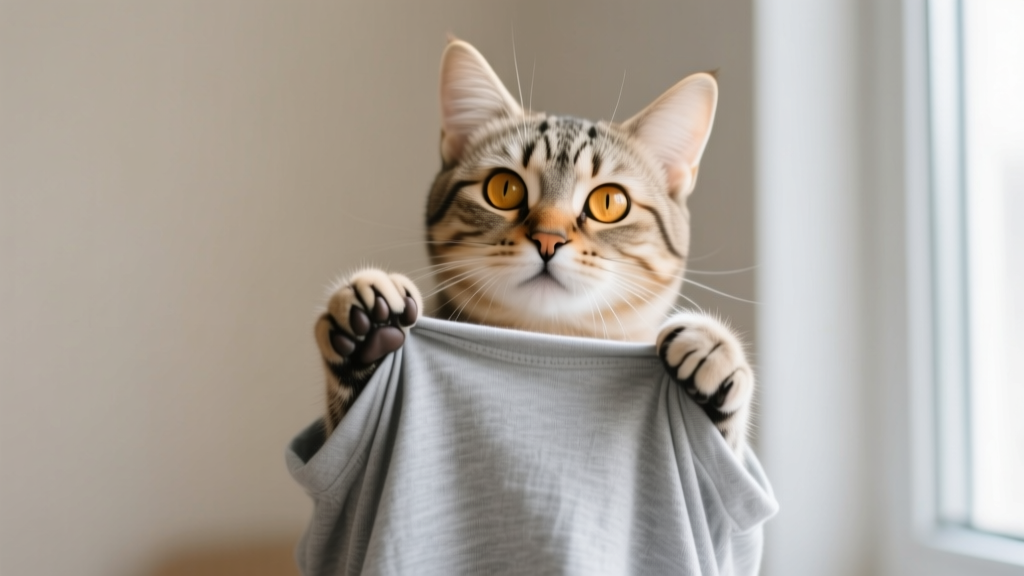
You’re standing in the kitchen, trying to make coffee with one eye open. Your cat winds around your ankles like a fuzzy scarf, then—just as you reach for the mug—there’s a soft tug on your shirt. Not a scratch, not a swat. A deliberate little paw hooking the fabric and pulling you closer, like your cat is saying, “Excuse me, you forgot something important… me.”
If you’ve ever been “grabbed” by a cat paw at the hem of your shirt, sleeve, or even your pant leg, you’re in good company. This behavior is common, surprisingly communicative, and often very sweet. It can also be mildly annoying when you’re late for work and your cat is determined to negotiate a cuddle contract.
So what’s really going on when your cat pulls at your shirt? It’s more than random clinginess—think of it as a tactile, cat-style tap on the shoulder.
Why Cats Pull at Your Shirt (The Evolutionary Backstory)
Cats are excellent at getting what they want without making a big fuss—until they decide to make a big fuss. Shirt-pulling sits in the middle: it’s direct, physical, and hard to ignore, but it’s not inherently aggressive.
From an evolutionary perspective, cats are both predators and (at times) prey. That means they’re wired to communicate efficiently and stay alert. In the wild, a mother cat and her kittens rely heavily on touch. Kittens knead and paw at their mother’s belly to stimulate milk flow. They also use paws to explore, steady themselves, and get attention in a crowded pile of siblings.
That early “pawing to engage” can carry into adulthood—especially in cats who are people-focused, social, or a bit persistent. Add to that the fact that domestic cats have learned we humans respond quickly to physical cues. A meow might be ignored. A paw on your shirt? That gets results.
In short: your cat is using a tool they trust—their paws—to communicate with a big, sometimes-distracted primate.
A Context-by-Context Breakdown: What’s Prompting the Shirt Pull?
Not all shirt-tugs mean the same thing. The key is to look at the full “body language sentence,” not just the paw.
1) The “Follow Me” Tug
What it looks like: Your cat hooks your shirt and steps backward, or pulls and then walks a few steps away while looking back at you.
Common scenario: You’re at your desk. Your cat tugs your sleeve, then trots toward the food bowl or the bedroom.
What it usually means: “I want you to come with me.” This can be about food, a closed door, an empty water bowl, a toy stuck under the couch, or an urgent desire for you to witness something extremely important (like a sunbeam).
2) The “Pet Me Right Here, Right Now” Tug
What it looks like: Paw reaches out, grabs fabric, pulls you closer; cat stays put and may lift their head or lean into you.
Common scenario: You’re scrolling on your phone. Your cat politely escalates from sitting nearby to physically reeling you in.
What it usually means: Social contact request. Often paired with purring, slow blinks, or head-butting.
3) The “Don’t Leave” Tug
What it looks like: You stand up, and your cat immediately paws at your shirt or pant leg, sometimes with a soft meow.
Common scenario: You put on shoes. Your cat appears out of nowhere like a tiny bouncer, grabbing your jeans.
What it usually means: A protest (gentle) or mild separation anxiety. Some cats also do this when their routine is about to change.
4) The “Play With Me, Human” Tug
What it looks like: Quick pawing or tugging, followed by a playful bounce, sideways hop, or a sprint.
Common scenario: You’re folding laundry. Your cat grabs the hanging shirt and launches into a dramatic wrestling match with the fabric.
What it usually means: Play invitation. Many cats aim for moving cloth because it mimics prey movement. (And yes, your hoodie string is “prey.”)
5) The “I’m Overstimulated” Tug (Less Common, But Important)
What it looks like: A firmer grab, ears rotating back, tail flicking, skin twitching, or a quick nip after the tug.
Common scenario: You’ve been petting for a while. Suddenly your cat grips your sleeve like they need you to stop.
What it usually means: “That’s enough.” Some cats use their paws to control distance when they’re done with touch.
What Shirt-Pulling Reveals About Your Cat’s Mood
This behavior can be a window into your cat’s emotional state—especially if you notice patterns.
- Affectionate and secure: Gentle tugging paired with purring, relaxed ears, slow blinking, or a soft body posture often signals comfort and bonding. Your cat is confident enough to ask.
- Needy or under-stimulated: Repeated shirt pulling during quiet times (especially in high-energy cats) can mean boredom. Think of it as your cat’s version of, “I’m not busy enough and this is becoming your problem.”
- Frustrated: If tugging happens near mealtimes or closed doors, it can reflect impatience. Cats are routine lovers—and excellent schedule enforcers.
- Uncertain or anxious: If your cat only does this during changes (guests, suitcases, moving furniture), it may be a comfort-seeking behavior.
One helpful rule: gentle tug + relaxed body = request. tug + tense body = boundary or stress.
Related Behaviors You Might Also Notice
Shirt pulling often travels with a whole constellation of “attention strategies.” If your cat tugs at your clothes, you may also see:
- Soft paw taps (“pat-pat”): A lighter version of the tug, often used as a polite request.
- Kneading: Especially on blankets, your lap, or—if your cat is bold—your stomach at 2 a.m.
- Head bunting: That affectionate forehead press that leaves you feeling chosen.
- Love bites: Gentle nibbling that can mean affection or rising arousal (watch the rest of the body language).
- Doorway herding: Cats may guide you with body blocking, meows, and strategic positioning. Shirt tugging is simply a more hands-on approach.
- Object presenting: A toy dropped at your feet, sometimes with a proud chirp: “I brought the activity to you.”
When Shirt-Pulling Is Normal (and When It Might Be a Concern)
Most of the time, shirt pulling is normal social behavior—a cat finding a reliable way to communicate. That said, consider a deeper look if you notice any of the following:
Normal and adorable
- Occurs at predictable times (meals, bedtime, greeting you home)
- Is gentle and doesn’t break skin
- Cat’s body language is relaxed (neutral tail, ears forward, soft face)
- Stops once you respond (pet, play, refill water)
Potential concern
- Sudden onset in an older cat who didn’t do it before
- Escalation into biting, scratching, or frantic clinging
- Compulsive repetition that doesn’t stop even after attention
- Other behavior changes like hiding, reduced appetite, increased vocalization, litter box issues, or aggression
If shirt pulling comes with new anxiety signs or seems driven and distressed, consider a vet check to rule out pain, cognitive changes, or medical discomfort. Cats sometimes “act needy” when they don’t feel well—and their signals can be subtle.
How to Respond (Without Accidentally Training a Tiny Tyrant)
You can absolutely enjoy this behavior while also shaping it into something that works for both of you.
1) Reward polite requests
If the tug is gentle, respond calmly: a few pets, a soft “hi,” or a short play session. You’re reinforcing that soft communication works.
2) Don’t reinforce demanding behavior by accident
If your cat yanks hard or escalates (claws out, frantic pulling), pause. Stand still, gently disengage, and wait for a calmer moment. Then reward the calmer version. Cats learn fast: “When I do X, human does Y.” Make sure you like Y.
3) Give your cat an alternative signal
Teach a replacement behavior like:
- Targeting: your cat touches your hand with their nose to request attention
- Sitting on a mat: “Go to your spot” for treats or petting
- Bringing a toy: if the tug is play-motivated
4) Increase daily “hunt” play for chronic shirt-tuggers
Many attention tugs happen because your cat’s daily schedule lacks enough stalking/chasing. Try two short play sessions (5–10 minutes) with a wand toy, ideally before meals. This satisfies natural predatory rhythms: hunt → eat → groom → rest.
5) Protect your clothes (and your skin) without punishing
Avoid yelling or physical punishment. It can make some cats fearful and others more intense. If claws are involved, keep nails trimmed and provide scratch posts. If your cat tends to snag, choose sturdier fabrics when you know they’re in a clingy mood (yes, cats have clingy moods).
Fun Facts and Research-Adjacent Tidbits
- Cats use multimodal communication: They combine touch, scent, sound, and body language. Shirt pulling is touch-based communication, often paired with scent marking (rubbing) and visual cues (staring, slow blinking).
- Domestic cats are expert human-readers: Studies suggest cats can learn to associate human actions and routines with outcomes (like feeding). Physical behaviors that reliably get results tend to stick.
- Paws are precision tools: Cats have sensitive paws used for exploring textures and controlling objects. Grabbing fabric is a controlled, intentional motion—more “handshake” than “attack” when done gently.
- Your reaction matters more than you think: Even negative attention (talking loudly, waving arms) can be rewarding to some cats. Calm, consistent responses are the fastest way to shape the behavior.
FAQ: Cat Paw Pulling at Your Shirt
Why does my cat pull at my shirt and then run away?
This is often an invitation to play or a “follow me” signal. Some cats also do a quick tug as a game starter—like tagging you and sprinting off. Look for playful body language: bouncy movement, sideways hops, bright eyes, tail up or twitching at the tip.
Is shirt pulling a sign my cat is bonded to me?
Often, yes. Gentle physical contact-seeking can indicate trust and comfort. Your cat has learned you’re a safe social partner who responds to their cues.
My cat only pulls my shirt at night—why?
Nighttime tugging commonly means your cat is under-stimulated, on a different sleep schedule, or has learned that nighttime gets a big reaction. A late-evening play session followed by a small meal can help shift their routine.
How do I stop my cat from snagging my clothes with claws?
Trim nails regularly, provide appealing scratch options, and reward gentle pawing. If the behavior happens during excitement, redirect to a toy. If snagging is frequent, teach a replacement cue like nose-targeting or sitting on a mat for attention.
Does this mean my cat has separation anxiety?
Not automatically. Many cats tug when they want interaction or predict a routine change. If it’s paired with distress signs (excessive vocalizing when you leave, destructive behavior, inappropriate urination, overgrooming), talk to your vet or a certified cat behavior professional.
Is it okay to encourage shirt pulling?
If it’s gentle and you enjoy it, it can be a sweet communication habit. Just be consistent: respond to polite tugs, and avoid rewarding rough pulling. You can also guide it toward more “clothing-safe” behaviors with training and play.
That little paw tug is your cat choosing a direct line to you—one that says, “I know how to get your attention, and I trust you enough to ask.” With a bit of context-reading and a few smart habits, you can turn shirt pulling into an even clearer, kinder conversation between species.
Does your cat do the sleeve-hook, the dramatic pant-leg grab, or the gentle “excuse me” paw? Share your story (and your cat’s funniest attention tactics) with the Cat Lovers Base community at catloversbase.com.