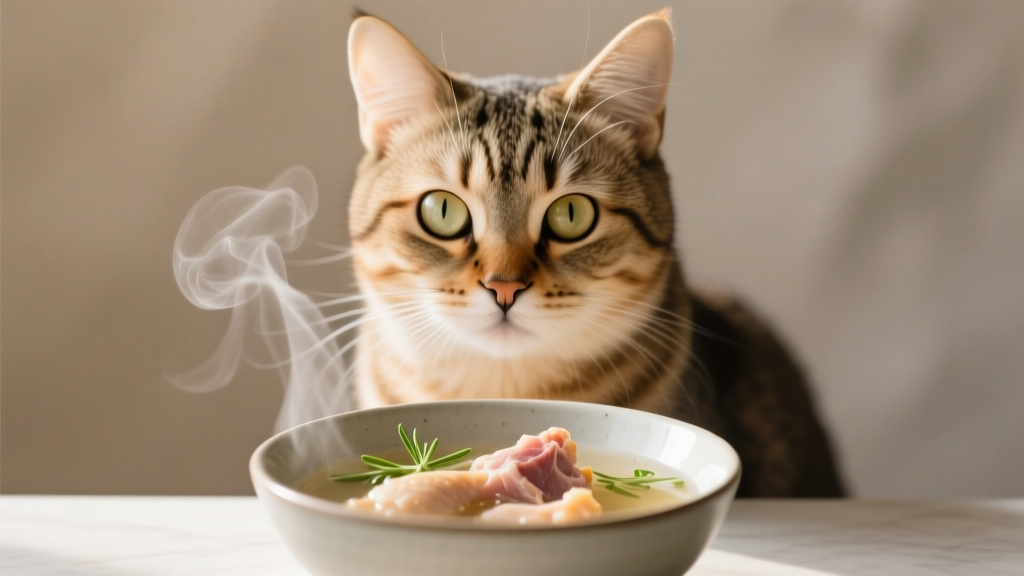
Why Cats Prefer Food With Bone Broth Added
Is bone broth safe for cats every day?
Often yes when it’s specifically made for cats (or homemade with no onion/garlic and minimal salt), and used in small amounts as a topper. Daily use should still be discussed with your veterinarian if your cat has kidney disease, heart disease, urinary problems, or pancreatitis risk.
Can I use store-bought chicken broth from the grocery store?
Usually not recommended. Many contain onion/garlic powder, “natural flavors,” or high sodium. Choose products labeled for cats or make a plain, unseasoned broth at home with veterinary guidance on ingredients and storage.
Does bone broth count as water intake?
Yes—most of it is water, so it contributes to overall fluid intake. It should not replace fresh drinking water availability, and it shouldn’t be used to justify feeding an otherwise inappropriate diet.
Will bone broth help my cat’s joints or skin?
It may provide some collagen/gelatin, but it’s not a reliable treatment. For arthritis or skin disease, evidence-based options include veterinary diets, omega-3 supplementation (proper dosing), weight management, and vet-prescribed medications when needed.
My cat won’t eat without broth now—what should I do?
Reduce reliance gradually. Use a measured amount, then slowly taper over 1–2 weeks while improving the base diet’s palatability (freshness, warming, switching to a more aromatic wet food). If appetite is truly poor or there’s weight loss, vomiting, or lethargy, consult your veterinarian promptly.
How much broth is too much?
There’s no universal number because broth recipes vary. A practical rule: keep toppers small (for many cats, a teaspoon or two per meal) and ensure the main diet remains complete and balanced. If stools soften, vomiting occurs, or your cat gains weight, scale back and talk to your vet.
Bone broth can be a smart tool for hydration and meal enthusiasm when you choose a cat-safe product, keep amounts modest, and prioritize complete nutrition. For any cat with medical conditions or on a therapeutic diet, your veterinarian is the best partner for tailoring toppers safely.
For more practical, science-based feeding tips, explore additional feline nutrition guides on catloversbase.com.