Cat Food Protein Quality: Biological Value Comparison
1) Why protein quality matters for cat health
Protein is the nutritional cornerstone of a cat’s diet. Cats don’t just need “enough” protein on a label—they need high-quality protein that delivers the right amino acids in forms their bodies can digest and use efficiently. Protein quality affects:
- Lean muscle maintenance (especially in senior cats and indoor cats that lose muscle easily)
- Healthy skin and coat (dull coat and excessive shedding can be tied to poor amino acid intake)
- Immune function and wound healing
- Heart and eye health (taurine deficiency can be dangerous)
- Weight management (better protein quality can support satiety and lean mass)
When protein quality is low, cats may need to eat more to meet amino acid needs, producing more stool and potentially straining metabolism. When protein quality is high, the body can use more of what it consumes—often translating into better body condition and overall vitality.
2) Scientific background: cats are obligate carnivores
Cats are obligate carnivores, meaning their physiology is adapted to a prey-based diet. Several biological traits make protein quality uniquely critical for them:
- High baseline protein requirement: Cats have higher protein needs than dogs because they continuously use amino acids for energy and essential metabolic pathways.
- Essential amino acid requirements: Cats require dietary taurine, arginine, methionine, and others in adequate amounts. Arginine deficiency, even briefly, can cause serious illness.
- Limited ability to adapt to low-protein intake: Cats don’t downshift protein metabolism as effectively as omnivores when dietary protein drops.
- Animal tissues naturally match feline amino acid needs: Muscle meat and organs generally provide amino acid profiles closer to what cats evolved to eat.
Modern commercial cat foods are typically formulated to meet AAFCO or FEDIAF nutrient profiles, but two foods can meet the same minimum protein percentage and still differ dramatically in biological value, digestibility, and amino acid availability.
3) Protein quality explained: biological value, digestibility, and amino acids
“Protein quality” is not one single number. It’s best understood as a combination of:
- Amino acid profile: Does the protein source provide all essential amino acids in adequate proportions for cats?
- Digestibility: How much of that protein is actually digested and absorbed?
- Biological value (BV): How efficiently absorbed amino acids are utilized for body protein synthesis and maintenance, rather than wasted and excreted.
Biological value (BV): what it tells you—and what it doesn’t
Biological value is traditionally defined as the proportion of absorbed protein that becomes incorporated into body proteins. A higher BV generally indicates a better match to the animal’s amino acid needs and more efficient utilization.
Limitations of BV for cat owners:
- BV is often measured under specific study conditions and may not reflect a whole commercial diet.
- Processing, ingredient combinations, and fiber levels can affect real-world digestibility and amino acid availability.
- Cats are not humans; values cited for humans may not translate directly.
Even with limitations, BV is still useful for comparing protein sources conceptually—especially when combined with digestibility and amino acid completeness.
Key point: “Crude protein” is not the same as “usable protein”
Pet food labels list crude protein, which measures nitrogen content (a proxy for protein). It does not tell you:
- How digestible that protein is
- Whether essential amino acids meet feline requirements
- How much protein comes from animal vs. plant sources
4) Biological value comparison: common protein sources in cat food
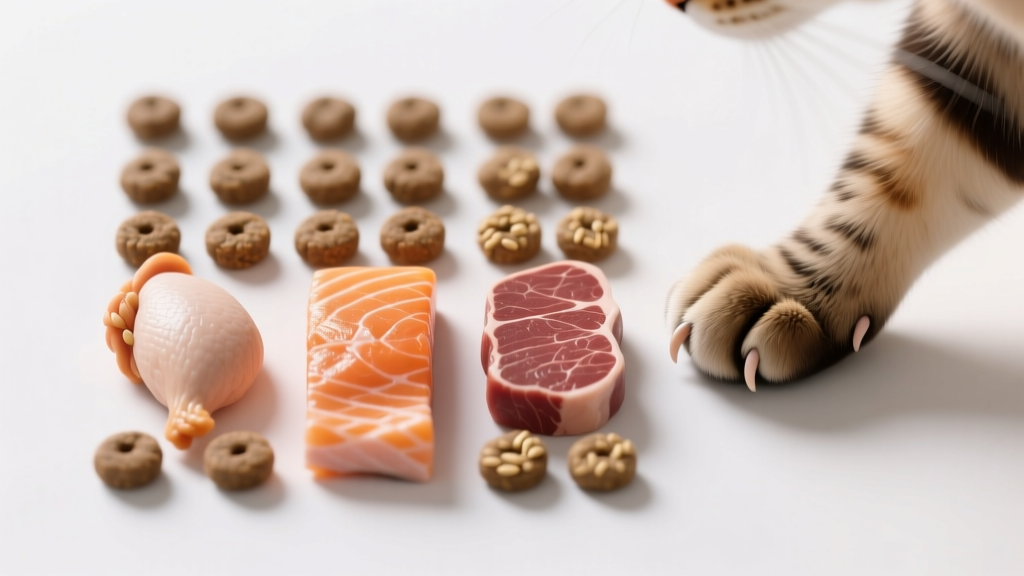
Exact BV values can vary by study method and processing. The comparisons below reflect general trends seen in nutrition science: animal-derived proteins tend to have higher BV and digestibility for carnivores compared to most plant proteins.
| Protein source | Typical BV ranking (general) | Why it ranks there | Notes for cat owners |
|---|---|---|---|
| Egg (whole egg/egg protein) | Very high | Excellent amino acid balance and digestibility | Often used as a “gold standard” reference protein; useful in some therapeutic/limited-ingredient diets |
| Muscle meats (chicken, turkey, beef, pork) | High | Highly digestible; strong essential amino acid profile | Look for named meats; quality depends on processing and overall formula |
| Fish (salmon, whitefish, tuna) | High | Good amino acid profile; often highly palatable | Best as part of variety; some fish-heavy diets may be higher in certain minerals or fats—ask your vet if feeding long-term |
| Organ meats (liver, heart) | High (varies) | Nutrient-dense; provides taurine (especially heart) and other micronutrients | Great in balanced formulas; too much liver in homemade diets can unbalance vitamin A |
| Meat meals (chicken meal, turkey meal) | Moderate to high | Concentrated animal protein; digestibility varies with quality control | Not automatically “bad”; can be a solid protein source in kibble |
| Plant proteins (pea protein, corn gluten meal, soy) | Lower (general) | Less ideal amino acid proportions for cats; lower digestibility in many cases | Not “toxic,” but plant-heavy formulas may need careful amino acid supplementation; watch stool quality and body condition |
Why animal proteins typically perform better for cats
- Amino acid match: Animal tissues more closely align with feline amino acid needs.
- Higher digestibility: Many animal proteins are easier for cats to digest than concentrated plant proteins.
- Natural taurine and arginine availability: Taurine is present in animal tissues; plant ingredients don’t supply taurine.
5) Practical recommendations: how to pick higher-protein-quality cat foods
Use these practical checkpoints when selecting a diet. They focus on protein quality, not just the crude protein percentage.
Label and formula checklist
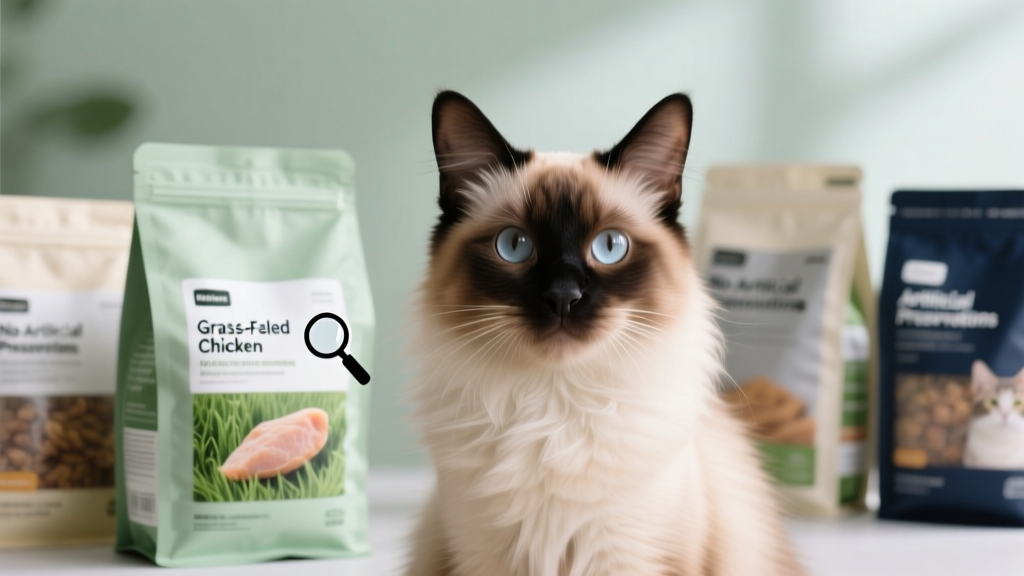
- Look for named animal proteins early in the ingredient list: “Chicken,” “turkey,” “salmon,” “beef,” or “chicken meal” are clearer than vague terms.
- Check for a complete-and-balanced statement: Choose foods formulated to meet AAFCO or FEDIAF for your cat’s life stage.
- Prioritize foods with clear amino acid support: Taurine should be listed in most commercial cat foods; that’s a good sign of feline-focused formulation.
- Be cautious with plant-protein boosting: Some foods raise crude protein using pea protein or gluten meals. That can inflate the number without improving amino acid suitability for cats.
- Consider digestibility clues: Consistently large stools, strong odor, or frequent soft stool can suggest the diet isn’t being utilized efficiently (discuss with your vet).
Wet vs. dry: protein quality and overall nutrition
| Approach | Potential pros | Potential cons | Best fit for |
|---|---|---|---|
| Wet food (canned/pouch) | Often higher animal ingredient inclusion; higher moisture supports urinary health and hydration | Cost; dental benefits are limited unless paired with dental care; some formulas still use plant proteins | Cats prone to urinary issues, constipation, low thirst drive, weight management plans (with vet guidance) |
| Dry food (kibble) | Convenience; cost-effective; stable for free-feeding (though not ideal for all cats) | Lower moisture; some formulas rely more on starch/plant protein; may be calorie-dense | Homes needing convenience, cats that prefer kibble, mixed-feeding households |
| Mixed feeding (wet + dry) | Balances convenience and moisture; allows higher-quality protein intake via wet meals | Requires portion control to avoid overfeeding | Many cats and owners; practical compromise |
For many cats, a mixed-feeding plan with at least one wet meal daily is a practical way to improve overall nutrition without forcing an all-or-nothing change.
6) Common mistakes and misconceptions to avoid
- Myth: “High protein % automatically means high quality.”
Fact: A high crude protein number can come from less suitable plant proteins. Focus on animal-forward formulas and complete-and-balanced standards. - Myth: “By-products are always bad.”
Fact: Certain organ meats are biologically appropriate for cats and can be nutrient-rich. What matters is quality control, sourcing, and overall formulation. - Myth: “Grain-free means better protein.”
Fact: Grain-free diets often replace grains with peas, lentils, or potatoes, which can increase plant protein content. Grain-free is not a guarantee of higher animal-protein quality. - Mistake: Choosing foods designed for dogs or “all life stages” without thinking.
Cats have unique amino acid requirements. Life-stage specificity can matter (kitten vs. adult vs. senior). - Mistake: Home-preparing diets without a complete recipe.
Unbalanced homemade diets can be deficient in taurine, calcium, essential fatty acids, or vitamins. Work with a veterinarian or a board-certified veterinary nutritionist for recipes.
7) How to implement changes safely (transition tips)
Changing protein sources or moving from plant-heavy to more animal-forward diets can trigger GI upset if done abruptly. Use a gradual transition and monitor results.
Suggested transition schedule (7–10 days)
| Days | Old food | New food |
|---|---|---|
| 1–3 | 75% | 25% |
| 4–6 | 50% | 50% |
| 7–8 | 25% | 75% |
| 9–10 | 0% | 100% |
What to monitor during the switch
- Appetite and energy
- Stool quality (too soft, too hard, mucus)
- Vomiting (more than once or twice needs a vet call)
- Water intake and urination patterns
- Body weight (weekly weigh-ins are helpful)
If your cat has a history of pancreatitis, inflammatory bowel disease, urinary disease, or food allergies, consult your veterinarian before changing diets.
8) Special considerations: age, health conditions, activity level
Kittens (growth phase)
- Need energy-dense, highly digestible protein and fat to support growth.
- Choose foods labeled complete and balanced for growth or all life stages from reputable manufacturers.
Adult cats
- Focus on maintaining lean mass: high-quality, animal-based proteins help support muscle and healthy weight.
- Indoor cats may need tighter calorie control; protein quality supports satiety and body composition when calories are managed.
Senior cats
- Many seniors lose muscle (sarcopenia). High-quality, highly digestible protein is often beneficial.
- Don’t assume seniors need low protein automatically. Needs depend on health status.
- Senior cats should have regular veterinary exams and lab work to guide diet decisions.
Chronic kidney disease (CKD)
- Nutrition for CKD is about more than protein amount; it’s also about phosphorus management and overall formulation.
- Many cats with CKD do better on veterinary therapeutic kidney diets. These typically use high-quality protein in controlled amounts and limit phosphorus.
- Always consult your veterinarian before changing protein levels in a cat with CKD.
Food allergies or sensitivities
- True food allergy often involves proteins (chicken, beef, fish), but GI sensitivity can mimic allergy.
- Diagnosis usually requires a veterinarian-guided elimination diet trial (often hydrolyzed or novel protein).
- Don’t switch proteins repeatedly without a plan; it can make troubleshooting harder.
Highly active cats vs. sedentary cats
- Active cats may thrive on higher calorie intake, but protein quality still matters most for muscle repair and maintenance.
- Sedentary cats benefit from protein-forward diets with careful calorie control to prevent weight gain.
9) FAQ: Cat food protein quality and biological value
1) What is “biological value” in simple terms?
Biological value is a way of describing how efficiently the body uses absorbed protein. Higher BV generally means the protein provides amino acids in proportions that the body can use with less waste.
2) Is fish the best protein for cats because it’s high BV?
Fish can be a high-quality protein, but “best” depends on the full diet. Some cats do great with fish-containing diets, while others do better with poultry or mixed proteins. Feeding fish exclusively long-term isn’t automatically ideal for every cat. If you’re considering a fish-heavy diet, ask your veterinarian—especially if your cat has urinary issues, thyroid disease concerns, or food sensitivities.
3) Are plant proteins bad for cats?
Plant proteins aren’t inherently “bad,” but they’re generally less biologically appropriate for obligate carnivores and may be less digestible or less complete in essential amino acids. Many commercial foods use some plant ingredients, but cats typically do best when the diet’s protein is primarily animal-based and the formula is complete and balanced.
4) How can I tell if my cat is doing well on a protein source?
Look for stable body weight, good muscle tone, a glossy coat, normal stools, and consistent energy. Signs that warrant a vet visit include chronic vomiting, diarrhea, itching, dandruff, weight loss, or changes in urination. Your vet can also assess body condition score, muscle condition score, and run lab work when needed.
5) Does “human-grade” mean higher protein quality?
Not necessarily. “Human-grade” refers to sourcing and processing standards, not automatically amino acid balance or digestibility for cats. A complete-and-balanced formulation from a reputable company is more meaningful than a marketing term.
6) Should I choose single-protein diets to improve protein quality?
Single-protein diets can help when investigating food sensitivities, but they’re not automatically higher quality. Many cats do well on mixed-protein diets that broaden amino acid intake and improve palatability. If you suspect an allergy, consult your veterinarian before changing foods.
Practical takeaways
- Protein quality for cats is about amino acids + digestibility + biological value, not just crude protein percentage.
- Animal-based proteins (egg, poultry, meat, organs, fish) generally provide higher biological value for obligate carnivores.
- Choose complete and balanced diets for your cat’s life stage, and be cautious of protein percentages boosted mainly by plant isolates.
- Transition slowly and involve your veterinarian—especially if your cat is senior, overweight, or has kidney, GI, or urinary disease.
If you want to keep optimizing your cat’s diet with practical, science-based guidance, explore more feline nutrition guides on catloversbase.com—and bring your questions to your veterinarian for individualized recommendations.