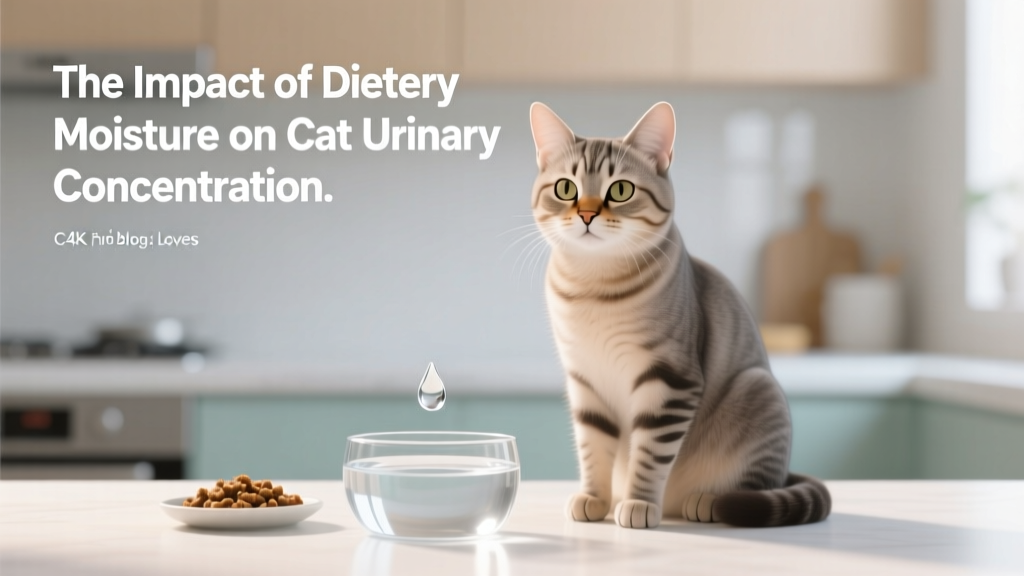
The Impact of Dietary Moisture on Cat Urinary Concentration
How can I tell if my cat’s urine is too concentrated?
You can’t reliably tell by looking at the litter box alone. The clinical tool is a urinalysis measuring urine specific gravity (USG) along with pH and crystal presence. Ask your vet about periodic urine checks if your cat has a urinary history.
Does wet food prevent urinary crystals and stones?
Wet food can reduce urine concentration, which lowers risk, but it does not guarantee prevention. Crystal/stones depend on water intake, urinary pH, mineral balance, genetics, and other factors. Cats with recurrent issues often need a therapeutic urinary diet and veterinary monitoring.
Can I just add water to kibble instead of switching to wet food?
Adding water can help if your cat eats the soaked food consistently and you manage food safety. Some cats refuse the texture. It’s a reasonable transition tool, but many cats do best with at least some complete-and-balanced wet food in the routine.
Are cat water fountains worth it?
For some cats, yes. A fountain can increase voluntary water intake, especially for cats attracted to moving water. Clean it frequently to prevent slime buildup and filter issues. A fountain is helpful, but dietary moisture is often more impactful.
Is drinking “a lot” always a good sign?
Not necessarily. Increased drinking and urination can indicate medical problems (diabetes, kidney disease, hyperthyroidism). If you notice a sudden change, schedule a veterinary visit.
Should I use urinary supplements (cranberry, DL-methionine, etc.)?
Use caution. Supplements can change urine chemistry and may be inappropriate depending on the type of crystals or your cat’s health status. Discuss any supplement with your veterinarian before starting.
Vet partnership reminder: If you’re planning significant diet changes—especially for a cat with urinary history, kidney disease, diabetes, or prior obstruction—consult your veterinarian (or a board-certified veterinary nutritionist) to tailor moisture, calories, and formulation safely.
If you want more practical feeding strategies, label-reading tips, and evidence-based nutrition guidance, explore the other cat nutrition guides on catloversbase.com.