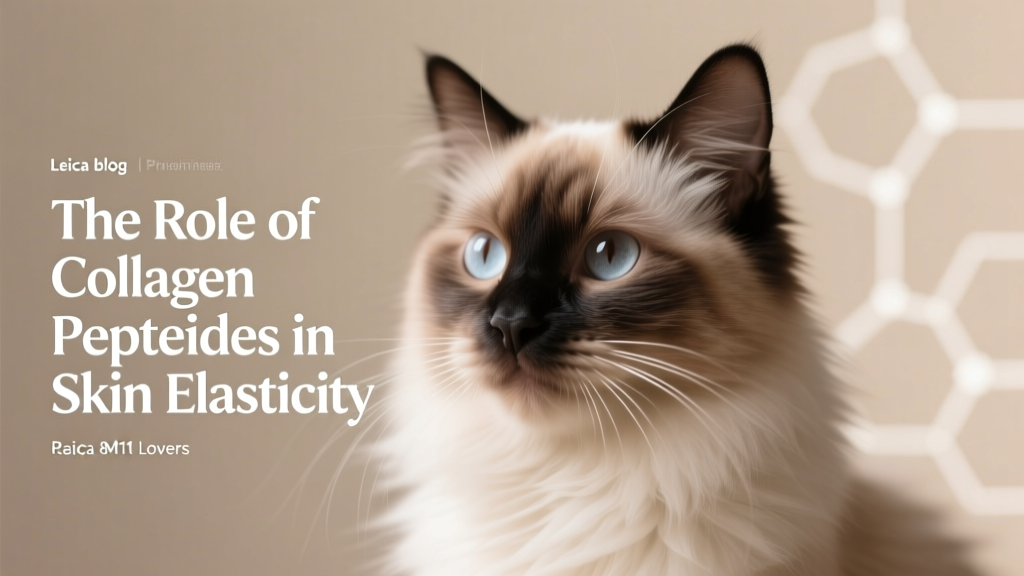
The Role of Collagen Peptides in Cat Skin Elasticity
1) Why this topic matters for cat health
Your cat’s skin is more than a “covering.” It’s a protective organ that regulates hydration, blocks pathogens, supports temperature control, and anchors the hair coat. When skin elasticity declines, you may notice flaking, a dull coat, slower healing from minor scrapes, or skin that seems less resilient. While parasites, allergies, infections, and endocrine disease are common culprits behind skin problems, nutrition strongly influences how well the skin barrier performs day to day.
Collagen peptides are increasingly marketed for skin and coat support. Cat owners see terms like “hydrolyzed collagen,” “collagen peptides,” and “marine collagen” and wonder whether these products actually help. The goal of this guide is to explain where collagen peptides may fit into an evidence-based feline diet, what they can and can’t do, and how to use them safely without overlooking more important nutritional priorities.
2) Scientific background: feline nutritional needs and obligate carnivore biology
Cats are obligate carnivores. Their metabolism is adapted to a prey-based diet that’s naturally high in animal protein and fat, with limited carbohydrate. This biology matters because skin and connective tissue depend on a steady supply of amino acids, essential fatty acids, vitamins, and minerals—nutrients most reliably provided by animal-sourced ingredients in appropriate balance.
- Higher protein requirements: Cats have higher baseline protein needs than omnivores, and they are less able to “downshift” protein metabolism when intake is low. Adequate dietary protein supports skin turnover, hair growth, immune function, and wound repair.
- Essential fatty acids: Linoleic acid (omega-6) is essential for cats and plays a major role in skin barrier function and coat quality. Some omega-3s (EPA/DHA) can support skin comfort and inflammation modulation.
- Key micronutrients: Zinc, copper, vitamin A, vitamin E, and B vitamins help maintain normal keratinization, barrier integrity, and antioxidant defenses.
- Hydration matters: Many cats have a naturally low thirst drive. Skin and coat health can worsen with chronic mild dehydration, especially in cats eating only dry food.
Skin elasticity is influenced by the dermis (the deeper layer of skin), which contains a scaffold of collagen and elastin fibers embedded in a gel-like matrix. Nutrition supports the building blocks and the cellular machinery that maintains this structure.
3) Collagen peptides and skin elasticity: what the science suggests
What collagen is (and what “collagen peptides” means)
Collagen is a family of structural proteins. In skin, collagen fibers provide tensile strength and help the skin “snap back” after being stretched. Over time, collagen is naturally broken down and rebuilt. Collagen peptides are collagen proteins that have been hydrolyzed into smaller fragments (peptides), which are generally easier to digest and absorb than intact collagen.
How collagen peptides might work in the body
When a cat eats collagen peptides, they are digested into amino acids and small peptides. These components can contribute to the body’s general amino acid pool (supporting protein synthesis throughout the body). Some research in other species suggests certain collagen-derived peptides may act as bioactive signals that influence collagen production in connective tissue.
Where the evidence is strongest: The best research for collagen peptide benefits is in humans and some dogs, especially for joint and skin parameters. Direct, high-quality studies in cats are more limited. That doesn’t mean collagen is useless for cats—just that claims should be interpreted cautiously and prioritized behind proven foundations: complete and balanced nutrition, parasite control, and management of allergies or disease.
What collagen can and can’t do for feline skin
- Potential benefits (when the rest of the diet is solid): May support dermal structure, contribute amino acids needed for skin repair, and complement a skin-supportive diet in cats with mild dryness or age-related coat changes.
- Not a cure for: Flea allergy dermatitis, food allergy, atopic dermatitis, ringworm, bacterial/yeast infections, hyperthyroidism, diabetes, or chronic kidney disease-related coat changes. These need veterinary diagnosis and treatment.
- Not a substitute for complete protein: Collagen is not a “complete” protein source because it is low in certain essential amino acids (notably tryptophan) and lacks the full amino acid profile cats require.
Collagen vs. the nutrients most associated with skin barrier quality
For most cats, the nutrients with the strongest link to skin and coat improvements are:
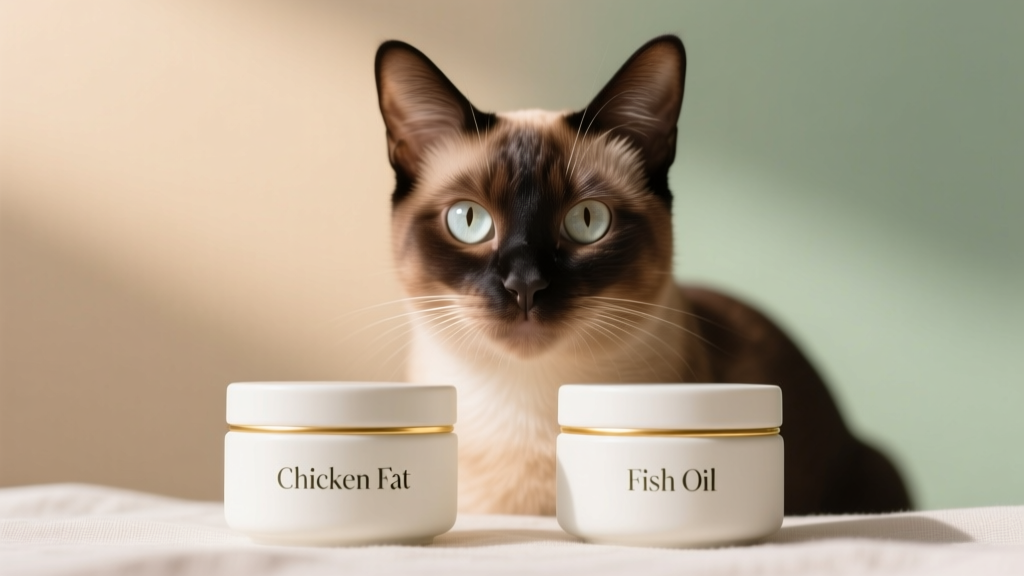
- Linoleic acid (omega-6): Found in poultry fat and certain animal fats used in complete diets.
- EPA/DHA (omega-3s): Found in fish oil or algae-derived sources; can help some inflammatory skin conditions.
- Zinc and vitamin E: Support barrier function and antioxidant protection.
- Adequate overall protein and calories: Undereating and low protein intake commonly show up as coat and skin issues.
Collagen peptides can be a “nice-to-have” adjunct, but they’re rarely the main fix unless the cat’s baseline diet was marginal or the cat has increased needs due to age or recovery.
Safety and quality considerations
- Species-appropriate formulation: Use supplements formulated for pets when possible, with transparent labeling.
- Purity and testing: Choose products with batch testing for contaminants (especially with marine collagen, where heavy metal concerns may be raised depending on sourcing).
- Calories count: Supplements add calories. For overweight cats, even small extras can matter over time.
- Palatability: Some cats dislike the smell of marine-based products; gradual introduction can help.
4) Practical recommendations for cat owners
If your goal is improved skin elasticity and a healthier coat, prioritize steps in this order:
- Rule out medical causes: Fleas, mites, infections, dental disease, pain, endocrine disorders, and allergies can all show up as coat/skin decline. A vet exam saves time and prevents “supplement masking.”
- Feed a complete and balanced diet: Look for “complete and balanced” statements that meet AAFCO or equivalent standards for your cat’s life stage.
- Optimize hydration: Consider adding wet food, a cat water fountain, or water added to food if your cat tolerates it.
- Target proven skin nutrients: Ensure the base diet provides adequate essential fatty acids and micronutrients; use fish oil only with vet guidance to avoid over-supplementation and GI upset.
- Use collagen peptides as an add-on: Consider them for senior cats, cats recovering from skin injury, or cats with mild coat changes when the foundational diet is already strong.
| Priority | Action | Why it helps skin elasticity |
|---|---|---|
| Highest | Vet exam + parasite control | Stops ongoing inflammation/irritation that breaks down the skin barrier |
| High | Complete & balanced diet (life-stage appropriate) | Provides amino acids, fatty acids, vitamins/minerals needed for skin turnover |
| High | Hydration support (wet food, added water) | Supports overall tissue hydration and barrier function |
| Medium | Omega-3 support (vet-guided) | May reduce inflammatory skin discomfort and support coat quality |
| Optional | Collagen peptides (vet-guided) | Provides collagen-related amino acids/peptides that may support dermal structure |
5) Comparison of options/products/approaches
| Approach | Pros | Cons | Best for |
|---|---|---|---|
| Complete wet food with animal-based protein and fat | Hydration support; typically high palatability; balanced nutrients | Higher cost; some cats are picky; dental tartar control not guaranteed | Cats with dry skin, low water intake, seniors |
| Complete dry food + added water/broth (no onion/garlic) | Convenient; can increase moisture intake | Some cats refuse; broth must be cat-safe; still less moisture than wet | Cats transitioning from dry-only diets |
| Fish oil (EPA/DHA) supplement | Evidence-supported for some inflammatory skin conditions | GI upset risk; calorie dense; dosing matters; oxidation risk | Itchy/inflamed skin under vet guidance |
| Collagen peptides (bovine/chicken/marine) | Generally easy to mix into food; may support connective tissue | Cat-specific evidence limited; not a complete protein; quality varies | Adjunct for seniors or mild skin/coat support |
| “Skin & coat” veterinary diets | Designed for dermatologic support; controlled fatty acids and nutrients | Cost; may require strict feeding for results | Chronic skin issues, allergy workups (vet-directed) |
Choosing a collagen peptide product: Look for clear ingredient sourcing, minimal additives, and straightforward dosing instructions. Avoid products with sweeteners (including xylitol), essential oils, or herbal blends not tested for cats. If your cat is on a prescription diet, ask your veterinarian before adding anything.
6) Common mistakes and misconceptions to avoid
- Myth: “Collagen is a complete protein for cats.”
Reality: Collagen lacks a full essential amino acid profile for cats. It should never replace a complete and balanced diet. - Myth: “If the coat is dull, just add supplements.”
Reality: Parasites, allergies, dental disease, arthritis (reduced grooming), and endocrine disorders often cause coat changes. Supplements won’t fix an untreated underlying issue. - Mistake: Using human collagen gummies or flavored powders.
Many contain sweeteners, flavorings, or additives not appropriate for cats. Stick to simple, pet-appropriate products and vet guidance. - Mistake: Overdoing fatty acid supplements alongside collagen.
Fish oil and other fats can cause diarrhea, pancreatitis risk in susceptible pets, and unwanted weight gain if overdosed. More is not better. - Myth: “Dry food causes all skin problems.”
Reality: A complete and balanced dry diet can maintain skin health for many cats. The bigger issue is often low moisture intake, calorie imbalance, or an unrelated medical condition.
7) How to implement changes safely (transition tips)
Cats can be sensitive to diet changes. Sudden switches may lead to vomiting, diarrhea, or food refusal. Use a gradual transition and monitor stool quality, appetite, and skin comfort.
- Diet transition schedule: Mix increasing amounts of the new food over 7–10 days (longer for sensitive cats).
- Introduce collagen slowly: Start with a very small pinch mixed into food once daily, then increase toward the product’s recommended amount only if stools remain normal.
- One change at a time: If you add wet food, fish oil, and collagen all at once, you won’t know what helped—or what caused GI upset.
- Track results: Take weekly photos of the coat, note dandruff/greasiness, grooming habits, and any scratching. Expect changes in coat quality to take several weeks because hair growth cycles are slow.
- Stop and call your vet if: persistent vomiting/diarrhea, refusal to eat for 24 hours, facial itching/swelling, hives, or sudden severe scratching occurs.
8) Special considerations (age, health conditions, activity level)
- Kittens: Prioritize growth-formulated complete diets. Avoid unnecessary supplementation unless directed by a veterinarian; nutrient imbalance risk is higher during growth.
- Adult indoor cats: Focus on weight management, hydration, and essential fatty acid adequacy. Over-supplementation can quietly add calories.
- Senior cats: Seniors may have reduced grooming (arthritis), reduced digestion efficiency, or chronic disease that shows up as coat decline. Collagen peptides may be a reasonable adjunct, but a vet check (including dental and thyroid evaluation) is often the bigger “skin and coat” intervention.
- Overweight cats: Prioritize calorie control first. Choose any supplements with minimal calories and measure amounts carefully.
- Food allergies or suspected intolerances: Don’t add collagen during an elimination diet unless your veterinarian approves. Collagen sourced from beef/chicken/fish could complicate interpretation.
- Kidney disease (CKD): Protein and phosphorus management can be complex. Adding protein-based supplements may conflict with a therapeutic renal plan. Only add collagen with your vet’s guidance.
- Diabetes: Weight and calorie control matter. Most collagen peptides are low carb, but any add-on should be counted and discussed with the vet managing insulin/monitoring.
9) FAQ
1) Will collagen peptides make my cat’s skin more elastic?
They may help as a supportive add-on, especially in older cats or cats with mild coat changes, but they are not a guaranteed fix. The biggest drivers of skin resilience are overall diet quality (complete amino acids, essential fatty acids), hydration, and controlling parasites/allergies. If skin elasticity is noticeably reduced or the coat suddenly worsens, schedule a veterinary exam.
2) How long does it take to see results from collagen or skin-focused nutrition changes?
Expect several weeks. Skin cells and hair follicles need time to respond to improved nutrition. Many owners reassess at 6–8 weeks, taking photos and tracking dandruff, shine, shedding, and scratching.
3) Is bone broth the same as collagen peptides?
No. Bone broth varies widely in protein/collagen content and may contain ingredients unsafe for cats (onion/garlic, excess salt). Collagen peptides are a more standardized source. If you use broth, choose a cat-safe, unsalted product and treat it as a hydration aid rather than a reliable collagen supplement.
4) Are marine collagen peptides better than bovine or chicken collagen for cats?
Not necessarily. “Better” depends on quality control, purity, and your cat’s tolerance and allergy history. Some cats dislike the odor of marine products. If your cat has suspected fish sensitivity, avoid marine collagen. Your veterinarian can help you choose the safest option for your cat’s situation.
5) Can I give my cat collagen every day?
Many products are intended for daily use, but dosing should be conservative and based on your vet’s guidance and the manufacturer’s directions. Watch for GI upset and remember that supplements add calories. If your cat is on a therapeutic diet or has chronic disease, consult your veterinarian before daily supplementation.
6) What are the most common nutritional reasons for dry, less-elastic skin in cats?
In practice, it’s usually one (or more) of these: low moisture intake, poor-quality or unbalanced diet, inadequate essential fatty acids, calorie restriction/underfeeding, or underlying disease. Supplements work best after these fundamentals are addressed.
Talk with your veterinarian before making significant diet changes or adding supplements—especially for kittens, seniors, or cats with medical conditions. For more practical, science-based feeding guidance, explore the nutrition library on catloversbase.com.