Cat Food Fat Sources: Chicken Fat vs Fish Oil Benefits
1) Is chicken fat bad for cats?
No. In reputable, complete cat foods, chicken fat is typically a digestible energy source and a provider of omega-6 linoleic acid that supports skin barrier health. The bigger issue is overall calorie intake and whether the diet is balanced for your cat’s needs.
2) Should I give my cat fish oil every day?
Not automatically. Many complete diets already include omega-3s. Daily fish oil supplementation should be based on your cat’s diet, symptoms, body condition, and any medical issues. Ask your veterinarian for a product and dose, especially if your cat is on medications or has a chronic disease.
3) What’s better for a shiny coat: chicken fat or fish oil?
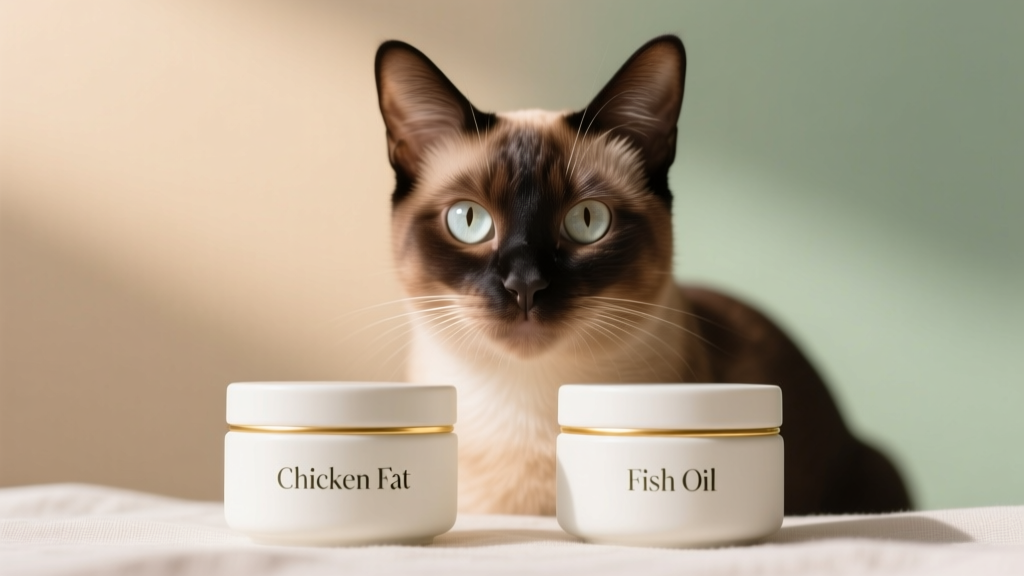
Both can help, in different ways. Chicken fat contributes linoleic acid for skin barrier function and palatability, while fish oil provides EPA/DHA that can help reduce inflammatory skin issues. For a truly “shiny coat,” you also need adequate protein, overall calories, and good parasite control.
4) My cat gets diarrhea with fish oil—what should I do?
Stop the supplement and contact your veterinarian. Diarrhea is commonly caused by too high a dose, a sudden increase, or a rancid product. Your vet may recommend a smaller dose, a different formulation, or focusing on a diet that includes omega-3s without additional supplementation.
5) Does “salmon” on the label mean the food has enough omega-3s?
Not necessarily. The label name often reflects flavor or a primary protein source, not the level of EPA/DHA. Check the ingredient list for “fish oil” and look for manufacturer nutrition details about omega-3 content when available.
6) Can cats be allergic to chicken fat?
True food allergies are typically reactions to proteins. Highly refined fats contain minimal protein, but trace amounts may still be present depending on processing. If your veterinarian suspects a chicken-related reaction, follow a vet-guided elimination diet rather than guessing.
Veterinary guidance matters: If you’re considering changing fat sources, adding fish oil, or switching diets for a health reason (itching, arthritis, kidney concerns, weight changes), consult your veterinarian or a board-certified veterinary nutritionist for individualized advice.
If you want more practical, science-based feeding help, explore our other nutrition guides on catloversbase.com for label-reading tips, life-stage feeding strategies, and evidence-informed supplement advice.