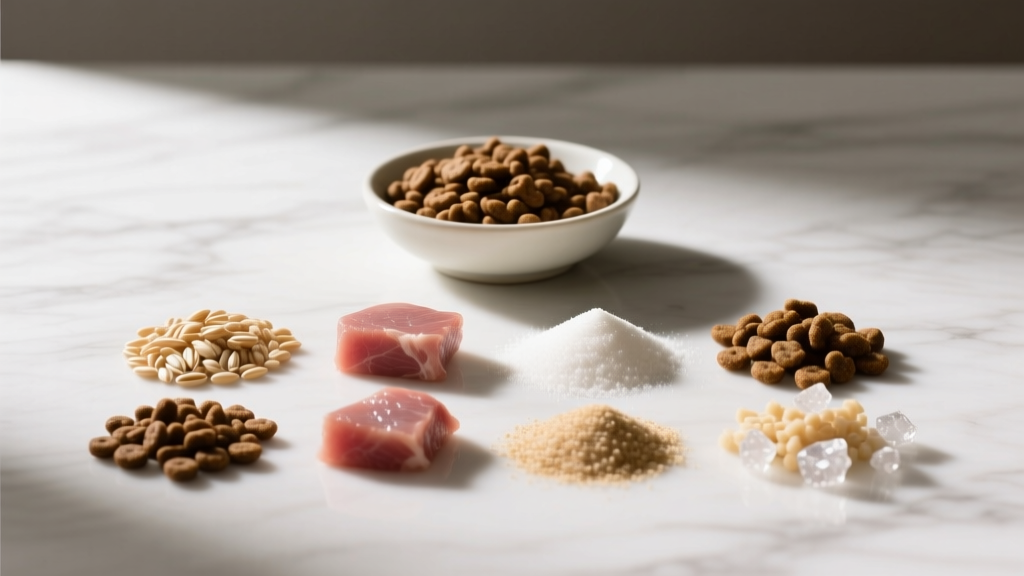
Cat Food Ingredient Splitting: Hidden Sugar and Starch Trick
1) Why this topic matters for cat health
Most cat owners scan an ingredient list looking for obvious red flags like “sugar,” “corn,” or “by-products.” What many don’t realize is that pet food labels can make a high-carbohydrate formula look meatier than it really is. A common tactic is ingredient splitting: breaking one carbohydrate source into multiple smaller-sounding ingredients (for example, “peas,” “pea protein,” “pea flour,” “pea starch”) so each appears lower on the ingredient list. The result can be a diet that’s heavier in starch (and sometimes added sugars) than a cat’s body is designed to handle.
Why does this matter? Because long-term diet composition influences:
- Weight and body fat (calorie density, satiety, carb load)
- Blood sugar regulation, especially in cats prone to diabetes
- Urinary health (water intake, mineral balance, urine concentration)
- Digestive comfort (fiber type, fermentability)
- Skin and coat (adequate animal protein and essential fatty acids)
Ingredient splitting doesn’t automatically mean a food is “bad,” but it can hide how starch-heavy a recipe is. Understanding this labeling trick helps you pick diets that align with feline biology and your cat’s specific needs.
2) Scientific background: feline nutritional needs and obligate carnivore biology
Cats are obligate carnivores. Their metabolism evolved to run primarily on nutrients found in animal tissues. Modern veterinary nutrition research recognizes that cats can digest and use carbohydrates, but their nutrient requirements remain strongly animal-protein centered.
Key biological points
- High protein needs: Cats have a higher dietary protein requirement than omnivores. They continuously use amino acids for energy and maintenance.
- Essential nutrients found in animal ingredients: taurine, arachidonic acid, vitamin A (preformed retinol), and vitamin D are naturally abundant in animal tissues. Cats cannot efficiently synthesize enough of some of these from plant precursors.
- Limited “carb-adapted” metabolism: Cats have lower activity of some carbohydrate-handling enzymes compared with omnivores and tend to maintain blood glucose via gluconeogenesis (making glucose from amino acids and glycerol) even when carbs are present.
- Water economy: Many cats have a low thirst drive. Wet foods can support hydration, which is relevant for urinary tract health.
Bottom line: For many cats, diets that are protein-forward and not excessively starch-based are an easier fit for their physiology, while still meeting complete-and-balanced standards.
3) Detailed analysis: what ingredient splitting is and how it hides sugar/starch
How pet food ingredients are listed
In the U.S. (AAFCO labeling model) and similarly in other regions, ingredients are listed in descending order by weight before cooking. This detail matters because:
- Fresh meats contain a lot of water, so they can weigh more before cooking.
- Dry ingredients (meals, flours) are more concentrated.
- Splitting one source into several ingredients can push each individual item lower on the list, making meat appear more dominant.
What ingredient splitting looks like
A label might read (example format):
- Chicken, chicken meal, peas, pea protein, pea starch, chickpeas, lentils…
Even if “peas” aren’t the second ingredient, the combined pea components can represent a large portion of the formula’s calories and dry matter.
Common “split” carbohydrate families
| Ingredient family | How it may be split on labels | What it contributes |
|---|---|---|
| Peas/legumes | Peas, pea flour, pea protein, pea fiber, pea starch, lentils, chickpeas | Starch, plant protein, fiber |
| Corn | Ground corn, corn gluten meal, corn meal, corn flour, corn starch | Starch, plant protein |
| Rice | Brewers rice, rice flour, rice starch, brown rice | Starch (often highly digestible) |
| Potato | Potatoes, potato protein, potato starch, potato flour | Starch, some plant protein |
| Tapioca/cassava | Tapioca starch, cassava, tapioca flour | Starch (often used as binder) |
| Wheat | Wheat flour, wheat gluten, wheat middlings, wheat starch | Starch, plant protein |
Where “hidden sugar” fits in
Added sugar is less common in cat foods than in many human foods, but it appears in some products for palatability, texture, or browning. It may show up as:
- Sucrose, sugar
- Corn syrup, caramel
- Molasses
- Dextrose
More often, the “sugar effect” comes from starches that rapidly break down into glucose. While not identical to spooning sugar into food, high-starch formulations can still increase post-meal blood glucose and insulin demand in some cats.
Evidence-based perspective: carbs aren’t “toxic,” but quantity and context matter
Veterinary nutrition science supports that cats can digest cooked starches and use glucose. Many commercial diets include carbohydrates for structure (especially kibble) and affordability. The concern is not that any carbohydrate is automatically harmful—it’s that ingredient splitting can disguise how carb-heavy a food is, making it harder for owners to choose a diet appropriate for:
- Overweight cats who need higher satiety per calorie
- Cats with diabetes or prediabetes risk factors
- Cats prone to lower urinary tract issues who benefit from higher moisture intake
How to estimate carb content (without guessing from the ingredient list)
Ingredient lists are imperfect for assessing carbohydrate level. A more reliable method is to look at the Guaranteed Analysis and calculate an estimate of carbohydrate by difference. When possible, use dry matter basis comparisons (especially when comparing wet vs dry). Many brands will provide a “typical nutrient analysis” or exact % carbohydrate on request.
| What to look for | Why it helps | What to do if it’s missing |
|---|---|---|
| Calories (kcal/cup or kcal/can) | Prevents overfeeding and “healthy food” weight gain | Ask the manufacturer or check their website |
| Moisture % | Needed to compare wet vs dry fairly | Use typical values (wet ~75–82%, dry ~8–12%) only as rough estimates |
| Ash % and fiber % | Improves carb-by-difference estimate | Request “as fed” and “dry matter” nutrient profile |
| AAFCO statement (“complete and balanced”) | Confirms nutritional adequacy for life stage | Avoid foods without an adequacy statement unless vet-directed |
4) Practical recommendations for cat owners
- Don’t judge by the first 3 ingredients alone. Ingredient splitting can make multiple starch sources look minor.
- Count the repeats. If you see a “family” (pea/legume, potato, rice, corn) listed in multiple forms, treat it as one combined ingredient group.
- Prioritize animal protein sources. Look for named animal proteins (chicken, turkey, beef, salmon) and meals (chicken meal) as primary protein sources in dry foods; in wet foods, look for meat-first formulas with minimal starchy thickeners.
- Use moisture strategically. If your cat has urinary issues, constipation tendency, or low water intake, discuss increasing wet food with your veterinarian.
- Ask for the full nutrient profile. Reputable manufacturers provide carbohydrate estimates or detailed “typical analysis.”
5) Comparison of approaches (and when each makes sense)
| Approach | Pros | Cons / watch-outs | Best for |
|---|---|---|---|
| Mostly wet (canned/pouch) | Higher moisture; often lower starch; easier portion control | Cost; dental myths (wet doesn’t “clean teeth”); picky eaters may resist | Urinary-prone cats, cats needing weight control, many indoor cats |
| Mixed wet + dry | Balances budget and hydration; flexible | Dry portion can still drive calorie excess; splitting may hide carbs in dry formulas | Owners transitioning from all-kibble; multi-cat homes |
| Dry-focused (kibble) | Convenient; cost-effective; works with some feeder systems | Typically higher starch; lower moisture; easier to overfeed | Owners who can measure precisely and add water/wet meals |
| Veterinary therapeutic diets | Targeted nutrition for medical issues; strong quality control | May still contain starch depending on the condition; requires vet guidance | Diabetes, kidney disease, urinary crystals, GI disease (vet-directed) |
6) Common mistakes and misconceptions to avoid
- Myth: “If the first ingredient is chicken, it’s a high-meat food.”
Fresh chicken is water-heavy. After cooking, the finished food may rely more on concentrated plant ingredients than the label suggests. - Myth: “Grain-free means low-carb.”
Grain-free foods frequently replace grains with potatoes, tapioca, peas, and lentils—often still high in starch. “Grain-free” is not a carbohydrate guarantee. - Mistake: Ignoring calories.
Even “premium” foods can be calorie-dense. Overfeeding drives obesity more reliably than any single ingredient. - Myth: “Cats don’t need any carbs, so any carb is harmful.”
Cats don’t have a dietary carbohydrate requirement, but they can digest cooked carbs. The practical goal is avoiding unnecessary starch loads for your cat’s situation. - Mistake: Switching foods rapidly to chase a perfect ingredient list.
Frequent abrupt changes can cause vomiting/diarrhea and food aversion.
7) How to implement changes safely (transition tips)
Any diet change should be discussed with your veterinarian, especially if your cat has diabetes, kidney disease, GI disease, urinary issues, or is a senior.
- Transition gradually over 7–10 days (longer for sensitive cats):
- Days 1–3: 75% old + 25% new
- Days 4–6: 50% old + 50% new
- Days 7–9: 25% old + 75% new
- Day 10: 100% new
- Track stool and appetite daily. If vomiting, watery diarrhea, or refusal occurs for more than 24 hours (or immediately in a kitten), contact your vet.
- For kibble-to-wet transitions: Warm wet food slightly, add a teaspoon of warm water, or use a small topper (vet-approved) to improve acceptance.
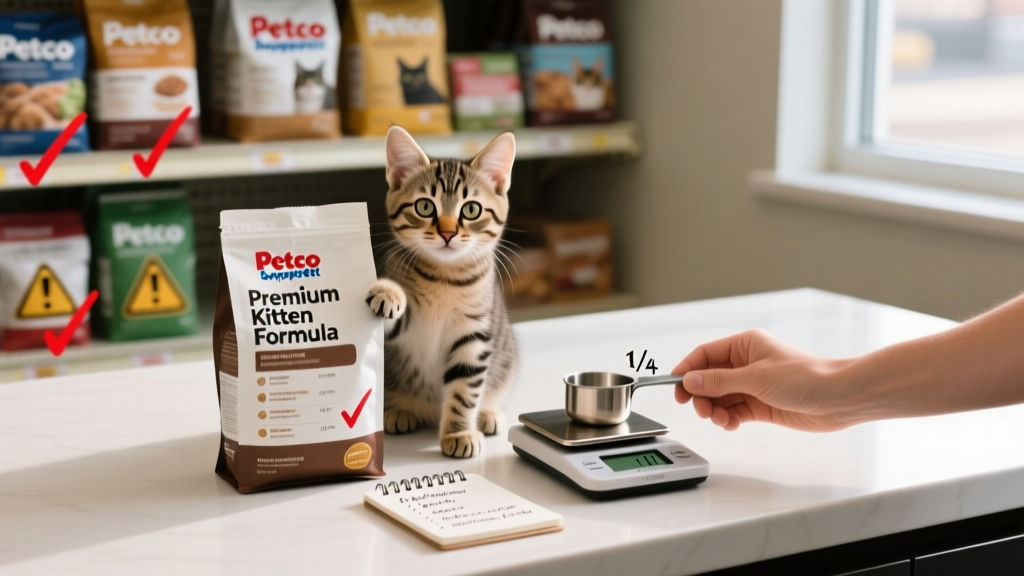
- Measure portions. Use a gram scale for dry food for accuracy.
8) Special considerations (age, health conditions, activity level)
- Kittens: Need energy-dense, complete-and-balanced growth diets with ample protein and fat. Avoid aggressively restricting calories. Ingredient splitting concerns still apply, but growth adequacy is the priority.
- Adult indoor cats: Often benefit from controlled calories and higher satiety. Diets that are protein-forward with moderate fat and not starch-heavy can help maintain lean mass.
- Seniors: Needs vary widely. Some seniors need more calories; others need weight control. Dental issues may make wet food easier. Work with a vet to assess kidney function, muscle condition, and hydration.
- Overweight cats: Weight loss should be gradual to avoid hepatic lipidosis (fatty liver disease). Choose a vet-guided plan emphasizing controlled calories, adequate protein, and realistic feeding routines.
- Diabetes or high-risk cats: Many diabetic cats do better with diets lower in carbohydrate and higher in protein, but insulin doses can need rapid adjustment when food changes. Always coordinate closely with your veterinarian.
- Urinary tract issues (FLUTD, crystals): Moisture intake, urine pH, and mineral balance matter more than single ingredients. Therapeutic diets may be recommended; don’t change away from one without your vet’s approval.
- Highly active cats: May tolerate higher calories and sometimes more dietary carbohydrate without weight gain, but protein adequacy remains central.
FAQ
1) Is ingredient splitting “illegal” or unsafe?
It’s generally legal labeling practice when each ingredient is correctly named and present. The concern is transparency: splitting can make a food appear lower in starch than it is. Safety depends on the overall formulation and whether it’s complete and balanced for your cat’s life stage.
2) How can I tell if a food is truly high in carbs?
The ingredient list alone can’t confirm carbohydrate percentage. Ask the manufacturer for carbohydrate content (as fed and dry matter), or request a typical nutrient analysis. Compare foods using dry matter basis when possible.
3) Are peas and lentils bad for cats?
Not automatically. They can provide fiber and structure, especially in dry diets. The practical issue is quantity and how much they displace animal-based nutrients. If multiple legume fractions appear high on the list, the food may be more plant-heavy than you prefer.
4) Does “no added sugar” mean low-starch?
No. A food can have no added sugar and still be high in starch due to grains, potatoes, tapioca, or legumes. Focus on the overall nutrient profile and calorie control rather than sugar claims alone.
5) Should I feed a raw or homemade diet to avoid starch entirely?
Not without veterinary guidance. Homemade diets frequently become unbalanced without a formulated recipe, and raw diets carry pathogen risks for cats and humans. If you’re interested, consult your veterinarian and ideally a board-certified veterinary nutritionist to design a complete and balanced plan.
6) If my cat seems fine on a split-ingredient kibble, do I need to change?
Not necessarily. If your cat has a healthy body condition, good stool quality, a shiny coat, and your veterinarian is happy with their health markers, the diet may be working. Still, understanding ingredient splitting can help you make informed choices if weight, blood sugar, urinary health, or appetite changes arise.
Veterinary guidance reminder: Cats are individuals. Before making major diet changes—especially for kittens, seniors, or cats with medical conditions—talk with your veterinarian so adjustments can be made safely and in a way that supports your cat’s long-term health.
Want more practical label-reading and cat nutrition guides? Explore the latest articles at catloversbase.com and build a feeding plan you feel confident about.