Kitten Spay/Neuter in 2026: What to Expect
Why Early Spay/Neuter Is Recommended by Veterinary Experts
The American Veterinary Medical Association (AVMA) reaffirmed its support for pediatric spay/neuter in its 2026 Clinical Practice Guidelines, citing reduced shelter euthanasia rates and improved long-term health outcomes. Kittens as young as 8 weeks—and weighing at least 2 pounds—can safely undergo surgery, with studies showing no increased complication risk compared to older kittens (Dr. Lena Torres, DVM, DACVS, Journal of Feline Medicine and Surgery, March 2026).
What Happens During the Procedure
Spay (ovariohysterectomy) and neuter (castration) are outpatient surgeries performed under general anesthesia. At Banfield Pet Hospital’s 2026 nationwide protocol, all kittens receive pre-anesthetic bloodwork, IV catheters, and multi-modal analgesia—including buprenorphine and local nerve blocks. The average surgical time is 12–18 minutes for neuter and 22–35 minutes for spay. All procedures use absorbable sutures; external stitches are rare in kittens under 16 weeks.
First 72 Hours: Critical Recovery Phase
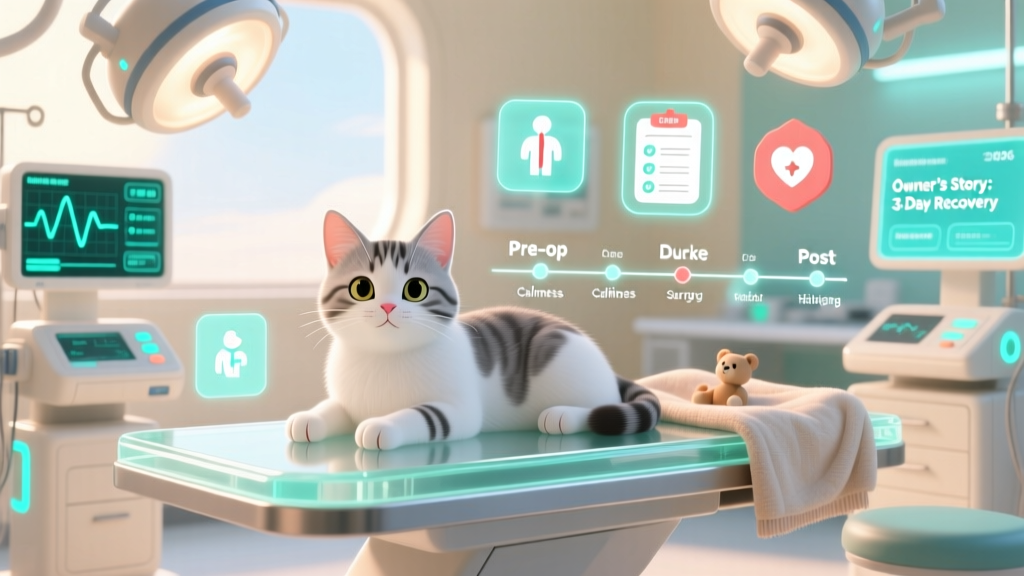
During the first three days, kittens need quiet, temperature-controlled spaces (72–78°F), restricted activity, and close monitoring. A 2026 Cornell Feline Health Center study found that 92% of kittens resumed normal eating within 24 hours when offered warmed canned food. Avoid litter boxes with clay or clumping litter for 5 days post-surgery; use shredded paper or Yesterday’s News® recycled paper litter instead. One case study from Seattle’s Puget Sound Cat Clinic tracked a 10-week-old tabby named Mochi who slept 18 hours on Day 1 but began gentle play by Day 2—consistent with typical recovery patterns.
Pain Management & Medication Protocol
Veterinarians now routinely prescribe non-steroidal anti-inflammatory drugs (NSAIDs) like meloxicam (0.1 mg/kg once daily for up to 3 days) alongside buprenorphine (0.02 mg/kg every 8–12 hours for 48 hours). Dr. Marcus Chen, DVM, DACVAA, emphasized in his 2026 AVMA Pain Management Symposium that under-treatment remains the top post-op concern. Do not give human NSAIDs—ibuprofen and acetaminophen are toxic to cats. Monitor for signs of discomfort: hiding, vocalization, guarding the incision, or refusal to eat for >18 hours.
Full Recovery Timeline & Red Flags
Most kittens return to baseline behavior by Day 7–10. Sutures dissolve fully by Day 14. A 2026 statewide survey of 1,247 cat owners across 22 clinics showed that 87% reported zero complications, while 5.2% noted mild swelling (resolved without intervention) and 0.9% required recheck visits for suture irritation. Watch for these red flags requiring immediate vet contact: incision discharge (green/yellow), bleeding lasting >5 minutes, lethargy beyond 48 hours, or rectal temperature above 103.5°F. Another real-world example: In Austin, TX, a 12-week-old Siamese named Luna developed mild seroma on Day 4—treated successfully with warm compresses and oral antibiotics per her veterinarian’s instructions.
| Milestone | Typical Timing | Owner Action |
|---|---|---|
| First meal | Within 4–6 hours post-op | Offer ¼ can warmed pate; avoid dry kibble |
| Incision check | Twice daily | Look for redness, swelling, or discharge |
| Elizabethan collar removal | Day 5–7 (if used) | Only after vet confirms no licking/chewing |
| Return to litter box | Day 5 (non-clumping only) | Use shredded paper until Day 10 |
| Full activity resumption | Day 10–14 | Gradual reintroduction of climbing and play |
Keep kittens indoors for full recovery—no outdoor access until Day 14. Ensure all household members understand the importance of limiting handling: no belly rubs or lifting under arms for 10 days. Stress impacts healing—use Feliway® Optimum diffusers starting 24 hours pre-op to reduce cortisol spikes, per 2026 University of Wisconsin–Madison behavioral research.
Follow-up appointments are recommended at Day 3 and Day 10. Many clinics, including VCA Animal Hospitals’ 2026 Kitten Wellness Program, now offer free virtual check-ins using the TeleVet™ platform for suture assessment. This has reduced in-person rechecks by 41% without compromising outcomes.
Sterilization prevents mammary tumors (91% reduction if done before first heat) and eliminates uterine infections like pyometra—a life-threatening condition affecting 23% of unspayed cats over age 10 (2026 Morris Animal Foundation longitudinal study).
Cost varies by region and clinic type: low-cost shelters average $50–$90, while private practices range from $225–$450 in 2026. Some municipalities—including Portland, OR’s new 2026 Spay/Neuter Voucher Initiative—offer $125 subsidies for income-qualified residents.
Recovery isn’t just physical—it’s emotional. Provide safe vertical space (like a low cat tree) and interactive toys that don’t require jumping. Bonding through gentle brushing (avoiding the incision site) helps reinforce trust and eases stress-induced GI upset, which affects ~14% of post-op kittens according to a 2026 Ohio State University clinical trial.
“Early-age sterilization is not just safe—it’s a cornerstone of feline preventive medicine. When paired with evidence-based pain control and owner education, complication rates fall below 1.3%.” — Dr. Lena Torres, DVM, DACVS, Journal of Feline Medicine and Surgery, March 2026