How to Take Your Cat’s Temperature at Home (2026)
Why Monitoring Your Cat’s Temperature Matters
A cat’s normal rectal temperature ranges from 100.4°F to 102.5°F (38.0°C–39.2°C) — significantly higher than humans. Even a 2°F elevation can signal infection, inflammation, or stress-related illness. According to the American Association of Feline Practitioners (AAFP), 68% of cats over age 10 show subclinical signs of chronic kidney disease, often accompanied by low-grade fever or temperature instability (AAFP Senior Care Guidelines, 2022).
Recommended Tools and Prep Steps
Use a digital rectal thermometer labeled for pets — such as the Vet-Temp Instant Read Digital Thermometer, which delivers results in 10 seconds. Never use glass mercury thermometers; they’re banned for veterinary use in the U.S. since 2017 per FDA guidance. Before use, lubricate the tip with water-soluble jelly (e.g., KY Jelly), not petroleum-based products. Have one person gently restrain the cat while another handles the thermometer.
Step-by-Step Rectal Measurement
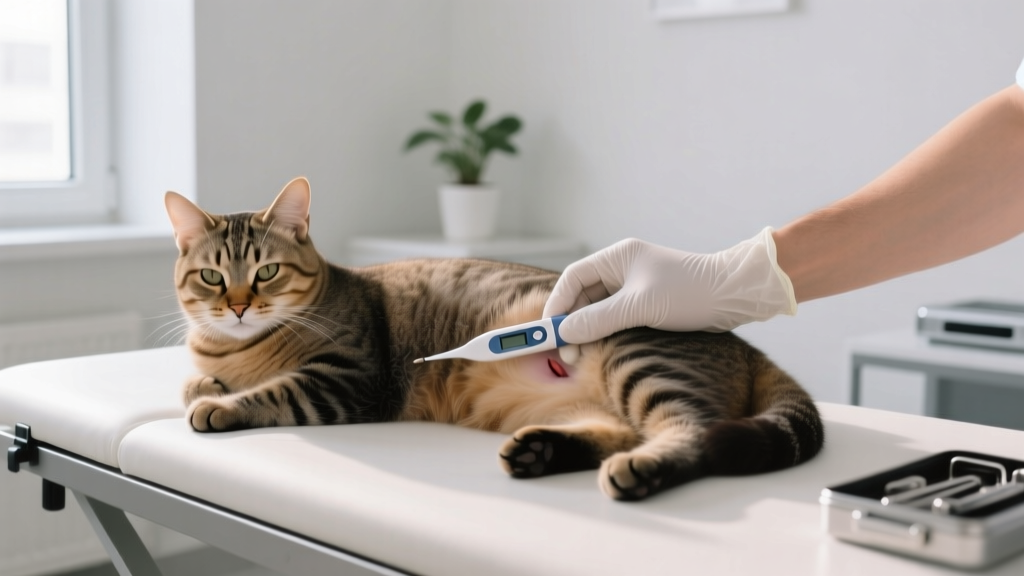
Position your cat sideways or upright on a non-slip surface. Gently lift the tail and insert the lubricated thermometer 0.5–1 inch into the rectum — no deeper. Hold steady until the device beeps (typically 10–20 seconds). Withdraw carefully and clean with isopropyl alcohol. Record the reading and time. In a real-world scenario, Luna, a 12-year-old Siamese, showed lethargy and decreased appetite; her home temperature reading of 104.1°F prompted immediate vet triage, revealing acute pancreatitis.
When to Seek Emergency Veterinary Care
Call your veterinarian immediately if your cat’s temperature exceeds 104°F (40.0°C) or falls below 99°F (37.2°C). Hypothermia under 97°F (36.1°C) requires urgent warming and diagnostics. Per Cornell University’s Feline Health Center (2023), temperatures above 105°F carry risk of organ damage within minutes. Also watch for concurrent symptoms: rapid breathing (>40 breaths/min), gums that are pale or brick-red, or refusal to stand.
Temperature Variations by Age and Condition
Skin or ear thermometers are unreliable for cats — studies show up to 2.8°F variance versus rectal readings (Journal of Feline Medicine and Surgery, 2021). Kittens under 4 weeks may have lower baseline temps (99.5°F–101.5°F); senior cats over 15 years often exhibit blunted febrile responses. A 2020 study of 342 geriatric felines found 41% had ‘afebrile illness’ — meaning serious infection without elevated temperature.
| Life Stage | Normal Range (°F) | Key Considerations |
|---|---|---|
| Kitten (0–4 wks) | 99.5–101.5 | Thermoregulation immature; prone to hypothermia |
| Adult (1–10 yrs) | 100.4–102.5 | Most stable range; best baseline for comparison |
| Senior (11+ yrs) | 99.8–102.0 | May mask fever; monitor behavior more closely |
Another real-world example: Max, an 18-year-old domestic shorthair, had a home reading of 100.1°F — seemingly normal — but his usual baseline was 101.8°F. His 1.7°F drop correlated with early-stage lymphoma, diagnosed via ultrasound and biopsy two days later.
Always cross-reference temperature with other vital signs: pulse (140–220 bpm), respiration (15–30 breaths/min), capillary refill time (<2 sec), and hydration status. Dehydration worsens thermal dysregulation, especially in cats with chronic renal disease.
Keep a log for at least 7 days if monitoring for illness — note time of day, activity level, and environmental temperature. Indoor ambient temps above 85°F can elevate readings artificially, particularly in long-haired breeds like Maine Coons.