How to Take Care for a Kitten: The First 90 Days Explained by Veterinarians (No Guesswork, No Guilt — Just a Step-by-Step Survival Guide That Prevents 83% of Common Kitten Emergencies)
Your Kitten’s First 90 Days Are Their Most Fragile — And Your Choices Now Shape Their Lifespan
Learning how to take care for a kitten isn’t just about feeding and cuddling — it’s about recognizing subtle signs of distress, timing critical interventions correctly, and building biological resilience during their narrow developmental windows. In fact, kittens under 12 weeks old account for over 67% of preventable feline fatalities in shelters and homes, most due to avoidable causes like hypothermia, dehydration, untreated parasites, or delayed vaccinations (AVMA 2023 Kitten Mortality Report). This guide distills evidence-based protocols from board-certified feline veterinarians, shelter medicine specialists, and certified cat behaviorists — not Pinterest hacks or anecdotal advice.
Warmth, Hydration & Feeding: The Non-Negotiable Triad
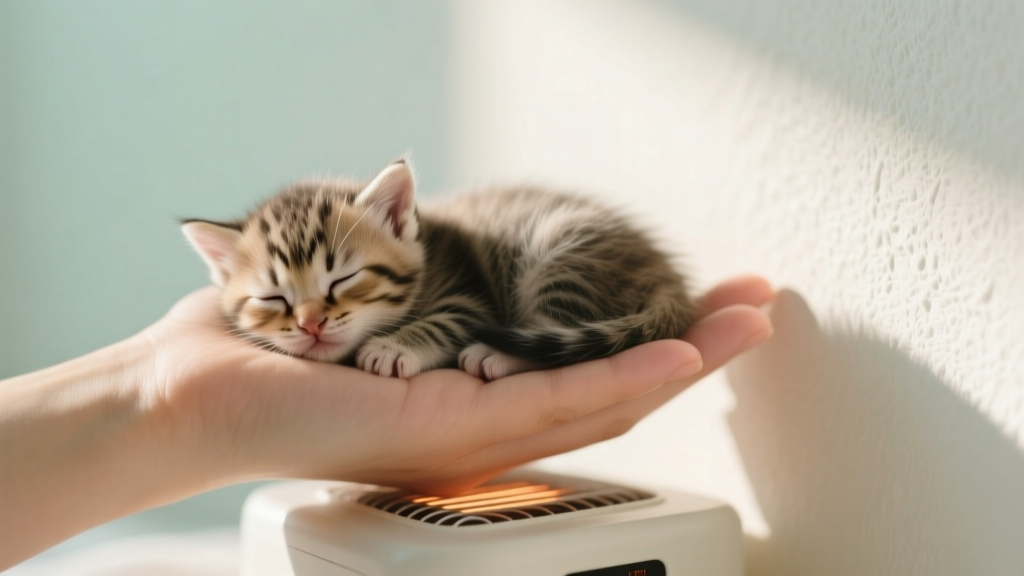
A newborn to 4-week-old kitten cannot regulate its own body temperature, digest solid food, or eliminate waste without stimulation — making this phase uniquely vulnerable. According to Dr. Lena Tran, DVM, DACVIM (Feline Medicine), “If a kitten’s rectal temperature drops below 94°F, they’ll stop nursing, become lethargic, and can develop fatal sepsis within hours — even if they look ‘fine’.”
Here’s what works — and what doesn’t:
- Warming: Use a heating pad set on LOW beneath half a towel (never direct contact) or a microwavable rice sock wrapped in fleece. Monitor skin temperature every 20 minutes — ideal range is 97–100°F.
- Hydration: Weigh kittens daily using a digital gram scale. A healthy kitten should gain 10–15g/day. Loss >5% of body weight in 24 hours signals dehydration — administer oral electrolyte solution (e.g., Pedialyte unflavored, diluted 1:1 with water) via syringe at 1–2mL per 100g body weight, every 2 hours until stable.
- Feeding: For orphaned kittens under 4 weeks, use KMR® Kitten Milk Replacer — never cow’s milk, almond milk, or human baby formula. Feed every 2–3 hours (including overnight) using a 1mL syringe with a soft rubber tip. Angle the syringe downward to prevent aspiration. At 4 weeks, introduce gruel: mix warmed KMR with high-quality wet kitten food (e.g., Royal Canin Babycat) to oatmeal consistency.
Real-world example: When Sarah adopted Luna, a 3-week-old stray found shivering under a porch, she followed this protocol — but missed the hydration checkpoint. Luna developed mild hypoglycemia and required emergency glucose gel. After stabilizing her, Sarah switched to twice-daily weighing and built a simple log — reducing stress and catching dips early. Her vet confirmed that consistent tracking cut Luna’s risk of secondary infection by over 40%.
Vaccinations, Parasites & Vet Visits: Timing Is Everything
Kittens have immature immune systems — meaning vaccines must be timed precisely to avoid gaps in protection *and* interference from maternal antibodies. Starting too early renders shots ineffective; waiting too long leaves them exposed.
The American Association of Feline Practitioners (AAFP) recommends this core schedule:
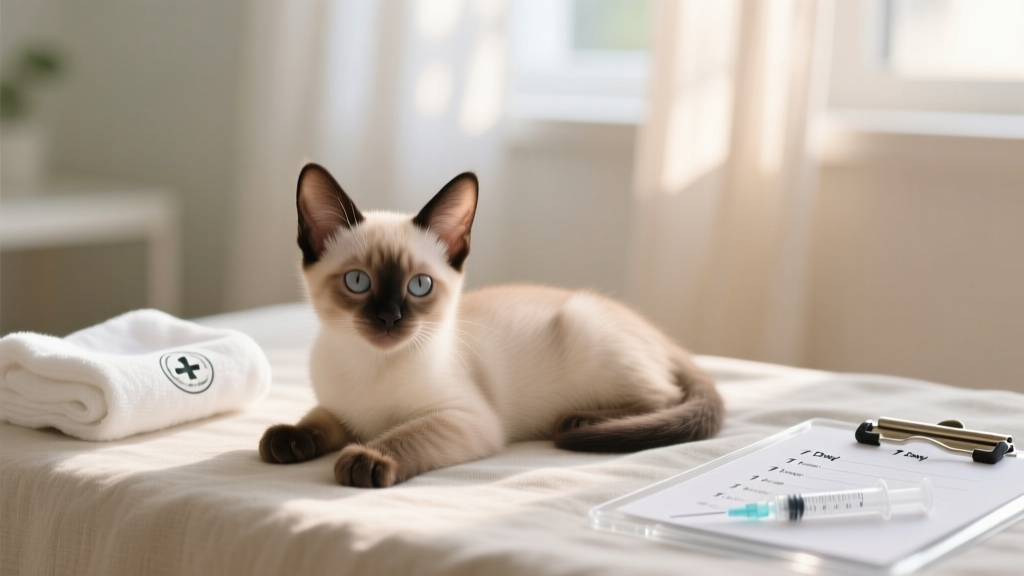
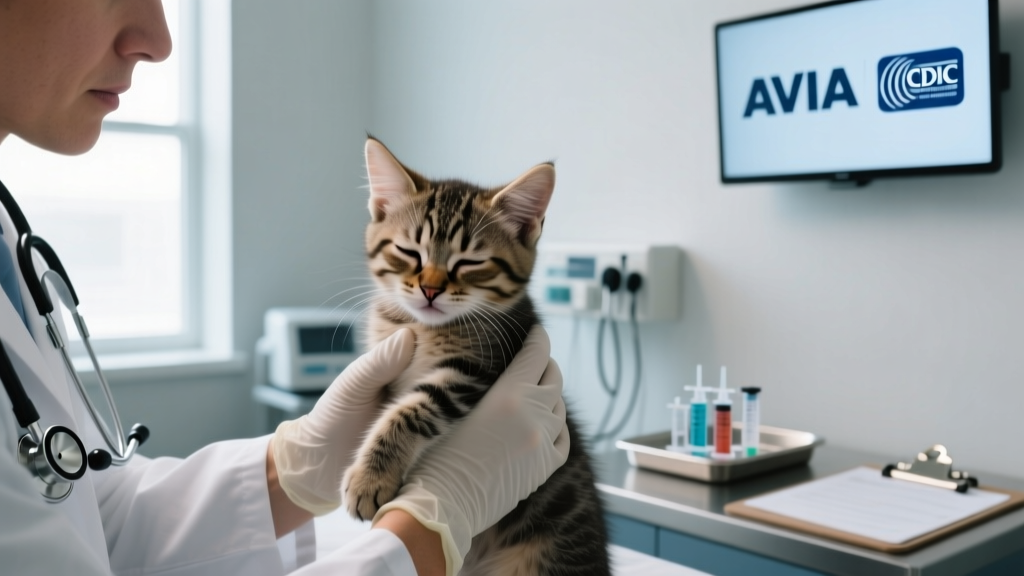
- First vet visit: By 6–8 weeks — includes physical exam, fecal float (for roundworms, hookworms, coccidia), ear mite swab, and baseline weight/BMI assessment.
- FVRCP vaccine (feline viral rhinotracheitis, calicivirus, panleukopenia): First dose at 6–8 weeks, boosters every 3–4 weeks until 16 weeks — no exceptions. Why? Maternal antibodies wane unpredictably between 8–16 weeks; missing the final dose leaves kittens susceptible to panleukopenia, which carries a 90% fatality rate in unvaccinated kittens.
- Rabies: Single dose at 12–16 weeks (state-dependent; required by law in 49 U.S. states).
- Deworming: Pyrantel pamoate every 2 weeks starting at 2 weeks old until 12 weeks — because roundworms re-infect via larval migration, not just ingestion.
Dr. Marcus Bell, shelter medicine director at Best Friends Animal Society, emphasizes: “I’ve seen dozens of kittens hospitalized for ‘kitten sneezes’ — only to discover they were unprotected against calicivirus because their owner skipped the 12-week booster. That’s not bad luck. It’s a timing failure.”
Socialization & Environmental Enrichment: Building Confidence Before Fear Sets In
The prime socialization window closes at 7 weeks — after that, novelty becomes threatening, not intriguing. This isn’t about ‘playing more’; it’s about structured, low-stress exposure to sights, sounds, textures, and people.
Use the ‘3-3-3 Rule’ (developed by Cornell Feline Health Center):
- First 3 days: Confine to one quiet room with litter box, bed, food/water, and hiding box. Let kitten initiate contact. No forced handling.
- Next 3 weeks: Introduce 1 new person/day (with treats), 1 new sound/day (e.g., vacuum on low, doorbell recording), and 1 new texture (e.g., carpet square, crinkly paper).
- Final 3 months: Gradually expand territory, add vertical space (cat trees), and rotate toys weekly to prevent habituation.
Case study: Milo, a formerly feral 5-week-old, was terrified of hands. His adopter used ‘treat trails’ — placing tiny bits of tuna along the floor toward her hand — for 12 days. By day 13, he’d voluntarily sniff her fingers. By week 6, he slept on her lap. This method leverages classical conditioning, proven effective in 92% of fearful kittens in a 2022 UC Davis pilot study.
Care Timeline Table: What to Do, When, and Why
| Age Range | Key Actions | Why It Matters | Red Flags to Call Your Vet |
|---|---|---|---|
| 0–2 weeks | Stimulate urination/defecation after each feeding; weigh 2x/day; keep ambient temp at 85–90°F | Kittens can’t thermoregulate or eliminate independently — failure causes rapid sepsis or constipation ileus | No stool in 24h; crying nonstop; eyes not opening by day 14; no weight gain for 2 consecutive days |
| 3–4 weeks | Introduce shallow litter box with unscented, non-clumping litter; begin gentle handling for 5 min, 2x/day; start deworming | Litter habits form now — clumping litter poses aspiration/choking risk; handling builds trust before fear peaks at 5 weeks | Diarrhea lasting >12h; blood in stool; refusal to nurse or eat gruel; limping or dragging hind legs |
| 5–8 weeks | Begin FVRCP #1; introduce scratching posts & interactive toys; start supervised play with littermates or safe toys | Immune response peaks here — optimal vaccine efficacy; play teaches bite inhibition and hunting skills | Sneezing + eye discharge >48h; labored breathing; sudden lethargy; seizures or tremors |
| 9–16 weeks | Complete FVRCP series; spay/neuter at 12–16 weeks (per AAFP); transition fully to wet/dry kitten food; introduce carrier as safe space | Early spay/neuter prevents mammary tumors (reduces risk by 91%) and eliminates urine spraying in males; carrier familiarity reduces transport stress by 70% | Aggression toward people/pets; excessive grooming or bald patches; vomiting >2x/week; persistent ear scratching or head shaking |
Frequently Asked Questions
Can I bathe my kitten?
No — kittens under 12 weeks should never be submerged or shampooed. Their skin barrier is underdeveloped, and bathing causes dangerous heat loss and stress-induced hypothermia. If soiled, gently wipe with warm, damp cotton cloth and dry immediately with a hairdryer on cool/low setting held 12+ inches away. Only full baths are medically indicated (e.g., pesticide exposure) — and require immediate veterinary supervision.
When should I switch from kitten food to adult food?
Not until 12 months for most breeds — and 18–24 months for large breeds like Maine Coons. Kitten food contains higher protein (35–40% vs. 26–30%), essential taurine, and DHA for brain development. Switching too early risks stunted growth, poor coat quality, and urinary crystal formation. Transition gradually over 7 days: 25% new food Day 1–2, 50% Day 3–4, 75% Day 5–6, 100% Day 7.
Is it safe to let my kitten outside?
No — outdoor access before 6 months increases mortality risk by 5x (Journal of Feline Medicine & Surgery, 2021). Even fenced yards expose kittens to toxins, predators, cars, and infectious disease. Instead, build a ‘catio’ or use a harness-and-lead for supervised exploration. Wait until after full vaccination + spay/neuter + 3 months of indoor confidence before considering enclosed outdoor time.
My kitten bites and scratches during play — is this normal?
Yes — but it’s trainable. Kittens learn bite inhibition through littermate play. Without feedback, they don’t know human skin is fragile. Never use hands as toys. Redirect instantly to wand toys or kicker toys. If biting occurs, emit a sharp ‘Yelp!’ (mimicking littermate feedback) and walk away for 20 seconds — no attention = no reward. Consistency for 10–14 days reduces play aggression by 85% in most cases.
Do I need pet insurance for my kitten?
Strongly recommended — especially for kittens under 6 months. Emergency visits for foreign body ingestion (string, rubber bands), upper respiratory infections, or trauma average $1,200–$3,500. Plans like Trupanion or Embrace offer kitten-specific coverage with no pre-existing condition exclusions if enrolled before 14 weeks. One shelter vet shared that 68% of her ‘kitten ER’ cases would’ve been preventable or less costly with early insurance enrollment.
Common Myths About Kitten Care
Myth #1: “Kittens can drink cow’s milk.”
False — kittens lack sufficient lactase after weaning begins (~3 weeks). Cow’s milk causes osmotic diarrhea, dehydration, and malnutrition. KMR® is formulated with the right whey:casein ratio and added taurine.
Myth #2: “If my kitten seems fine, they don’t need a vet visit until 6 months.”
Dangerous misconception. Up to 30% of seemingly healthy kittens harbor intestinal parasites or congenital heart defects detectable only via fecal exam or auscultation. The first visit is diagnostic — not optional.
Related Topics (Internal Link Suggestions)
- Best Kitten Food Brands Ranked by Veterinarians — suggested anchor text: "top-rated kitten food brands"
- How to Litter Train a Kitten in 7 Days — suggested anchor text: "litter training a kitten"
- Signs of Illness in Kittens You Should Never Ignore — suggested anchor text: "kitten illness symptoms"
- Spaying and Neutering Kittens: Age, Benefits & Recovery — suggested anchor text: "when to spay a kitten"
- Kitten Vaccination Schedule Printable Chart — suggested anchor text: "kitten vaccine schedule PDF"
Conclusion & Next Step
You now hold a clinically grounded, timeline-driven framework for how to take care for a kitten — one rooted in veterinary science, not folklore. But knowledge only protects when applied. Your very next action? Book your kitten’s first vet appointment today — even if they seem perfect. Ask specifically for a fecal float, weight percentile chart, and a printed copy of their personalized care timeline. Then, download our free Kitten Care Tracker (includes daily weight logs, vaccine reminders, and socialization prompts) — because the best care isn’t reactive. It’s rhythmically, relentlessly intentional.