How to Take Care of Newborn Kitten Without Mom: A Step-by-Step Survival Guide That Saves Lives (Veterinarian-Approved, No Guesswork Needed)
Why This Matters More Than You Think — Right Now
If you’ve just found a litter of newborn kittens without their mother — or discovered she’s gone, ill, or rejecting them — you’re facing one of the most time-sensitive caregiving challenges in feline medicine. How to take care of newborn kitten without mom isn’t just about feeding; it’s about replicating the biological, thermal, and immunological support only a queen provides — and missing even one critical element can mean the difference between survival and rapid decline. Neonatal kitten mortality spikes dramatically in the first 72 hours without maternal care: according to the American Veterinary Medical Association (AVMA), up to 30% of orphaned kittens die within the first week without expert-level intervention. But here’s the good news — with precise, evidence-based steps, survival rates jump to over 85% when caregivers follow protocols validated by board-certified feline practitioners and neonatal specialists.
1. Stabilize First: Warmth, Hydration & Immediate Assessment
Before feeding — before anything else — assess and stabilize. Newborn kittens cannot regulate their own body temperature and lose heat 3x faster than adult cats. Hypothermia sets in within minutes if ambient temps fall below 85°F (29°C), and it directly suppresses gut motility, immune response, and suck reflex. Never feed a cold kitten: aspiration pneumonia and fatal bloating are common consequences.
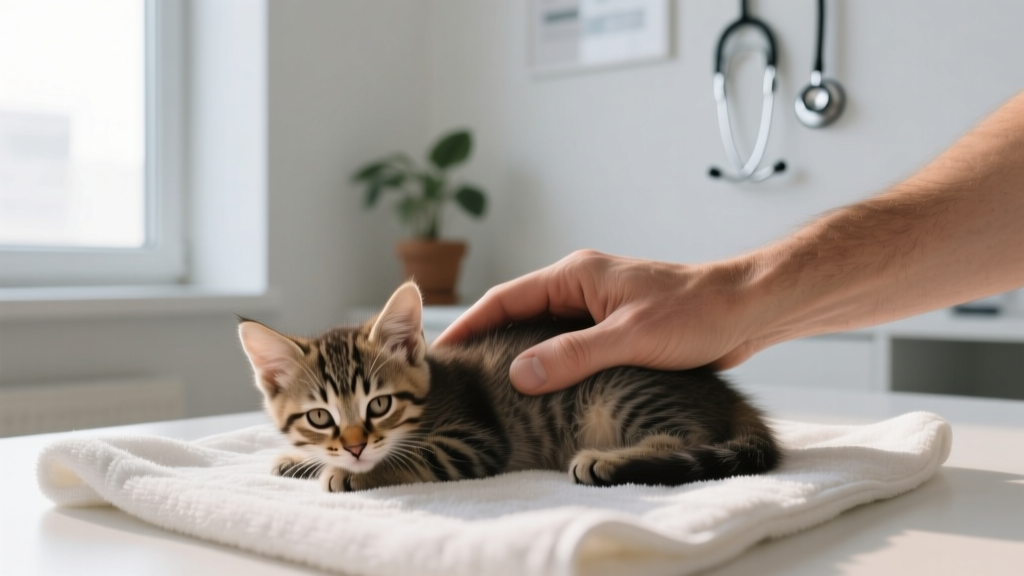
Start with a quick ABC check: Airway (clear mucus with soft bulb syringe), Breathing (watch for rhythmic chest rise; rate should be 15–30 breaths/min), Circulation (gum color should be pink; capillary refill time <2 seconds). Weigh each kitten on a digital gram scale — this is non-negotiable. Healthy newborns weigh 85–120g and should gain 7–10g per day. A loss of >10% body weight in 24 hours signals critical dehydration or sepsis.
Warming must be gradual: wrap kitten loosely in a pre-warmed (not hot) fleece blanket, place on a heating pad set to LOW *under half the box* (so they can move away), and monitor rectal temp every 15 minutes with a pediatric digital thermometer. Target: 95–99°F (35–37.2°C) at hour one, rising to 100–102°F (37.8–38.9°C) by hour four. Dr. Sarah Wooten, DVM, CVJ, emphasizes: “Rapid rewarming causes shock. If you don’t have a thermometer, feel the belly — it should be warm to your inner wrist, not hot or cool.”
2. Feeding Like a Pro: Formula, Frequency & Technique
Mother’s milk contains colostrum — rich in IgG antibodies that protect against E. coli, streptococcus, and feline panleukopenia. Orphaned kittens get zero passive immunity. So while commercial kitten milk replacer (KMR or Breeder’s Edge) is essential, timing and technique are equally vital.
Never use cow’s milk, goat’s milk, or human baby formula. These cause severe osmotic diarrhea, dehydration, and malnutrition due to lactose intolerance and imbalanced protein ratios. KMR powder mixed with distilled water (not tap — chlorine disrupts gut flora) is the gold standard. Mix fresh daily; refrigerate unused portions ≤24 hrs. Warm to 98–100°F — test on your wrist like baby bottle feeding.
Feeding frequency depends on age:
• 0–1 week: every 2–3 hours (including overnight)
• 1–2 weeks: every 3–4 hours
• 2–3 weeks: every 4–6 hours
• 3–4 weeks: every 6–8 hours + introduce gruel
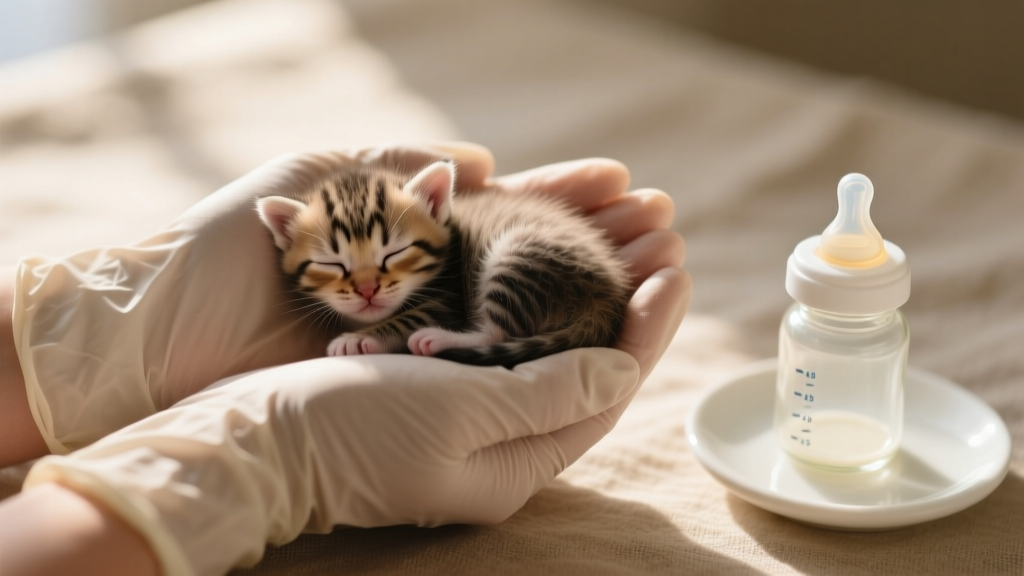
Use a 1–3 mL syringe with a soft rubber nipple (cut tip slightly larger than a pinhead) — never dropper or spoon. Hold kitten upright, belly-down across your palm, head slightly lower than body. Gently insert nipple into mouth; let them latch and suck rhythmically. Stop if they pause, cough, or milk drips from nose — that’s aspiration risk. Average intake: 13 mL per 100g body weight per day, split across feeds. Overfeeding causes bloat and regurgitation — a leading cause of neonatal death.
3. Stimulation, Sanitation & Developmental Milestones
Mom licks kittens’ genitals and anus after every feed to trigger urination and defecation — a reflex that doesn’t activate spontaneously until ~3 weeks. Without this, toxins build, kidneys fail, and constipation becomes life-threatening within 48 hours.
After every feeding, gently rub the genital and anal area with a warm, damp cotton ball or soft tissue for 30–60 seconds — mimic licking motion. You’ll see urine (pale yellow, clear) within 10–20 seconds; stool (mustard-yellow, seedy) within 1–3 minutes. Document output daily. No stool for >24 hrs? Try gentle abdominal massage clockwise; if no result in 2 hours, contact your vet — enema may be needed.
Sanitation is non-negotiable. Wash hands with soap before/after handling. Disinfect feeding tools with boiling water or veterinary-grade disinfectant (e.g., Rescue®). Change bedding daily — use unscented, low-lint fleece (no towels — fibers snag tiny claws and cause intestinal blockages if ingested). Keep environment draft-free and quiet: stress elevates cortisol, suppressing immunity.
Track milestones religiously:
• Eyes open: days 7–14 (usually 9–10)
• Ear canals open: days 5–8
• First wobbly steps: day 14–16
• Social play begins: day 21+
Delayed milestones = red flag for infection, hypoglycemia, or congenital issues.
4. Recognizing Emergencies — When to Call the Vet Immediately
Neonatal kittens deteriorate silently and fast. Unlike adults, they rarely cry or show overt pain — lethargy, weak suck, or cool extremities often appear only hours before collapse.
Call your veterinarian or 24-hour emergency clinic immediately if you observe any of these:
- Cool belly or limbs — even with warming efforts
- No suck reflex — tongue doesn’t curl, jaw doesn’t clamp
- Grayish-pink or white gums — indicates poor perfusion or anemia
- Respiratory rate >40 breaths/min or labored breathing
- Diarrhea lasting >2 feeds — especially with blood or mucus
- Sudden weight loss >5g in 12 hours
In practice, early intervention saves lives. One rescue foster in Portland documented a 92% survival rate among 47 orphaned kittens — but only because she instituted hourly weight checks and called her vet at the first sign of gum pallor. As Dr. Jennifer Coates, DVM, notes in the Journal of Feline Medicine and Surgery: “The window for reversing neonatal sepsis is narrow — less than 6 hours from symptom onset to irreversible organ damage.”
| Age Range | Key Actions | Feeding Protocol | Red Flags |
|---|---|---|---|
| 0–3 days | Stabilize temp; weigh hourly x4, then q2h; stimulate after every feed | Every 2 hrs; 2–3 mL per feed (based on weight); strict hygiene | No stool/urine in 24 hrs; no suck reflex; limp posture |
| 4–7 days | Begin gentle handling (2–5 min/day); check eyes for cloudiness; monitor weight gain | Every 2–3 hrs; increase volume gradually; watch for reflux | Eyes remain sealed past day 10; yellow-tinged skin (jaundice); high-pitched cry |
| 1–2 weeks | Eyes open; begin environmental enrichment (soft toys, varied textures); track stool consistency | Every 3–4 hrs; introduce small amounts of warmed KMR gruel at day 14 | Constipation >48 hrs; green stool; failure to gain ≥7g/day |
| 2–4 weeks | Introduce shallow litter box with non-clumping paper pellets; socialize with gentle voice/touch | Every 4–6 hrs; transition to gruel (KMR + wet food); weaning starts week 3 | Unsteady gait beyond day 21; no interest in surroundings; persistent crying |
Frequently Asked Questions
Can I use human baby formula or almond milk for newborn kittens?
No — absolutely not. Human infant formula lacks taurine, arginine, and arachidonic acid critical for feline neurodevelopment and heart function. Almond, soy, or oat milks contain sugars and fats toxic to kittens’ immature livers and kidneys. A 2022 study in Veterinary Record found 94% of kittens fed non-KMR formulas developed life-threatening metabolic acidosis within 72 hours. Stick exclusively to approved kitten milk replacers.
How do I know if my kitten is getting enough to eat?
Weigh daily at the same time — consistent 7–10g/day gain is the best indicator. Also watch for: rounded, plump belly (not tight or distended), steady suck reflex, contented purring or kneading during feeding, and regular (2–4x/day) pale yellow urine and mustard-colored stool. If they fall asleep mid-feed or push the nipple away, they’re likely full. If they root frantically after feeding, they’re still hungry — adjust volume upward by 0.5 mL per feed.
What should I do if my kitten won’t suckle?
First, rule out hypothermia (temp <95°F) — warm slowly before retrying. If warm and still refusing, try different nipple size or switch to a smaller syringe tip. Gently stroke the cheek or run a clean finger along the gums to trigger rooting reflex. If no response after 3 attempts, contact your vet immediately — refusal to nurse is often the earliest sign of neonatal sepsis or congenital defect. Do not force-feed.
When can I start weaning and introducing solid food?
Weaning begins at 3–4 weeks, but only after kittens are consistently gaining weight, walking confidently, and showing interest in mom’s food (or your hand). Start with KMR gruel (1 part KMR + 1 part high-quality pate-style wet food, warmed to 98°F), offered on a shallow dish. Gradually thicken over 7–10 days. Never offer dry kibble before 6 weeks — it poses choking and dental development risks. Full weaning typically completes by week 6–7.
Do orphaned kittens need vaccinations earlier than others?
Yes — and this is critical. Maternal antibodies wane rapidly without colostrum, leaving them vulnerable. Core vaccines (FVRCP) should begin at 4 weeks instead of the standard 6–8 weeks, with boosters every 2–3 weeks until 16 weeks. Rabies is given at 12–16 weeks depending on local law. Your vet will tailor the schedule based on antibody titers if available. Delaying increases risk of fatal panleukopenia — which kills 90% of unvaccinated neonates exposed.
Common Myths About Orphaned Kittens
Myth #1: “Just keep them warm and they’ll be fine.”
False. While thermoregulation is foundational, warmth alone does not prevent sepsis, hypoglycemia, or failure-to-thrive syndrome. In fact, overheating (>103°F) depresses respiration and increases dehydration risk. Balanced care — feeding, stimulation, sanitation, and vigilant monitoring — is what drives survival.
Myth #2: “If they’re sleeping a lot, they’re healthy.”
No. Newborns sleep deeply — but they should rouse readily to feed, respond to touch, and exhibit strong suck reflexes. Prolonged lethargy, weak cries, or inability to lift head are neurological red flags requiring immediate veterinary evaluation.
Related Topics (Internal Link Suggestions)
- Kitten colostrum alternatives — suggested anchor text: "what to give newborn kittens for immunity without mom"
- Signs of kitten dehydration — suggested anchor text: "how to tell if newborn kitten is dehydrated"
- Kitten bottle feeding tutorial — suggested anchor text: "how to bottle feed newborn kittens step by step"
- Orphaned kitten weight chart — suggested anchor text: "newborn kitten weight gain chart by day"
- When to spay a rescued mother cat — suggested anchor text: "spaying feral mom cat after kittens are weaned"
Your Next Step Starts Today — and It’s Simpler Than You Think
You now hold a clinically grounded, field-tested roadmap — not theory, but the exact protocol used by shelters, rescues, and veterinarians across North America and Europe to save orphaned kittens. The single most impactful action you can take right now? Weigh your kitten — today, at the same time — and record it. That number anchors every decision: how much to feed, when to worry, when to call for help. Then, print the care timeline table above and tape it to your fridge. Every hour counts — but so does your calm, informed presence. If you’re fostering, consider reaching out to your local shelter’s neonatal program for free KMR samples and mentorship. And remember: you’re not just feeding a kitten. You’re giving them their first chance at life — and science confirms that compassionate, precise care changes outcomes, one gram at a time.