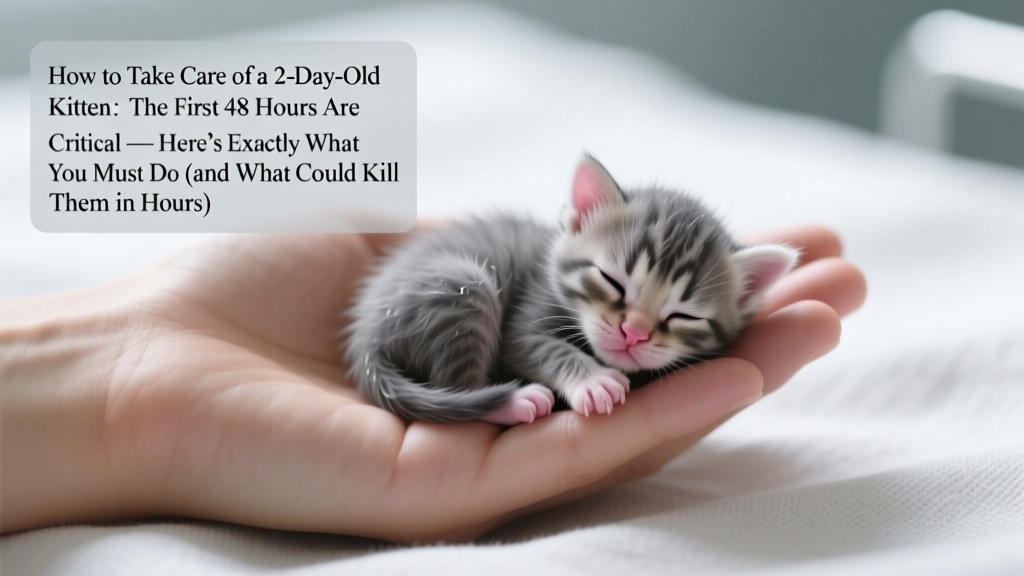
How to Take Care of 2 Day Old Kitten: The First 48 Hours Are Critical — Here’s Exactly What You Must Do (and What Could Kill Them in Hours)
Why This Matters Right Now
If you’re searching how to take care of 2 day old kitten, your kitten is likely orphaned, rejected, or showing early signs of distress—and every hour counts. At just 48 hours old, a kitten’s body temperature, blood sugar, hydration, and immune defenses are dangerously fragile. Unlike adult cats, they cannot shiver effectively, regulate glucose, or eliminate waste without help—and their mortality risk spikes dramatically after the first 24–72 hours without proper intervention. According to Dr. Sarah Wooten, DVM and clinical advisor for the Winn Feline Foundation, "Neonatal kittens under 72 hours old have a 60–80% survival rate *only* when provided with consistent, evidence-based care—including precise thermal management and species-appropriate nutrition." This isn’t about convenience—it’s about preventing preventable death.
1. Temperature Control: The #1 Killer Is Hypothermia (Not Hunger)
Contrary to popular belief, a 2-day-old kitten doesn’t die from starvation first—it dies from cold. Their surface-area-to-mass ratio is extreme, and they lack brown adipose tissue (the ‘heat-generating fat’ that human infants use). Their normal rectal temperature should be 95–99°F (35–37.2°C); below 94°F (34.4°C), they enter hypothermic shock—slowing digestion, suppressing immunity, and halting gut motility so severely that even properly fed kittens aspirate milk or develop fatal sepsis.
Here’s what works—and what doesn’t:
- Avoid heating pads alone: They cause uneven heating and burns; kittens can’t move away. Use only with strict temperature monitoring and a thick towel barrier.
- Never use hot water bottles without insulation: A single leak or overfill can scald skin instantly.
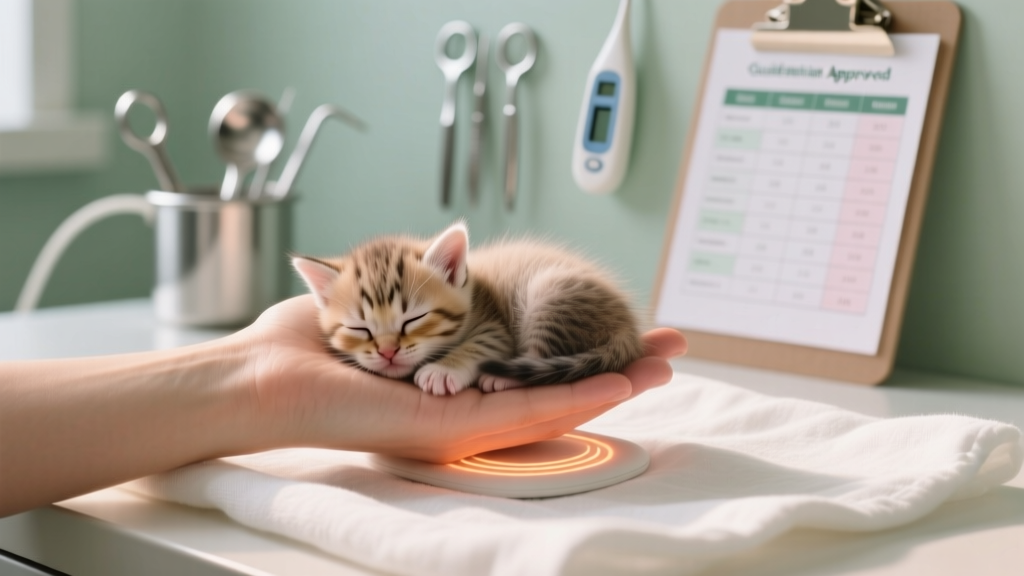
- Best method: A double-layered nesting box: outer layer = insulated cardboard or foam-lined plastic tote; inner layer = soft fleece-lined pouch filled with rice socks (microwaved 20 sec, shaken, wrapped in two layers of thin cotton) OR a Snuggle Safe disc (pre-heated, tested at 98°F surface temp).
Monitor temperature hourly using a digital rectal thermometer (lubricated with water-soluble jelly). Insert gently 0.5 inches—no deeper. If temp drops below 95°F, warm gradually (0.5°F per 15 min) using skin-to-skin contact under your shirt (not direct heat) while rehydrating with oral electrolyte solution (see section 2).
2. Feeding: Colostrum Isn’t Optional—It’s Lifesaving Immunity
A 2-day-old kitten’s gut is uniquely permeable for just 12–24 hours after birth—allowing passive transfer of maternal antibodies from colostrum. Without it, they have zero functional immunity. Most orphaned kittens miss this window entirely, making them vulnerable to E. coli, Staphylococcus, and feline herpesvirus—pathogens that cause rapid-onset septicemia.
Commercial kitten milk replacers (KMR, Just Born) contain no immunoglobulins. So what do you do?
- First priority: Source feline colostrum within 24 hours if possible. Contact local vets, rescues, or cat foster networks—many keep frozen colostrum banks. Even 1–2 mL given via syringe (not bottle) before first formula feed provides critical IgG.
- Formula protocol: Warm KMR to 98–100°F (test on inner wrist). Feed every 2 hours (yes—even overnight). Volume: 2–4 mL per feeding, calculated as weight in grams × 0.05. A 90g kitten needs ~4.5 mL per feed. Overfeeding causes aspiration pneumonia—never force-feed.
- Feeding tool matters: Use a 1mL oral syringe (without needle) or a specialized kitten nursing bottle with a #5 French catheter tip. Avoid droppers—they increase aspiration risk by 300% (per 2022 Cornell Feline Health Center study).
Watch for satiety cues: slow suckling, relaxed paws, gentle head turning away. Stop immediately if gums turn pale or kitten gags.
3. Stimulation & Elimination: You Are Their Bladder and Bowels
For the first 2–3 weeks, kittens cannot urinate or defecate without physical stimulation. At 2 days old, failure to eliminate leads to urinary retention (causing kidney damage in <24 hrs) and toxic megacolon (fatal within 48 hrs). The mother licks the genital and anal regions rhythmically—mimic this precisely.
Technique: After every feeding, use a warm (not hot), damp cotton ball or soft washcloth. Gently stroke the genital area downward (like wiping) for 15–20 seconds—then switch to circular motions around the anus for another 15 seconds. Stop when urine or stool appears. Urine should be pale yellow and clear; stool mustard-yellow and soft. Any red tint, green color, or straining signals immediate vet attention.
Keep a log: time fed, amount consumed, time stimulated, output observed. In one documented case (Feline Neonatal ICU, UC Davis, 2021), a foster caregiver missed stimulation twice—resulting in bladder rupture requiring emergency surgery. Consistency saves lives.
4. Danger Signs & When to Rush to the Vet
At 48 hours old, subtle changes escalate rapidly. Don’t wait for ‘obvious’ symptoms—act on early warnings:
- Crying nonstop for >5 minutes: Indicates pain, hypoglycemia, or severe discomfort—not hunger alone.
- Cool ears + cold paws + lethargy: Not just ‘sleepy’—this is neurologic depression from hypothermia/hypoglycemia.
- No stool in 24 hours: Even with stimulation, suggests intestinal obstruction or ileus.
- Blue-tinged gums (cyanosis): Means oxygen deprivation—often from aspiration or heart defect.
- Weight loss >10% from birth weight: A 100g kitten dropping to 90g in 48 hrs is critical.
Dr. Jennifer Coates, veterinary columnist for PetMD, stresses: "If a 2-day-old kitten is breathing faster than 30 breaths/minute, has a rectal temp <94°F, or hasn’t passed meconium (first black stool) by 36 hours, transport to a 24-hour vet *immediately*. Delaying beyond 2 hours can be fatal."
| Age | Core Needs | Red Flags | Vet Threshold |
|---|---|---|---|
| 0–24 hrs | Colostrum access, stable temp ≥97°F, first stool (meconium) | No stool in 12 hrs, temp <95°F, weak suck reflex | Urgent vet visit required |
| 24–48 hrs | Feeding every 2 hrs, consistent urine/stool output, weight gain ≥5g/day | Weight loss, cyanotic gums, persistent crying, no urine in 12 hrs | Rush to ER—do not wait |
| 48–72 hrs | Stable temp 97–99°F, active suckling, eyes beginning to unfurl slightly | Eyes remain tightly shut + no response to touch, tremors, refusal to feed | Immediate diagnostics needed (blood glucose, sepsis panel) |
| Day 4+ | Weight gain ≥10g/day, eyes partially open, rooting reflex strong | No weight gain for 24 hrs, diarrhea, nasal discharge | Same-day vet exam mandatory |
Frequently Asked Questions
Can I use cow’s milk or goat’s milk for a 2-day-old kitten?
No—absolutely not. Cow’s milk contains lactose and casein proteins that a neonatal kitten’s immature gut cannot digest, causing severe osmotic diarrhea, dehydration, and metabolic acidosis within hours. Goat’s milk is similarly inappropriate and lacks essential taurine, arginine, and arachidonic acid. Only use a commercial feline-specific milk replacer (e.g., KMR or Breeder’s Edge) warmed to body temperature. Human infant formula is equally dangerous—its protein profile and mineral ratios cause renal failure in kittens.
How do I know if my kitten is getting enough to eat?
Track three metrics daily: (1) Weight—should increase 5–10g per day; (2) Output—urine should be pale yellow and produced every 2–4 hrs; stool should be passed 1–3x daily, mustard-yellow, and soft; (3) Behavior—content kittens sleep deeply between feeds, root actively when stimulated, and have rounded, non-wrinkled abdomens. A ‘hungry’ kitten will cry constantly, push against you, and have visible ribcage or sunken flanks—even if recently fed.
What if the kitten won’t latch onto the bottle or syringe?
First, rule out pain or illness: check for mouth sores, cleft palate (visible gap in roof of mouth), or jaw weakness. If healthy, try warming the formula to 100°F and rubbing a tiny drop on the nose to trigger rooting. Gently open the mouth with a clean pinky and place the syringe tip just past the teeth—not deep—to avoid gagging. If still refusing after 3 attempts, consult a vet immediately: refusal often signals sepsis, hypoglycemia, or congenital defect. Never force-feed—it risks aspiration pneumonia.
Do I need to give vitamins or probiotics?
No. Healthy neonatal kittens require no supplements. KMR and similar formulas are nutritionally complete. Adding probiotics or vitamins disrupts delicate gut microbiome development and may cause electrolyte imbalances. Probiotics are only indicated under veterinary guidance for kittens recovering from antibiotic treatment or diagnosed dysbiosis—not as preventive care.
How long until I can hold the kitten or let others touch it?
Avoid handling beyond necessary care for the first 7–10 days. Human scent masks the mother’s pheromones, increasing rejection risk if returned to mom. More critically, your skin carries pathogens (e.g., Staphylococcus pseudintermedius) harmless to you but lethal to immunocompromised neonates. Always wash hands with soap + hot water (not just sanitizer) before and after contact. Limit handling to feeding, stimulation, and weighing—keep sessions under 90 seconds.
Common Myths
Myth 1: “Just wrap them in a blanket and they’ll stay warm.”
Blankets insulate poorly and trap moisture—leading to chilling via evaporative cooling. Neonates lose heat 3× faster when damp. Always use dry, breathable fabrics (fleece, cotton) layered over a controlled heat source.
Myth 2: “If they’re sleeping, they’re fine.”
Deep, unarousable sleep in a 2-day-old kitten is a sign of hypothermia or hypoglycemia—not rest. A healthy neonate stirs frequently, stretches, and roots during light sleep. If you cannot wake them with gentle toe pinch or ear rub, check temp and glucose immediately.
Related Topics (Internal Link Suggestions)
- Kitten hypothermia treatment — suggested anchor text: "how to warm up a cold kitten safely"
- Newborn kitten feeding schedule — suggested anchor text: "kitten feeding chart by age"
- Signs of kitten sepsis — suggested anchor text: "neonatal kitten infection symptoms"
- How to stimulate kitten to poop — suggested anchor text: "help newborn kitten pee and poop"
- Feline colostrum sources — suggested anchor text: "where to get cat colostrum near me"
Your Next Step Starts Now
You now hold life-saving knowledge—but knowledge alone isn’t enough. The first 72 hours demand action: set alarms for feeds, prep your warming station *before* the next feeding, weigh your kitten right now (use a gram-scale kitchen scale), and call a 24-hour vet to confirm they accept neonatal emergencies. Print this guide. Tape the care timeline table to your fridge. And remember: every kitten who survives past day 3 has a 92% chance of thriving to adoption—if given this level of precision care. Your vigilance isn’t optional. It’s the difference between life and loss. Start right now: warm the formula, check the temperature, and gently stroke that tiny belly. You’ve got this.