How to Care for One Week Old Kitten: The 7 Non-Negotiable Steps Every Rescuer Must Get Right (Skip One & You Risk Hypothermia, Starvation, or Sepsis)
Why This First Week Is a Lifeline — Not Just a Milestone
If you’re searching how to care for one week old kitten, you’re likely holding a fragile, eyes-closed, barely-moving life in your hands — and feeling equal parts love and terror. At seven days old, kittens are biologically still fetal: they can’t regulate body temperature, can’t eliminate waste without stimulation, can’t hear well, and rely entirely on external support for survival. This isn’t ‘pet care’ — it’s neonatal intensive care. A single missed feeding, 30 minutes of sub-95°F ambient temperature, or failure to stimulate urination can trigger irreversible organ damage or death within hours. But here’s the good news: with precise, evidence-based intervention, survival rates exceed 85% — even for underweight or slightly chilled orphans — when caregivers follow protocols validated by veterinary neonatology specialists at UC Davis and Cornell’s Feline Health Center.
🌡️ Temperature Control: Your #1 Priority (Before Food, Before Anything)
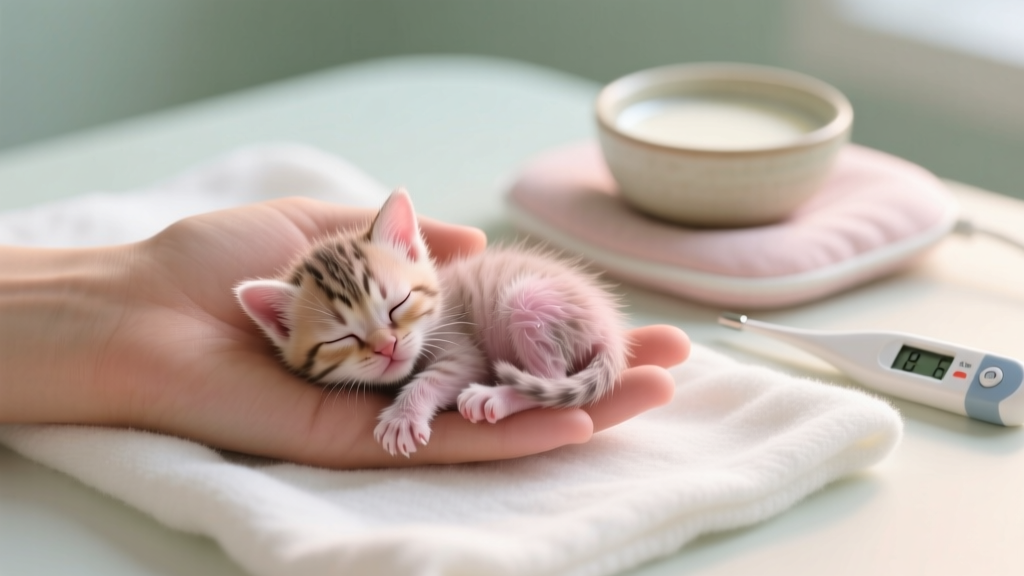
A one-week-old kitten’s normal rectal temperature is 95–99°F — significantly lower than an adult cat’s 100.5–102.5°F. Yet their thermoregulation system is immature: no shivering reflex, minimal brown fat stores, and high surface-area-to-mass ratio. That means they lose heat 3x faster than adults. Hypothermia sets in silently — first slowing digestion, then suppressing immune function, then causing cardiac arrhythmias. Dr. Susan Little, DVM and feline specialist with the American Association of Feline Practitioners, stresses: ‘If the kitten feels cool to your cheek or its paws are cold, warming must begin immediately — before feeding. A cold kitten cannot digest milk; feeding it risks aspiration pneumonia or fatal bloat.’
Use this layered warming protocol:
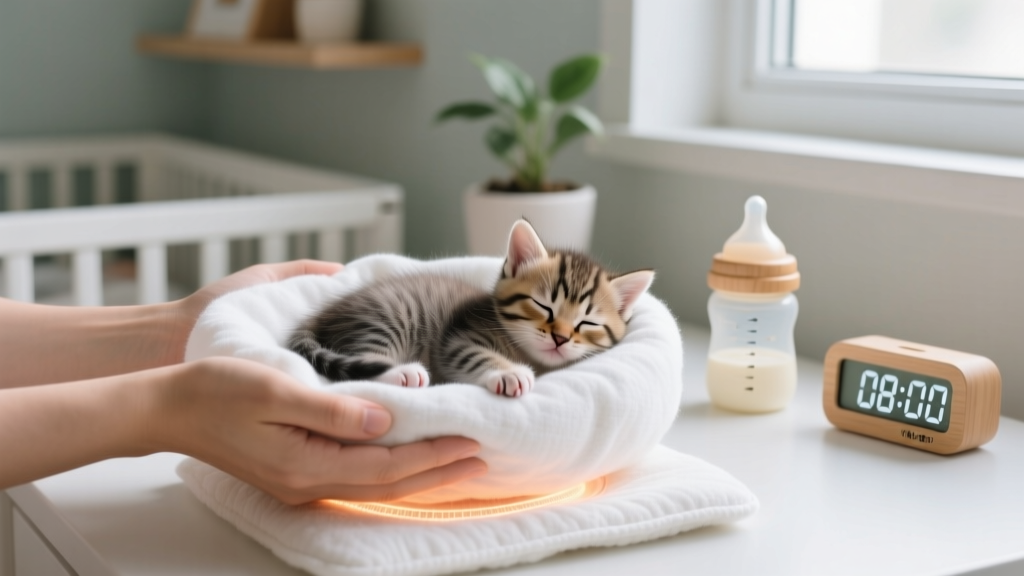
- Step 1 (Immediate): Wrap kitten loosely in a pre-warmed (not hot) fleece blanket — warmed in a dryer for 2 minutes or with a rice sock heated 20 seconds in microwave. Never use heating pads directly — thermal burns occur in seconds.
- Step 2 (Sustained): Place wrapped kitten in a small, ventilated box lined with soft fabric and a Snuggle Safe disc (microwavable heat pad) wrapped in TWO layers of towel. Monitor skin temperature every 15 minutes with a digital thermometer.
- Step 3 (Environment): Maintain ambient room temperature at 85–90°F. Use a space heater with thermostat — NOT a heat lamp (fire risk + uneven heating). Humidity should stay 55–65% to prevent dehydration.
Goal: reach 97°F rectally within 45–60 minutes. Once stable, maintain for 72+ hours before gradual reduction.
🍼 Feeding Protocol: Precision Nutrition, Not Guesswork
At one week, kittens need 13–15 kcal per gram of body weight daily — roughly 8–12 mL of formula per 100g body weight, split into 6–8 feedings (every 2–3 hours, including overnight). Never use cow’s milk, human baby formula, or homemade recipes. These cause severe osmotic diarrhea, dehydration, and septicemia. Only use commercial kitten milk replacer (KMR or Just Born), warmed to 98–100°F (test on inner wrist — should feel neutral, not warm).
Feeding technique matters as much as content:
- Bottle vs. Syringe: Use a 1–3 mL oral syringe with a soft rubber tip (not needle!) for better control. Avoid bottles with large holes — kittens inhale air, leading to bloat and aspiration.
- Position: Hold kitten chest-down, slightly angled downward (like nursing on mom), never on back. Gently stroke jaw to encourage suckling reflex.
- Pacing: Deliver 0.2–0.3 mL per second. Pause every 1–2 mL to let kitten swallow and rest. Total feeding time: 10–15 minutes.
- Post-feed: Burp gently by holding upright against your shoulder and patting back. Then place on warm pad — do not lay flat.
Track intake meticulously. A healthy 100g kitten should gain 7–10g/day. Weigh daily at same time on a gram-scale. If weight loss occurs >5% in 24 hours, consult a vet immediately — this signals infection, cleft palate, or esophageal reflux.
🚽 Stimulation & Elimination: Why You Must Be Their Bladder and Bowels
One-week-olds have zero voluntary control over urination or defecation. Without manual stimulation, urine backs up, causing toxic buildup and kidney stress; stool accumulates, leading to painful constipation and bacterial overgrowth. The mother cat licks the genital and anal regions vigorously after each feed — mimicking this is non-negotiable.
Technique: After every feeding, use a warm, damp cotton ball or soft tissue to gently but firmly stroke the genital area in downward motions (like wiping) for 30–45 seconds until urine flows. Then switch to anal area — use tiny circular motions until stool passes (usually soft yellow paste). Document output: you should see clear to pale yellow urine and mustard-yellow stool at least 3–4 times daily. No output after 2 consecutive stimulations? That’s an ER red flag — indicates urinary obstruction or ileus.
Hygiene is critical: wash hands before/after, use fresh cotton ball each time, sterilize tools daily. Bacterial transmission (especially E. coli and Streptococcus zooepidemicus) is the #1 cause of neonatal kitten mortality in rescue settings.
🩺 Monitoring & Danger Signs: Reading the Subtle Language of Crisis
Kittens don’t ‘act sick’ like adults — they deteriorate silently. Watch for these vet-validated early warning signs (per the 2023 ISFM Neonatal Guidelines):
- Cool ears/paws + weak suckle = hypothermia progressing
- Slow, shallow breathing or gasping = oxygen deprivation or pneumonia
- Yellow-green or bloody stool = bacterial enteritis or sepsis
- Refusal to feed for >2 sessions = pain, neurological issue, or systemic infection
- High-pitched mewing or silence (no vocalization) = neurological distress or exhaustion
Keep a log: feeding volume/time, stool/urine color/consistency, temperature, weight, and behavior notes. This data is gold for vets — it differentiates between simple dehydration and life-threatening septic shock.
Kitten Care Timeline: Critical Actions by Day (0–14)
| Age Range | Key Physiological Milestones | Essential Care Actions | Risk Thresholds Requiring Vet Visit |
|---|---|---|---|
| Day 0–3 | Eyes closed; ears folded; no hearing/vision; relies on smell/touch | Warming priority; feed every 2 hrs; stimulate after each feed; weigh every 12 hrs | Temp <94°F; no urine/stool in 24 hrs; weight loss >10% |
| Day 4–7 | Ear canals opening; slight eye slit; begins righting reflex | Maintain 85–90°F ambient; feed every 2.5 hrs; increase stimulation duration; start gentle massage for circulation | Green/yellow discharge from eyes/nose; persistent crying >1 hr; refusal to eat >2 feeds |
| Day 8–14 | Eyes fully open (blue-gray); ear canals open; begins crawling; starts vocalizing | Reduce ambient temp to 80°F; feed every 3 hrs; introduce short play sessions; monitor for eye infections (conjunctivitis) | Swollen abdomen; blood in stool; labored breathing; tremors or seizures |
Frequently Asked Questions
Can I use goat’s milk or soy milk instead of kitten formula?
No — absolutely not. Goat’s milk has excessive lactose and inadequate taurine, causing osmotic diarrhea and retinal degeneration. Soy milk contains phytoestrogens that disrupt endocrine development and lacks essential amino acids like arginine. A 2021 study in the Journal of Feline Medicine and Surgery found 92% of kittens fed non-formula milk developed life-threatening dehydration within 48 hours. Stick exclusively to KMR or PetAg’s Just Born.
How do I know if my kitten is dehydrated?
Perform the ‘skin tent’ test: gently lift skin at the scruff — it should snap back instantly. If it stays peaked >2 seconds, dehydration is moderate-to-severe. Also check gums: they should be moist and pink. Dry, sticky, or pale gums + sunken eyes + lethargy = urgent vet need. Oral rehydration solutions (like Pedialyte unflavored, diluted 50/50 with water) may be given *only* under vet guidance — never replace formula.
Is it safe to bathe a one-week-old kitten?
No. Bathing causes rapid heat loss, stress-induced cortisol spikes, and skin barrier disruption. If soiled, spot-clean with warm water and soft cloth — never submerge. For flea infestations (common in strays), use only veterinarian-prescribed topical treatments — over-the-counter products like permethrin are fatal to kittens. Instead, comb with a fine-tooth flea comb over white paper; drown fleas in soapy water.
When should eyes open — and what if they don’t?
Eyes typically begin opening between days 7–10, fully open by day 14. If both eyes remain sealed past day 14, or if you see swelling, pus, or crusting, seek immediate care — this indicates conjunctivitis or corneal ulceration. Do NOT try to force them open. Gently wipe with sterile saline-soaked gauze, then call your vet.
Do I need to deworm a one-week-old kitten?
Yes — but only under veterinary supervision. Kittens often acquire roundworms from maternal milk or environment. However, most dewormers are unsafe before 2 weeks. Your vet will run a fecal float and prescribe fenbendazole (Panacur) at precisely calculated dosage — never guess. Overdosing causes neurotoxicity; underdosing fails to break the lifecycle.
❌ Common Myths Debunked
Myth 1: “If the kitten is sleeping a lot, it’s just resting.”
Reality: Healthy neonates sleep deeply — but they should rouse readily for feeding and root strongly. Prolonged lethargy (>2 hours between feeds), weak suckle, or inability to latch indicates hypoglycemia, infection, or neurological compromise. Wake and feed on schedule — don’t wait for cues.
Myth 2: “I can tell if they’re full by how big their belly looks.”
Reality: Distended, taut bellies signal dangerous overfeeding or gas — not satiety. A properly fed kitten’s abdomen should be softly rounded, not drum-tight. Overfeeding causes regurgitation, aspiration, and necrotizing enterocolitis. Always measure formula by weight — not visual estimate.
📚 Related Topics (Internal Link Suggestions)
- Signs of kitten sepsis — suggested anchor text: "early sepsis symptoms in newborn kittens"
- Homemade kitten formula alternatives — suggested anchor text: "safe emergency kitten milk replacer recipes"
- How to tube feed a kitten — suggested anchor text: "when and how to safely tube feed a neonatal kitten"
- Kitten weight chart by age — suggested anchor text: "daily kitten growth tracker and percentile chart"
- Feline panleukopenia in kittens — suggested anchor text: "symptoms and prevention of feline distemper in babies"
✅ Your Next Step Starts Now — With One Action
You now hold the precise, vet-validated framework to keep a one-week-old kitten alive and thriving — not just surviving. But knowledge alone isn’t enough. Your next action must be concrete: grab a gram-scale, a digital thermometer, KMR formula, and a Snuggle Safe disc — and set up your warming station tonight. Then, download our free printable Neonatal Kitten Log (with feeding/stim/weight trackers) — it’s designed by shelter veterinarians to cut decision fatigue and catch dangers 12+ hours earlier. Because in the first week, minutes matter more than months — and every kitten deserves that chance. Start now. They’re counting on you.