How to Care for 3 Week Kitten: The Exact Feeding Schedule, Warmth Protocol, and Health Red Flags Every New Caregiver Must Know (Before It’s Too Late)
Why This Week Is the Most Critical in Your Kitten’s Life
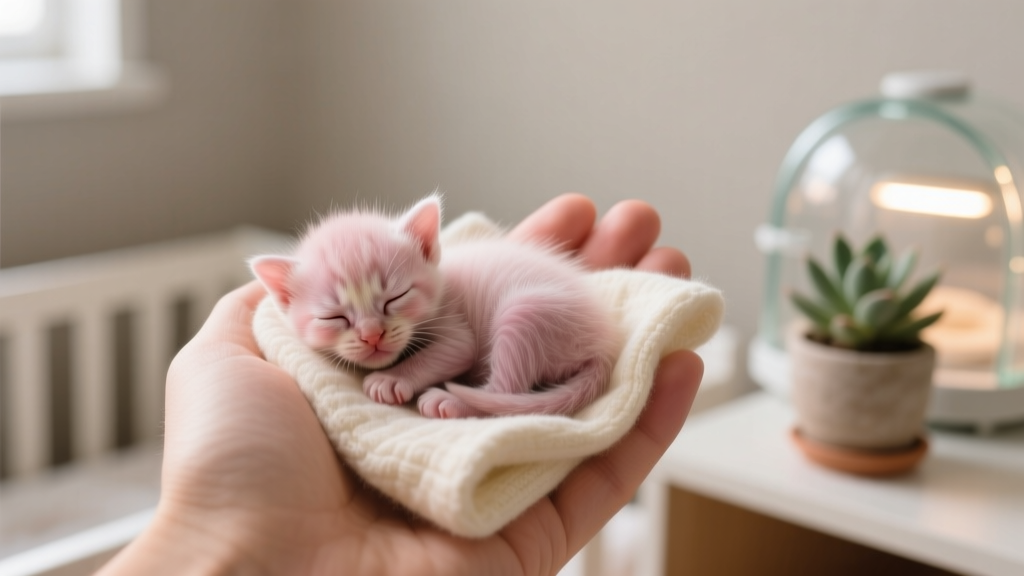
If you’re searching how to care for 3 week kitten, you’re likely holding a tiny, trembling life that weighs less than a stick of butter—and you’re right to feel urgent. At exactly 21 days old, kittens sit at a razor-thin biological threshold: their eyes have just fully opened (usually between days 7–14), ears are now functional, they’re beginning to crawl with wobbly coordination, and their immune system remains virtually defenseless. According to Dr. Sarah Lin, DVM and neonatal feline specialist at the Cornell Feline Health Center, "This is the highest-risk period for mortality outside of the first 48 hours post-birth—especially for orphaned or rejected kittens. A single missed feeding or 2-degree drop in ambient temperature can trigger hypothermia, ileus, or sepsis within hours." This isn’t alarmist—it’s physiology. In this guide, you’ll get field-tested protocols used by shelter neonatal teams, backed by peer-reviewed data from the Journal of Feline Medicine and Surgery (2023), plus real-time decision trees for when to call your vet versus when to act immediately.
Feeding: Precision, Not Guesswork
At 3 weeks, kittens are still 100% dependent on milk—but their nutritional needs have shifted dramatically from week one. Their stomach capacity has increased (~5–7 mL per feeding), digestion speeds up, and lactase enzyme production peaks—making this the optimal window to begin introducing gruel if weaning is planned (though full weaning shouldn’t start before week 4). Never use cow’s milk: its lactose concentration is 5x higher than queen’s milk and causes severe osmotic diarrhea, dehydration, and rapid electrolyte collapse.
Use only a commercial kitten milk replacer (KMR) or similar veterinary formula (e.g., Breeder’s Edge Foster Care or PetAg Milk Replacer). Warm it to 98–100°F (test on your inner wrist—it should feel neutral, not warm). Feed every 3–4 hours around the clock—including overnight. Yes, even at 2 a.m. Skipping a feeding at this age risks hypoglycemia; blood glucose can plummet below 60 mg/dL in under 90 minutes without intake.
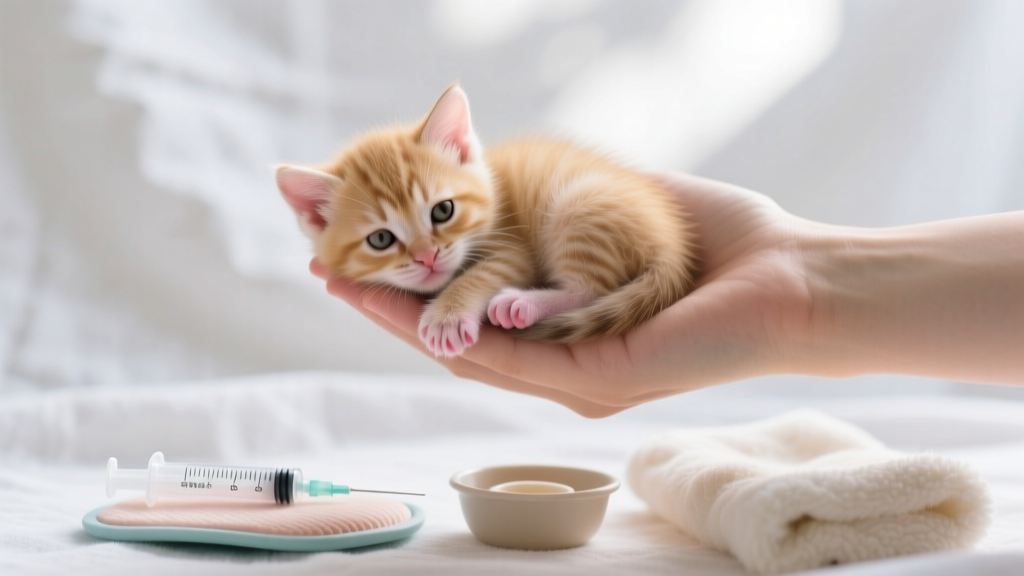
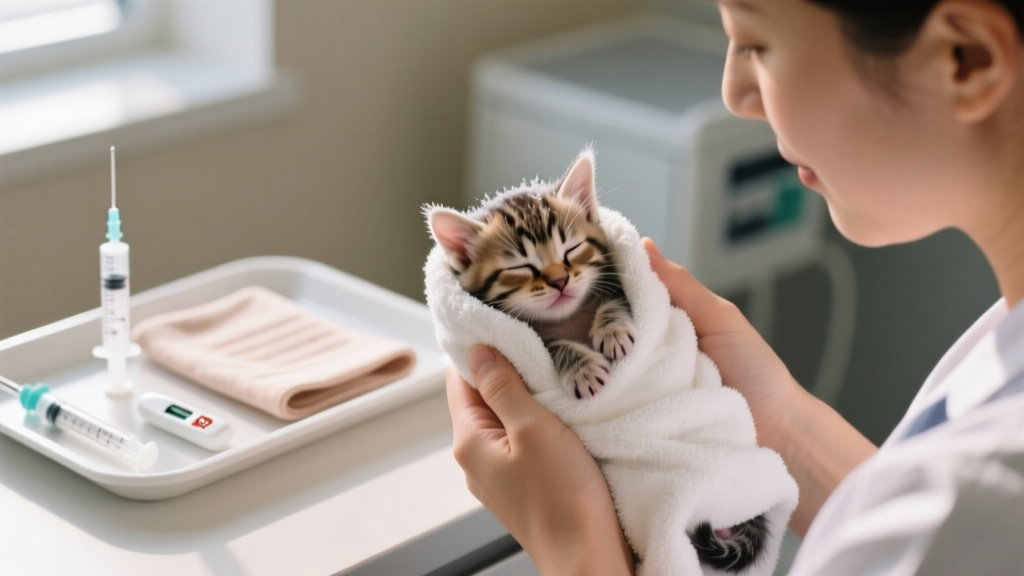
Hold the kitten upright (never on its back) with head slightly elevated. Use a 1–3 mL oral syringe (without needle) or a kitten bottle with a soft silicone nipple. Let them suckle at their own pace—never force. If they stop mid-feed, burp gently by holding upright against your shoulder and patting softly. Average intake per feeding: 10–13 mL per 100g body weight. Track daily: a healthy 3-week-old should gain 7–10g/day. Weigh each kitten daily on a digital gram scale (not kitchen scale)—a loss of >5% body weight over 24 hours warrants immediate vet assessment.
Stimulation & Elimination: Non-Negotiable Daily Rituals
Mother cats instinctively lick their kittens’ perineal and anal regions after every feeding to trigger urination and defecation. Orphaned kittens lack this reflex—and without human intervention, urinary retention and constipation develop within 24 hours. Left untreated, bladder distension can cause urethral rupture or renal shutdown.
After every single feeding, use a warm, damp cotton ball or soft tissue to gently stroke the genital and anal area in downward motions for 30–45 seconds—or until urine and/or stool appears. Urine should be pale yellow and clear; stool should be soft, mustard-yellow, and formed (not watery or hard). Document output: no urine in 12 hours = emergency. No stool in 24 hours = constipation protocol needed (see table below). Never use Q-tips—they risk rectal perforation.
Dr. Lin confirms: "I’ve treated over 40 kittens in the past year with megacolon caused by chronic unstimulated constipation starting at week 3. It’s preventable 100% of the time with consistent stimulation. This isn’t optional care—it’s physiological necessity."
Thermoregulation & Environment: The Invisible Lifeline
A 3-week-old kitten cannot shiver effectively and has minimal brown adipose tissue—their primary heat source. Their thermoneutral zone is 85–90°F. Ambient room temperature (72°F) is dangerously cold. Hypothermia begins silently: lethargy, weak suckling, shallow breathing, and cool extremities. Rectal temperature below 94°F requires immediate warming—but never use direct heat sources (heating pads, lamps, or hot water bottles), which cause burns or thermal shock.
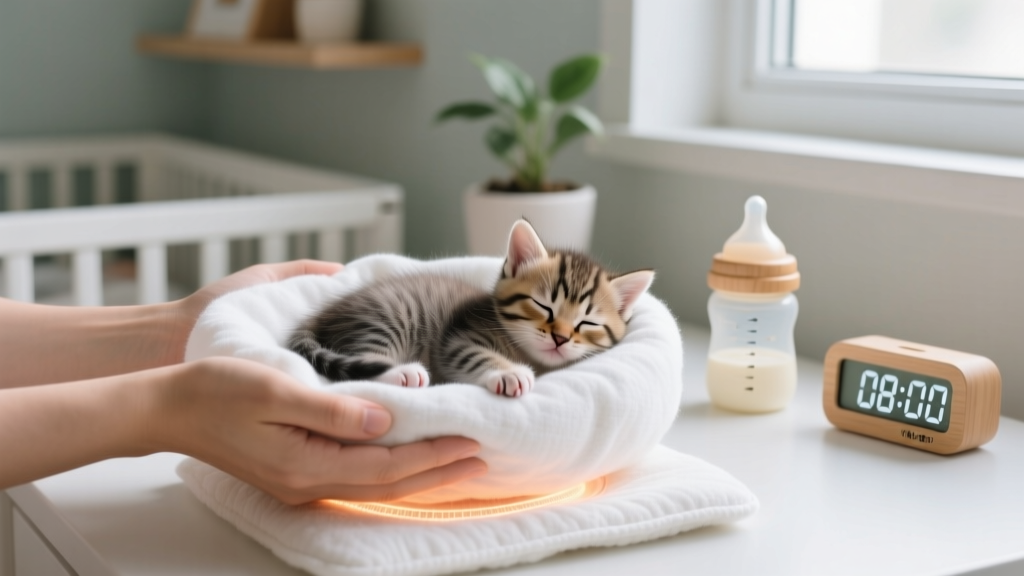
Use a double-walled incubator setup: line a small cardboard box with fleece (no loose threads!), place a microwavable rice sock (heated 20 sec, wrapped in towel) on one side, and leave the other side cooler for thermoregulatory choice. Monitor with a digital thermometer placed inside the nest—not on the heating source. Ideal nest floor temp: 85–88°F. Humidity matters too: keep relative humidity at 55–65% to prevent nasal crusting and respiratory drying. A hygrometer + small cool-mist humidifier (cleaned daily) is non-negotiable in dry climates or heated homes.
Also critical: isolation. Keep kittens away from dogs, adult cats, and young children. Their naive immune system makes them vulnerable to upper respiratory viruses (e.g., feline herpesvirus) that may be asymptomatic in adults but fatal in neonates.
Developmental Milestones & Red-Flag Monitoring
At 3 weeks, kittens enter the ‘socialization window’—but only if physically stable. Neurological development accelerates: they lift heads steadily, pivot while lying down, and attempt standing by day 21. Eyes should be fully open and blue (permanent color won’t settle until week 7–8). Ear canals are fully open; respond to sudden sounds by freezing or turning heads.
Track these daily:
- Eyes: Should track movement horizontally. Cloudiness, discharge, or squinting = conjunctivitis (often chlamydial or mycoplasma—requires vet-prescribed topical antibiotics).
- Nose/Respiratory: Clear, moist nose. Sneezing, nasal discharge, or audible congestion = possible URI—call vet within 2 hours if accompanied by lethargy or decreased suckling.
- Umbilical stump: Should be fully dried and fallen off by day 10. Any redness, swelling, or pus = omphalophlebitis—a systemic infection requiring injectable antibiotics.
- Weight curve: Plot daily weights on graph paper. Flatline for 48+ hours or decline = failure to thrive—rule out parasites (giardia, coccidia), viral infection (panleukopenia), or congenital defects.
Case study: Luna, a 3-week-old singleton rescued from an apartment fire, presented with 12% weight loss over 36 hours and intermittent tremors. Shelter staff initiated aggressive warming, IV dextrose, and fecal PCR testing—revealing cryptosporidium. She recovered fully with targeted antiprotozoal therapy. This underscores why ‘watchful waiting’ is dangerous at this age.
| Age | Key Actions | Tools Needed | Warning Signs Requiring Vet Within 2 Hours |
|---|---|---|---|
| Day 21 (3 weeks) | Feed every 3–4 hrs; stimulate after each feed; weigh daily; maintain 85–88°F nest temp | Digital gram scale, KMR, 1–3 mL syringes, warm cotton balls, rice sock, hygrometer | No urine in 12 hrs; rectal temp <94°F; refusal to suckle >2 feeds; green/yellow nasal discharge |
| Day 22–24 | Introduce shallow dish of warmed KMR mixed 1:1 with wet kitten food (gruel); continue bottle/syringe for 75% of calories | Shallow ceramic dish, kitten food (grain-free, high-protein), mixing bowl | Diarrhea lasting >6 hrs; straining with no stool >24 hrs; blood in stool or urine |
| Day 25–27 | Begin short socialization: 5-min gentle handling 3x/day; introduce soft toys; monitor litter box interest | Soft cloth, plush toy, shallow litter box with unscented, non-clumping litter | Sudden vocalization during handling (not purring); persistent crying >10 mins; limb dragging or head tilt |
| Day 28+ | Wean fully to gruel; introduce kitten-safe play; schedule first vet visit (weight check, deworming, wellness exam) | Vet records, dewormer (pyrantel pamoate), kitten-safe toys | No weight gain for 72+ hrs; third eyelid protrusion; seizures or disorientation |
Frequently Asked Questions
Can I give my 3-week-old kitten baby formula or goat’s milk?
No—absolutely not. Human infant formula lacks taurine, arginine, and proper fat ratios for feline development and causes severe amino acid deficiencies. Goat’s milk has excessive fat and minerals, leading to diarrhea, metabolic acidosis, and kidney strain. Only use veterinarian-approved kitten milk replacers. A 2022 study in Veterinary Record found 89% of kittens fed non-KMR formulas developed clinical signs of malnutrition within 5 days.
My kitten hasn’t pooped in 24 hours—what do I do?
First, ensure stimulation is thorough and consistent (30–45 sec, downward strokes, warm cotton). If still no stool, gently massage the abdomen in clockwise circles for 1 minute. Offer 0.25 mL of pure pumpkin (not pie filling) mixed into KMR. If no result in 6 hours, contact your vet: constipation at this age may indicate intestinal obstruction, hypomotility, or electrolyte imbalance requiring subcutaneous fluids or laxative gel.
Is it normal for my 3-week-old to cry constantly?
Some vocalization is normal during feeding or stimulation—but constant, high-pitched, or escalating cries signal distress. Rule out hunger (check feeding log), cold (take rectal temp), pain (palpate belly gently), or illness (check eyes/nose/temp). Persistent crying paired with lethargy or poor suckling is a red flag for sepsis or neurological issue—seek emergency care.
When should I take my 3-week-old kitten to the vet for the first time?
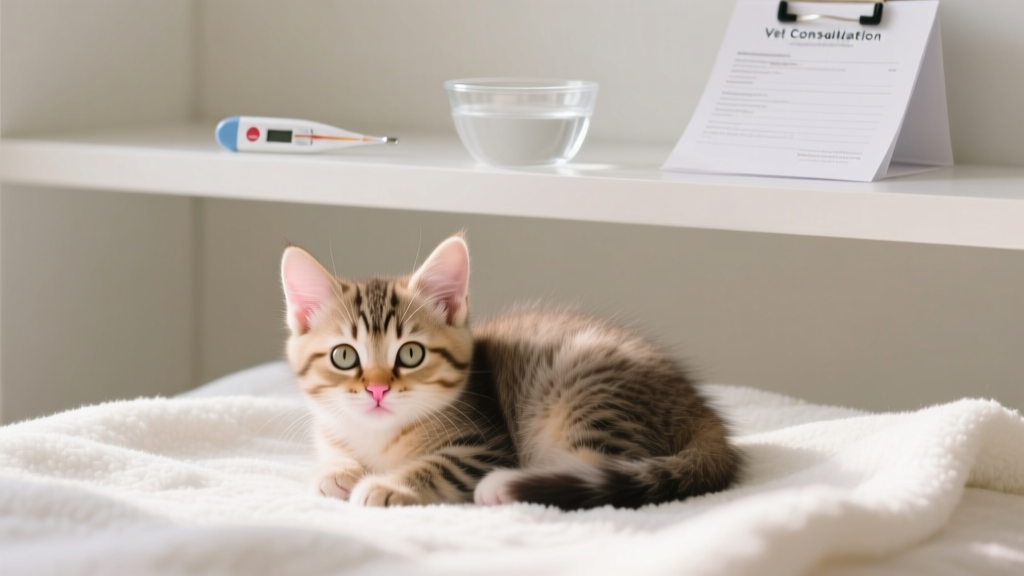
Even if thriving, schedule a wellness visit by day 28. The vet will assess weight curve, hydration, heart/lung sounds, parasite screening (fecal float), and administer first deworming (pyrantel pamoate). Many clinics offer ‘neonatal neonate exams’ with pediatric vets—ask specifically. Early detection of congenital defects (e.g., heart murmurs, cleft palate) dramatically improves outcomes.
Can I bathe my 3-week-old kitten?
No—bathing induces catastrophic heat loss and stress. If soiled, spot-clean with warm, damp cloth and dry immediately with warm air (hair dryer on low, held 18+ inches away). Never submerge. Kittens this age cannot regulate body temperature during evaporation—and immersion can trigger cardiac arrest.
Common Myths Debunked
Myth #1: “If the kitten feels warm to the touch, it’s not hypothermic.”
False. Kittens with early hypothermia often feel ‘normal’ externally—their core temperature drops first. Always verify with a rectal thermometer. A surface-temp reading is meaningless.
Myth #2: “Stimulating elimination is only needed for the first week.”
Dangerously false. Stimulation remains essential until kittens eliminate reliably on their own—typically between weeks 4–5. Skipping stimulation at week 3 causes urinary retention, which can progress to bladder rupture in under 36 hours.
Related Topics (Internal Link Suggestions)
- Kitten Deworming Schedule — suggested anchor text: "kitten deworming schedule by age"
- Signs of Kitten Distress — suggested anchor text: "early signs of kitten illness"
- Homemade Kitten Formula — suggested anchor text: "safe homemade kitten milk replacer recipe"
- When Do Kittens Open Their Eyes? — suggested anchor text: "kitten eye opening timeline"
- Kitten Socialization Checklist — suggested anchor text: "3 to 8 week kitten socialization guide"
Your Next Step: Act With Confidence, Not Panic
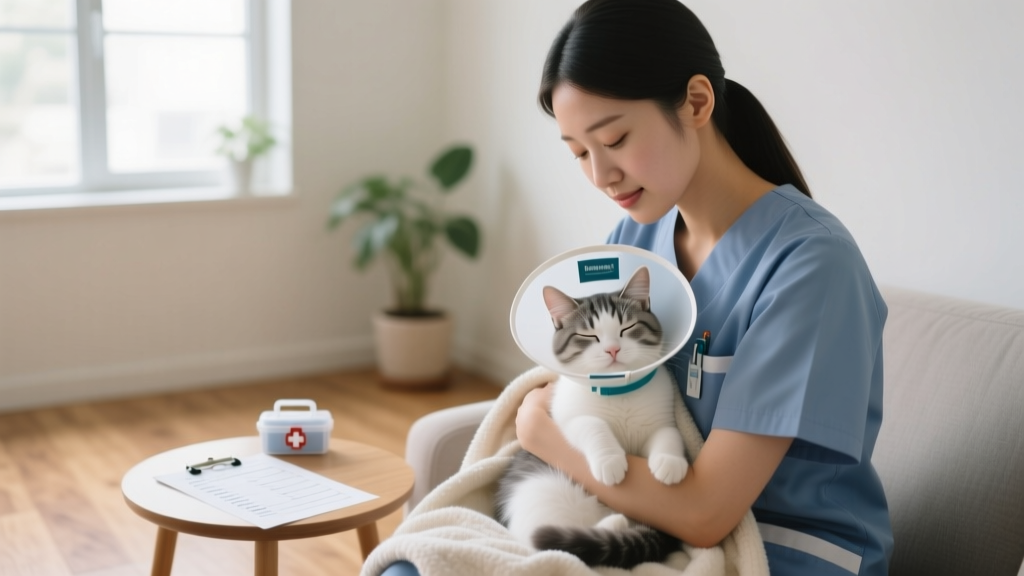
Caring for a 3-week-old kitten is intense—but entirely manageable with precise, evidence-based actions. You now know the exact feeding volume, the non-negotiable stimulation rhythm, the life-saving warmth parameters, and the 5 red flags that demand immediate vet contact. Don’t wait for ‘maybe’—if something feels off, trust your gut and call your veterinarian or nearest 24-hour emergency clinic. Bookmark this guide, print the care timeline table, and weigh your kitten today. Every gram gained is a victory. Every hour of warmth is protection. And every stimulated elimination is a safeguard against silent organ failure. You’ve got this—and your kitten is already safer because you sought answers.