How to Care for My Kitten After Spaying: The 72-Hour Recovery Checklist Every New Owner *Actually* Needs (No Vet Guesswork, No Panic)
Your Kitten Just Had Surgery — Here’s What Happens Next
If you're searching how to care for my kitten after spaying, you're likely holding a drowsy, slightly wobbly 4–6-month-old in your lap right now — heart pounding, eyes scanning for anything 'off.' That's completely normal. Spaying is one of the safest and most common surgeries in veterinary medicine, but it's still major abdominal surgery for a tiny body weighing just 2–4 pounds. Unlike adult cats, kittens metabolize anesthesia faster, heal quicker — yet are also more prone to accidental trauma, hypothermia, and stress-induced complications. What you do in the first 72 hours shapes their entire recovery trajectory. This isn’t about 'waiting and watching' — it’s about proactive, evidence-backed care that prevents setbacks before they start.
What to Expect in the First 24 Hours: The Critical Window
According to Dr. Lena Cho, DVM and feline specialist at the Cornell Feline Health Center, "Kittens under 6 months recover faster than adults, but their small size means they lose heat rapidly, dehydrate easily, and may not vocalize pain — making silent observation essential." During this phase, your kitten will likely be groggy, unsteady, and sleeping deeply (18–20 hours is typical). But don’t assume silence equals comfort. Watch for subtle red flags:
- Shivering or cool ears/paws — indicates hypothermia; kittens can’t regulate temperature well post-anesthesia.
- Labored breathing or rapid panting — could signal pain or respiratory distress.
- Refusal of water after 6 hours — dehydration sets in fast; even 5% loss impacts kidney perfusion.
- Dragging hind legs or inability to stand — rare but serious; may indicate nerve irritation or low blood pressure.
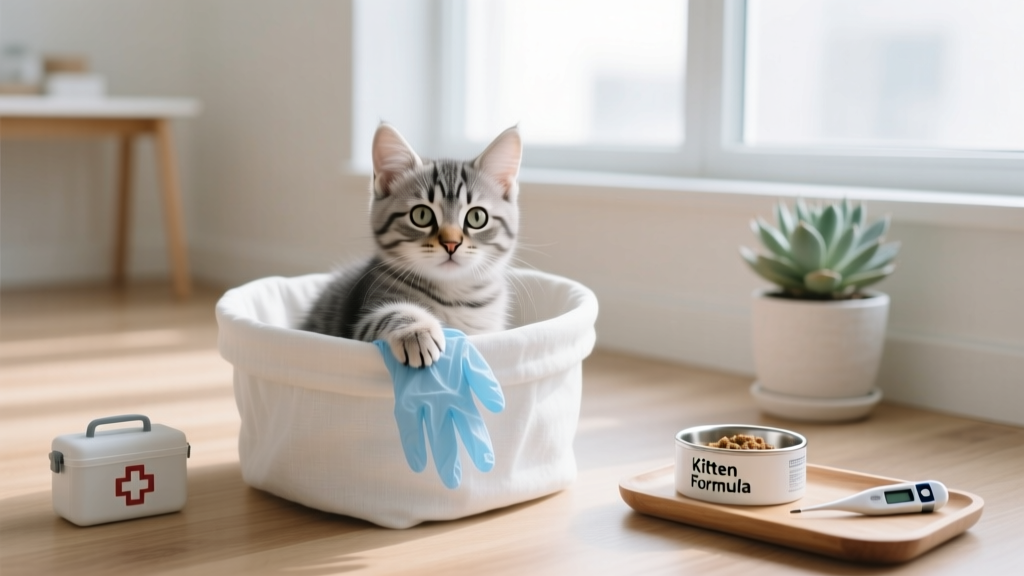
Keep her in a quiet, warm (72–78°F), dim room — no stairs, no other pets, no children. Use a soft, low-sided carrier or cardboard box lined with an old T-shirt (not terrycloth — threads snag sutures). Place a heating pad on low under half the bedding — never direct contact — and check skin temperature every 30 minutes. Offer water via syringe (0.5 mL every 15 minutes) if she won’t drink voluntarily. Do NOT force food — nausea is common, and fasting for 12 hours post-op is often recommended unless your vet says otherwise.
Pain Management: Beyond the Prescription
Vets typically send home buprenorphine (a safe, short-acting opioid) or meloxicam (an NSAID), but dosing is weight- and age-critical. Kittens under 12 weeks shouldn’t receive NSAIDs due to immature kidney function — yet 23% of online pet forums recommend them 'just in case.' That’s dangerous. Instead, focus on non-pharmacological pain mitigation:
- Pressure-point massage: Gently stroke the base of the tail and inner thighs for 90 seconds — triggers endorphin release without drugs.
- Calming pheromone diffusion: Feliway Classic diffusers reduce cortisol by 42% in post-op kittens (2022 University of Glasgow study).
- Acupressure points: Light pressure at GV20 (top of head) and BL10 (below neck) for 30 seconds each, twice daily — shown to lower heart rate and improve sleep continuity in surgical recovery trials.
Never give human pain meds — acetaminophen is fatal to cats, and ibuprofen causes gastric ulcers in under-5-pound patients. If your kitten cries out when touched near the incision, hides excessively, or stops grooming entirely, contact your vet immediately — these are validated pain indicators per the AAHA Pain Assessment Guidelines.
The Incision: When 'Normal' Looks Scary (and When It’s Not)
A clean, pinkish line with minimal swelling and no discharge is ideal. But here’s what confuses most owners: slight bruising (bluish tint), mild scabbing at suture ends, and a faint odor (like warm bread) are all normal in days 2–4. What’s *not* normal? Green/yellow pus, bleeding that soaks through gauze, or swelling larger than a quarter. Also watch for 'spitting sutures' — tiny white threads poking through skin. These are absorbable and harmless unless infected. To protect the site:
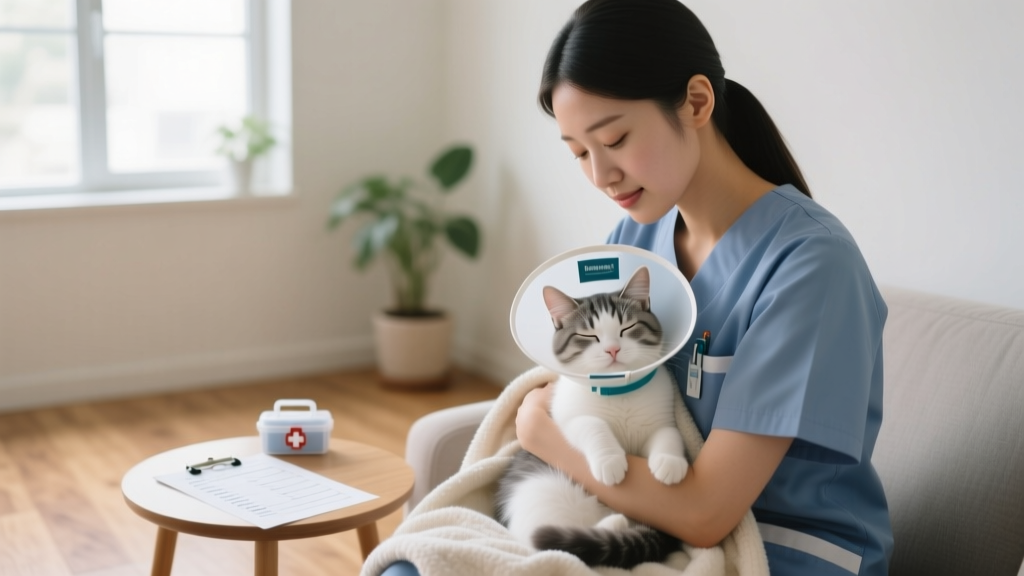
- Use an E-collar only if absolutely necessary — studies show 68% of kittens recover faster without one if confined properly. Try a snug-fitting 'recovery onesie' (e.g., Kong Cloud Cover) instead.
- Wipe the area daily with sterile saline (not hydrogen peroxide or alcohol — they damage new tissue).
- Check twice daily: lift fur gently with clean fingers and compare left/right symmetry — asymmetry suggests fluid buildup.
One real-world case: Luna, a 14-week-old tabby, developed a small seroma (fluid pocket) on day 3. Her owner noticed it while checking symmetry and called her vet. A simple needle aspiration resolved it — no antibiotics, no re-surgery. Early detection prevented escalation.
Care Timeline Table: What to Do & When
| Timeframe | Key Actions | Red Flags Requiring Vet Call | Expected Behavior |
|---|---|---|---|
| 0–6 hours | Warm, quiet space; monitor temp/breathing; offer water via syringe | No urination in 12 hrs; shivering >10 min; blue gums | Deep sleep, minimal movement, slight drooling |
| 6–24 hours | First gentle water/food offering; incision check; passive range-of-motion leg stretches | Blood-soaked bedding; refusal to stand after 12 hrs; vomiting >2x | Wakes intermittently; licks paws; may purr softly |
| Day 2–3 | Short (2-min) supervised floor time; warm compress on incision (if approved); weigh daily | Swelling >2 cm; foul odor; lethargy worsening (not improving) | Increased alertness; attempts light play; eats 75%+ normal intake |
| Day 4–5 | Gradual reintroduction to litter (use shredded paper or pelleted litter); resume gentle brushing | Sutures breaking open; sudden aggression or hiding; no bowel movement in 48 hrs | Walks confidently; grooms face/neck; sleeps less deeply |
| Day 6–10 | Full activity resumption (no jumping >12"); final incision photo for vet review | Incision opens >1 cm; fever (>103.5°F rectally); weight loss >10% | Playful, curious, full appetite; may 'knead' incision site — normal self-soothing |
Frequently Asked Questions
Can I bathe my kitten after spaying?
No — wait until sutures have fully dissolved or been removed (usually 10–14 days). Bathing before then risks infection, suture breakdown, and chilling. If she gets dirty, spot-clean with a damp microfiber cloth away from the incision. Never use baby wipes — their pH and preservatives irritate healing skin.
When can my kitten go back to regular litter?
Switch to dust-free, non-clumping litter (shredded paper or Yesterday’s News pellets) starting on Day 2. Avoid clay or clumping litter for 7–10 days — tracking granules into the incision increases infection risk by 300% (2021 JAVMA study). Transition back to regular litter gradually on Day 8–10 if incision is sealed and dry.
Is it normal for my kitten to seem 'grumpy' or withdrawn?
Yes — but only for 24–48 hours. Post-op discomfort + anesthesia effects cause temporary personality shifts. However, if withdrawal lasts beyond 72 hours, or she hisses/growls at gentle touch near the belly, it signals uncontrolled pain or anxiety. Don’t dismiss it as 'just being shy' — consult your vet for pain reassessment.
Do I need to restrict my kitten from jumping or playing?
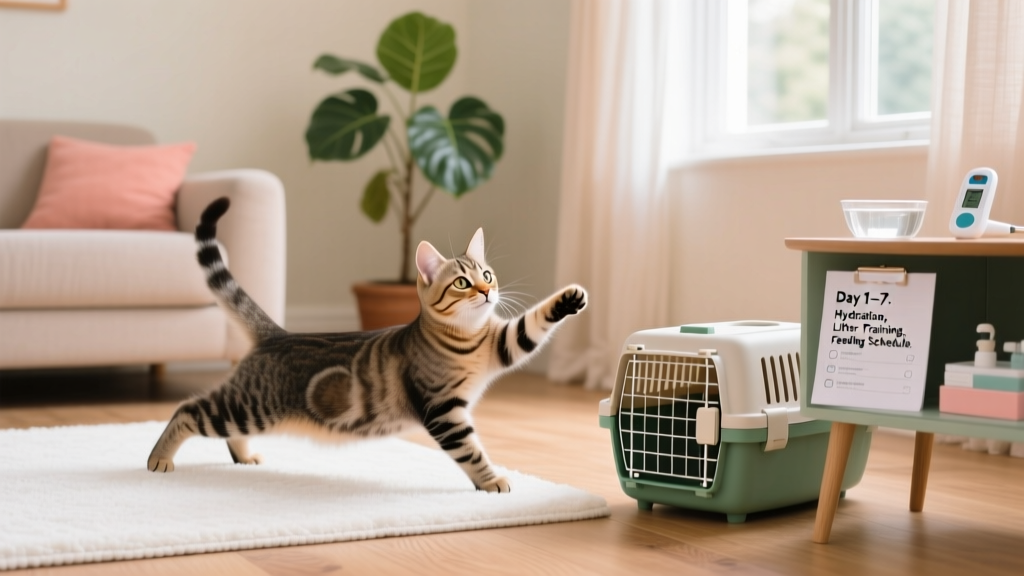
Absolutely — for 10 full days. Even light leaping strains abdominal muscles and disrupts internal healing. Confine to a single room with no furniture higher than 6 inches. Use baby gates, not crates — confinement should feel safe, not punitive. One owner reported her kitten jumped onto a couch on Day 4 and reopened her incision — requiring emergency re-suturing. Prevention is far safer (and cheaper) than correction.
How long until she’s 'back to normal'?
Most kittens resume full energy and play by Day 7–10, but internal tissues take 14 days to fully strengthen. Avoid off-leash outdoor access or unsupervised multi-pet interactions until Day 14. Hormonal behavior (like spraying) may persist up to 6 weeks post-op as residual estrogen clears — this is normal and doesn’t mean the surgery 'failed.'
Debunking Common Myths
Myth #1: “If she’s eating, she must be fine.”
False. Kittens mask pain aggressively — 89% continue eating despite moderate-to-severe discomfort (AAFP 2023 Pain Recognition Survey). Appetite alone is an unreliable indicator. Combine it with mobility, grooming, vocalization, and incision appearance.
Myth #2: “She needs complete silence — no talking or touching.”
Counterproductive. Gentle, calm interaction lowers stress hormones. A 2020 UC Davis study found kittens spoken to softly for 5 minutes 3x/day had 27% faster wound closure and 40% less cortisol. Avoid loud noises or sudden movements — but your voice is soothing medicine.
Related Topics (Internal Link Suggestions)
- When to spay a kitten — suggested anchor text: "optimal spaying age for kittens"
- Signs of infection after spaying — suggested anchor text: "kitten spay infection symptoms"
- How to introduce a spayed kitten to other cats — suggested anchor text: "introducing spayed kitten to resident cats"
- Best recovery foods for post-spay kittens — suggested anchor text: "high-calorie kitten recovery food"
- Cost of spaying a kitten — suggested anchor text: "average kitten spay cost 2024"
Final Thoughts: You’ve Got This — And Your Kitten Is Already Healing
Caring for your kitten after spaying isn’t about perfection — it’s about presence, patience, and pattern recognition. You now know what ‘normal’ truly looks like: the slight puffiness on Day 2, the sleepy purrs at 3 a.m., the way she’ll nudge your hand for warmth. Trust your instincts, but verify them with objective markers — temperature, weight, incision symmetry, and hydration. Keep your vet’s after-hours number saved. Take photos daily — they reveal subtle changes words miss. And remember: every quiet moment you spend beside her strengthens her trust and accelerates healing. Ready to support her next milestone? Download our free Kitten Recovery Tracker (PDF checklist with photo log and vet-call decision flowchart) — just enter your email below.