Feline Mast Cell Tumor: Skin and Internal Variants
1. Why this topic matters for cat owners
Finding a new lump on your cat’s skin or noticing vague signs like vomiting, appetite changes, or weight loss can be unsettling. Mast cell tumors (MCTs) are one of the more common tumor types in cats, and they can show up as skin bumps or develop internally, especially in organs like the spleen and intestines. The encouraging part is that many feline mast cell tumors—particularly some skin forms—can be treated effectively, especially when caught early.
This guide explains what mast cell tumors are, how skin and internal forms differ, what warning signs to watch for, and what you can expect at the veterinarian. If your cat has a suspicious lump or ongoing digestive issues, a veterinary exam is always the safest next step.
2. Overview: What is a mast cell tumor?
Mast cells are a normal part of the immune system. They live in tissues throughout the body (especially the skin and digestive tract) and help fight parasites and participate in allergic reactions. Mast cells contain granules filled with chemicals such as histamine and heparin. When mast cells are triggered, they release these chemicals, causing inflammation, redness, itching, and sometimes stomach acid changes.
A mast cell tumor occurs when mast cells grow uncontrollably and form a mass. In cats, mast cell tumors generally fall into two broad categories:
- Cutaneous (skin) mast cell tumors: Lumps or plaques in the skin or just under it. Many are treatable with surgery.
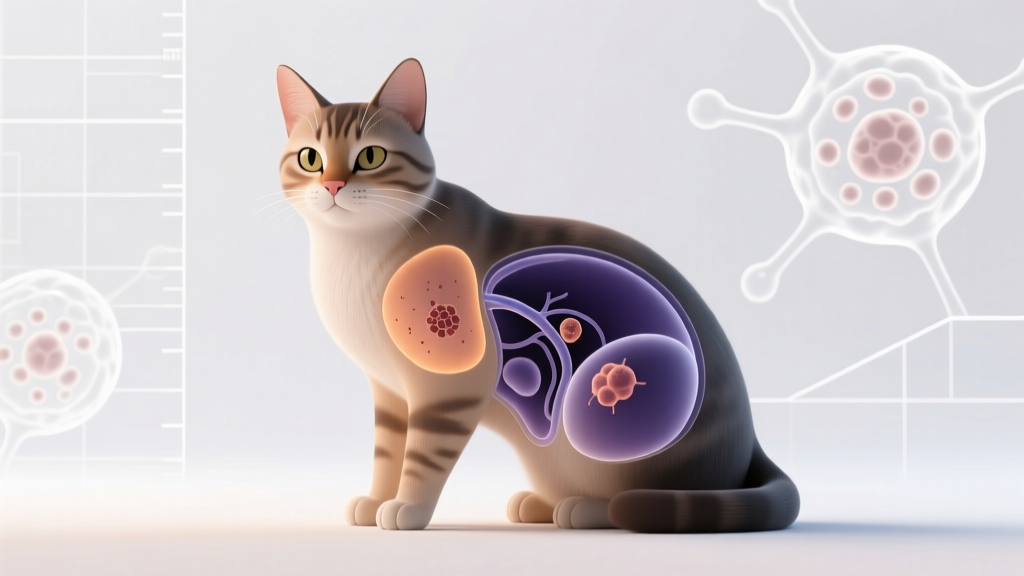
- Visceral (internal) mast cell tumors: Tumors in internal organs, most commonly the spleen, intestines, and sometimes liver or bone marrow. These may cause vague signs and can require more involved treatment.
Unlike some cancers, mast cell tumors can be tricky because their behavior varies. Some are slow-growing and localized. Others may spread (metastasize) or cause illness through histamine release, even if the tumor itself isn’t very large.
3. Symptoms and warning signs to watch for
Signs depend on whether the tumor is in the skin or internal organs, and whether mast cell chemicals (like histamine) are affecting the body.
Skin (cutaneous) mast cell tumor signs
- A new lump anywhere on the body (often head/neck in cats, but can be anywhere)
- Raised bump, plaque, or thickened area that may be hairless, red, or crusty
- Size changes: the lump may swell and shrink over days/weeks
- Itching or irritation at the site; your cat may scratch, lick, or rub
- Redness or hives around the lump after touching it (from histamine release)
- Multiple skin lumps (less common, but possible)
Internal (visceral) mast cell tumor signs
- Vomiting (sometimes frequent or chronic)
- Diarrhea or soft stool
- Decreased appetite or picky eating that persists
- Weight loss or muscle loss
- Lethargy or reduced activity
- Abdominal swelling or a “pot-bellied” look (possible enlarged spleen or fluid)
- Pale gums (possible anemia)
- Dark, tarry stool (possible gastrointestinal bleeding)
Signs related to histamine release
Mast cell tumors can release histamine, which may contribute to:
- Stomach irritation or ulcers (vomiting, poor appetite, dark stools)
- General itchiness or skin redness
- Low blood pressure in severe cases (weakness, collapse—rare but urgent)
Practical tip: If you find a new lump, take a clear photo and measure it (in millimeters or with a coin for scale). Recheck every 1–2 weeks. Any lump that persists longer than a couple of weeks, grows, or changes should be examined by a veterinarian.
4. Causes and risk factors
In many cats, we don’t know exactly why a mast cell tumor forms. Cancer is usually caused by a mix of genetic factors and environmental influences over time.
Known and suspected risk factors
- Age: Mast cell tumors are more common in middle-aged to older cats, though they can occur at any age.
- Breed predispositions: Some studies suggest higher rates of certain mast cell tumor types in breeds like Siamese, but any cat can be affected.
- Immune and inflammatory factors: Mast cells are immune cells, so chronic inflammation may play a role in some cases, though this isn’t fully understood.
- Previous skin disease: Not a direct cause, but skin tumors can be overlooked when cats have ongoing dermatitis or allergies.
Most importantly: mast cell tumors are not your fault, and they are not contagious to other pets.
5. Diagnosis: What to expect at the vet
Because mast cell tumors can mimic benign lumps, diagnosis is essential. Many cats act normal even when a tumor is present, so testing matters more than “waiting to see.”
Common diagnostic steps
- Full physical exam: The veterinarian will check the lump(s), skin, lymph nodes, and abdomen.
- Fine needle aspirate (FNA): A tiny needle samples cells from the lump. For many skin MCTs, this is a quick, low-stress test that can strongly suggest mast cell tumor.
- Biopsy: If FNA results are unclear or to guide treatment planning, a surgical biopsy may be recommended.
- Bloodwork and urinalysis: Helps assess overall health, anemia, organ function, and safety for anesthesia.
- Imaging:
- Abdominal ultrasound to evaluate spleen, liver, intestines, and lymph nodes
- X-rays may be used to look for other concerns and evaluate general health
- Sampling internal organs: If the spleen is enlarged or intestinal thickening is seen, the vet may recommend FNA, biopsy, or other sampling.
Grading and staging (plain language)
- Grade describes how aggressive the tumor cells look under the microscope.
- Stage describes how far the disease has spread (local only vs. lymph nodes/organs).
Not every case needs extensive staging, but internal signs or an abnormal ultrasound often justify a deeper look.
6. Treatment options (medical, surgical, and home care)
Treatment depends on location (skin vs. internal), whether there are multiple tumors, and your cat’s overall health. Your veterinarian may also recommend consultation with a veterinary oncologist for complex cases.
Surgical treatment
- Skin tumors: Surgical removal is often the first choice. Many feline cutaneous mast cell tumors can be cured with complete excision.
- Spleen involvement: If the spleen is affected, splenectomy (surgical removal of the spleen) is commonly recommended and can significantly improve quality of life.
- Intestinal tumors: Surgery may be considered in select cases, depending on location and spread, but these cases can be more complicated.
Your vet will discuss anesthesia safety, pain control, and what margins (how much tissue around the tumor) are needed.
Medical treatment
- Antihistamines (such as H1 blockers): May help reduce histamine-related effects like itching or stomach irritation. Only give these if your veterinarian prescribes them; some human medications are unsafe for cats.
- Stomach protectants: Medications that reduce stomach acid or protect the GI lining may be recommended if vomiting, appetite loss, or ulcer risk is present.
- Corticosteroids (e.g., prednisolone): Sometimes used to reduce inflammation and tumor burden, especially when surgery isn’t possible or while planning treatment.
- Chemotherapy: Considered for some internal or more aggressive cases, or when disease is widespread. Cats often tolerate chemo better than many owners expect, but it requires monitoring.
Home care and supportive care
- Monitor appetite, vomiting, and stool: Keep a simple log (daily notes) to share with your vet.
- Prevent licking/scratching after surgery: Use an e-collar or recovery suit as advised to protect the incision.
- Give medications exactly as directed: Ask your vet what to do if a dose is missed or vomiting occurs after dosing.
- Nutrition support: If appetite is reduced, talk to your vet about GI-friendly diets, appetite stimulants, or ways to increase calories safely.
- Gentle handling of lumps: Repeated rubbing or squeezing can cause mast cells to degranulate and inflame the area.
Practical tip: Before any planned surgery for a suspected mast cell tumor, ask your vet whether pre-treatment with antihistamines or stomach protectants is appropriate for your cat’s case.
7. Prevention strategies and early detection tips
There’s no guaranteed way to prevent mast cell tumors, but early detection makes a real difference.
Actions you can start today
- Monthly “nose-to-tail” check: While petting your cat, feel for new lumps, scabs, or thickened skin—especially around the head, neck, and trunk.
- Weigh your cat at home: Monthly weight checks can catch subtle weight loss early (a baby scale works well for many cats).
- Track GI signs: Occasional hairballs happen, but repeated vomiting or ongoing soft stool deserves a veterinary visit.
- Schedule routine wellness exams: Even indoor cats benefit from regular checkups; your vet may detect an enlarged spleen or subtle body condition changes.
- Don’t “watch and wait” on lumps: A quick FNA can provide clarity and peace of mind.
8. Prognosis and quality of life
Prognosis varies widely. Many cats with solitary skin mast cell tumors do very well after surgical removal. Internal mast cell tumors can be more serious, but some cats respond well to splenectomy and supportive care, and may enjoy good quality time.
Factors that influence outlook
- Tumor location (skin vs. spleen vs. intestines)
- Whether the tumor has spread to lymph nodes, liver, or bone marrow
- How aggressive the cells look on cytology/biopsy
- Overall health, including kidney function and heart health (important for anesthesia and treatment planning)
Quality of life priorities
- Comfort: good pain control, reduced nausea/itching, stress-minimized care
- Steady appetite and hydration
- Normal, enjoyable routines: grooming, social time, play, and rest
- Regular rechecks: catching recurrence or complications early
If treatment choices feel overwhelming, ask your veterinarian to walk you through goals: cure, control, or comfort. All three are valid goals depending on the individual cat and family situation.
9. When to seek emergency veterinary care
Most mast cell tumor cases are not immediate emergencies, but certain signs should be treated urgently.
- Difficulty breathing, open-mouth breathing, or severe wheezing
- Collapse, extreme weakness, or inability to stand
- Pale or white gums, or signs of sudden anemia
- Repeated vomiting (especially multiple times in a day), vomiting blood, or inability to keep down water
- Black, tarry stool or obvious blood in stool
- Rapidly enlarging lump, significant swelling/redness, or intense pain at a tumor site
- Post-surgery concerns: bleeding from the incision, lethargy that worsens, refusal to eat for 24 hours, or signs of infection (heat, pus, foul odor)
If you’re unsure whether it’s an emergency, call your veterinary clinic or the nearest emergency hospital for guidance. It’s always appropriate to ask.
10. FAQ: Common questions cat owners ask
Can a mast cell tumor in cats be benign?
Mast cell tumors exist on a spectrum. Some feline skin mast cell tumors behave in a more benign, localized way and may be cured with surgery. Others can be more aggressive or recur. Because you can’t tell behavior just by looking, veterinary testing (FNA/biopsy) is the safest approach.
Do mast cell tumors in cats spread?
Some do, especially internal (visceral) forms or more aggressive tumors. Spread may involve lymph nodes, liver, or bone marrow. Your veterinarian may recommend staging tests (bloodwork, ultrasound, sampling) if there are internal signs or concerning exam findings.
My cat’s lump changes size—does that mean it’s a mast cell tumor?
Size changes can happen with mast cell tumors because mast cells can release histamine and trigger localized swelling. Other conditions can also fluctuate, including allergic skin reactions or cysts. A fine needle aspirate is often the quickest way to get clarity.
Is surgery risky if the tumor releases histamine?
Most cats do well with appropriate planning. Veterinarians may use medications before and after surgery to reduce histamine-related effects and protect the stomach. Your vet will tailor anesthesia and monitoring to your cat’s health and tumor location.
What’s the outlook after spleen removal for splenic mast cell tumor?
Many cats feel better after splenectomy if the spleen was enlarged or contributing to anemia or discomfort. Some cats can have meaningful good-quality time afterward, especially with supportive care and follow-up monitoring. Your veterinarian can give the most accurate expectation based on ultrasound findings, lab work, and any additional testing.
Can I treat a mast cell tumor at home with supplements or topical products?
No home remedy can reliably treat a mast cell tumor, and some products can irritate the skin or delay diagnosis. If you notice a lump or persistent GI signs, schedule a veterinary visit. Ask your vet before giving supplements, as cats can be sensitive to ingredients and dosing.
If your cat has a new lump, ongoing vomiting, weight loss, or any symptoms that worry you, book an appointment with your veterinarian. Early evaluation is often simpler, less expensive, and more effective than waiting.
For more caring, practical cat health guidance, visit catloversbase.com and explore our library of articles designed to help you protect your cat’s comfort and wellbeing.