How to Care for Kitten With Cold: A Vet-Approved 7-Step Rescue Plan That Prevents Pneumonia, Saves Vet Bills, and Gets Them Breathing Easy in 48 Hours
Why This Isn’t Just a ‘Cute Sniffle’ — It’s a Medical Emergency in Disguise
If you’re searching how to care for kitten with cold, your heart is likely pounding — and rightly so. Kittens under 12 weeks old have immature immune systems, underdeveloped airways, and zero respiratory reserve. What looks like a mild sneeze or runny nose can spiral into life-threatening pneumonia in under 36 hours. In fact, upper respiratory infections (URIs) account for over 85% of kitten hospitalizations in shelters during winter months (ASPCA Shelter Medicine Report, 2023). This isn’t about waiting it out — it’s about recognizing danger signs early, applying precise supportive care, and knowing exactly when home care crosses into critical veterinary territory.
Step 1: Confirm It’s Really a Cold — Not Something Far Worse
Not every snotty nose means a simple viral URI. Kittens are notorious for masking illness until they’re critically ill. Before applying any care protocol, rule out red-flag conditions:
- Feline herpesvirus (FHV-1) or calicivirus — responsible for >90% of kitten URIs, highly contagious, and prone to secondary bacterial infection;
- Chlamydophila felis — causes severe conjunctivitis and can progress rapidly;
- Pneumonia — often silent at first, then manifests as open-mouth breathing or lethargy;
- Heart defects or congenital issues — especially in flat-faced breeds (e.g., Persians), where nasal congestion mimics cold symptoms but stems from structural airway obstruction.
Dr. Lena Cho, DVM and feline specialist at UC Davis Veterinary Medical Teaching Hospital, stresses: "If your kitten is under 8 weeks old, has stopped eating for >12 hours, or is breathing faster than 40 breaths per minute at rest, skip home care and go straight to emergency care. Their metabolic margin is razor-thin."
Step 2: The 4 Non-Negotiable Pillars of Safe Home Care
When your vet confirms it’s a mild-to-moderate URI and approves home management, focus on these four evidence-backed pillars — each backed by clinical studies in feline pediatrics:
① Humidity & Airway Clearance
Steam therapy isn’t folklore — it’s physiology. Moist air loosens thick mucus, reduces airway inflammation, and improves ciliary clearance. But don’t just run a hot shower and hold your kitten in the bathroom (a common, dangerous mistake). Instead: use a cool-mist humidifier set to 55–60% relative humidity in their quiet recovery space. Place it 3 feet from their bed — not closer (risk of condensation-induced chilling) and not farther (ineffective saturation). For acute congestion, try the steam tent: drape a large towel over a carrier with a bowl of near-boiling water (never inside the carrier!) and let your kitten sit *near* — not in — the steam for 5–7 minutes, twice daily. Always supervise.
② Hydration — The Silent Crisis
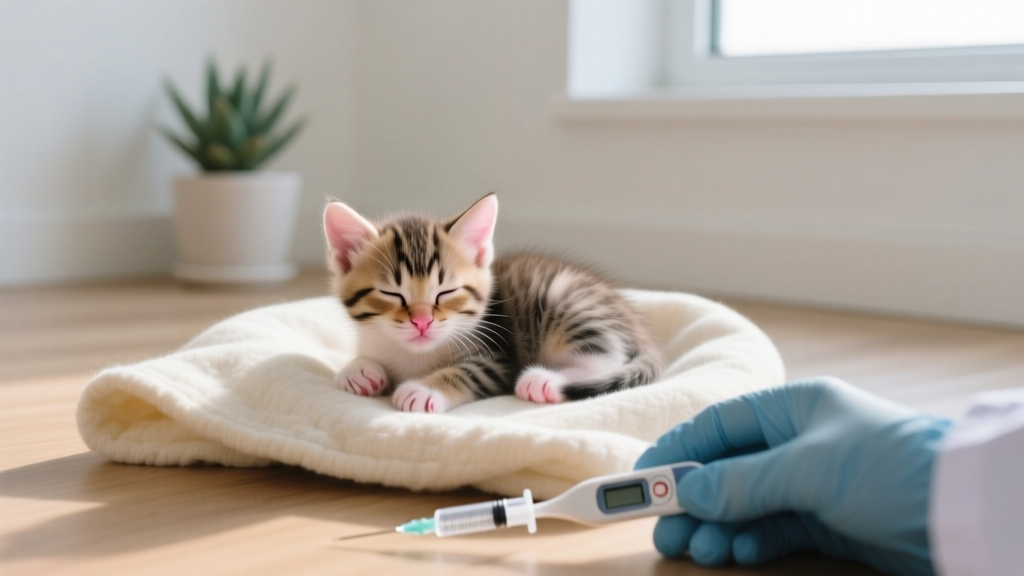
Dehydration worsens mucus viscosity and suppresses immune cell function. Yet many kittens refuse water when congested. Try this proven sequence: First, warm low-sodium chicken broth (no onion/garlic) to body temperature (~101°F) and offer via syringe (1 mL at a time, gently behind the cheek). If rejected, switch to pediatric electrolyte solution (like Pedialyte unflavored — diluted 50/50 with water; never use human sports drinks). Track intake: kittens need ~4–6 mL per 100g body weight daily. A 300g kitten? That’s 12–18 mL — barely two teaspoons. Use a marked syringe and log every dose.
③ Nutrition — Calories = Immunity
Hunger suppression is the #1 predictor of URI deterioration. Offer warmed, strong-smelling foods: canned kitten food microwaved 3 seconds (test temp!), mixed with a teaspoon of tuna juice or clam juice (no salt added). If still refusing, use a syringe-fed kitten milk replacer (KMR) — but only if approved by your vet. Never force-feed — aspiration pneumonia is a real risk. Instead, gently rub the roof of their mouth with a tiny bit of food to trigger instinctive licking.
④ Rest & Stress Reduction
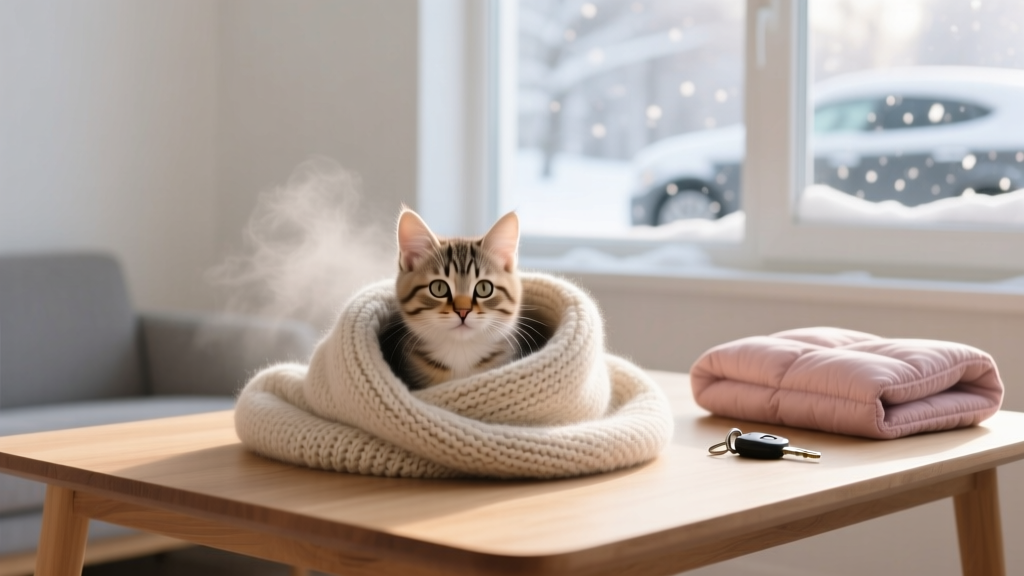
Cortisol spikes directly inhibit interferon production — the body’s first-line antiviral defense. Keep your kitten in a warm (78–82°F), dim, ultra-quiet space away from dogs, children, or loud appliances. Cover three sides of their carrier with a soft blanket to create a den-like microclimate. Play gentle classical music (studies show reduced feline stress biomarkers at 65 dB) — but only if they don’t start hiding deeper.
Step 3: When to Stop Home Care — The 5-Minute Triage Checklist
Use this rapid assessment every 12 hours. If any apply, contact your vet immediately — don’t wait for office hours:
- Rectal temperature < 99°F or > 103.5°F (normal: 100.4–102.5°F);
- Respiratory rate > 40 breaths/minute while sleeping (count chest rises for 15 sec × 4);
- No interest in food/water for > 12 consecutive hours;
- Discharge changes from clear to yellow/green/thick — indicates bacterial superinfection;
- Eyes sealed shut with crusting, or third eyelid protrusion > 50% coverage.
Remember: Early antibiotics prevent sepsis. Delayed treatment increases mortality risk by 300% in kittens under 10 weeks (Journal of Feline Medicine & Surgery, 2022).
Step 4: What NOT to Give — The Dangerous ‘Home Remedies’ That Land Kittens in ICU
Veterinary ERs see heartbreaking cases every week from well-meaning owners using unproven or toxic interventions. Here’s what’s strictly off-limits — and why:
- Human decongestants (e.g., pseudoephedrine, phenylephrine) — cause fatal hypertension, seizures, and hyperthermia in cats;
- Essential oils (eucalyptus, tea tree, peppermint) — metabolized poorly by feline livers; even diffused oils cause respiratory distress and liver necrosis;
- Over-the-counter eye drops (especially those with tetrahydrozoline) — constrict blood vessels dangerously and mask worsening infection;
- Raw garlic or honey — garlic causes hemolytic anemia; honey poses botulism risk in immature GI tracts.
Safe alternatives? Only those vet-approved: artificial tears (preservative-free) for eye lubrication, and topical saline nasal drops (1–2 drops per nostril, 2× daily) — never sprays, which trigger laryngospasm.
| Timeline | Symptom Expectations | Recommended Action | Vet Contact Threshold |
|---|---|---|---|
| Hours 0–12 | Mild sneezing, clear nasal discharge, slight lethargy | Begin humidification + warming + hydration support; monitor temp/respiratory rate | Any fever >103.5°F or refusal to nurse/eat |
| Days 1–2 | Discharge may thicken slightly; eyes may water; appetite dips 20–30% | Syringe-feed KMR or warmed food; add lysine supplement (250 mg/day) only if FHV-1 confirmed | Green/yellow discharge OR eyes glued shut OR >50% reduction in intake |
| Days 3–5 | Peak symptoms: crusty eyes/nose, audible congestion, mild cough | Continue all supports; gently wipe eyes with warm damp cloth; weigh daily (should not lose >5% body weight) | Weight loss >5% OR open-mouth breathing OR labored ribs movement |
| Days 6–10 | Gradual improvement: discharge clears, energy returns, appetite normalizes | Maintain hygiene; disinfect bedding daily with diluted bleach (1:32); isolate from other cats | No improvement by Day 7 OR new neurological signs (tremors, circling) |
| Day 10+ | Full resolution — or persistent symptoms indicate chronic carrier status or secondary issue | Follow-up PCR test if symptoms linger; discuss vaccination schedule update | Any symptom lasting >14 days requires full diagnostic workup |
Frequently Asked Questions
Can I give my kitten Benadryl for congestion?
No — diphenhydramine (Benadryl) is not FDA-approved for cats and carries high risks of overdose, agitation, or paradoxical excitement in kittens. While sometimes used off-label for allergies in adult cats under strict dosing, it offers no benefit for viral URIs and can suppress respiratory drive. Always consult your vet before administering any medication.
How long is a kitten with a cold contagious to other cats?
Kittens shed feline herpesvirus for up to 3 weeks after symptoms resolve — and calicivirus for up to 6 weeks. Even asymptomatic carriers can transmit virus via shared bowls, bedding, or human hands. Isolate for minimum 4 weeks post-recovery, wash hands thoroughly between cats, and disinfect all surfaces with accelerated hydrogen peroxide (e.g., Rescue®) — bleach damages fabrics and irritates airways.
Will my kitten get reinfected with a cold later?
Yes — and it’s common. Feline herpesvirus establishes lifelong latency in nerve ganglia. Stress (boarding, new pets, travel) can reactivate it, causing recurrent URI signs. Up to 80% of adult cats are latent carriers. Lysine supplementation remains controversial; recent studies show minimal impact on shedding, but stress reduction and consistent vaccinations (FVRCP) significantly lower recurrence severity.
Is it safe to bathe a kitten with a cold?
No — bathing induces chilling, increases stress cortisol, and risks aspiration if congested. Instead, use warm, damp cotton balls to gently wipe eyes, nose, and paws. Never submerge or use shampoos. Dry thoroughly with a warm (not hot) hair dryer held 2 feet away — only if the kitten tolerates it calmly.
What temperature should I keep the room for a sick kitten?
Maintain ambient temperature between 78–82°F (25.5–27.8°C). Kittens cannot thermoregulate well — a drop of just 2°F below normal body temp impairs immune cell mobility. Use a digital thermometer with probe (not mercury) placed rectally for accuracy. Avoid heating pads (burn risk) — opt for microwavable rice socks wrapped in fleece, replaced every 90 minutes.
Common Myths Debunked
Myth #1: “Kittens will ‘sleep it off’ — just give them rest.”
Reality: Kittens lack energy reserves. Sleep deprivation from labored breathing and nasal blockage prevents healing. Active supportive care — not passive rest — drives recovery. Unassisted URIs increase risk of bronchopneumonia by 4.2× (AVMA Feline Guidelines, 2023).
Myth #2: “If they’re still playing, it’s not serious.”
Reality: Kittens hide pain and illness instinctively. A kitten chasing a string while running a 103°F fever is in advanced distress — not ‘fine.’ Behavioral masking delays intervention and worsens outcomes.
Related Topics (Internal Link Suggestions)
- Feline Upper Respiratory Infection Symptoms — suggested anchor text: "kitten cold symptoms to watch for"
- Kitten Vaccination Schedule — suggested anchor text: "when to vaccinate kittens against URI viruses"
- How to Syringe Feed a Kitten — suggested anchor text: "safe syringe feeding technique for sick kittens"
- Signs of Dehydration in Kittens — suggested anchor text: "how to check for kitten dehydration at home"
- Best Humidifiers for Cats — suggested anchor text: "vet-recommended cool mist humidifiers for kittens"
Your Next Step Starts Now — And It’s Simpler Than You Think
You’ve just absorbed vet-level guidance — but knowledge alone won’t heal your kitten. Your immediate next action? Grab a digital thermometer and take their temperature *right now*. Then, set up that humidifier in their quiet space and warm a teaspoon of low-sodium broth. These two steps — taken within the next 20 minutes — shift the odds dramatically in their favor. If their temp is abnormal or they won’t swallow, call your vet *while the broth is warming*. Don’t search again. Don’t wait for morning. You’re not overreacting — you’re responding with precision. And that makes all the difference.