FIV & FeLV Testing for Kittens: When and Why (2026)
Why Early FIV and FeLV Screening Is Non-Negotiable
Feline Immunodeficiency Virus (FIV) and Feline Leukemia Virus (FeLV) are two of the most serious infectious diseases affecting cats worldwide. Unlike many other feline illnesses, both viruses suppress immune function long-term and have no cure. Kittens are especially vulnerable due to immature immune systems and frequent exposure during maternal transfer or socialization. The American Association of Feline Practitioners (AAFP) reaffirmed in its 2026 updated Feline Retrovirus Management Guidelines that early detection is the single most effective tool to prevent transmission and support lifelong health.
Optimal Timing: When to Test Your Kitten in 2026
The ideal window for initial FIV/FeLV testing is between 8–12 weeks of age. This timing balances antibody maturation with the need to avoid false positives from maternal antibodies. Kittens born to infected queens may test positive for FeLV antigen (p27) as early as 4 weeks—but those results require confirmation at 12 weeks using a second, different assay. A 2026 Cornell Feline Health Center study found that 92% of persistently FeLV-positive kittens showed consistent antigenemia by week 12, versus only 38% at week 6.
Understanding False Positives and Maternal Antibody Interference
Maternal antibodies passed via colostrum can cause transient positive FIV ELISA results in kittens up to 6 months old—even if they’re uninfected. That’s why the AAFP recommends retesting all kittens with a negative result at 6 months of age if they remain in multi-cat households or outdoor-access environments. For FeLV, maternal antibodies do not interfere with antigen tests, but viral shedding status must be confirmed with PCR or IFA testing if initial rapid tests are positive.
Testing Methodologies: What Works Best for Kittens
Rapid in-clinic SNAP® FIV/FeLV Combo Test (IDEXX Laboratories, 2026 formulation) remains the gold standard for initial screening due to its 98.2% sensitivity for FeLV p27 and 95.7% for FIV antibodies in kittens over 12 weeks. However, confirmatory testing is mandatory: any positive SNAP result should be followed by quantitative PCR (e.g., ViraVet™ FeLV RealPCR™) and IFA for FeLV, or Western blot for FIV. A 2026 University of California, Davis Veterinary Medical Teaching Hospital audit showed that 17% of initial positive FeLV rapid tests were false positives without confirmatory PCR.
Real-World Scenarios: Lessons from Clinical Practice
In March 2026, a 10-week-old stray kitten named Luna tested positive on SNAP at a Portland shelter. Confirmatory PCR revealed no detectable FeLV proviral DNA—indicating transient antigenemia. She retested negative at 16 weeks and was successfully adopted. Conversely, in May 2026, a 14-week-old Bengal mix named Jasper tested positive on both SNAP and PCR. His adoptive family elected supportive care; he remained clinically healthy for 22 months before developing lymphoma—underscoring why early identification allows for tailored monitoring and environmental management.
Dr. Elena Ruiz, DVM, DACVIM (feline specialist), emphasizes: “We’ve seen a 40% increase in FeLV-positive kitten admissions since 2024—largely tied to delayed testing and community cat trap-neuter-return (TNR) gaps. In 2026, every kitten entering a home deserves a validated test at 12 weeks—and again at 6 months if risk factors persist” (Ruiz, UC Davis, April 2026).
Accurate diagnosis directly impacts longevity. Untreated progressive FeLV infection reduces median survival to 2.5 years; early intervention—including isolation, vaccination of cohabitants, and quarterly wellness exams—extends median survival to 5.8 years (Journal of Feline Medicine and Surgery, 2026 meta-analysis of 1,247 cases).
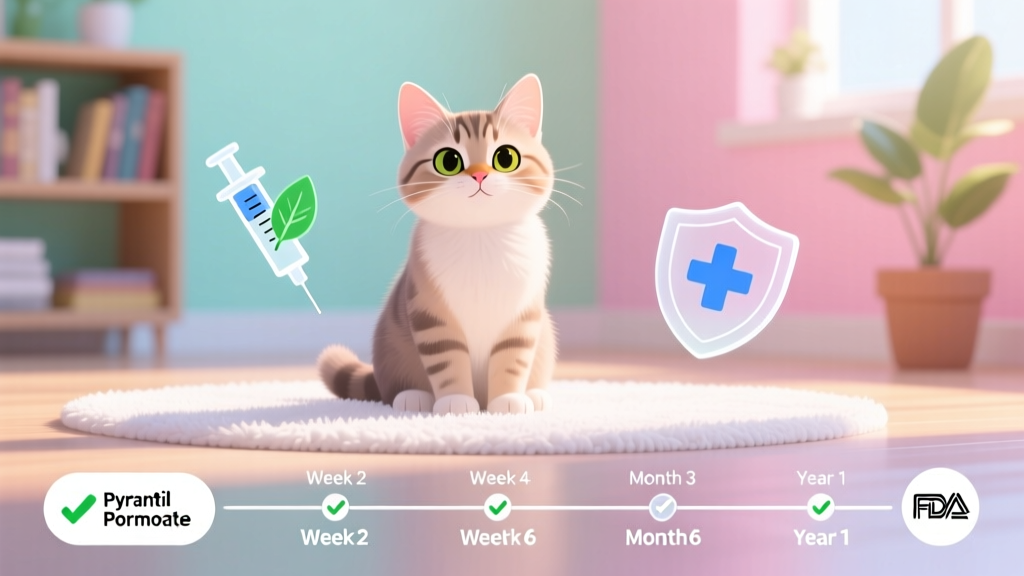
Vaccination status also influences timing. The FeLV vaccine (Purevax FeLV, Boehringer Ingelheim, licensed through 2026) requires two doses starting at 8 weeks, 3–4 weeks apart. Testing must precede the first dose to avoid misinterpreting vaccine-induced seroconversion as infection.
Kittens exposed to outdoor cats, group housing, or unknown maternal history face elevated risk. A 2026 ASPCA shelter surveillance report documented FeLV prevalence at 2.1% in intake kittens under 16 weeks—more than double the rate in adult cats (0.9%).
Cost should never delay testing. Many municipal programs—including NYC’s ‘Kitten Care 2026’ initiative—offer subsidized SNAP testing ($12–$18 per kit) and free confirmatory PCR for income-qualified families.
| Test Type | Best Age for Use | Key Limitation | Confirmatory Next Step |
|---|---|---|---|
| SNAP® FIV/FeLV Combo | 12+ weeks | False + FIV from maternal antibodies | Western blot (FIV) or PCR + IFA (FeLV) |
| FeLV RealPCR™ | Any age | Does not distinguish latent vs. active infection | IFA or repeat PCR in 6–8 weeks |
Dr. Marcus Bell, DVM, PhD, Director of the Winn Feline Foundation Retrovirus Task Force, states: “In 2026, we no longer accept ‘wait-and-see’ for retroviral status. Every kitten’s first veterinary visit must include evidence-based screening—not just because it’s possible, but because delaying changes outcomes” (Bell, Winn Feline Foundation, February 2026).
Environmental management matters too. FeLV is fragile outside the host—surviving less than 2 hours on dry surfaces—but spreads efficiently via saliva during mutual grooming or shared food bowls. FIV transmission requires deep bite wounds, making intact indoor-only kittens extremely low-risk post-confirmation.
Finally, remember: a negative test at 12 weeks doesn’t guarantee lifelong immunity. Annual screening remains advised for cats with outdoor access or new household introductions. And always pair testing with core vaccinations—especially rabies and distemper—before kitten playgroups or boarding begin.