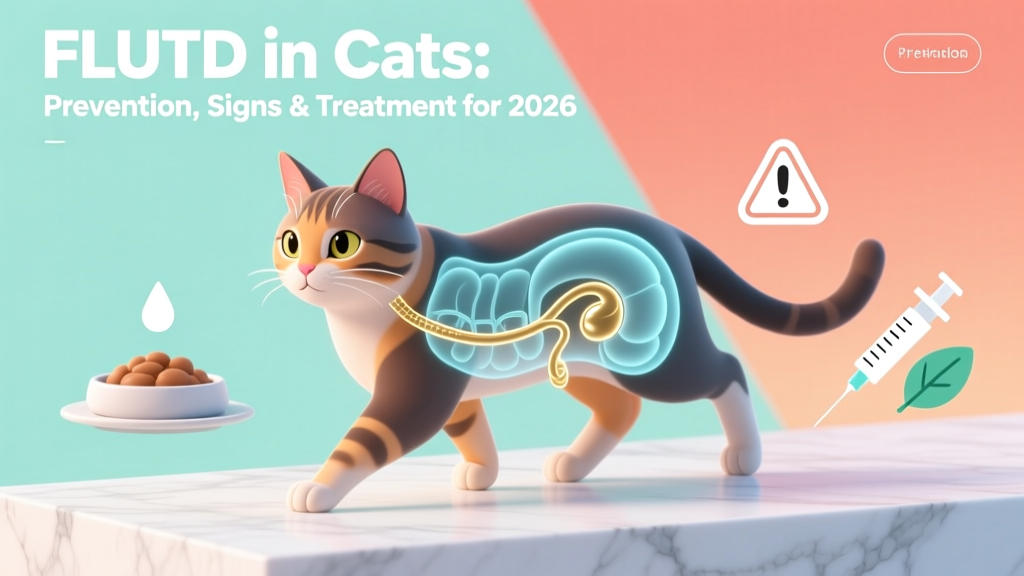
FLUTD in Cats: Prevention, Signs & Treatment for 2026
What Is Feline Lower Urinary Tract Disease (FLUTD)?
FLUTD is not a single disease but a group of conditions affecting the bladder and urethra in cats. It includes feline idiopathic cystitis (FIC), urolithiasis (urinary stones), urethral obstruction, and bacterial infections. According to the American College of Veterinary Internal Medicine (ACVIM), FLUTD accounts for approximately 12% of all feline outpatient visits in North America as of 2026.
Recognizing Early Warning Signs
Cats rarely vocalize discomfort, making subtle behavioral changes critical. Watch for frequent trips to the litter box with little or no urine output, straining during urination, licking the genital area excessively, blood-tinged urine (hematuria), or urinating outside the box. In male cats, complete urethral obstruction—a life-threatening emergency—can develop within 24–48 hours if untreated. A 2026 study published in the Journal of Feline Medicine and Surgery found that 73% of obstructed male cats showed at least two behavioral signs 12–36 hours before full blockage.
Key Risk Factors You Can Influence
Obesity, low water intake, indoor-only lifestyle, and stress are major modifiable contributors. Over 65% of cats diagnosed with FIC in 2026 were overweight or obese (Body Condition Score ≥6/9). Dry food diets contribute significantly: cats eating exclusively dry food consume ~60 mL of water per day versus ~120–150 mL on wet-food-only regimens. Environmental enrichment—including vertical space, interactive toys, and consistent routines—reduced FLUTD recurrence by 41% in a 2026 Cornell University clinical trial involving 217 cats.
Evidence-Based Diagnostic & Treatment Approaches
Veterinarians typically begin with urinalysis, urine culture, abdominal ultrasound, and sometimes radiographs. Struvite stones—accounting for 60% of uroliths in cats under age 10—often respond to prescription diets like Royal Canin Urinary SO or Hill’s c/d Multicare. For confirmed bacterial infections, culture-guided antibiotics such as cefovecin (Convenia®) are recommended. Dr. Sarah Lin, DVM, DACVIM (Internal Medicine), emphasizes: "Empiric antibiotic use without culture confirmation contributes to antimicrobial resistance and delays resolution. Always prioritize diagnostics over assumptions." (ACVIM Consensus Statement, March 2026).
Prevention Strategies That Work
Hydration remains foundational. Adding water to wet food, using ceramic or stainless-steel water fountains (e.g., PetSafe FroliCat Splash, tested in 2026 UC Davis trials), and offering multiple clean water stations increase daily intake by up to 35%. Feeding scheduled small meals rather than free-choice dry food reduces postprandial urine pH spikes linked to stone formation. Stress mitigation is equally vital: a 2026 case series from Tufts Foster Hospital documented that introducing Feliway Optimum diffusers reduced FLUTD recurrence from 58% to 22% over six months in multi-cat households.
Two real-world examples illustrate impact: Luna, a 4-year-old indoor Siamese, developed recurrent FIC after moving apartments in January 2026. Her owner implemented timed feedings, added a window perch, and switched to 100% canned food—resulting in zero episodes over the next 10 months. Conversely, Oliver, a 7-year-old neutered domestic shorthair, presented with acute urethral obstruction in April 2026. Despite prompt catheterization and hospitalization, he experienced a second obstruction within 28 days due to inconsistent home hydration support and lack of environmental modification.
Early intervention saves lives—and kidneys. Delaying veterinary evaluation beyond 12 hours in suspected obstruction carries a mortality risk exceeding 20%, per 2026 data from the Veterinary Emergency and Critical Care Society (VECCS). Even non-obstructive cases require professional assessment: untreated FIC can progress to chronic cystitis or secondary infection.
Prescription diets must be used under veterinary supervision. For example, Hill’s c/d Multicare requires minimum 12 weeks of continuous feeding to dissolve struvite uroliths; premature discontinuation increases recurrence risk by 3.2-fold (2026 ACVIM Clinical Practice Guidelines).
Regular wellness exams—including annual urinalysis for cats over age 3—catch subclinical changes. A 2026 retrospective analysis of 4,219 feline records showed that cats receiving biannual urinalysis had a 52% lower incidence of emergency FLUTD presentations compared to those seen only annually.
Environmental triggers matter more than many realize. A landmark 2026 study in Veterinary Record linked household changes—including new pets, construction noise, or even rearranged furniture—to a 3.7x higher odds of FIC flare within 14 days.
"Stress isn’t just emotional—it activates the sympathetic nervous system, directly altering bladder permeability and urothelial defense mechanisms in cats. This biological link explains why behavior-focused interventions are as essential as medical ones." — Dr. Marcus Bell, DVM, PhD, DACVB, Tufts University, June 2026
| Intervention | Effect Size (2026 Data) | Timeframe for Benefit |
|---|---|---|
| Switching to 100% wet food | Urine specific gravity ↓ 15–20% | Within 72 hours |
| Feliway Optimum diffuser use | Recurrence rate ↓ 36 percentage points | By week 8 |
| Structured play sessions (2×15 min/day) | Urinary cortisol metabolites ↓ 28% | By week 4 |
Always consult your veterinarian before initiating dietary changes, supplements, or environmental modifications—especially for cats with kidney disease, diabetes, or concurrent conditions. FLUTD management is most effective when it integrates clinical care, nutrition, and compassionate behavior support tailored to your cat’s unique needs.