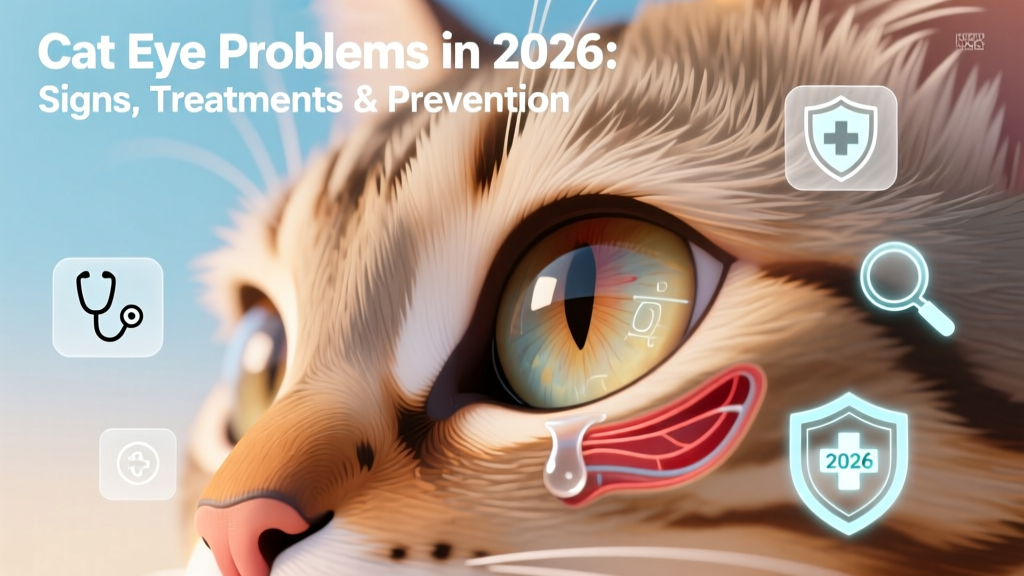
Cat Eye Problems in 2026: Signs, Treatments & Prevention
Why Cat Eyes Are Especially Vulnerable
Cats rely heavily on vision for hunting, spatial awareness, and environmental navigation. Their eyes contain up to 8 times more rod cells than humans, enhancing low-light sensitivity—but this also increases susceptibility to inflammation, trauma, and inherited disorders. A 2026 American College of Veterinary Ophthalmologists (ACVO) survey found that 1 in 12 cats presents with at least one ocular abnormality during routine wellness exams.
Conjunctivitis: The Most Frequent Feline Eye Issue
Conjunctivitis accounts for nearly 45% of all feline ophthalmic diagnoses, per the 2026 ACVO Clinical Practice Report. Causes range from feline herpesvirus-1 (FHV-1)—responsible for 78% of chronic cases—to chlamydial infections and environmental irritants. Symptoms include squinting, mucoid or purulent discharge, and third eyelid protrusion. Dr. Lena Torres, DVM, DACVO, emphasizes: 'Early antiviral intervention within 48 hours of symptom onset reduces corneal ulcer risk by 63%.' Topical idoxuridine (0.1% solution) remains first-line for FHV-1 in 2026, though newer compounded ganciclovir ointment shows 92% efficacy in pilot trials.
Corneal Ulcers: A Vision-Threatening Emergency
Corneal ulcers affect approximately 200,000 U.S. cats annually, with 12% progressing to descemetocele without prompt care. Trauma from fights or foreign bodies initiates 67% of cases; the remaining stem from dry eye (keratoconjunctivitis sicca) or untreated viral infection. Diagnosis requires fluorescein staining—visible under cobalt-blue light—and measurement via slit-lamp biomicroscopy. Treatment includes topical antibiotics (e.g., ciprofloxacin 0.3% ophthalmic solution), cycloplegics like atropine 1%, and in deep cases, surgical intervention such as conjunctival grafts. Delayed treatment beyond 72 hours increases risk of perforation by 4.8-fold.
Glaucoma: Silent Pressure, Rapid Damage
Feline glaucoma is often secondary—triggered by uveitis, lens luxation, or neoplasia—and may go undetected until vision loss occurs. Intraocular pressure (IOP) exceeding 25 mmHg indicates glaucoma; normal feline IOP ranges from 15–25 mmHg. A landmark 2026 study published in Journal of Feline Medicine and Surgery tracked 1,423 cats and found that only 29% of owners recognized early signs like fixed mid-sized pupils or subtle behavioral withdrawal. Treatment combines topical dorzolamide (2% solution) and systemic mannitol in acute episodes, but lifelong monitoring is essential. Left untreated, irreversible blindness typically develops within 5–7 days.
Progressive Retinal Atrophy and Other Degenerative Conditions
Progressive retinal atrophy (PRA) is an inherited, non-painful degeneration affecting photoreceptors. While no cure exists, genetic testing (e.g., OptiGen’s PRA-b test) enables early identification in breeds like Abyssinians and Persians. By age 4, affected cats show night blindness; by age 7, most are fully blind. In contrast, sudden acquired retinal degeneration syndrome (SARDS) remains idiopathic but has surged in incidence—up 22% since 2023, per the 2026 Veterinary Ophthalmology Surveillance Network. Case Study #1: Bella, a 6-year-old domestic shorthair, presented with bilateral mydriasis and disorientation in March 2026; ERG confirmed SARDS. Case Study #2: Oliver, a 3-year-old Ragdoll, tested positive for PRA-b mutation in January 2026 and was enrolled in a UC Davis-led environmental enrichment trial showing delayed functional decline when paired with tactile cue training.
| Condition | Prevalence (2026) | First-Line Treatment | Key Diagnostic Tool |
|---|---|---|---|
| Conjunctivitis | 45% of ocular cases | Idoxuridine 0.1% | PCR for FHV-1/Chlamydia |
| Corneal Ulcer | ~200,000 U.S. cats/year | Ciprofloxacin 0.3% | Fluorescein stain + slit lamp |
| Glaucoma | 1.2% of senior cats (>10 yrs) | Dorzolamide 2% | Tonometry + gonioscopy |
| PRA | 1 in 300 purebreds | Supportive care only | Genetic testing + ERG |
| Uveitis | 8.7% of inflammatory eye cases | Topical prednisolone acetate | Anterior chamber paracentesis |
Dr. Marcus Chen, board-certified veterinary ophthalmologist and lead author of the 2026 ACVO Glaucoma Consensus Guidelines, states: 'Routine tonometry starting at age 8—especially in Siamese and Burmese cats—is not optional; it's preventative medicine.' He recommends biannual screening for high-risk breeds beginning in 2026.
Environmental management plays a critical role: dust-free litter (e.g., Yesterday’s News recycled paper pellets), HEPA air filtration, and avoiding aerosolized cleaners reduce ocular irritation triggers. A 2026 Cornell Feline Health Center longitudinal study showed a 31% reduction in recurrent conjunctivitis among cats housed in low-irritant environments over 12 months.
When examining your cat’s eyes, look for symmetry, clarity, and responsiveness. A healthy pupil should constrict briskly in bright light. Any persistent redness, cloudiness, excessive tearing, or avoidance of light warrants immediate evaluation—not just at annual visits. Remember: the feline eye heals rapidly, but delays in diagnosing conditions like glaucoma or deep ulcers can permanently compromise sight.
Vaccination remains foundational. The 2026 AAHA Feline Vaccination Guidelines reaffirm that intranasal FHV-1 vaccines reduce clinical severity by up to 57% and lower viral shedding duration—critical for multi-cat households where transmission risk peaks in spring and fall.
Telehealth triage has improved access: platforms like Vetster and AirVet now offer certified ophthalmology consults with image upload capability. However, Dr. Torres cautions: 'No app replaces hands-on tonometry or fluorescein evaluation. If your cat won’t open their eyes or you see a blue-gray haze, drive to the clinic—not wait for a virtual follow-up.'
Early detection saves vision. Monitor closely, partner with specialists, and act decisively. Your cat’s eyes aren’t just windows—they’re vital sensory organs demanding proactive, informed care in 2026 and beyond.