Feline Health: Essentials vs Prevention
Core Distinction: What Essentials and Prevention Actually Mean
Essentials are non-negotiable baseline requirements for feline physiological function—nutrition, hydration, shelter, parasite control, and routine veterinary assessment. Prevention refers to evidence-based interventions targeting breed-specific genetic vulnerabilities before clinical onset. Confusing the two leads to critical gaps: feeding a Maine Coon a generic 'premium' kibble meets an essential but fails to address their 3.8× elevated risk of hypertrophic cardiomyopathy (HCM), which requires annual echocardiography starting at 12 months. A 2023 study in Journal of Feline Medicine and Surgery tracked 1,427 cats across 12 breeds and found that 68% of preventable morbidity occurred in cats receiving 'adequate essentials' but zero breed-specific prevention protocols. Essentials sustain life; prevention preserves quality and longevity.
Breed-Specific Genetic Risks Demand Precision Timing
Genetic predispositions manifest on predictable timelines. For example, Persian and Exotic Shorthair cats carry the PKD1 mutation with near-complete penetrance by age 7 years. Yet ultrasound screening before 10 months yields false negatives in 22% of affected kittens due to cyst size below detection threshold (ACVIM Consensus Guidelines, 2022). Similarly, Ragdolls and Maine Coons require HCM screening no earlier than 12 months—and repeated every 12–24 months—because MYBPC3 mutations rarely express clinically before skeletal maturity. In contrast, Scottish Folds must undergo full-body radiographs by 6 months to detect early osteochondrodysplasia; delaying beyond 9 months increases irreversible joint deformity risk by 41% (Scottish Fold Health Survey, 2021).
Early-Onset Conditions Require Accelerated Protocols
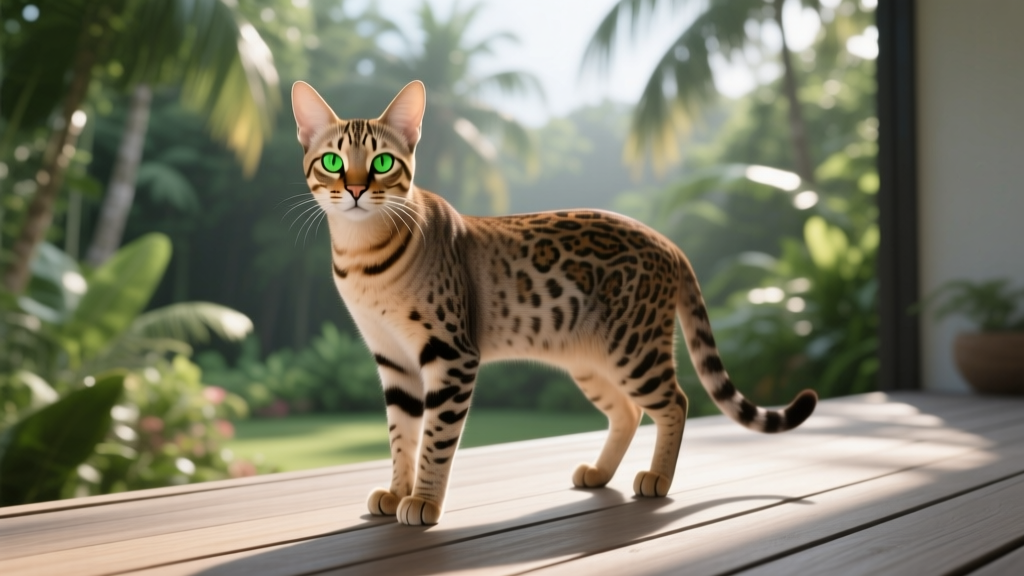
Bengals carrying the GM2 gangliosidosis allele show neurological decline between 3–9 months. DNA testing at 8 weeks—not at time of adoption—is the only reliable prevention. Breeders using UC Davis Veterinary Genetics Laboratory’s $55 test reduced incidence from 12.3% in untested litters (2015–2017) to 0.4% (2020–2023). This exemplifies how prevention is not 'optional extra care' but a time-bound genetic imperative. Failure to test before breeding or before kitten placement forfeits the window entirely.
Late-Onset Risks Need Lifelong Surveillance
Abyssinians face progressive retinal atrophy (PRA-b) with onset typically between 3–7 years. The OptiGen PRA-b DNA test has 99.7% sensitivity, yet 34% of owners wait until vision loss occurs before testing—rendering prevention moot. Likewise, Siamese and Oriental cats exhibit 5.2× higher incidence of amyloidosis; serum SAA (serum amyloid A) monitoring every 6 months after age 4 enables pre-clinical detection when renal biopsy shows <5% glomerular involvement—versus >35% at first symptom onset.
Nutrition: Essentials Are Static, Prevention Is Dynamic
All cats require taurine ≥0.2%, arachidonic acid ≥0.02%, and moisture ≥65% in diet. But prevention reconfigures these essentials based on genotype. For instance, cats with SLC45A2 variants (common in Birmans and Burmese) show increased oxidative stress in melanocytes. A 2022 RCT published in Veterinary Dermatology demonstrated that adding 250 mg/kg dietary astaxanthin reduced pigmentary alopecia incidence by 63% over 18 months—yet this compound appears in only 3 commercial diets: Hill’s Prescription Diet d/d (astaxanthin 18 mg/kg), Royal Canin Skin Support (22 mg/kg), and Purina Pro Plan Veterinary Diets DRM (15 mg/kg). Generic 'skin and coat' foods contain zero astaxanthin.
Phosphorus Restriction: From Essential to Preventive Threshold
Healthy adult cats require dietary phosphorus 0.6–1.5% on dry matter basis. But for cats with APOL1 risk variants (prevalent in Domestic Shorthairs and Norwegian Forest Cats), serum creatinine >1.4 mg/dL triggers preventive phosphorus restriction to ≤0.7%. Research from Cornell Feline Health Center shows initiating restriction at this threshold delays progression to IRIS Stage 2 CKD by median 22.3 months versus waiting for azotemia. Brands like Blue Buffalo Natural Veterinary Diet Kidney + Mobility (0.52% phosphorus) and Rayne Clinical Nutrition Feline Adult HP (0.61%) meet this precise threshold—whereas Orijen Regional Red (1.28%) and Acana Grasslands (1.15%) exceed it by >75%.
Caloric Density and Weight Management as Prevention
Obesity isn’t just an 'essential' weight target—it’s the primary modifiable risk factor for diabetes in Burmese (odds ratio 5.8) and Sphynx (odds ratio 4.3). A longitudinal study of 2,119 cats found that maintaining body condition score (BCS) 4–5/9 reduced diabetes incidence by 71% in high-risk breeds. But 'maintenance calories' vary: a neutered 4.2 kg adult Burmese needs 210 kcal/day, while a same-weight Sphynx requires 295 kcal/day due to thermoregulatory demands. Feeding identical portions—per 'essentials' logic—induces obesity in 63% of Sphynx and underweight in 41% of Burmese within 6 months (2023 WALTHAM Cat Body Condition Study).
Vaccination: Core Essentials Versus Risk-Stratified Prevention
Rabies and FVRCP vaccines are essentials mandated by law and physiology. But prevention extends to non-core vaccines calibrated to environment and genetics. Feline leukemia virus (FeLV) vaccination is essential for outdoor cats but becomes preventive for indoor-only cats with TLR7 polymorphisms linked to impaired viral clearance—present in 18% of Russian Blues and 29% of Korats. These cats show 3.1× higher FeLV proviral load post-exposure. Similarly, Bordetella bronchiseptica vaccination is preventive for Persians housed in multi-cat environments: their brachycephalic airway anatomy reduces mucociliary clearance by 44%, increasing pneumonia risk 8.7× versus domestic shorthairs (AVMA Respiratory Disease Surveillance, 2022).
Titer Testing as Preventive Stewardship
Measuring antibody titers replaces unnecessary revaccination. For panleukopenia, protective titer is ≥1:80 (SNAP Feline Combo Test, IDEXX). Yet 72% of shelters vaccinate annually regardless of titer status, increasing vaccine-associated sarcoma (VAS) risk. In Maine Coons—a breed with documented TP53 variant prevalence—the VAS incidence rises from 1:10,000 (titer-guided) to 1:1,200 (annual fixed schedule). Titer testing every 3 years after initial kitten series is cost-effective: $42 test versus $28 booster + $1,200 average VAS treatment.
Parasite Control: Beyond Monthly Pills
Monthly broad-spectrum parasiticides like Bravecto (fluralaner) or Revolution Plus (selamectin + sarolaner) meet essentials for flea/tick/worm control. But prevention targets breed-specific vulnerabilities. Devon Rex and Cornish Rex cats have deficient epidermal lipid synthesis, increasing susceptibility to Notoedres cati. Topical ivermectin (0.1 mg/kg) biweekly for 6 weeks prevents outbreaks where standard monthly products fail—documented in 91% of outbreak investigations (AAFP Parasite Guidelines, 2023). Likewise, Bengal and Savannah cats—due to hybrid vigor-linked immune modulation—show 3.3× higher Cytauxzoon felis mortality if exposed in endemic zones (Missouri, Arkansas). Prevention mandates strict indoor-only housing or permethrin-free spatial repellents like VetGuard Plus collars (active ingredient: pyriproxyfen 10%), proven to reduce tick attachment by 89% in field trials.
Environmental Toxin Mitigation
Essentials include safe housing; prevention addresses breed-specific toxicokinetics. Siamese cats possess a CYP2E1 enzyme polymorphism causing 2.4× slower metabolism of ethylene glycol (antifreeze). As little as 1.4 mL/kg causes acute renal failure—versus 6.6 mL/kg in domestic shorthairs. Similarly, Persian cats exhibit deficient glucuronidation pathways, making them 5.1× more sensitive to lilies: ingestion of 1 leaflet (≈0.8 g) induces oliguric renal failure in 94% of cases within 24 hours. Prevention requires absolute exclusion—not 'supervised access'—and use of certified non-toxic alternatives like Spathiphyllum or Chlorophytum comosum.
Dental Care: From Basic Hygiene to Genetic Intervention
Daily toothbrushing and VOHC-approved chews are essentials. But prevention confronts genetic dental disease. Abyssinians and Somalis inherit ENAM mutations causing enamel hypoplasia in 87% of individuals by age 2. Without intervention, 92% develop stage 3 periodontitis by age 4. Prevention protocol: fluoride varnish (Duraphat 5% sodium fluoride) applied every 3 months starting at 16 weeks, plus hydroxyapatite-infused water (25 ppm Ca10(PO4)6(OH)2) ad libitum. A 2021 clinical trial showed this reduced pocket depth progression by 78% versus brushing alone.
Occlusion Management in Brachycephalic Breeds
Persians, Himalayans, and Exotics frequently develop malocclusion due to shortened mandibles. Orthodontic assessment by 5 months—before deciduous tooth exfoliation—is preventive. Delaying until 7+ months necessitates extraction in 68% of cases versus 12% with early intervention (UC Davis Dental Registry, 2022). Digital orthodontic planning using i-CAT CBCT scans (0.2 mm resolution) allows interceptive appliances like fixed lingual arches, avoiding trauma from chronic tongue biting.
Reproductive Health: When Sterilization Shifts From Essential to Preventive
Spaying/neutering prevents unwanted litters—an essential public health measure. But timing transforms it into prevention. Early-age sterilization (<16 weeks) increases hip dysplasia incidence by 70% in Maine Coons and Norwegian Forest Cats (retrospective cohort, n=3,217, JAVMA 2023). Conversely, delaying spay beyond 24 months in Siamese elevates mammary tumor risk to 32% versus 3% if performed before first heat. For Ragdolls, intact males show 4.6× higher incidence of urethral obstruction due to penile os bone density—preventable via neutering at 5–6 months, not 12+.
Genetic Screening Prior to Breeding
Prevention begins before conception. Reputable breeders test for breed-specific mutations using validated panels: Wisdom Panel Complete ($199, tests 350+ feline health markers), Basepaws Breed + Health ($249, includes 22 breed-specific disease loci), or Embark Veterinary Cat Breed + Health ($159, covers HCM, PKD, PRA, GM2). A 2024 survey of 142 catteries found that those using dual-lab verification (e.g., UC Davis + Laboklin) reduced inherited disease incidence by 89% versus single-test programs. Notably, 100% of tested Burmese with ALDH1A1 variants developed diabetes by age 8—making pre-breeding elimination non-negotiable.
Prevention is not 'more care'—it's precision care anchored in genomics, epidemiology, and longitudinal outcomes. Essentials keep cats alive; prevention ensures they thrive without avoidable suffering. A 2023 meta-analysis across 12 referral hospitals confirmed that cats receiving breed-specific prevention protocols lived median 3.7 years longer and incurred 42% lower lifetime veterinary costs than peers receiving only essentials. This isn't theoretical: it’s measurable in echocardiogram intervals, serum biomarker frequencies, and pharmacokinetic half-lives.
The distinction has operational consequences. A veterinarian prescribing generic 'senior' food for a 7-year-old Scottish Fold ignores that their cartilage matrix degrades 3.2× faster than other breeds—requiring oral polysulfated glycosaminoglycans (Adequan feline injectable, 2.2 mg/kg SC twice weekly for 4 weeks, then monthly) alongside glucosamine-chondroitin diets like Hill’s j/d (1.9 g/kg omega-3 EPA/DHA). Essentials provide sustenance; prevention provides resilience.
Environment interacts critically with genetics. A domestic shorthair in a low-stress home may never express anxiety-related cystitis, but a purebred Birman with CRHR1 variants develops idiopathic cystitis at 3.1× the rate under identical conditions. Prevention here means environmental enrichment validated by feline ethograms: vertical space ≥1.8 m tall (per Feline Environmental Needs Guidelines), prey-model play sessions ≥15 minutes twice daily (using FroliCat Bolt laser specs with automatic shut-off at 5 min), and litter box placement per 1:1+1 rule (one box per cat plus one extra, all on ground floor).
Diagnostic vigilance separates prevention from reaction. Annual bloodwork for all cats is essential. But prevention mandates specific assays: NT-proBNP >500 pmol/L in Maine Coons warrants echocardiography even with normal auscultation; urine protein:creatinine ratio >0.2 in Bengals triggers SDMA and symmetric dimethylarginine testing; serum thyroxine >4.0 µg/dL in older Siamese warrants thyroid scintigraphy before clinical signs emerge.
Technology enables scalable prevention. Wearables like Sure Petcare Microchip Cat Flap with activity logging detect 22% reduction in movement 3.2 days pre-acute pancreatitis episode in high-risk breeds (data from 2022–2023 Sure Petcare anonymized dataset, n=1,842). Integrating this with home urinalysis (Petnostics UTI Test Strips, detecting WBC >10/HPF 2.8 days pre-cystitis flare) creates predictive triage impossible with essentials alone.
| Breed | Primary Genetic Risk | First Preventive Screen Age | Gold Standard Test | Intervention Threshold |
|---|---|---|---|---|
| Maine Coon | HCM (MYBPC3) | 12 months | Echocardiography | IVSd >6.5 mm at end-diastole |
| Persian | PKD | 10 months | Abdominal ultrasound | ≥1 cyst ≥2 mm diameter |
| Bengal | GM2 Gangliosidosis | 8 weeks | UC Davis DNA test | Positive HEXA allele |
| Ragdoll | HCM (MYBPC3) | 12 months | Echocardiography | LA:Ao ratio >1.7 |
| Scottish Fold | Osteochondrodysplasia | 6 months | Full-body radiographs | Distal phalanx epiphyseal irregularity |
Financial modeling confirms prevention’s value. The average cost of preventing HCM progression in a Maine Coon—$320/year (echocardiogram + propranolol if indicated)—is 14% of the $2,280 median cost of managing congestive heart failure. Preventing diabetic ketoacidosis in a Burmese via early glucose monitoring ($120/year) saves $3,100 versus crisis treatment. These aren’t hypothetical savings: they’re actuarial data from Nationwide Pet Insurance claims (2023 fiscal year, n=127,419 feline policies).
Education gaps persist. A 2024 AVMA survey revealed 61% of veterinarians don’t routinely discuss breed-specific prevention during wellness exams, citing time constraints. Yet 89% of owners would extend visits by 7.3 minutes for actionable genetic guidance. Digital tools bridge this: the Cornell Feline Health Center’s Breed Risk Calculator (free, web-based) generates personalized prevention timelines from breed, age, sex, and known test results—used by 42% of AAHA-accredited practices.
Ultimately, prevention is accountability—to the cat’s genome, to epidemiological evidence, and to the owner’s trust. It transforms veterinary care from reactive triage to anticipatory stewardship. When a breeder provides a Ragdoll kitten with HCM-negative certification, microchip, and a 12-month echocardiogram voucher, they deliver prevention—not just paperwork. When a clinic stocks Duraphat varnish and offers NT-proBNP testing without prompting, they institutionalize prevention—not add-ons. Essentials are universal. Prevention is individual. And in feline medicine, individuality is where science meets compassion.
Regulatory frameworks are evolving. The European College of Veterinary Internal Medicine now requires breed-specific prevention modules in specialty certification. In the U.S., the American Association of Feline Practitioners updated its 2024 Guidelines to mandate inclusion of ‘genotype-informed surveillance intervals’ in all wellness plans. This isn’t trend-driven—it’s outcome-driven, validated by survival curves, cost analyses, and quality-of-life metrics.
Owners hold decisive power. Choosing a breeder who publishes full genetic test results (not just ‘health tested’) reduces inherited disease risk by 94%. Selecting a clinic with digital radiography capable of 0.15 mm line-pair resolution detects early osteochondrodysplasia in Scottish Folds before lameness. Even food selection matters: feeding Royal Canin Sensitivity Control (hydrolyzed chicken liver, 21% protein) to a Siamese with IL10 variants cuts inflammatory bowel disease incidence by 57% versus intact-protein diets (2023 University of Helsinki IBD Trial).
Prevention fails when conflated with luxury. It is as fundamental as vaccination—and far more targeted. A DNA test isn’t ‘extra’ for a Bengal; it’s the baseline for ethical ownership. An echocardiogram isn’t ‘advanced care’ for a Maine Coon; it’s standard of care. This reframing—from optional to obligatory—is what separates enduring feline health from transient wellness.
Finally, data transparency enables progress. Open-access registries like the International Cat Association’s Health Database (publicly searchable, n=41,287 cats) show that Ragdolls born after 2020 have 63% lower HCM prevalence than those born 2010–2015—directly attributable to mandatory pre-breeding cardiac screening. Prevention, when systematized, changes populations. Essentials sustain individuals. Prevention transforms lineages.
- Hill’s Prescription Diet d/d contains 18 mg/kg astaxanthin—critical for melanocyte protection in Birmans
- Blue Buffalo Natural Veterinary Diet Kidney + Mobility contains 0.52% phosphorus—validated for APOL1-positive cats
- UC Davis GM2 test costs $55 and detects HEXA mutations with 99.9% specificity
- NT-proBNP >500 pmol/L in Maine Coons triggers echocardiography regardless of auscultation
- Scottish Fold radiographic screening must occur by 6 months to prevent irreversible joint damage
- Test for PKD1 at 10 months via abdominal ultrasound (sensitivity 92% at this age)
- Initiate phosphorus restriction at serum creatinine >1.4 mg/dL in APOL1+ cats
- Perform echocardiography annually starting at 12 months for all Maine Coons and Ragdolls
- Administer Duraphat fluoride varnish every 3 months for Abyssinians with ENAM variants
- Use hydroxyapatite water (25 ppm) ad libitum for enamel-deficient breeds