Prairie Lynx: Midwest Domestic Cross
The Prairie Lynx has a way of stopping cat lovers in their tracks. Maybe it’s the wild-leaning look—those ear tufts, that bobbed tail, the athletic build—or maybe it’s the wonderfully “just one more cuddle” personality that wins people over. Either way, this Midwest-born domestic cross has carved out a loyal fan club among enthusiasts who want a cat that looks a little untamed while acting very much like a devoted family companion.
If you’ve heard the name and wondered whether the Prairie Lynx is a true wildcat hybrid, you’re not alone. The short, reassuring answer: Prairie Lynx cats are domestic cats, selectively bred for a bobtail, spotted or patterned coats, and a rugged, lynx-like vibe. They’re often associated with the midwestern United States and share historical ties with the development of bobtailed “lynx look” domestic lines. For potential owners, researchers, and dedicated cat people, the Prairie Lynx is a fascinating example of how domestic breeding programs can create a striking look without relying on wild ancestry.
This guide covers Prairie Lynx history, appearance, temperament, health, care, and what life is like with one of these charismatic “Midwest domestic cross” cats.
Breed History and Origin
The Prairie Lynx is best described as a domestic cross type—a breeding program and regional line rather than a universally standardized, single-registry breed. The name “Prairie Lynx” has been used by breeders and enthusiasts to describe bobtailed, spotted or marbled cats developed to resemble a small lynx, with a sturdy body and an outgoing, companionable temperament.
Prairie Lynx cats are commonly linked to the Midwest, where breeders worked with domestic cats featuring traits such as:
- Natural bobtails (shortened tails of varying length)
- Spotted, rosetted, or marbled patterns reminiscent of wildcats
- Ear furnishings (tufts and lynx-like ear set)
- Athletic, medium-to-large build
Depending on the cattery and lineage, Prairie Lynx lines may overlap with or be discussed alongside other “bobtailed lynx look” domestic developments, including early foundation work that also influenced cats marketed under names like “Highlander” or “Highland Lynx” in some circles. The key point for owners and researchers: Prairie Lynx cats are domestics, and reputable breeders focus on stable temperaments and sound health along with the signature look.
| Quick Origin Snapshot | Details |
|---|---|
| Type | Midwest domestic cross / bobtail “lynx look” line |
| Common hallmark | Natural bobtail, athletic build, wild-style patterning |
| Wildcat ancestry? | No (domestic breeding programs; verify claims with documentation) |
Physical Characteristics
The Prairie Lynx is all about that “mini lynx” illusion—without sacrificing the comfort of a domestic companion. Individual cats vary a lot (because this is a cross-type), but there are recognizable traits that show up again and again.
Size and Weight
- Build: Medium to large, muscular, athletic
- Typical weight:
- Males: often 12–18 lb (some may be larger)
- Females: often 8–14 lb
Coat Type and Length
Prairie Lynx coats are usually plush and dense. Depending on the line, you may see:
- Short to medium coat (common)
- Medium-long coat with a shaggy, “woods-cat” texture (also seen)
Colors and Patterns
Coat patterns can be a major draw for Prairie Lynx fans. Common looks include:
- Spotted (leopard-like spots or broken spotting)
- Marbled (swirled, dramatic striping patterns)
- Tabby variations (brown, silver, red, and more)
Colors can vary widely, from warm browns to cool silvers and high-contrast combinations. Because terminology can differ by breeder, ask for photos of parents and past litters to get a realistic idea of what you’ll see as the kitten matures.
Distinctive Features
| Feature | What You’ll Notice |
|---|---|
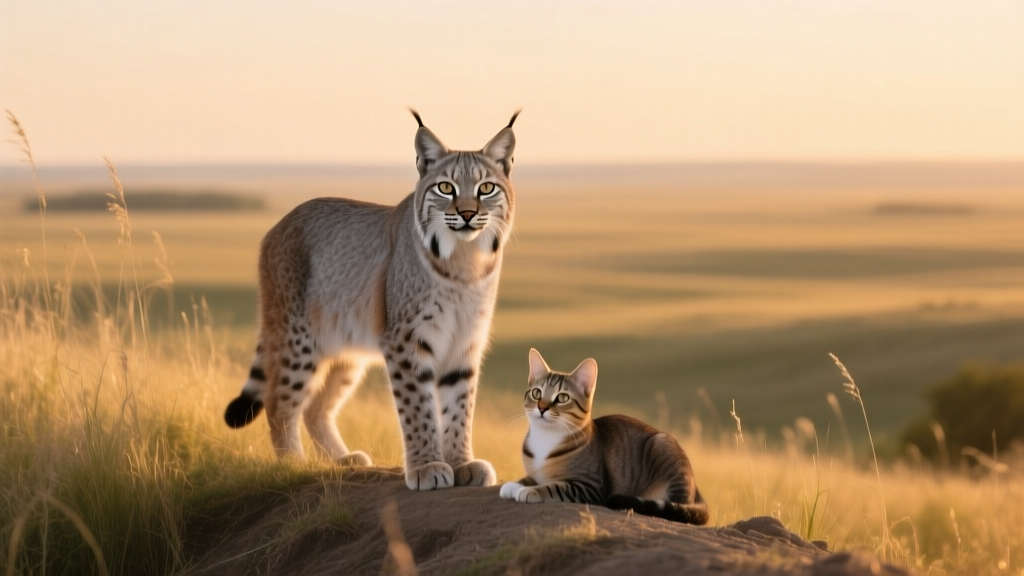
| Tail | Natural bobtail, ranging from very short to about half-length; can be straight or slightly kinked depending on genetics |
| Ears | Often medium to large with tufts and ear furnishings that add to the lynx look |
| Eyes | Expressive, often slightly almond; color varies with coat genetics |
| Body | Broad chest, strong legs, athletic movement; many are surprisingly agile jumpers |
Heads-up for researchers: If you see claims of “wild blood” attached to Prairie Lynx kittens, request documentation and clarity. A Prairie Lynx is typically marketed as a domestic line with wild-like styling, not a regulated wildcat hybrid.
Personality and Temperament Traits
Prairie Lynx cats tend to be a happy blend of confident explorer and affectionate shadow. Many owners describe them as “dog-like” in the sense that they enjoy being involved: following you from room to room, supervising chores, and showing up the second they hear a treat bag crinkle.
Common Prairie Lynx temperament traits include:
- Social and people-oriented: Often bonds strongly with household members
- Playful and active: Loves interactive play, puzzle toys, and climbing
- Curious: Will investigate new sounds, guests, and rearranged furniture
- Confident: Many handle household bustle well when properly socialized
- Talkative tendencies: Some lines are chatty, others more quietly expressive
Because Prairie Lynx cats are a domestic cross type, temperament depends heavily on early handling and the breeder’s focus. A well-socialized kitten raised in a home environment is much more likely to develop into the affectionate, easy-to-live-with companion people hope for.
Health Considerations and Common Issues
With cross-type cats, health profiles can vary by line. Many Prairie Lynx cats are robust, but responsible breeders still screen carefully and avoid exaggerating traits that could cause discomfort or long-term issues.
Potential health considerations to discuss with a breeder and your veterinarian:
- Bobtail-related spine concerns: In bobtailed populations, careful selection is key. A natural bobtail should not come with pain or mobility problems. Ask about veterinary checks and family history.
- Joint health and weight management: Their sturdy build can hide extra pounds. Keeping them lean supports hips, knees, and overall mobility.
- Dental health: Like many cats, Prairie Lynx cats benefit from routine dental care and periodic veterinary cleanings when needed.
- General wellness: Vaccinations, parasite prevention, and regular exams remain the foundation of a healthy life.
What to ask a breeder:
- Do you have veterinary records for the parents?
- Have any kittens shown tail/spine issues in previous litters?
- What is your socialization plan from birth to placement?
- Do you provide a health guarantee and return policy?
Care Requirements (Grooming, Exercise, Diet)
Grooming
Most Prairie Lynx coats are pretty manageable, but that plush texture can hold onto shed hair. A simple routine keeps them looking sharp and reduces hairballs.
- Brushing: 1–2 times per week for short coats; 2–3 times per week for medium-long coats
- Seasonal shedding: Expect heavier shedding in spring/fall; increase brushing as needed
- Nails: Trim every 2–4 weeks
- Ears: Check weekly for debris; clean only if your vet recommends and shows you how
Exercise and Enrichment
This is not a “decorative” cat. Prairie Lynx cats thrive when they can climb, chase, and problem-solve.
- Daily interactive play: 15–30 minutes split into sessions (wand toys, fetch-style play, laser followed by a tangible “catch”)
- Vertical space: Tall cat trees, wall shelves, window perches
- Puzzle feeders: Helps satisfy hunting instincts and slows fast eaters
- Leash training: Many adapt well with patience and a secure harness
Diet
Feed the cat in front of you—active Prairie Lynx adults often do well on a high-protein diet with measured portions. Talk with your vet about calorie needs based on age, activity, and body condition.
- Protein-forward wet food can support hydration and lean muscle
- Measured meals help prevent gradual weight gain
- Fresh water access via bowls or a pet fountain
- Treats: Keep to under 10% of daily calories
Compatibility with Families, Children, and Other Pets
Prairie Lynx cats are often a great match for families who want an interactive, playful companion. They tend to enjoy household activity and can be wonderfully patient—assuming kids are taught respectful handling.
- With children: Often excellent with gentle, cat-savvy kids; supervise with very young children
- With dogs: Many do well with calm, cat-friendly dogs when introductions are slow and structured
- With other cats: Usually social, especially when introduced properly and given enough resources (litter boxes, beds, vertical space)
- With small pets: Use caution. Like most cats, they may view rodents/birds as prey animals; keep small pets securely separated.
Best household setup: one with enrichment, play time, and humans who enjoy a cat that likes to participate in daily life.
Pros and Cons of Owning a Prairie Lynx
| Pros | Cons |
|---|---|
|
|
FAQ: Prairie Lynx Cats
Are Prairie Lynx cats part wildcat?
No. Prairie Lynx cats are generally considered domestic cats bred to resemble a lynx (bobtail, tufted ears, spotted/marbled patterns). If someone claims wild ancestry, ask for clear documentation and be cautious with marketing language.
How big does a Prairie Lynx get?
Most are medium to large. Many adults fall in the 8–18 lb range, with males often larger than females. Size depends on lineage, diet, and activity.
Do Prairie Lynx cats shed a lot?
They can shed moderately, especially during seasonal coat changes. Weekly brushing (more during heavy shedding) usually keeps it under control.
Are Prairie Lynx cats good for first-time cat owners?
They can be, as long as you’re ready for an interactive, playful cat. First-time owners who want a calmer, more independent pet may find the Prairie Lynx a bit demanding.
Do Prairie Lynx cats need special care because of the bobtail?
Not “special” care day-to-day, but you should choose a kitten from lines with a history of sound structure and normal mobility. A veterinary exam after adoption is always a smart move.
Where can I find a Prairie Lynx kitten or adult?
You may find them through specialized breeders or occasionally through rescue networks and rehoming situations. Look for transparent health practices, strong socialization, and a willingness to answer detailed questions.
Living with a Prairie Lynx: The Takeaway
The Prairie Lynx is a wonderful option for cat lovers who want the bold, outdoorsy look of a little lynx paired with the warmth of a domestic companion. When bred responsibly and raised with plenty of handling and play, these cats often grow into confident, affectionate, entertaining family members—equal parts athlete, cuddle buddy, and household supervisor.
If a Prairie Lynx has captured your imagination, take your time, ask great questions, and choose a source that prioritizes health and temperament over extremes. And when you’re ready for more whiskered inspiration, explore more breed profiles on catloversbase.com.