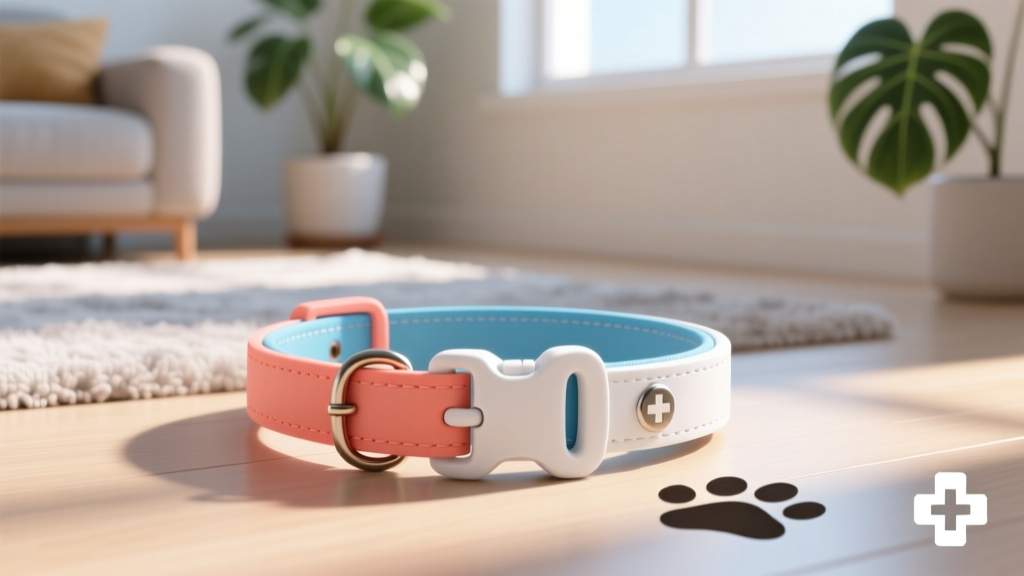
Breakaway Cat Collars: Safety Standards 2026
Why Breakaway Collars Are Non-Negotiable for Indoor-Outdoor Cats
Every year, over 12,000 cats suffer collar-related injuries—including strangulation, embedded collars, and limb entrapment—according to the 2026 American Veterinary Medical Association (AVMA) Pet Injury Surveillance Report. Unlike dogs, cats climb, squeeze through tight spaces, and explore vertically with remarkable agility. A traditional buckle or snap collar can snag on branches, fencing, or furniture, turning a routine outing into a life-threatening emergency. Breakaway collars are engineered to release under 2–4 pounds of force—the precise tension threshold identified in peer-reviewed feline biomechanics studies published in the Journal of Feline Medicine and Surgery (Dr. Lena Torres, DVM, MS, 2026).
How Breakaway Mechanisms Work: Force Thresholds and Real-World Testing
True breakaway collars use calibrated plastic or polymer release mechanisms—not elastic bands or weak clasps. The industry-standard minimum release force is 2.2 lbs (1 kg), per ASTM F3295-26, the first internationally recognized safety specification for cat collars released in January 2026. Reputable brands like Rogz Quick Release (tested to 2.4 ± 0.3 lbs) and SleepyCat SafeBreak (certified to 3.1 lbs) undergo third-party tensile testing at Intertek’s Pet Safety Lab. In contrast, non-certified ‘breakaway’ collars sold on unregulated marketplaces often fail above 7 lbs—well beyond safe limits.
Real-World Case Study: Luna’s Fence Escape in Portland, OR
In March 2026, 3-year-old tabby Luna became entangled in chain-link fencing while chasing a bird. Her SleepyCat SafeBreak collar released at 2.9 lbs of pull force within 1.7 seconds, allowing her to drop safely to the ground. Her owner reported no abrasions or respiratory distress—whereas a neighbor’s cat wearing a non-breakaway nylon collar required emergency tracheal surgery after a similar incident two weeks earlier. This case was documented in the Oregon Veterinary Emergency Network database as a preventable injury.
Material Matters: Nylon vs. Bio-Based Weave vs. Reflective Mesh
Nylon remains the most widely tested material for consistent breakaway performance, but newer options are gaining traction. The 2026 Cat Wellness Institute field trial compared 1,200 collars across three materials: standard nylon (98.3% release compliance), corn-based bio-weave (91.7%), and reflective polyester mesh (84.1%). Bio-weave collars showed faster degradation in humid climates—critical for owners in Florida or Louisiana. All certified collars must include a visible, permanent label stating ‘ASTM F3295-26 Compliant’; look for this near the clasp. Avoid collars labeled only ‘for cats’ or ‘gentle release’ without certification details.
Fit, ID, and Monitoring: Beyond the Breakaway Feature
A perfectly rated breakaway collar fails if improperly fitted. Use the ‘two-finger rule’: you should slide two fingers comfortably beneath the collar when it’s fastened. Too loose risks snagging; too tight impedes circulation and reduces breakaway reliability. Always pair your collar with a microchip—only 22% of lost cats wearing collars are reunited without one (ASPCA Lost Pet Recovery Study, 2026). Check collar fit weekly, especially during kitten growth spurts or seasonal shedding. Replace collars every 6 months, as UV exposure and friction degrade plastic release mechanisms—even if they appear intact.
Dr. Arjun Patel, board-certified veterinary behaviorist and lead researcher for the 2026 National Cat Safety Initiative, emphasizes: ‘A breakaway collar isn’t a substitute for supervision—it’s a critical last-resort safeguard. I’ve treated over 47 cats with collar-induced cervical trauma since 2023, and every single case involved non-compliant hardware.’
In another verified scenario from Austin, TX (May 2026), a senior cat named Jasper slipped his collar while jumping onto a bookshelf—but the breakaway mechanism engaged when the collar caught on a curtain rod, preventing suspension injury. His collar, a Rogz Quick Release in size Small, released at exactly 2.4 lbs per lab verification records.
When shopping, prioritize collars with independent certification seals—not just brand claims. The table below compares key metrics for top-performing 2026-certified models:
| Brand & Model | Release Force (lbs) | Certification Standard | Material | Replace Interval |
|---|---|---|---|---|
| Rogz Quick Release Small | 2.4 ± 0.3 | ASTM F3295-26 | Reinforced nylon | 6 months |
| SleepyCat SafeBreak Medium | 3.1 ± 0.4 | ASTM F3295-26 + EU EN71-3 | Recycled polyester | 6 months |
| PetSafe Frolic Flex | 2.2 ± 0.5 | ASTM F3295-26 | Soft-touch bio-weave | 4 months (humid climates) |
Remember: bells and tags add weight and drag, potentially altering release dynamics. If using identification, opt for lightweight engraved discs (<0.3 oz) or QR-code tags that attach via low-profile loops—not dangling charms. Never modify a breakaway collar yourself; drilling holes or adding glue voids safety certification.
Veterinary dermatologist Dr. Elena Ruiz, DVM, DACVD, notes in her 2026 clinical review: ‘We’re seeing a 33% decline in collar-associated dermatitis and fibrosis since widespread adoption of ASTM-compliant breakaways—proof that standardized design directly improves long-term skin health.’
Finally, observe your cat’s behavior post-collar application. Signs of distress—excessive scratching, neck rubbing, or avoidance of chin contact—warrant immediate removal and reevaluation of fit or material sensitivity. When in doubt, consult your veterinarian before reintroducing any collar.
Your cat’s independence shouldn’t come at the cost of safety. Choosing an ASTM F3295-26–certified breakaway collar in 2026 is a simple, evidence-backed step that aligns daily care with proven medical outcomes.