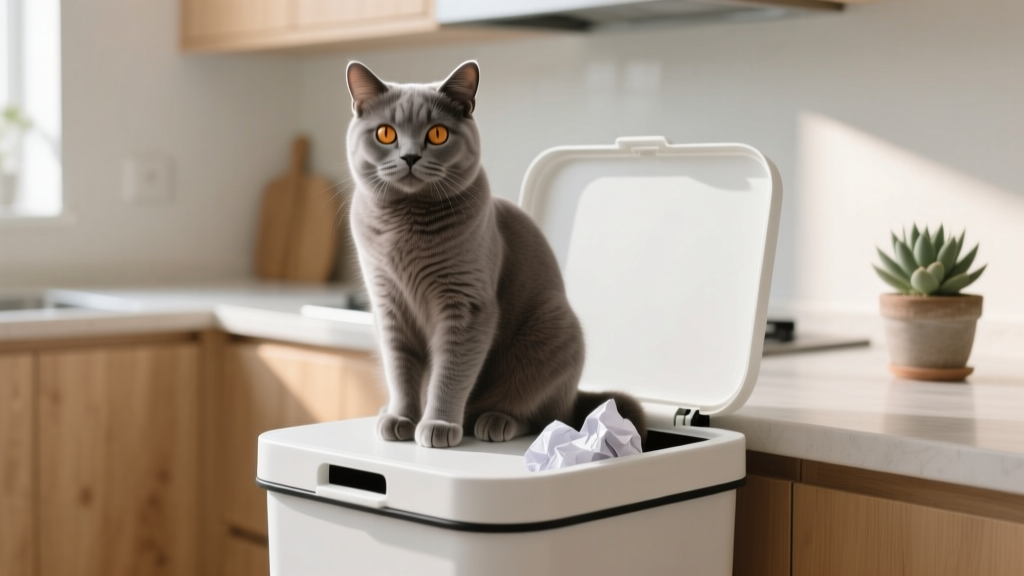
Why Cats Sit on the Kitchen Trash Can Lid
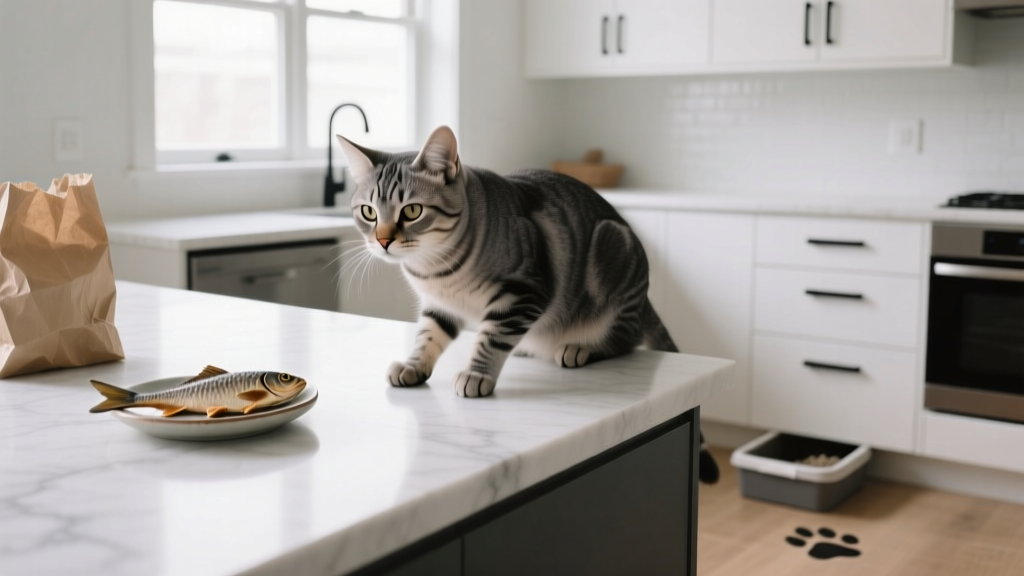
You’re making dinner. The chopping board is out, the faucet is running, and you’re doing that little dance where you open the trash can with your foot while trying not to drip onion juice everywhere. Then you glance over and there’s your cat—calm, confident, and completely in the way—perched on the kitchen trash can lid like it’s a throne.
If you’ve ever thought, “Of all places… why there?” you’re in good company. Cats have a talent for choosing the most inconvenient, hilarious, and oddly specific spots. The trash can lid is one of those classic “cat logic” locations that actually makes a lot of sense once you see it through feline eyes.
1) The scientific (and evolutionary) reasons cats do this
Cats are small predators and cautious prey animals at the same time. That mix shapes nearly everything they do, including where they choose to sit. The trash can lid checks several instinct-driven boxes:
- Height = safety and information. Even a few extra inches can make a cat feel more secure. From a slightly elevated perch, they can monitor the room, the humans, and potential “threats” (like the vacuum you haven’t even taken out yet).
- Warmth and comfort. Many kitchen bins sit near appliances that give off heat—dishwashers, ovens, refrigerators. Cats are heat-seekers, and “warm-ish plastic” can be surprisingly appealing.
- Smell is data. Cats navigate the world through scent more than we realize. A trash can lid is basically an information bulletin: what you ate, what you handled, what came into the house, what changed since yesterday.
- Resource guarding tendencies. In the wild, access to food is everything. Domestic cats still carry the instinct to monitor food sources. Your trash can is, from a cat’s perspective, a food-adjacent hotspot.
- Territory and control. Cats feel calm when they can predict and control their environment. Sitting on a “central” object in a high-traffic room can be a way to keep tabs on the household.
In short: your cat isn’t being random. They’re being a tiny, fuzzy strategist.
2) A detailed breakdown: different contexts and what’s really going on
Not all trash-can sitting is the same. The why often depends on what’s happening around the house and what kind of cat you have.
The “kitchen supervisor” sit
This is the cat who hops up when you start cooking and watches you like a stern manager. They may blink slowly, knead a little, or simply stare at your hands.
What it usually means: Your cat enjoys your company and finds food-prep sounds and smells fascinating. They’re also learning your routines—cats love predictable patterns.
The “I heard a noise” sit
Your cat bolts into the kitchen and lands on the trash lid like it’s base camp. Ears swivel, body is still, eyes are big.
What it usually means: They’re using height to assess something new or uncertain—company at the door, a new appliance sound, construction outside, a dog walking past the window.
The “please notice me” sit
You’re busy. Your cat chooses the one spot guaranteed to make you look at them—especially if it’s right by your legs while you cook.
What it usually means: Attention-seeking, social connection, or boredom. This is common in cats who have learned that certain behaviors reliably earn interaction (even “No, get down!” can be rewarding).
The “snack detective” sit
Your cat sniffs the lid, circles, sits, and occasionally tries to paw at the edge. Sometimes they park there after you toss out something especially fragrant.
What it usually means: Food motivation and scent interest. Some cats are more “opportunistic scavenger” than we like to admit, especially if they’ve ever successfully found something tasty in there.
The “it’s the best seat in the house” sit
The lid is wide, flat, and in a central location. Your cat sits there even when nothing interesting is happening.
What it usually means: It’s a vantage point with good visibility and traffic. Cats often choose places where they can be near you without being handled.
3) What this behavior says about your cat’s mood and feelings
Trash-can sitting can look silly, but it can be surprisingly informative. Watch the body language—not the location alone.
- Relaxed and content: Soft eyes, slow blinks, tail loosely wrapped, gentle kneading. Your cat feels safe and likes being part of the household action.
- Curious and engaged: Forward ears, sniffing, head tilts, alert posture without stiffness. They’re gathering information and enjoying mental stimulation.
- On edge: Low crouch, wide eyes, ears partially to the side, tail tucked or twitching sharply. The “perch” is helping them feel secure while they assess something stressful.
- Frustrated or demanding: Intense staring, vocalizing, tail flicking, repeated hopping up and down. This can be “I want something” energy—food, play, or your attention.
A key point: many cats sit on the trash can lid because it’s a social compromise. They can be close to you in the kitchen, but not trapped in your arms. It’s feline closeness on feline terms.
4) Related behaviors you might also notice
If your cat loves the trash can lid, you may see similar “strategic perching” choices elsewhere:
- Sitting on the refrigerator, microwave, or bread box (anything elevated and near food smells)
- Perching on the back of the couch to monitor the room
- Sleeping in the sink (cool, curved, safe-feeling)
- Camping near the dishwasher (warmth + routine)
- Following you into the bathroom (social curiosity + predictable rituals)
- Investigating grocery bags and packaging (novel smells are irresistible)
These behaviors are all variations on the same theme: cats seek vantage points, warmth, novelty, and proximity to their favorite humans.
5) When sitting on the trash can lid is normal… and when it’s a concern
Most of the time, this is harmless and even charming. But there are situations where it deserves a closer look.
Usually normal
- Your cat sits there briefly to watch you cook.
- They hop up when interesting smells appear, then move on.
- Their body language is relaxed and they otherwise act like themselves.
Potential concerns
- Obsessive trash interest: Persistent attempts to break into the bin, stealing wrappers, chewing packaging, or eating food scraps. This can lead to GI upset or dangerous ingestion (bones, string, plastic).
- Sudden behavior change: A cat who never cared about the trash suddenly becomes fixated. If paired with increased hunger, weight loss, vomiting, or thirst, it’s worth a vet check (medical issues can increase food-seeking).
- Stress signals: If the trash lid perch coincides with hiding, over-grooming, aggression, or litter box changes, your cat may be using the perch as a “safety station” because something feels off in the home.
- Safety risk: If your cat startles easily, a wobbling lid can lead to slips or falls, especially for seniors or cats with mobility issues.
If you’re unsure, take a quick “whole cat” snapshot: appetite, energy, litter habits, grooming, and general mood. A single quirky perch is rarely the problem; the pattern around it is what matters.
6) Tips for responding to (or encouraging) the behavior
You have two goals here: keep your cat safe and keep your kitchen functional. Good news—both are possible.
If you don’t mind it
- Offer a better perch nearby. A cat tree, sturdy stool, or wall shelf in the kitchen (out of the cooking zone) gives them the same vantage point without the sanitation concerns.
- Reinforce the alternative. When your cat chooses the approved perch, quietly reward with praise, a treat, or a few seconds of petting if they enjoy it.
- Create a “supervised kitchen spot.” A small mat on a counter corner (if you allow it) or a dedicated chair can become the official hangout. Consistency matters.
If you want them to stop
- Remove the reward. If your cat hops up and you always talk to them, they may be training you. Try calmly guiding them to an approved spot without extra commentary.
- Make the lid less appealing—kindly. Use a trash can with a curved lid, a secure step pedal lid that closes firmly, or place a light, unstable-but-safe item on top (like a large plastic tray) so it’s not a comfy platform.
- Upgrade trash security. Use a locking lid or keep tempting scraps in a sealed container. If your cat is a “snack detective,” management beats constant battles.
- Add daily enrichment. Many attention-seeking kitchen behaviors fade when cats get predictable play sessions, puzzle feeders, and hunting-style games.
A quick safety note
If your cat is in the kitchen while you cook, be extra mindful of hot burners, knives, and toxic foods (onions, garlic, grapes/raisins, chocolate, alcohol, xylitol). A nearby perch that’s safe is the best compromise.
7) Fun facts and research-based tidbits
- Cats are scent-driven observers. Their sense of smell is far more sensitive than ours, and they use it to build a “map” of what’s happening in their territory—including what you ate, where you’ve been, and what’s new.
- Small height changes matter. A perch doesn’t have to be tall to feel strategic. Even a trash can lid can offer a sense of control in a busy room.
- Routine is a comfort cue. Kitchens are full of repeated patterns—meal prep, coffee, dishwashing. Many cats are drawn to predictable human rituals because they’re easy to anticipate and feel safe.
- “In the middle of things” is often a social choice. Cats who park themselves in your path aren’t always being pushy; they’re often choosing proximity while keeping autonomy.
8) FAQ: Common questions about cats and trash can lids
Is my cat trying to tell me they’re hungry?
Sometimes. If your cat sits on the trash can lid mainly when you’re cooking or right before mealtimes, hunger (or anticipation) is likely part of it. If they seem constantly hungry or are losing weight, check in with your veterinarian to rule out medical causes.
Why does my cat do this even when the trash is empty?
Because the spot is rewarding: it’s a perch, it’s central, it’s near you, and it holds interesting scents even when “empty.” Cats remember locations that pay off.
Is it safe for my cat to sit on the trash can?
It can be, but it depends on the bin and your cat. Wobbly lids, sharp edges, or easy access to food scraps are risks. A more stable bin (or a nearby cat perch) is safer.
How do I stop my cat from jumping on the trash without scaring them?
Use redirection, not punishment. Calmly move them to an approved perch and reward that choice. Improve trash security so there’s no food reward, and give them another elevated spot in the kitchen so they’re not losing their “job” as supervisor.
My cat knocks the lid open—are they being naughty?
They’re being a cat: curious, persistent, and motivated by interesting smells. “Naughty” usually means the environment is too tempting. Locking lids, sealed scrap containers, and enrichment (especially food puzzles) help a lot.
Could this be a sign of stress?
It can be if the behavior increases suddenly or comes with other stress signs (hiding, over-grooming, irritability, litter box issues). In that case, consider what changed recently—new pets, visitors, noises, schedule changes—and offer more safe perches and predictable routines.
Closing thoughts
Your cat on the kitchen trash can lid isn’t just being weird for the sake of it (though cats do enjoy a little comedic timing). They’re choosing a perch that offers height, information, warmth, routine, and closeness to you—often all at once. When you read the context and body language, this quirky habit becomes a small window into how your cat feels about their world.
Does your cat sit on the trash can like they own the place, or do they have an even stranger kitchen “throne”? Share your funniest (or most puzzling) cat perch stories with us on catloversbase.com—we’d love to hear what your feline supervisor has been up to.