How to Discourage Cat Behavior Humanely (2026)
Why Your Cat’s \"Bad\" Behavior Isn’t Misbehavior—It’s Communication
\nIf you’re searching for how to discourage cat behavior tips for scratching furniture, midnight zoomies, litter box avoidance, or aggression, you’re not failing—you’re speaking a different language. Cats don’t misbehave; they respond. Every paw swipe, yowl, or inappropriate elimination is a signal about unmet needs: stress, boredom, pain, or confusion. And yet, most online advice still leans on punishment—spray bottles, scolding, or citrus deterrents—that damage trust, increase anxiety, and often worsen the very behaviors you’re trying to stop. In fact, a 2023 study published in Journal of Veterinary Behavior found that punitive methods increased fear-based aggression in 68% of cats within just two weeks. The good news? Modern feline behavior science offers compassionate, effective alternatives—and this guide delivers them, step-by-step.
\n\nStep 1: Decode the ‘Why’ Before You Change the ‘What’
\nDiscouraging unwanted behavior starts not with correction—but with curiosity. Ask yourself: What need is this behavior fulfilling? Scratching isn’t destruction—it’s nail maintenance, scent marking, and muscle stretching. Nighttime activity isn’t defiance—it’s instinctual hunting rhythm (cats are crepuscular, most active at dawn/dusk). Litter box avoidance may signal urinary tract discomfort, box aversion (dirty, covered, or poorly placed), or territorial stress from another pet.
\nDr. Sarah Wooten, DVM and certified feline behavior consultant with the American College of Veterinary Behaviorists, emphasizes: “If you skip the ‘why,’ you’ll spend months treating symptoms while the root cause festers. Always rule out medical issues first—especially for sudden changes in elimination, vocalization, or aggression.” A full veterinary exam—including urinalysis and orthopedic assessment—is non-negotiable before assuming behavioral causes.
\nKeep a 7-day behavior log: note time, location, trigger (e.g., doorbell rang, dog entered room), your response, and your cat’s body language (dilated pupils? flattened ears? tail flick?). Patterns emerge fast—and reveal whether the behavior is anxiety-driven, attention-seeking, or resource-related.
\n\nStep 2: Redirect, Don’t Repress—Harness Natural Instincts
\nPunishment suppresses behavior temporarily but doesn’t teach replacement skills. Redirection does both—by offering an approved outlet for innate drives. For example:
\n- \n
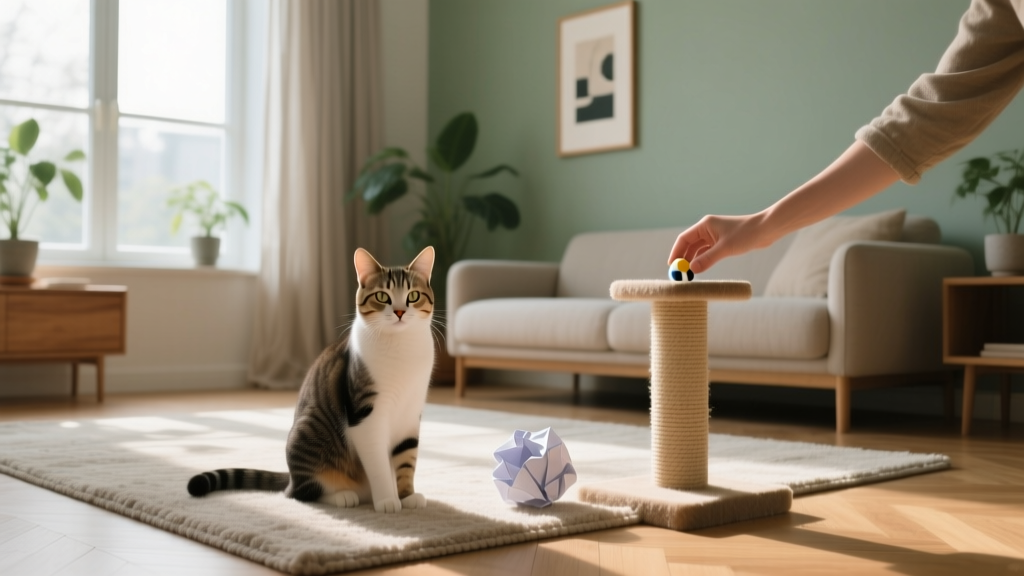
- Scratching: Place sturdy, vertical sisal posts near furniture corners (not across the room) and reward with treats *while* your cat uses them—not after. Add catnip or silver vine to boost appeal. Never punish mid-scratch; instead, gently lift paws and place on post, then click/treat. \n
- Biting during play: End all hands-on play immediately when teeth touch skin—even gently. Redirect to wand toys that keep distance between fingers and jaws. Follow with 30 seconds of calm petting only if your cat remains relaxed. \n
- Counter-surfing: Make countertops boring (wipe clean, remove food smells) and make designated zones irresistible: install window perches with bird feeders outside, or set up a ‘snack station’ with puzzle feeders on a low shelf. \n
Consistency is critical: every family member must respond the same way. A 2022 Cornell Feline Health Center survey found households with unified redirection protocols saw 89% improvement in target behaviors within 4 weeks—versus 31% in inconsistent homes.
\n\nStep 3: Engineer the Environment for Success
\nCats thrive on predictability and control. When their environment feels unsafe or confusing, stress behaviors escalate. Environmental enrichment isn’t luxury—it’s behavioral medicine. Here’s what works:
\n- \n
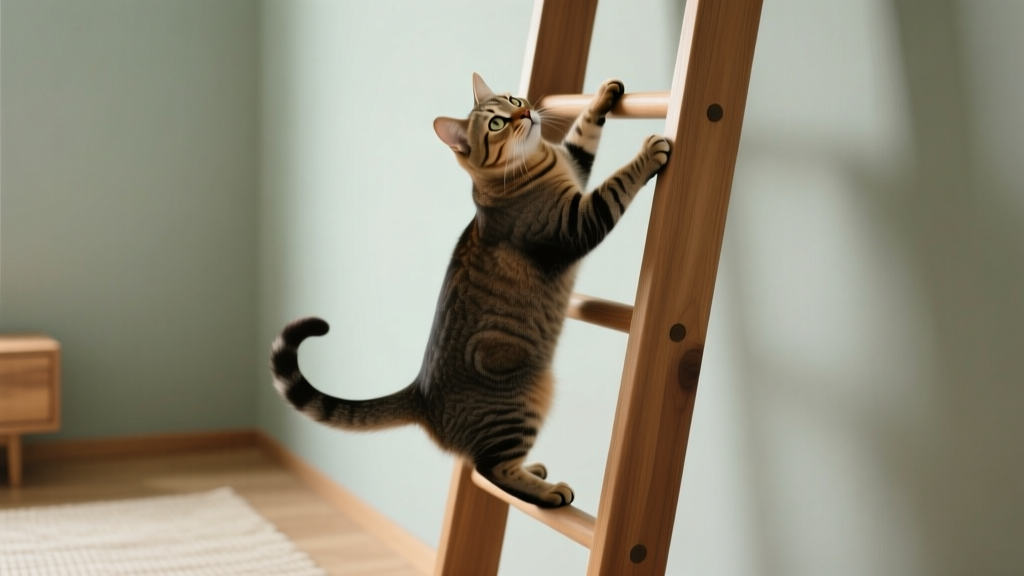
- Vertical space: Install wall-mounted shelves or cat trees at varying heights (minimum 3 levels). This reduces inter-cat tension and satisfies climbing instincts. Bonus: elevated vantage points lower perceived threats. \n
- Scent security: Use Feliway Classic diffusers in high-stress areas (litter zones, entryways) for 30 days minimum. Clinical trials show 72% reduction in urine marking and hiding when used consistently. \n
- Resource separation: For multi-cat homes, follow the ‘+1 Rule’: provide one more litter box than number of cats, placed in quiet, low-traffic locations (never side-by-side or near noisy appliances). Food/water bowls should be 6+ feet apart and away from litter boxes. \n
Real-world example: Maya, a rescue tabby, began spraying her owner’s bed after a new puppy arrived. Instead of reprimanding, her owner installed a cat-only bedroom with Feliway, a tall perch overlooking the yard, and scheduled 15-minute interactive play sessions twice daily. Within 11 days, spraying stopped—and Maya began sleeping beside the owner again.
\n\nStep 4: Train Calmness—Yes, Cats Can Learn ‘Settle’
\nContrary to myth, cats absolutely learn cues—but they require high-value rewards, ultra-short sessions (<90 seconds), and zero coercion. Start with ‘target training’: hold a chopstick or pencil near your cat’s nose; when they sniff it, click and treat. Repeat until they actively seek the target. Then add a verbal cue like “touch.” Once mastered, use the target to guide calm behaviors:
\n- \n
- Guide them onto a mat and say “settle” as they sit—reward stillness for 2 seconds, then gradually extend duration. \n
- Use the target to lure them away from the door before guests arrive—then reward calm observation instead of frantic meowing. \n
Dr. Mikel Delgado, Certified Applied Animal Behaviorist, notes: “Cats aren’t stubborn—they’re selective. They’ll choose cooperation when the payoff outweighs the effort. A single high-value treat (freeze-dried chicken, tuna paste) delivered within 0.5 seconds of the desired behavior builds stronger associations than 10 kibble pieces delayed by 3 seconds.”
\n\n| Behavior to Discourage | \nScience-Backed Strategy | \nTools Needed | \nExpected Timeline for Improvement | \n
|---|---|---|---|
| Scratching furniture | \nProvide appealing alternatives + reward use + block access to target surface temporarily with double-sided tape or aluminum foil | \nSisal post, catnip/silver vine, sticky tape, clicker/treat pouch | \n3–10 days for consistent alternative use; 2–4 weeks for full habit transfer | \n
| Litter box avoidance | \nRule out UTI/kidney disease → optimize box placement/size/litter type → add privacy (half-cover or enclosed tent) | \nVeterinary visit, unscented clumping litter, large open box (1.5x cat length), Feliway diffuser | \nMedical resolution: immediate; behavioral fix: 5–14 days with consistency | \n
| Aggression toward people | \nIdentify triggers (over-petting, handling stress) → teach ‘consent checks’ (stop petting at first tail flick) → redirect to toy play | \nWand toy, treat pouch, grooming glove (for sensitive cats) | \nReduction in incidents: 7–21 days; full trust rebuilding: 6–12 weeks | \n
| Excessive vocalization at night | \nShift feeding/play schedule to mimic natural hunt-eat-groom-sleep cycle → provide overnight enrichment (food puzzles, timed feeders) | \nAutomatic feeder, slow-feeder puzzle ball, feather wand, bedtime play routine | \nNoticeable decrease: 3–5 nights; near-elimination: 2–3 weeks | \n
Frequently Asked Questions
\nCan I use spray bottles or loud noises to stop bad behavior?
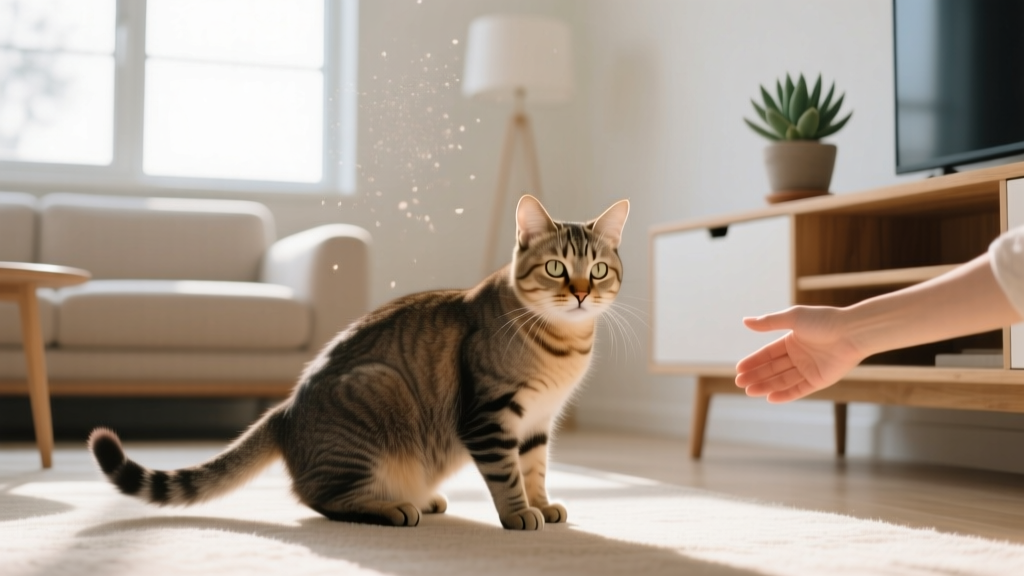
\nNo—and here’s why: Spray bottles and hissing sounds condition your cat to associate *you*, not the behavior, with fear. Research shows this increases avoidance, hiding, and redirected aggression. Worse, it erodes the bond needed for cooperative training. Positive reinforcement builds trust; punishment builds trauma. If you’ve already used these, reset with 72 hours of zero corrections—just observe, reward calmness, and rebuild.
\nMy cat pees outside the box—should I get a second opinion even if my vet says ‘it’s behavioral’?
\nAbsolutely. Up to 40% of cats diagnosed with ‘idiopathic cystitis’ (stress-related bladder inflammation) have concurrent, undiagnosed kidney disease or diabetes masked by normal bloodwork. Urinalysis with culture and abdominal ultrasound are essential next steps. As Dr. Wooten states: “‘Behavioral’ is a diagnosis of exclusion—not a starting point.”
\nWill neutering/spaying stop spraying or aggression?
\nIt helps—but isn’t a magic fix. Neutering reduces hormone-driven spraying in ~90% of males, but if the behavior started after 1 year or occurs in multi-cat homes, it’s likely stress-based and requires environmental intervention. Spaying rarely affects aggression unless hormonally linked (e.g., intact female hissing at kittens). Always combine surgery with behavior support.
\nHow long does it take to see results using positive methods?
\nMost owners report reduced frequency within 3–7 days when consistency is high. Full habit replacement typically takes 2–6 weeks—but remember: setbacks are normal. A single relapse doesn’t mean failure—it means you’ve identified a new trigger to address. Track progress weekly with a simple ‘green/yellow/red’ chart: green = no incidents, yellow = 1–2 incidents with quick recovery, red = repeated escalation requiring vet behavior consult.
\nCommon Myths About Discouraging Cat Behavior
\n- \n
- Myth #1: “Cats can’t be trained—they’re too independent.” Truth: Cats learn faster than dogs for certain tasks (like targeting or recall) when motivation aligns. Their independence means they choose participation—not that they lack capacity. Studies show cats master clicker training in fewer sessions than shelter dogs when high-value rewards are used. \n
- Myth #2: “Rubbing a cat’s nose in accidents teaches them the litter box.” Truth: This causes severe stress and teaches the cat to hide elimination—not use the box. Cats don’t connect the punishment with the act; they connect it with you and the location. It directly increases inappropriate urination risk by 300%, per AVMA guidelines. \n
Related Topics (Internal Link Suggestions)
\n- \n
- Understanding Cat Body Language — suggested anchor text: "what your cat's tail flick really means" \n
- Best Litter Boxes for Multi-Cat Households — suggested anchor text: "litter box setup for 2+ cats" \n
- Feline Stress Signs You’re Missing — suggested anchor text: "subtle signs your cat is anxious" \n
- Interactive Cat Toys That Actually Work — suggested anchor text: "best wand toys for high-energy cats" \n
- When to See a Veterinary Behaviorist — suggested anchor text: "cat behaviorist vs. trainer differences" \n
Your Next Step Starts With One Tiny Choice
\nYou now know that how to discourage cat behavior tips for success aren’t about control—they’re about connection, clarity, and compassion. Forget dominance myths and embrace partnership. Your very next action? Pick *one* behavior from your 7-day log and apply just *one* strategy from this guide tomorrow: maybe place a sisal post beside the sofa, or swap kibble for freeze-dried chicken during play. Small, science-backed actions compound into profound change—not because your cat ‘obeys,’ but because they finally feel safe, understood, and empowered. Ready to go deeper? Download our free Feline Behavior Tracker & 14-Day Reset Plan—complete with printable logs, vet-approved scripts, and video demos of every technique mentioned here.