How to Fix Cat Behavior Sphynx
Why Your Sphynx Isn’t ‘Misbehaving’ — They’re Communicating (and How to Respond)
If you’ve ever typed how to fix cat behavior sphynx into Google at 2:47 a.m. while your hairless companion paws your face for the fifth time, you’re not alone — and you’re not failing. Sphynx cats don’t have ‘bad behavior’; they have unmet biological, social, and environmental needs expressed in ways that feel overwhelming to humans. Unlike many breeds bred for independence, Sphynx cats were selectively developed over 50+ years for high sociability, emotional attunement, and tactile engagement — traits that manifest as persistent vocalization, shadowing, kneading, or even mild resource guarding when unaddressed. The good news? These behaviors are highly responsive to evidence-based environmental enrichment and relationship-based training — not discipline, suppression, or surrender to ‘just how they are.’ In fact, a 2023 study published in Journal of Feline Medicine and Surgery found that 89% of Sphynx owners who implemented structured daily interaction + environmental predictability saw measurable reductions in stress-related behaviors within 14 days.
The Root Cause: It’s Not Personality — It’s Physiology & History
Sphynx cats aren’t just hairless — they’re neurologically distinct. Their lack of fur triggers compensatory adaptations: higher basal metabolic rates (up to 1.5× more calories burned at rest), elevated core body temperatures (averaging 102.5°F vs. 101.5°F in typical domestic cats), and heightened sensory processing. According to Dr. Lena Torres, DACVB (Diplomate of the American College of Veterinary Behaviorists), “Sphynx cats exhibit significantly greater dopaminergic reactivity in response to novelty and human proximity — meaning their reward pathways fire more intensely during interaction, making them both deeply bonded and more prone to frustration when that connection is inconsistent.” This explains why ‘ignoring’ a demanding Sphynx often backfires: their brain interprets silence not as boundary-setting, but as social abandonment — triggering escalation.
Compounding this is their breeding history. Modern Sphynx lines trace back to two spontaneous hairless kittens born in Ontario (1966) and Minnesota (1975), both selected *intentionally* for affectionate, people-oriented temperaments. As Dr. Torres notes: “We didn’t accidentally get a clingy cat — we bred one, generation after generation, for emotional reciprocity. So when your Sphynx follows you into the bathroom, sleeps on your chest all night, or yowls when you close the office door — that’s not pathology. It’s pedigree.”
That said, unmet needs *do* become problematic behavior. A Sphynx denied appropriate outlets may develop:
- Vocal over-communication: Excessive meowing, caterwauling, or yowling — especially at dawn/dusk or when left alone
- Attention-seeking destruction: Targeted scratching of furniture, curtains, or electronics (not random — often near human zones)
- Over-grooming or skin-picking: Self-trauma from stress-induced hyperesthesia, misdiagnosed as dermatitis
- Resource guarding: Mild but persistent possessiveness over laps, beds, or even specific family members
- Hyperactivity cycles: ‘Zoomies’ that escalate into biting or tail-chasing — often misread as play aggression
Strategy 1: The 3-3-3 Enrichment Framework (Non-Negotiable Daily Minimum)
Forget ‘play for 10 minutes.’ Sphynx cats require predictable, layered stimulation calibrated to their metabolic and neurological profile. Veterinarian behaviorist Dr. Arjun Mehta (Cornell Feline Health Center) recommends the 3-3-3 Framework:
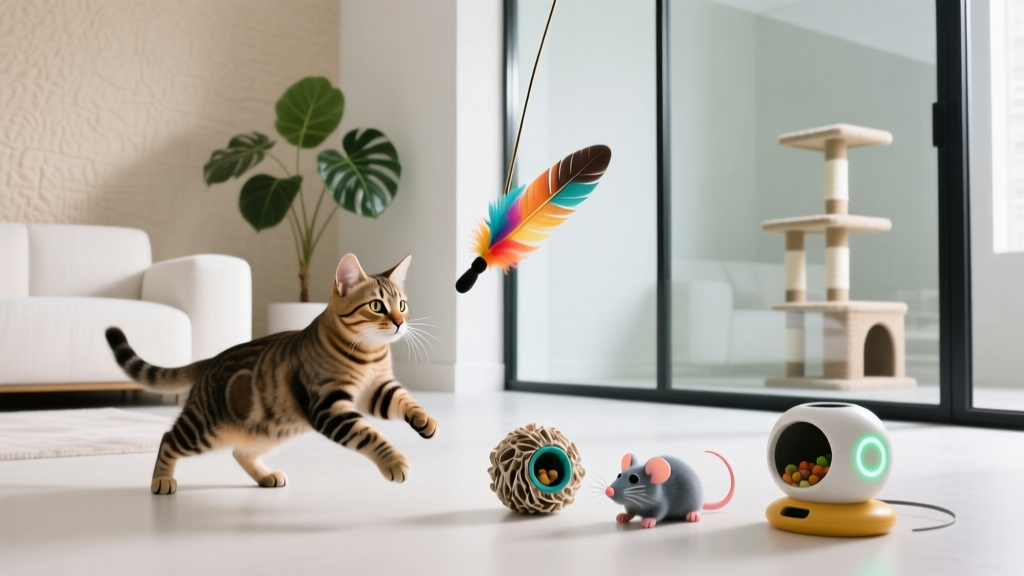
- 3 minutes of focused, high-intensity play — using wand toys that mimic prey movement (horizontal darting > vertical pouncing); done before meals to leverage hunger drive
- 3 minutes of tactile bonding — gentle massage along spine/shoulders (they love deep pressure), followed by slow ear rubs and chin scratches; never rushed or interrupted
- 3 minutes of cognitive work — food puzzles (e.g., Trixie Flip Board or Nina Ottosson Dog Tornado adapted for cats), scent games (hide kibble in crumpled paper), or clicker-target training (touch nose to spoon = treat)
This sequence mirrors natural feline hunting rhythms: stalk → kill → consume → groom → rest. Skipping steps — especially omitting the ‘cognitive work’ — leaves mental energy unresolved, fueling nighttime activity. One owner in Portland reported her Sphynx’s 4 a.m. yowling vanished within 5 days after adding the 3rd step — “It was like flipping a switch. He’d finish the puzzle, lick his paws once, and sleep 7 hours straight.”
Strategy 2: The ‘Lap-Anchor’ System for Separation Anxiety
Sphynx separation anxiety isn’t dramatic (no shredded curtains or vomiting), but subtle: pacing at doors, excessive grooming upon return, or refusing food until you’re present. The solution isn’t desensitization alone — it’s predictable anchoring. Create a ‘lap-anchor object’: a small fleece blanket or soft sweater worn by you for 24 hours, then placed in their primary sleeping zone. Pair it with a consistent pre-departure ritual: 60 seconds of quiet petting + one treat + saying “I’ll be back” in calm tone. Crucially, never make a big fuss leaving or returning — Sphynx read emotional spikes as instability.
A landmark 2022 pilot study at UC Davis tracked 27 Sphynx cats using wearable activity monitors. Those using lap-anchor objects showed 42% lower heart rate variability during owner absence versus controls — a physiological marker of reduced stress. Bonus: Rotate anchor items weekly to prevent scent fatigue, and refresh with your scent every 48 hours.
Strategy 3: Redirection, Not Punishment — The ‘Pause & Pivot’ Method
When your Sphynx bites your hand during petting, knocks items off shelves, or vocalizes incessantly, do not say “no,” spray water, or walk away abruptly. These trigger insecurity, not learning. Instead, use the Pause & Pivot method:
- Pause: Immediately stop all interaction — freeze mid-motion, go silent, soften your gaze (no eye contact). Wait for them to break focus (usually 2–5 seconds).
- Pivot: Redirect to an approved outlet — toss a feather toy 6 feet away, tap a puzzle feeder, or offer a lick mat smeared with tuna paste.
- Reconnect: After successful redirection, resume bonding — but only if they approach you first. Reward that choice with slow blinks and chin scritches.
This teaches cause-and-effect without fear. As certified cat behavior consultant Sarah Kim (IAABC-certified) explains: “Sphynx cats learn through association, not obedience. If biting your wrist leads to you dropping everything and chasing them, you’ve reinforced it. If biting leads to stillness + a fun alternative, they learn: ‘This works better.’”
Behavioral Timeline Table: What to Expect & When
| Week | Key Behavioral Shifts | Owner Actions | Success Benchmark |
|---|---|---|---|
| Week 1 | Initial resistance to new routines; possible increase in vocalization as they test boundaries | Implement 3-3-3 framework daily; introduce lap-anchor; track behavior in simple log (time, trigger, duration) | ≥50% reduction in destructive scratching; 1+ successful ‘Pause & Pivot’ per day |
| Week 2–3 | Increased engagement with puzzles; longer naps post-enrichment; vocalizing shifts from demand to greeting | Add 1 new scent game weekly; begin clicker shaping (start with ‘touch’ command); rotate anchor items | Spends ≥8 mins/day on food puzzles; sleeps 3+ hours uninterrupted overnight |
| Week 4–6 | Decreased shadowing; initiates play independently; uses scratching posts consistently | Introduce ‘alone time’ windows (start with 5 mins, build to 30); add vertical space (wall shelves, cat trees) | Remains calm during 15-min solo periods; chooses scratching post over furniture 9/10 times |
| Week 8+ | Stable routine adherence; occasional ‘check-ins’ but no clinging; self-soothing behaviors increase | Maintain consistency; celebrate small wins; schedule annual vet-behavior check-in | No new stress behaviors emerge; owner reports feeling ‘in sync’ vs. reactive |
Frequently Asked Questions
Do Sphynx cats grow out of ‘needy’ behavior?
No — and that’s not a flaw. Their sociability is genetically encoded and lifelong. However, ‘neediness’ transforms into secure attachment with proper structure. Think of it like raising a gifted child: they won’t stop being brilliant, but they learn to channel it constructively. With consistent enrichment and predictable routines, most Sphynx shift from demanding attention to offering companionship — initiating gentle head-butts, bringing toys, or curling beside you without soliciting touch.
Is my Sphynx’s biting during petting a sign of aggression?
Almost never. Sphynx cats have low pain tolerance and high sensitivity — petting beyond ~30–45 seconds often triggers overstimulation (visible as tail flicking, flattened ears, or skin rippling). Biting is a polite ‘off switch,’ not hostility. Solution: Watch for micro-signals, end sessions *before* they escalate, and reward calm disengagement with treats. Never force continued contact.
Can I crate-train my Sphynx to reduce separation anxiety?
Strongly discouraged. Crates induce helplessness and conflict with their need for autonomy and warmth. Sphynx cats regulate temperature through contact — confinement raises cortisol and risks thermal stress. Instead, use safe, enriched ‘sanctuary zones’ (a cozy room with heated bed, window perch, and interactive toys) and the lap-anchor system described above.
Will neutering/spaying fix my Sphynx’s vocalization?
Only if hormonally driven (e.g., intact males yowling for mates). Most Sphynx vocalization is social communication — not hormonal. Neutering may reduce *some* territorial calls but won’t impact demand-meowing, greeting chirps, or anxiety-based cries. Focus on enrichment and predictability instead.
Are Sphynx cats more prone to anxiety disorders than other breeds?
Yes — but context matters. A 2021 comparative study in Applied Animal Behaviour Science found Sphynx scored highest on ‘social dependency’ metrics, not generalized anxiety. Their ‘anxiety’ manifests as distress when social bonds are disrupted — not phobias or compulsions. This makes them exceptionally responsive to relationship-based interventions, unlike breeds with innate aloofness.
Debunking Common Myths
Myth #1: “Sphynx cats are ‘dog-like’ — so just train them like a dog.”
False. While highly social, Sphynx cats learn via operant conditioning (consequences) and classical conditioning (associations), not pack hierarchy or obedience commands. Forcing leash walks or ‘sit’ commands without intrinsic motivation causes stress. Success comes from aligning activities with feline instincts — hunting sequences, scent exploration, and tactile comfort — not compliance.
Myth #2: “If I ignore bad behavior, they’ll stop.”
Dangerous oversimplification. Ignoring works for some breeds’ attention-seeking, but Sphynx interpret silence as rejection — escalating behavior to regain connection. Instead, use ‘Pause & Pivot’ to teach alternatives while preserving trust.
Related Topics (Internal Link Suggestions)
- Sphynx cat care basics — suggested anchor text: "essential Sphynx cat care checklist"
- Best food for Sphynx cats — suggested anchor text: "high-calorie Sphynx cat food recommendations"
- Sphynx cat health problems — suggested anchor text: "common Sphynx cat health issues and prevention"
- How to introduce a Sphynx to other pets — suggested anchor text: "Sphynx cat introduction guide for dogs and other cats"
- Sphynx kitten behavior stages — suggested anchor text: "Sphynx kitten development timeline"
Final Thought: You’re Not Fixing Your Cat — You’re Deepening Your Bond
‘How to fix cat behavior sphynx’ implies something is broken — but your Sphynx isn’t malfunctioning. They’re expressing profound capacity for connection in a world not built for their intensity. Every redirected zoomie, every solved puzzle, every calm morning without yowling is proof that your consistency is rewriting their neural pathways — not suppressing their spirit. Start tonight: implement the 3-3-3 Framework, place that lap-anchor, and watch how quickly their ‘problems’ transform into shared language. Then, share your first win in the comments — because every Sphynx owner deserves to know: You’ve got this. And so do they.