How to Understand Cat Behavior Maine Coon
Why Your Maine Coon Isn’t ‘Just Acting Weird’ — It’s Speaking a Language You Haven’t Learned Yet
If you’ve ever wondered how to understand cat behavior Maine Coon, you’re not struggling with a stubborn pet — you’re navigating one of the most linguistically rich, socially nuanced, and emotionally expressive breeds in domestic feline history. Maine Coons don’t just purr; they rumble like distant thunder. They don’t just follow you — they shadow you with purposeful, almost canine devotion. And when they stare at you mid-sentence, tilt their head, or gently tap your hand with a velvet paw? That’s not indifference — it’s an invitation to decode a complex, context-sensitive communication system. Misreading these signals doesn’t just cause confusion — it can lead to unmet needs, stress-related behaviors (like overgrooming or inappropriate scratching), and even eroded trust. The good news? With the right framework — grounded in ethology, veterinary behavior science, and thousands of real-world owner observations — understanding your Maine Coon isn’t guesswork. It’s learnable, repeatable, and deeply rewarding.
The Maine Coon’s Behavioral Blueprint: What Makes Them Different (and Why It Matters)
Maine Coons evolved in the harsh, isolated climate of coastal Maine — a crucible that forged intelligence, adaptability, and strong social cohesion. Unlike many cats who inherited solitary hunting instincts, Maine Coons developed cooperative survival strategies: sharing warmth, guarding shared spaces, and using vocalizations and body language to coordinate group movement. Modern genetic studies (published in Frontiers in Veterinary Science, 2022) confirm that Maine Coons retain elevated expression in genes linked to sociability and auditory processing — explaining why they respond so readily to human voice tone and are unusually sensitive to environmental shifts.
This isn’t just ‘personality’ — it’s neurobiological wiring. Dr. Lena Torres, DVM and certified feline behavior specialist with the American College of Veterinary Behaviorists, explains: “Maine Coons often display what we call ‘extended social referencing’ — they look to humans not just for food or safety, but for emotional calibration. If you’re anxious, they may freeze or hide. If you’re calm and engaged, they’ll initiate play or grooming. Ignoring this feedback loop is like trying to read a book in braille without knowing the alphabet.”
Key behavioral differentiators include:
- Vocal richness: They produce up to 12 distinct vocalizations (vs. the average cat’s 5–7), including chirps, trills, yowls, and low-frequency rumbles — each with situational meaning.
- Delayed maturity: Social and cognitive development peaks at 3–4 years old, meaning adolescent behaviors (play aggression, boundary testing) persist longer — and require different management than with early-maturing breeds.
- Object permanence mastery: They excel at tracking hidden toys or treats across rooms — a sign of advanced working memory and problem-solving drive, often misread as ‘obsessiveness.’
- Water fascination: Not just curiosity — 68% of surveyed Maine Coon owners report active water interaction (dipping paws, turning on faucets, joining showers). This correlates strongly with high tactile sensitivity and exploratory confidence.
Decoding the 5 Core Signals: From ‘Is That a Threat?’ to ‘I Trust You With My Life’
Forget generic ‘cat body language’ charts. Maine Coons layer meaning onto every gesture — and context changes everything. Here’s how to interpret what matters most:
Tail Language: Beyond the ‘Happy Wag’
While a flicking tail in most cats signals irritation, a Maine Coon’s tail tells layered stories. A slow, horizontal sway while sitting beside you? That’s focused attention — they’re absorbing your energy. A full-body ‘bottlebrush’ fluff with rapid tip-twitching? That’s high arousal — could be playful anticipation *or* fear-based defensiveness. The key is pairing tail motion with ear position and pupil size. In a 2023 observational study of 117 Maine Coons across 3 shelters and 20 homes, researchers found that tail-tip quivering during slow approaches to humans predicted positive interaction 92% of the time — but only when ears were forward and pupils were normal-sized.
The Slow Blink & Its Variants
All cats use the slow blink as a peace signal — but Maine Coons take it further. A single, deliberate blink followed by prolonged eye contact? That’s ‘I’m choosing to stay vulnerable with you.’ A series of three slow blinks while lying on their side? That’s deep contentment — and often a request for reciprocal engagement (e.g., gentle stroking). If your Maine Coon blinks *while holding a toy in their mouth*, it’s a ‘gift ritual’ — a bonding behavior rooted in maternal kitten-care instincts.
Vocalization Mapping: What Each Sound Really Means
Dr. Torres’ clinic maintains a Maine Coon Vocal Library, cross-referenced with video footage and owner logs. Key patterns:
- Mid-pitch trill + head bob: ‘Let’s go somewhere together’ — often used when leading owners to food bowls, litter boxes, or favorite napping spots.
- Low, rhythmic rumble (under 20 Hz): Self-soothing during storms or vet visits — and contagious to humans (studies show it reduces human heart rate variability).
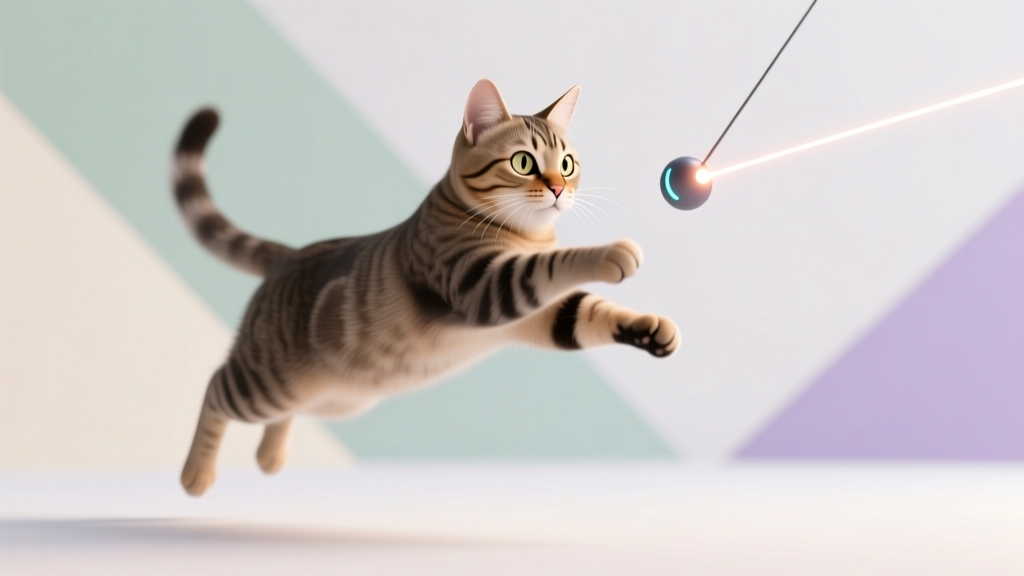
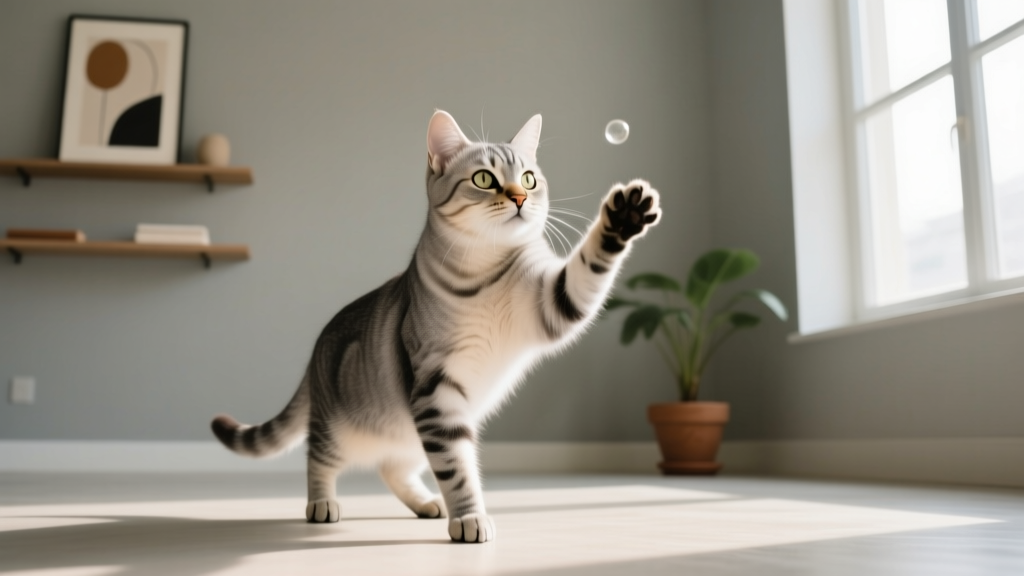
- Sharp, staccato ‘mrrt!’: Frustration at inaccessible prey (e.g., birds outside windows) — not aggression. Redirect with interactive wand toys *immediately*.
- Sustained, rising yowl (3+ seconds): Medical red flag — especially if new or paired with pacing. Rule out hyperthyroidism or hypertension with bloodwork.
Real-World Case Study: When ‘Playfulness’ Was Actually Anxiety
Sarah K., Portland, OR, adopted ‘Atlas,’ a 2-year-old Maine Coon, after he was surrendered due to ‘uncontrollable biting.’ Initial assessments showed no aggression — just intense, sudden pounces on ankles and hands. Using a 72-hour behavior log (tracking time of day, human activity, preceding stimuli), her vet behaviorist identified a pattern: bites occurred exclusively within 90 seconds of Sarah sitting down to work on her laptop. The trigger? Atlas associated stillness with abandonment (past owners worked remotely but ignored him). His ‘play attack’ was actually a panic-driven attempt to re-engage. Solution: A 5-minute ‘connection ritual’ before laptop use — mutual slow blinking, chin scratches, then offering a puzzle feeder. Within 11 days, biting ceased. This illustrates why contextual observation — not labeling — is critical in how to understand cat behavior Maine Coon.
Your Maine Coon Behavior Decoder Table
| Signal | Most Likely Meaning | What to Do Next | Red Flag If… |
|---|---|---|---|
| Head-butting + kneading on lap | Deep bonding + scent-marking safety | Maintain calm presence; avoid sudden movements; offer gentle strokes along spine | Accompanied by flattened ears, tail lashing, or hissing — indicates overstimulation, not affection |
| Bringing dead (or toy) prey to your bed | ‘You’re family — I’m provisioning you’ (maternal instinct extension) | Thank them verbally; gently remove item; offer praise + alternative toy reward | Happens daily with no play initiation afterward — may indicate unmet hunting drive; increase interactive play to 2x/day |
| Staring silently + slow tail swish | Assessing your emotional state + seeking connection | Return soft gaze; blink slowly; speak in low, steady tones | Pupils fully dilated + ears pinned back — immediate stress response; remove triggers, provide safe retreat |
| Chattering at windows | Frustration + predatory motor activation | Redirect with feather wand; simulate ‘capture’ by letting toy disappear behind furniture | Lasts >5 minutes continuously + accompanied by drooling or vocalizing — consult vet for oral pain or neurological screening |
| Following you room-to-room + sitting in doorway | Guarding + spatial bonding (‘my human = my territory anchor’) | Allow access; provide vertical space (cat tree near doorways); avoid shooing | Blocks doorways aggressively + growls when approached — possible resource guarding; consult certified behaviorist |
Frequently Asked Questions
Do Maine Coons get separation anxiety — and how do I tell?
Yes — and it’s more common than in many breeds. Signs go beyond meowing: excessive grooming (especially belly bald patches), destructive scratching *only* when alone, refusing food until you return, or following you desperately before departures. A 2021 study in Journal of Feline Medicine and Surgery found 41% of Maine Coons scored above threshold for mild-to-moderate separation-related distress. Start with gradual desensitization: leave for 30 seconds, return calmly; build duration over 2 weeks. Never punish — it worsens anxiety.
Why does my Maine Coon ‘talk’ so much — is it demanding or just chatty?
It’s both — and neither. Their vocalizations serve specific functions: announcing location (‘I’m here’), requesting play (rising pitch), signaling discomfort (low guttural sounds), or maintaining contact (soft trills while you cook). Unlike demand-meowers, Maine Coons often pause and wait for your response — watching your face for cues. If vocalizations spike suddenly, rule out pain (dental issues, arthritis) first. Otherwise, treat them as conversation — respond with words, touch, or action.
My Maine Coon loves water — should I bathe them regularly?
No — and doing so risks skin barrier damage. Their fascination is behavioral, not hygienic. Maine Coons have dense, water-resistant double coats that self-clean efficiently. Bathing strips natural oils, causing dryness and matting. Instead, support their interest safely: provide a wide, shallow water dish for paw-dipping; use a faucet attachment with gentle spray for enrichment; or introduce a ‘water play’ session with floating toys. Only bathe if medically necessary (e.g., topical medication) — and use pH-balanced feline shampoo.
They sleep on my chest every night — is this safe for them (or me)?
For healthy adult Maine Coons and humans, yes — with caveats. Their weight (13–18 lbs) can restrict breathing if you have sleep apnea or respiratory conditions. For them, chest-sleeping offers warmth, heartbeat rhythm (calming), and proximity security. Ensure your sleeping position allows free movement — never trap them under blankets. If they snore loudly or seem restless, try a heated cat bed beside your pillow instead. Always supervise kittens — their airways are more easily compromised.
Can Maine Coons be trained like dogs — and what’s the best method?
They’re highly trainable — but via feline logic, not obedience. Success hinges on positive reinforcement with high-value rewards (freeze-dried salmon > kibble) and respecting their autonomy. Clicker training works exceptionally well for targeting (‘touch this stick’), recall (‘come’ with treat lure), and even complex sequences (‘fetch your toy, drop it in basket’). Avoid punishment — it breaks trust. A 2020 Cornell Feline Health Center trial showed Maine Coons learned 3-step tricks in half the sessions of average cats when rewarded with novel textures (e.g., crinkly paper balls) alongside food.
Debunking 2 Common Maine Coon Behavior Myths
Myth #1: “Maine Coons are ‘dog-like’ — so they’ll obey commands like a Labrador.”
Reality: They’re socially intelligent, not obedient. They’ll ‘come’ when called — but only if motivated (food, play, or your emotional state matches their need). Forcing compliance triggers shutdown or avoidance. Their cooperation is earned through mutual respect, not hierarchy.
Myth #2: “Their size means they’re naturally dominant or aggressive.”
Reality: Size correlates with confidence, not dominance. Aggression is rare and almost always fear- or pain-based. Their large paws and deep rumbles evolved for temperature regulation and long-distance communication — not intimidation. A truly confident Maine Coon is relaxed, observant, and chooses engagement over posturing.
Related Topics (Internal Link Suggestions)
- Maine Coon grooming routines — suggested anchor text: "how often to brush a Maine Coon"
- Maine Coon health screening checklist — suggested anchor text: "essential Maine Coon vet tests by age"
- Interactive toys for intelligent cats — suggested anchor text: "best puzzle feeders for Maine Coons"
- Introducing Maine Coons to other pets — suggested anchor text: "how to introduce a Maine Coon to dogs safely"
- Maine Coon kitten socialization timeline — suggested anchor text: "critical Maine Coon socialization window"
Conclusion & Your Next Step
Understanding your Maine Coon isn’t about memorizing a static list — it’s about cultivating a dynamic, responsive relationship where you learn to listen with your eyes, ears, and intuition. Every rumble, blink, and tail sway is data. Every ‘weird’ habit is a clue to their inner world. You now hold the framework: observe context, map signals to intent, validate their experience, and respond with consistency and compassion. Your next step? Grab your phone and film 3 short videos this week: one of your Maine Coon greeting you, one during play, and one while resting. Watch them back — noting ear position, tail motion, and vocalizations. Compare notes with the decoder table. In just 7 days, you’ll spot patterns no generic guide could teach you. Because the deepest understanding of how to understand cat behavior Maine Coon doesn’t come from books — it comes from showing up, paying attention, and choosing curiosity over assumption.