Cat Perching Behavior: High Place Security Need
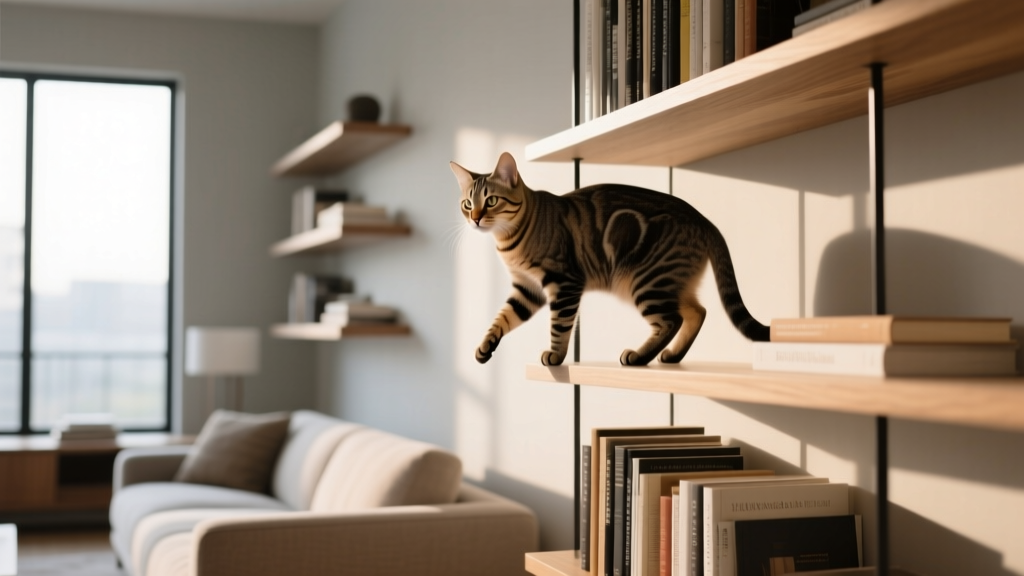
You’re carrying laundry to the bedroom when you feel it: that familiar sensation of being watched. You look up and—of course—your cat is on top of the bookshelf like a tiny, furry gargoyle, calmly blinking down at you as if they personally own the mortgage. Maybe it’s the top of the fridge. Maybe it’s the curtain rod (heart attack included at no extra charge). Maybe it’s the highest cat tree platform they can cram themselves onto, even though it’s clearly designed for a smaller, more dignified animal.
If you’ve ever wondered, “Why are you up there?” the answer is usually not “because I enjoy giving you anxiety.” It’s because being high up meets a deep, hardwired need for security, control, and information. Perching isn’t just quirky—it’s classic cat.
Why Cats Love High Places (The Evolutionary Backstory)
Cats are both predators and, in certain situations, prey. That double identity shapes a lot of feline behavior. In the wild, a higher vantage point offers three major advantages:
- Safety: Elevated spots are harder for threats to reach and give cats more time to react.
- Hunting advantage: A good view helps them track movement—prey, rivals, or anything worth investigating.
- Territory monitoring: Cats are very invested in “knowing what’s happening” in their space. Height improves their ability to patrol without moving much.
Even the most pampered indoor cat carries that instinctive preference. Your living room is their territory, and a tall perch is basically the command center. From up there, your cat can observe routine patterns—when you walk into the kitchen, which dog toys mysteriously migrate, when the delivery person arrives—without having to physically engage. It’s efficient. And cats love efficient.
Perching in Different Contexts: What “Up High” Is Doing for Your Cat
Not all perching is the same. The location and timing can tell you what your cat is trying to accomplish.
1) The “I Want to Oversee Everything” Perch
This is the cat on the cat tree near the window or the top of the couch, rotating their ears like satellite dishes. They’re not hiding. They’re monitoring. You’ll often see this when the household is active—kids running, dinner cooking, doors opening and closing.
Owner scenario: You have guests over, and your cat is perched above the room like a security camera with whiskers. They’re not necessarily scared; they’re collecting information at a comfortable distance.
2) The “I Need a Break” Perch
Height can be a polite way to say, “I want to be near you, but not touched.” Cats can enjoy company while still needing space. A high shelf or the top tier of a cat tree gives them social proximity with low pressure.
Owner scenario: You’re binge-watching a show, and your cat chooses the back of the sofa instead of your lap. They’re still hanging out—just on their terms.
3) The “New Place, New Rules” Perch
When a cat enters a new environment (new home, new furniture layout, or even a new vacuum cleaner parked in the hallway), they often seek height first. It’s the quickest way to map the territory and feel less vulnerable.
Owner scenario: You moved a new cat tree into the living room, and your cat immediately climbs to the top and sits there like they’re reviewing your interior design choices.
4) The “Avoiding Conflict” Perch
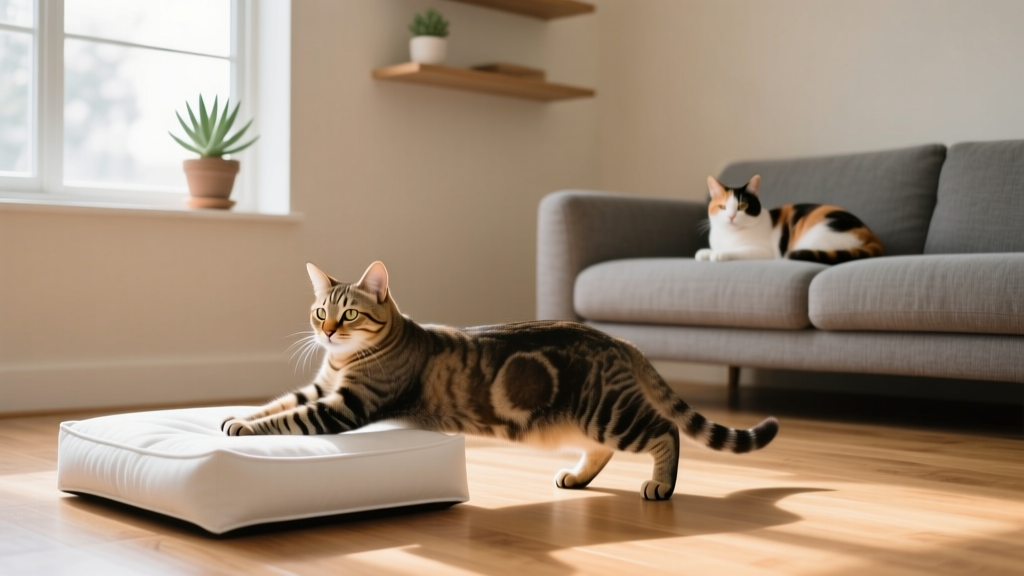
In multi-cat homes, vertical space is not just enrichment—it’s conflict management. Cats can share a room more peacefully when they can occupy different elevations. Height helps them pass each other without a confrontation.
Owner scenario: One cat is on the windowsill, the other is on the floor. They’re coexisting nicely because they’re not competing for the same lane.
5) The “Warm Spot” Perch
Sometimes the simplest answer is the correct one: heat rises. The top of the fridge, a high shelf near a ceiling vent, or the sunniest window perch can be genuinely cozy.
Owner scenario: Your cat chooses the highest platform in a sunbeam and becomes a melted croissant for three hours.
What Perching Says About Your Cat’s Mood and Feelings
Your cat’s body language up high matters as much as the perch itself. Here are common “mood reads” you can use:
- Relaxed and content: Loaf position, soft eyes, slow blinking, tail loosely wrapped. This is “I feel secure.”
- Curious and engaged: Upright posture, ears forward, head tracking movement. This is “I’m gathering intel.”
- Cautious or uncertain: Body slightly crouched, ears swiveling, tail tucked close, wide eyes. This is “I’m not ready to interact.”
- Overstimulated or stressed: Rapid tail flicking, tense shoulders, pupils very dilated, startled reactions. This can mean “I’m coping, but I’m not okay.”
- Possessive (especially in multi-cat homes): Blocking access to a perch, staring down another cat, swatting when approached. This can signal resource guarding.
Perching is often a self-soothing strategy. Your cat is creating a buffer zone between themselves and whatever feels unpredictable down on the ground—whether that’s a toddler, a new dog, or the terrifying betrayal of you moving a chair two feet to the left.
Related Behaviors You Might Also Notice
Perching rarely travels alone. Cats who love height often show a few of these classics:
- Window watching (“cat TV”): Chirps, chattering, and intense staring at birds or passing people.
- Following you from room to room—without being underfoot: They “shadow” you from countertops or furniture backs.
- Kneading and settling on elevated blankets: Comfort + security combined.
- Rubbing cheeks on perch edges: Marking the spot with facial pheromones to make it feel like “theirs.”
- Vertical scratching: Especially near climbing routes; it’s a way of claiming pathways and stretching muscles used for climbing.
When Perching Is Normal… and When It Might Be a Concern
Most of the time, high-place living is normal, healthy cat behavior. It’s enrichment, exercise, and emotional regulation all in one fuzzy package.
Generally normal:
- Your cat chooses a high spot to nap, watch, or avoid gentle chaos.
- They come down to eat, drink, use the litter box, and socialize at least sometimes.
- They have more than one preferred perch and aren’t fixated on a single “safe zone.”
Potential concern signals:
- Sudden change: A cat who never perched before starts hiding up high constantly.
- Avoidance of normal activities: They won’t come down to eat, drink, or use the litter box comfortably.
- Increased aggression or fear: Hissing when approached, panicking when you walk near the perch, or acting jumpy and on-edge.
- Physical difficulty: Hesitating to jump, misjudging distances, yowling before jumping, or seeming stiff. Pain (arthritis, injuries) can change climbing and perching patterns—sometimes cats go up but struggle to come down.
- Senior cat risk: Older cats may still want height but need safer routes and softer landing options.
If the perching looks like a coping mechanism for stress—especially after changes like a new pet, baby, move, construction noise, or neighborhood cats outside—consider both behavior support and a vet check to rule out medical causes.
How to Respond (and Encourage Perching in a Cat-Friendly Way)
You don’t need to eliminate perching. You want to shape it so it’s safe, enriching, and doesn’t involve your cat attempting a tightrope act on your curtain rod.
Create “approved” vertical real estate
- Cat trees with true height: Many are shorter than cats prefer. Look for stable, tall options with a wide base.
- Wall-mounted shelves or cat highways: A series of steps and platforms lets cats move around without risky leaps.
- Window perches: Especially valuable if your cat loves to monitor the outdoors.
Make it easy to get up—and down
- Add intermediate “stepping stones”: An ottoman, chair, or small shelf can turn a big jump into a comfortable climb.
- Use non-slip surfaces: Rugs, grippy mats, or carpeted shelves help prevent slips.
- Offer safe descent routes: Cats sometimes get stranded because going down feels riskier than going up.
Reduce conflict with vertical spacing
- Multiple perches in different rooms: This prevents one cat from monopolizing the “best seat.”
- Duplicate key resources: More than one litter box, feeding station, and water source can lower overall tension—less stress means less defensive perching.
Encourage brave exploration without forcing it
- Toss treats onto lower steps first: Let your cat progress at their pace.
- Use play to build positive associations: Wand toys that “climb” up shelves can help a cautious cat feel confident.
- Never drag a cat off a perch: If height is their safe zone, forcibly removing them can increase anxiety and reduce trust.
If your cat perches somewhere unsafe
Try a two-part strategy: make the unsafe option less rewarding (gently block access, remove the “launch point,” or use a harmless deterrent like double-sided tape on edges) and make the safe option more rewarding (treats, catnip, a soft blanket, or a better view). Cats don’t respond well to “no” without a satisfying “yes.”
Fun Facts and Research-Flavored Findings
- Vertical space reduces stress: In shelters and multi-cat environments, providing hiding spots and elevated perches is associated with improved welfare and reduced stress-related behaviors. Height gives cats choice and control—two big emotional needs.
- Cats think in 3D territory: We tend to picture territory as floor space. Cats map space vertically too. A small apartment can feel huge to a cat if it has shelves, trees, and perches.
- Perching is “information gathering”: When your cat sits high and watches quietly, they’re often doing low-energy surveillance. It’s not laziness—it’s strategy.
FAQ: Cat Perching Behavior
Why does my cat sit on top of the refrigerator?
It’s high, often warm, and usually offers a clear view of the kitchen—one of the most interesting “resource zones” in the home. If you’d rather they didn’t, provide a taller cat tree nearby and block the easiest jump-up route.
Is it normal for my cat to sleep up high all the time?
Often yes—especially if the spot is quiet and feels secure. It becomes more concerning if it’s a sudden change, if your cat avoids eating or using the litter box, or if they seem fearful or tense when approached.
My cat perches when guests come over. Are they scared?
Not always. Many cats choose height to observe safely. If their body looks relaxed (soft eyes, steady breathing), they’re likely just cautious and curious. If they’re tense, wide-eyed, or tail-flicking hard, they may be stressed and need more distance and quiet.
How can I stop my cat from climbing curtains and shelves?
Give them a better vertical option (tall cat tree, wall shelves) in the same general area, plus regular play to burn climbing energy. Block access to the curtain “starting point” and reward use of the approved climbing station.
Do cats perch more when they don’t feel safe?
Yes—height is a common safety strategy. A cat may perch more during changes at home, conflict with another pet, outdoor cat sightings through windows, or after a stressful event. Increasing predictable routines and adding safe vertical space usually helps.
My older cat still wants high places, but I’m worried about falls. What should I do?
Add ramps, steps, and intermediate platforms, and choose wider, more stable perches with non-slip surfaces. Consider a vet check for arthritis if you notice hesitation, stiffness, or changes in jumping confidence.
Your cat’s love of high places isn’t them being dramatic (okay, not only that). It’s instinct plus emotion: security, curiosity, and the comfort of having options. When you give your cat safe vertical choices, you’re not spoiling them—you’re speaking their language.
Have a cat who rules the house from the top of the bookshelf, the fridge, or a suspiciously narrow ledge? Share your cat’s perching stories (and what their favorite “lookout tower” is) with the Cat Lovers Base community at catloversbase.com.