Cat Startle Response: Why They Jump at Nothing
You’re sitting on the couch, the house is calm, and your cat is loafed up like a warm little bread roll. Then—out of nowhere—she launches three feet into the air, whips her head around, and stares at the hallway like it just insulted her ancestors. You freeze. Your brain scans for danger. Was it a burglar? A bug? A ghost?
Most of the time, it’s… nothing you can detect. No loud sound. No obvious movement. Just your cat reacting like she heard the theme music of a horror movie. If you’ve ever wondered whether your cat is being dramatic (or whether you should start calling a paranormal investigator), you’re in good company. Cats “jump at nothing” so often that it’s practically a signature move—and it actually makes a lot of sense once you see the world through feline senses.
The Science Behind the Sudden Jump: A Tiny Predator with a Huge Alarm System
Cats are built to be both hunters and the hunted. In the wild, a small predator is constantly balancing two jobs:
- Catch prey (tiny movements, faint sounds, quick reactions)
- Avoid becoming prey (detect threats early, escape fast, stay alert)
That balancing act shaped a nervous system that’s basically an early-warning radar with fur.
The startle response is a fast, automatic reflex. It’s your cat’s body saying, “Potential threat detected—move first, ask questions later.” In humans, it’s the flinch when something bangs. In cats, it can look like a full-body levitation act.
Here’s why cats are so easy to startle:
- Supersensitive hearing: Cats can hear higher frequencies than humans. That includes the ultrasonic squeaks of rodents—and also the high-pitched whine of electronics, distant car brakes, or the faint click of a cooling appliance.
- Fast reflexes: A cat’s nervous system is tuned for speed. Jumping away from “maybe danger” is safer than waiting to confirm “definitely danger.”
- Motion detection bias: Cats are visual specialists at tracking movement. A tiny flicker of shadow, a shifting reflection, or a dust mote drifting through a sunbeam can be “something” to your cat.
- Whisker and paw sensitivity: Cats feel vibrations through their paws and can pick up subtle air currents with whiskers. A floor vibration from a washing machine or a neighbor’s door slam might register strongly.
So when your cat jumps at “nothing,” it’s often “nothing visible to you,” not nothing at all.
What “Jumping at Nothing” Looks Like in Real Life (and What Might Be Triggering It)
Not all startles are the same. The context matters—and it can tell you a lot about what your cat likely detected.
1) The Sudden Vertical Pop (“Boing!”)
Scenario: Your cat is walking across the living room and suddenly springs straight up like the floor bit her.
Common triggers:
- A faint sound (a pipe shifting, a phone buzzing on another surface)
- A tiny movement in peripheral vision (a curtain flutter, a reflection from a watch)
- Static shock from carpet or a fabric throw
- A surprising floor texture (sticky spot, crumb underfoot)
2) The “Freeze and Stare” with Huge Eyes
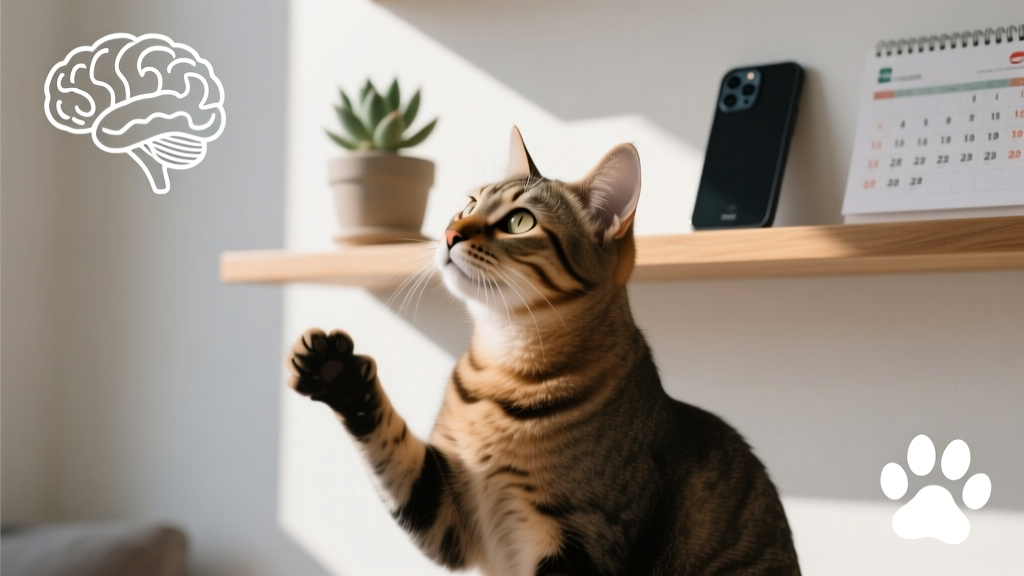
Scenario: Your cat locks onto a spot near the ceiling and won’t blink. You see nothing. She sees… destiny.
Common triggers:
- Insects you can’t see yet (tiny moths, gnats)
- Wall or ceiling sounds (water moving in pipes, rodents in walls, wind in vents)
- High-frequency electronic noise (chargers, routers, TVs)
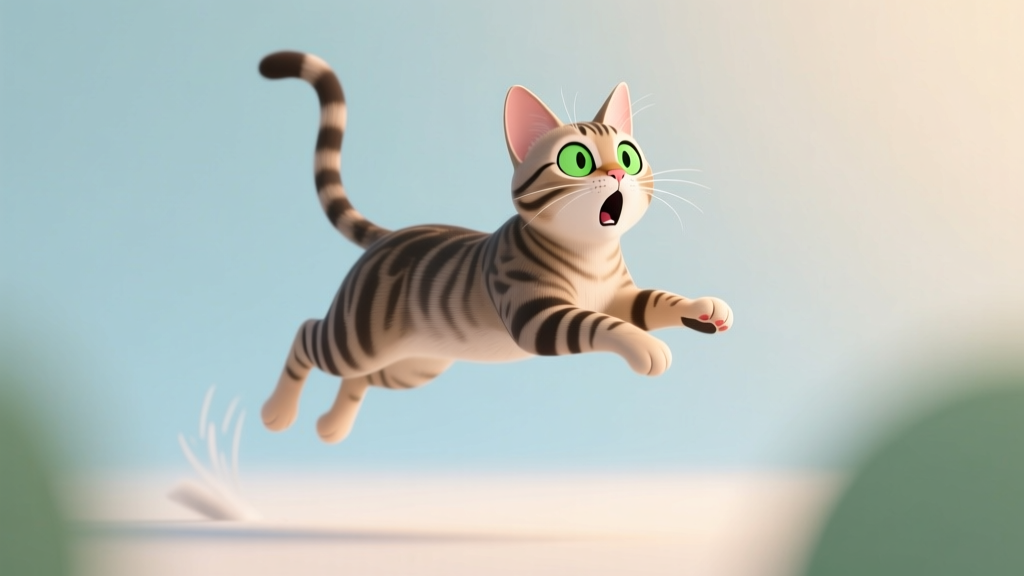
3) The “Startle-Then-Zoom” (Panic Sprint)
Scenario: Your cat jolts and tears out of the room as if late for an appointment.
Common triggers:
- Overstimulation (too much petting, too much noise, too many changes)
- Conflict stress (another cat stared at them earlier; tension lingers)
- Sound surprises (ice maker, HVAC turning on, a neighbor’s bass)
4) The “Back Twitch + Sudden Jump” Combo
Scenario: Skin ripples along your cat’s back, tail flicks hard, then she jumps and bolts—or spins to lick her back.
Common triggers:
- Static or light touch sensitivity
- Fleas or skin irritation
- Stress-related sensitivity (some cats get jumpier when anxious)
What This Behavior Says About Your Cat’s Mood
A startle response isn’t automatically fear. It’s information: your cat detected something and reacted fast. The emotional “meaning” depends on what comes next.
- Quick startle, quick recovery: If your cat jumps and then calmly goes back to what she was doing, that’s normal alertness. Think of it as a reflex, not a meltdown.
- Startle + stalking posture: If she crouches, tail tip twitching, eyes focused, she may have switched from “avoid danger” to “hunt mode.”
- Startle + hiding: If she runs under the bed and stays there, she’s telling you she felt unsafe. This can happen more in timid cats or in busy households.
- Startle + aggression (swat, hiss, bite): This is usually fear-based or overstimulation-based. The cat’s nervous system is in high gear, and she may redirect that energy onto the nearest moving thing (sometimes your hand or your other cat).
Watch for the recovery time. A cat who resets quickly is generally feeling secure. A cat who remains tense—crouched, ears sideways, tail lashing—may be struggling with stress or feeling overwhelmed.
Related Quirky Behaviors You Might Notice
Cats rarely do just one funny thing in isolation. If your cat startles easily, you might also see:
- Random “greebles” hunting: Staring at empty corners, pouncing at invisible specks, batting at the air. Often a mix of real tiny stimuli plus instinct.
- Sudden grooming after a scare: This is a common “self-soothing” behavior—like your cat saying, “I meant to do that.”
- Tail puffing (piloerection): The classic bottle-brush tail when arousal spikes. Not always aggression—sometimes it’s surprise.
- Air sniffing / Flehmen response: If your cat wrinkles her face and “tastes” the air, she’s analyzing scent cues you can’t detect.
- Nighttime zoomies: Some cats have extra energy and heightened arousal at dawn/dusk (their natural hunting times), making startles more dramatic.
When It’s Normal… and When It Might Be a Concern
For many cats, the occasional jump is perfectly normal. But frequency, intensity, and sudden changes matter.
Generally Normal
- Infrequent startles with quick recovery
- Startles linked to obvious changes (new appliance noise, guests, storms)
- Young cats and adolescents (more reactive, more playful, more energetic)
Worth a Closer Look (or a Vet Call)
- Sudden increase in jumpiness without an environmental change
- Startling at touch (especially along the back) or acting painful when picked up
- Skin twitching, frantic running, or intense sensitivity that seems out of proportion
- Signs of hearing issues (not responding to normal sounds, startling only when seeing movement)
- Compulsive pacing, constant scanning, or hiding that affects eating, litter box use, or sleep
- Fleas/itchiness (scratching, scabs, overgrooming), which can make cats feel “attacked” by their own skin
If your cat’s startle response comes with pain, major behavior changes, or ongoing distress, it’s smart to rule out medical causes first. Stress and anxiety can be real contributors too—but pain and sensory changes often hide behind “quirky” behavior.
How to Respond (and When to Encourage Calm Instead)
Your goal isn’t to stop your cat from being a cat. It’s to help her feel safe, confident, and understood.
Do This in the Moment
- Stay calm and quiet: Big reactions from you can confirm to your cat that something is scary.
- Give space: If she bolts, don’t chase. Let her choose a safe spot.
- Use a soft voice: Gentle, predictable speech can help some cats reset.
- Offer a choice, not a demand: If she approaches you, reward with a treat or slow blink. If not, respect the distance.
Set Up the Environment for Fewer Startles
- Create predictable “safe zones”: Covered beds, high perches, and quiet rooms let cats observe without feeling exposed.
- Reduce surprise noises: If your cat fears the ice maker or HVAC, try white noise, soft music, or closing doors at peak times.
- Add daily play: A consistent hunt-play-eat routine helps regulate arousal. Wand toys, kicker toys, and food puzzles are perfect outlets.
- Check for sensory triggers: Static shocks, slippery floors, or strong odors can contribute. A runner rug or a humidifier can sometimes reduce the “floor attacked me” effect.
Should You “Test” Them to See What They Heard?
Try not to. Purposefully startling a cat can increase anxiety and teach them that the environment is unpredictable. Curiosity is fine (you can look around), but turning it into a game of “what makes the cat jump?” usually backfires.
Fun Facts and Research-Style Nuggets
- Cats are crepuscular hunters: Many cats are naturally more alert at dawn and dusk, which can make “random” startles more common in early morning or evening.
- Whiskers are sensory tools: They help cats detect air movement and navigate tight spaces. If your cat startles in narrow hallways, she may be reacting to subtle airflow changes or echo-y sounds.
- Startle is about survival efficiency: In nature, false alarms are cheaper than missed threats. A jump that turns out unnecessary costs a little energy; ignoring a real danger could cost everything.
- Some cats are simply more reactive: Personality plays a role. Confident cats often investigate after a startle; cautious cats retreat. Neither is “wrong”—it’s temperament.
FAQ: Cat Startle Response
Why does my cat jump when nothing touched them?
They may have heard a high-frequency sound, felt a vibration through the floor, seen subtle movement in peripheral vision, or experienced static. Cats process tiny sensory changes that humans often miss.
Is my cat scared or just playing?
Look at what happens after the jump. If your cat recovers quickly and starts stalking, pouncing, or doing playful sideways hops, it’s often excitement or hunting mode. If they hide or stay tense, fear is more likely.
Why does my cat startle when I pet them?
This can be overstimulation (“petting sensitivity”) or discomfort. If it’s new or focused around the back/hips, consider a vet check to rule out pain, skin irritation, or fleas. Also try shorter petting sessions with breaks.
Do cats get more jumpy with age?
Some do. Senior cats may experience changes in hearing, vision, or cognition that make the world feel less predictable. If jumpiness increases alongside yowling at night, confusion, or changes in routine, a vet visit is a good idea.
Can stress make a cat startle more?
Yes. Household changes, new pets, neighborhood cats outside, construction noise, or lack of predictable routine can keep a cat’s nervous system on high alert. Enrichment, safe zones, and steady playtime often help.
Should I comfort my cat when they get startled?
Offer calm support, but don’t force contact. Some cats feel better with a soft voice and a treat; others prefer distance. The best “comfort” is giving them control and a safe place to reset.
If your cat has a signature “jump at nothing” moment—staring down an invisible hallway menace, launching off the rug like it’s lava, or performing a dramatic mid-nap levitation—share your story with the Cat Lovers Base community at catloversbase.com. Your cat’s weirdness might be exactly what another cat parent needs to feel normal.