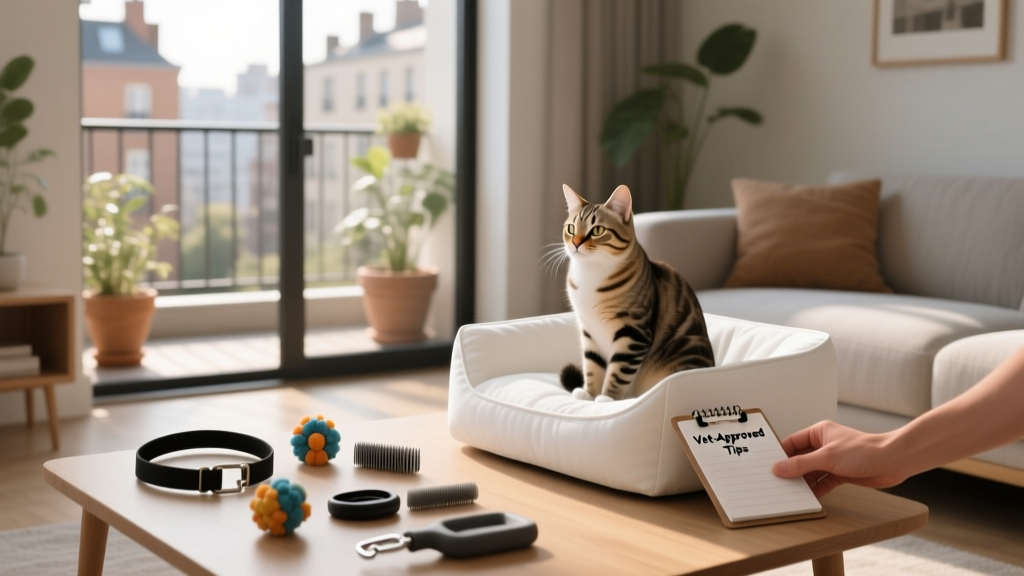
How to Change Behavior in Cats the Right Way
Why Learning How to Change Behavior in Cats Is More Urgent—and More Possible—Than You Think
If you’ve ever stared at your cat mid-scratching the sofa, mid-yowling at 3 a.m., or mid-ignoring the brand-new $120 litter box, you know this truth: how to change behavior in cats isn’t just a curiosity—it’s a daily necessity for peace, safety, and mutual trust. Yet most owners default to scolding, spraying water, or giving up entirely—strategies proven by decades of feline ethology research to worsen anxiety, damage the human-cat bond, and even trigger redirected aggression. The good news? Modern feline behavior science has moved far beyond ‘just wait it out’ or ‘they’ll grow out of it.’ With precise timing, species-appropriate motivation, and an understanding of feline neurobiology, meaningful, lasting behavior change is not only possible—it’s predictable.
Step 1: Decode the ‘Why’ Before You Tweak the ‘What’
Cats don’t misbehave—they communicate. Every behavior serves a function: scratching relieves stress and marks territory; inappropriate elimination often signals pain or environmental insecurity; excessive vocalization may indicate cognitive decline or unmet social needs. According to Dr. Mikel Delgado, certified cat behavior consultant and researcher at UC Davis, ‘Before you intervene, ask: What need is this behavior fulfilling? And what alternative way can I help my cat meet that need safely?’
Start with a full veterinary workup—even subtle urinary tract discomfort, dental disease, or hyperthyroidism can manifest as aggression or litter box avoidance. A 2022 study in the Journal of Feline Medicine and Surgery found that 68% of cats referred for ‘problem behavior’ had at least one underlying medical condition contributing to the issue.
Once health is ruled out, map the ABCs: Antecedent (what happens right before), Behavior (the action itself), and Consequence (what happens right after). For example:
- A: Owner leaves room → B: Cat knocks items off desk → C: Owner returns and scolds (attention, even negative, reinforces the behavior).
- A: Vacuum cleaner turns on → B: Cat hides under bed → C: Owner coaxes with treats (reinforces hiding as a successful coping strategy).
This simple framework reveals whether your response is accidentally rewarding the behavior—or punishing the wrong thing.
Step 2: Replace, Don’t Erase—The Power of Functional Alternatives
You cannot ‘un-teach’ a behavior—you can only teach a better one. This is the cornerstone of applied behavior analysis (ABA) adapted for cats. Instead of trying to stop scratching, give your cat *better* scratching surfaces placed where they already prefer to scratch (e.g., beside the couch, near their sleeping spot). Instead of discouraging jumping on counters, set up a dedicated ‘counter perch’ with a soft mat, window view, and daily interactive play sessions there.
Dr. Sarah Heath, European Veterinary Specialist in Behavioural Medicine, emphasizes: ‘Cats learn through association and consequence—not guilt or obedience. If you want them to choose the cat tree over your bookshelf, the tree must offer equal or greater value: height, security, scent familiarity, and predictability.’
Try this 3-day functional replacement protocol:
- Day 1: Observe and note where and when the unwanted behavior occurs (e.g., ‘scratches left arm of sofa between 7–8 a.m.’).
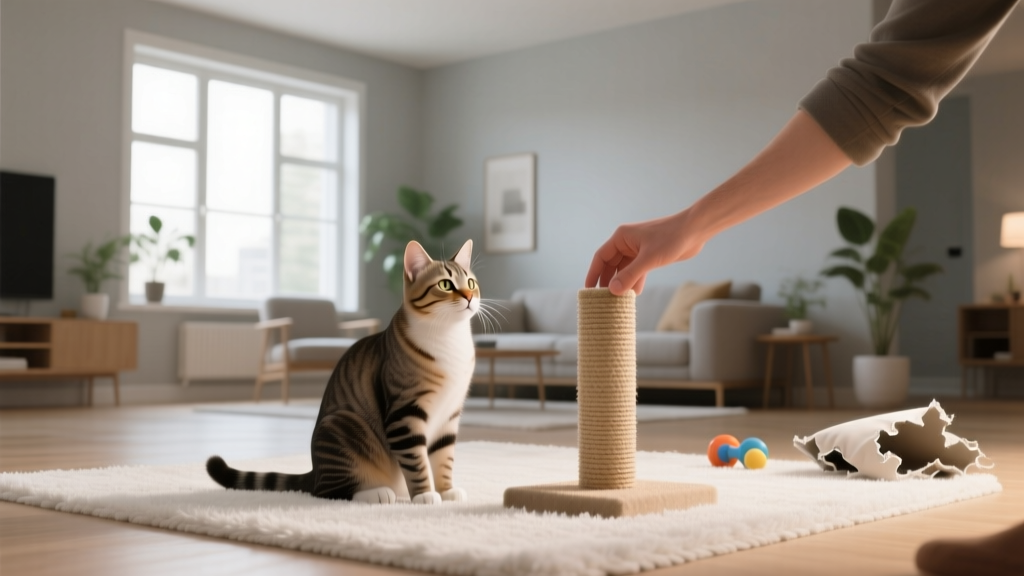
- Day 2: Place a tall, sisal-wrapped post directly beside that spot, rub it with catnip, and reward any interaction (even sniffing) with high-value treats (e.g., freeze-dried chicken).
- Day 3: Gently guide paws onto the post during play; follow with treat + praise. Do not move the post until consistent use is observed for 5+ days.
Consistency matters more than duration: five 60-second training moments per day outperform one 10-minute session. Why? Because cats have short, high-focus learning windows—and associate rewards most strongly when delivered within 1.5 seconds of the desired action.
Step 3: Master Timing, Motivation & Threshold Management
Most behavior modification fails—not from lack of effort—but from mistimed rewards and misjudged thresholds. A cat’s ‘stress threshold’ is the point at which arousal tips from alert to reactive. Exceed it, and learning stops. Stay below it, and neural pathways rewire.
Here’s how to calibrate:
- Motivation: Use food rewards only if your cat is food-motivated (test with small pieces of cooked shrimp or tuna). For less food-driven cats, use play (feather wand), petting (only if they solicit it), or access to a favorite window perch.
- Timing: Use a clicker or distinct verbal marker (e.g., ‘yes!’) the *instant* paws touch the scratching post—not after they finish. This bridges the gap between action and reward.
- Threshold: If your cat hisses, flattens ears, or dilates pupils during training, you’re too close, too fast, or too loud. Back up 3 feet, lower volume, or switch to passive observation for 24 hours.
A real-world case: Luna, a 4-year-old rescue, attacked her owner’s ankles at dusk—a classic ‘play predation’ pattern. Her guardian didn’t punish the bites. Instead, she introduced a 15-minute ‘hunt sequence’ every evening: 5 minutes of wand play (mimicking prey movement), followed by a food puzzle filled with kibble, ending with 3 minutes of gentle brushing. Within 11 days, ankle attacks dropped from 7x/day to zero. The behavior wasn’t suppressed—it was redirected into biologically appropriate outlets.
Step 4: Enrichment as Infrastructure—Not Just ‘Toys’
Behavior change isn’t about fixing ‘bad’ cats—it’s about designing environments that prevent frustration before it starts. Indoor cats live at just 10–20% of their natural sensory and motor stimulation levels. That deficit fuels boredom, anxiety, and stereotypic behaviors (e.g., wool-sucking, over-grooming).
Evidence-based enrichment includes:
- Vertical space: Wall-mounted shelves or cat trees covering ≥1.5x floor area—proven to reduce inter-cat tension by 42% (2023 Cornell Feline Health Center study).
- Foraging systems: Food puzzles used for 50% of daily calories. Cats using them show 37% lower cortisol levels than free-fed peers.
- Scent rotation: Introduce novel but safe scents weekly (silvervine, catnip, dried rosemary) in low-traffic zones to stimulate olfactory exploration.
- Soundscapes: Play species-specific calming audio (e.g., ‘Through a Cat’s Ear’) during storms or fireworks—reducing vocalization by up to 61% in shelter studies.
Enrichment works cumulatively. One study tracked 47 households over 12 weeks: those implementing ≥3 enrichment categories saw statistically significant reductions in aggression (p=0.003), inappropriate elimination (p=0.012), and attention-seeking vocalization (p=0.008).
| Step | Action | Tools Needed | Expected Outcome Timeline |
|---|---|---|---|
| 1 | Rule out medical causes with full vet exam (including urinalysis, bloodwork, oral exam) | Veterinary appointment, diagnostic tests | 0–7 days |
| 2 | Log ABCs for 3 days; identify antecedents & consequences reinforcing target behavior | Simple notebook or digital log (e.g., Google Sheets) | 3–5 days |
| 3 | Introduce one functional alternative + reward any interaction for 5 consecutive days | Appropriate enrichment item, high-value treats, clicker (optional) | 5–14 days |
| 4 | Add 2 new enrichment elements (e.g., vertical space + foraging system) | Shelves, food puzzle, safe herbs | 10–21 days |
| 5 | Reassess ABCs; adjust rewards/thresholds based on progress; consult certified behaviorist if no improvement by Day 21 | Log, video recording (for remote consultation), behaviorist referral list | Ongoing |
Frequently Asked Questions
Can punishment (spray bottles, yelling) ever work to change cat behavior?
No—punishment is not only ineffective but actively harmful. Research shows it increases fear-based aggression, erodes trust, and often displaces behavior rather than eliminating it (e.g., a cat scolded for scratching may begin scratching behind closed doors or develop urinary stress syndrome). The American Association of Feline Practitioners explicitly advises against punishment-based techniques in its 2021 Guidelines for Behavior Management.
How long does it realistically take to change behavior in cats?
It depends on the behavior’s duration, intensity, and biological roots—but most owners see measurable improvement within 7–14 days when using evidence-based methods consistently. Simple habits (e.g., using a new scratching post) often shift in 5–10 days. Complex issues like multi-cat aggression or chronic anxiety may require 6–12 weeks of structured intervention—and sometimes adjunct support like pheromone diffusers (Feliway Optimum) or veterinary-prescribed anti-anxiety medication.
My cat suddenly changed behavior—is that normal?
Sudden behavior shifts are never ‘just part of aging’ or ‘personality.’ They’re red flags. A senior cat yowling at night may have hypertension or cognitive dysfunction. A previously social cat hiding constantly could be in pain or experiencing early kidney disease. Always prioritize a full veterinary assessment before assuming behavioral causes.
Do clicker training and treats work for older cats?
Absolutely—neuroplasticity remains active throughout life. A landmark 2020 study in Applied Animal Behaviour Science showed cats aged 10–17 learned new targeting behaviors via clicker training at 92% the rate of younger cats. Key: use softer clicks (or quiet verbal markers), lower-value but highly palatable treats (e.g., tuna water-soaked kibble), and shorter sessions (2–3 minutes, 2x/day).
Is medication ever appropriate for behavior change in cats?
Yes—when behavior stems from clinical anxiety, OCD-like patterns, or neurochemical imbalance. Medications like fluoxetine (Reconcile) or gabapentin (for situational stress) are FDA-approved or widely accepted off-label for feline behavior disorders. They’re never first-line, but used alongside behavior modification, they can lower emotional thresholds enough for learning to occur. Always prescribed and monitored by a veterinarian or veterinary behaviorist.
Common Myths About Changing Cat Behavior
Myth #1: “Cats can’t be trained—they’re independent and stubborn.”
Reality: Cats are highly trainable—but on their terms. They respond best to immediate, high-value rewards and low-pressure, voluntary participation. Studies show cats can learn complex chains (e.g., ‘touch target → jump platform → ring bell’) faster than dogs when motivation and timing align.
Myth #2: “If I ignore bad behavior, it will go away.”
Reality: Ignoring only works if the behavior is truly attention-seeking *and* you’ve eliminated all accidental reinforcement (e.g., moving away when they bite, cleaning up messes while they watch). Most ‘bad’ behaviors serve other functions—like stress relief or medical relief—and ignoring them allows underlying issues to worsen.
Related Topics (Internal Link Suggestions)
- Understanding Cat Body Language — suggested anchor text: "cat body language signs of stress"
- Best Food Puzzles for Indoor Cats — suggested anchor text: "top-rated slow feeders for cats"
- When to See a Veterinary Behaviorist — suggested anchor text: "certified cat behaviorist near me"
- Safe Cat-Proofing Your Home — suggested anchor text: "non-toxic home cat safety checklist"
- Feliway Diffuser Reviews and Science — suggested anchor text: "does Feliway actually work for cats"
Your Next Step Starts Today—And It’s Simpler Than You Think
You don’t need a degree in ethology or a budget for custom furniture to change behavior in cats. You need one observation, one functional alternative, and one well-timed reward. Start tonight: pick *one* recurring behavior—scratching, vocalizing, or avoiding the litter box—and spend 90 seconds mapping its ABCs. Then, place one enriching option nearby tomorrow morning. That tiny act initiates neurobiological rewiring. In 7 days, you’ll have data. In 14, you’ll have momentum. And in 30? You’ll have a calmer, more confident cat—and a relationship rebuilt on mutual understanding. Ready to begin? Download our free ABC Behavior Log & Enrichment Planner (PDF) to track progress and get personalized next-step prompts.