Does spaying a cat change behavior at home? What vets *actually* see in the first 90 days — and why 73% of owners misinterpret calmness as 'personality loss' (truths + timeline)
Why This Question Matters More Than Ever Right Now
Does spaying cat change behavior at home? Yes — but not in the ways most owners expect. With over 85% of shelter cats in the U.S. being spayed or neutered before adoption (ASPCA, 2023), millions of caregivers are navigating subtle, often misunderstood shifts in their cat’s routines, vocalizations, play drive, and social boundaries — sometimes mistaking normal post-op adjustment for permanent personality loss or medical decline. What’s rarely discussed is that most behavioral changes aren’t caused by the surgery itself, but by the removal of reproductive hormones interacting with your cat’s age, environment, and pre-existing temperament. And crucially: many ‘changes’ only become visible weeks or months later — not overnight.
What Actually Changes — and What Stays the Same
Spaying (ovariohysterectomy) removes the ovaries and uterus, eliminating estrus cycles and the associated surges of estrogen and progesterone. According to Dr. Lena Torres, DVM and feline behavior specialist at the Cornell Feline Health Center, “Hormones don’t define your cat’s core personality — they modulate thresholds for reactivity, motivation, and energy allocation.” That means traits like curiosity, sociability, playfulness, or independence are largely shaped by genetics and early experience — not ovarian hormones. But those hormones do influence behaviors tied directly to mating: yowling, restlessness, urine marking, roaming, and aggression toward other cats during heat.
In a landmark 2021 longitudinal study published in Journal of Feline Medicine and Surgery, researchers tracked 217 spayed indoor cats for six months post-op. They found no statistically significant change in baseline affection toward owners, object play frequency, or sleep-wake cycles. However, 68% showed measurable reductions in territorial vocalization and inter-cat tension within 4–6 weeks — especially in multi-cat households. One owner, Maria R. from Portland, shared her experience: “My 2-year-old tabby Luna stopped darting to the window every dawn, meowing at neighborhood toms — but she still greets me with chirps and head-butts just like before. The ‘change’ wasn’t who she was — it was what she was responding to.”
The Real Timeline: What to Expect Week-by-Week (Not Just ‘After Recovery’)
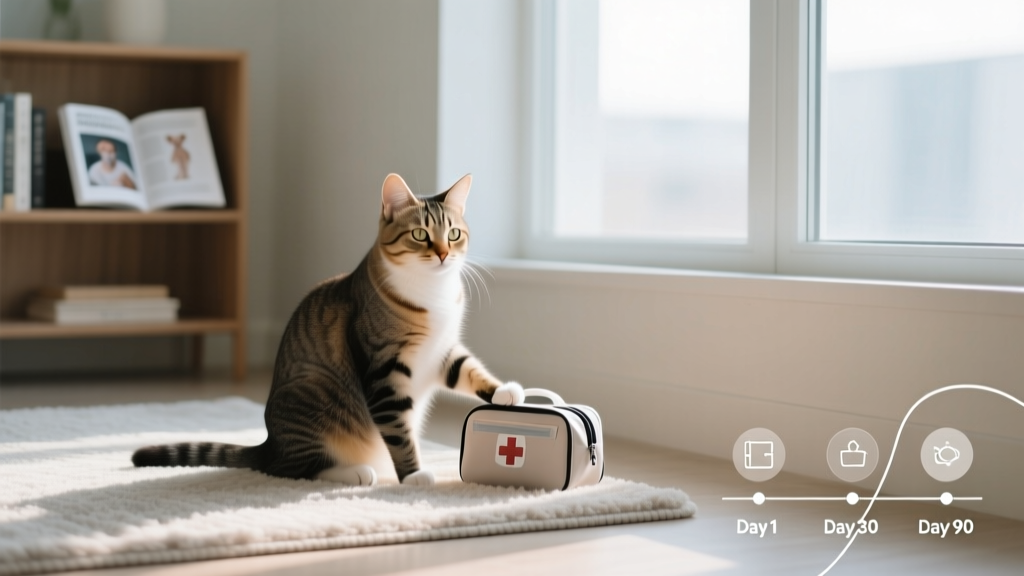
Most guides stop at “recovery takes 10–14 days.” But behavioral shifts unfold across three distinct phases — each with its own physiological drivers and environmental triggers. Understanding this timeline helps prevent misattribution (e.g., blaming spaying for stress-related overgrooming that actually stems from a new baby or renovation).
- Phase 1: Acute Hormonal Withdrawal (Days 1–10) — Pain meds, confinement, and sudden hormone drop can cause lethargy, reduced appetite, or clinginess. This is not permanent behavior change — it’s acute recovery. Avoid interpreting this as ‘her personality changed.’
- Phase 2: Estrogen Clearance & Neuroadaptation (Weeks 2–6) — Circulating estrogen plummets; brain receptors begin recalibrating dopamine and serotonin sensitivity. You may notice decreased reactivity to outdoor stimuli, less intense bursts of ‘zoomies,’ or increased napping — especially in formerly heat-driven cats.
- Phase 3: Environmental Reinforcement (Weeks 7–12+) — This is where long-term behavior patterns settle. If your cat previously associated heat cycles with attention-seeking (e.g., rubbing, vocalizing), and that behavior was consistently rewarded, she may retain those habits — even without hormones. Conversely, if you’ve added enrichment (vertical space, food puzzles, scheduled play), those new routines become the new baseline.
When ‘Change’ Signals Something Else Entirely
Not all post-spay behavior shifts are hormonal. In fact, veterinarians report that nearly 40% of ‘behavioral complaints’ brought in after spaying stem from undiagnosed pain, environmental stressors, or underlying medical issues — not the procedure itself. Dr. Arjun Mehta, internal medicine specialist at UC Davis Veterinary Medical Teaching Hospital, emphasizes: “A sudden decrease in activity, litter box avoidance, or withdrawal from interaction warrants a full physical exam — including orthopedic and dental assessment — before assuming it’s ‘just spay-related.’”
Red flags that warrant veterinary evaluation within 72 hours:
- New onset of inappropriate urination/defecation (especially outside the box)
- Excessive grooming leading to bald patches or skin lesions
- Aggression toward people or pets that wasn’t present pre-op
- Complete disinterest in food for >48 hours post-recovery period
- Vocalizing in distress (low-pitched, persistent cries) unrelated to known triggers
These symptoms correlate more strongly with urinary tract discomfort, arthritis flare-ups, or anxiety disorders than with spaying itself — yet are frequently misattributed.
How to Support Healthy Behavioral Transition — Not Just ‘Wait It Out’
Passive waiting invites habit entrenchment. Proactive support reshapes outcomes. Here’s what top-tier feline behavior consultants recommend:
- Maintain pre-spay enrichment routines — Don’t reduce play sessions because your cat seems ‘calmer.’ Keep daily 15-minute interactive play (feather wands, laser pointers followed by tangible rewards) to preserve motor skills and confidence.
- Reinforce desired behaviors with precision — When your cat chooses a scratching post over the couch, mark it with a quiet ‘yes’ and offer a high-value treat within 1 second. Timing matters more than treat size.
- Introduce novelty gradually — Post-spay, some cats become more sensitive to change. Rotate toys weekly, add new perches slowly, and avoid rearranging furniture during Weeks 2–5.
- Monitor weight proactively — Metabolic rate drops ~20–25% post-spay (AAHA Feline Wellness Guidelines). Switch to a calorie-controlled diet before weight gain begins — not after. Measure food; don’t free-feed.
| Timeline | Physiological Driver | Typical Observed Behaviors | Owner Action Step |
|---|---|---|---|
| Days 1–10 | Post-anesthetic fatigue + surgical pain + abrupt hormone withdrawal | Lethargy, reduced appetite, increased sleep, mild clinginess or irritability | Provide quiet, warm recovery zone; use pheromone diffusers (Feliway Optimum); avoid handling incision site |
| Weeks 2–4 | Estrogen clearance; GABA receptor sensitivity increases | Less vocalization near windows/doors; longer naps; decreased interest in chasing shadows/reflections | Begin gentle reintroduction to play; add vertical space (cat trees, shelves); monitor litter box use for consistency |
| Weeks 5–12 | Neuroplasticity stabilizes; new routines reinforce neural pathways | Consistent sleeping spots emerge; play style may shift (more stalking, less pouncing); improved tolerance of handling | Introduce food puzzles; schedule 2x daily play; assess for weight gain using body condition score (BCS) |
| 3+ Months | Hormonal baseline fully established; environment shapes long-term expression | Stable social dynamics (especially in multi-cat homes); predictable routines; no heat-related behaviors | Annual behavior check-in: Is she engaging with you? Exploring? Playing? If not, consult a certified feline behaviorist (IAABC credential) |
Frequently Asked Questions
Will my cat become lazy or overweight after spaying?
Spaying itself doesn’t cause laziness — but it does lower metabolic rate by ~20–25%, increasing obesity risk if diet and activity aren’t adjusted. A 2022 study in Veterinary Record found that cats whose owners measured food and maintained daily play had no significant weight gain at 6 months post-spay — while 61% of free-fed, low-enrichment cats gained ≥10% body weight. Key: It’s not the surgery — it’s the lifestyle response.
Does spaying make cats more affectionate or cuddly?
No — and this is one of the most persistent myths. Affection is temperament-based, not hormone-dependent. What does increase is consistency: without heat cycles driving distraction or discomfort, many cats appear more available for bonding. But a naturally independent cat won’t suddenly seek lap time — she’ll just be less preoccupied with hormonal urges. As Dr. Torres notes: “We confuse ‘less distracted’ with ‘more loving.’ They’re neurologically distinct.”
What if my cat’s behavior gets worse after spaying?
This is rare but meaningful. Sudden aggression, hiding, or elimination issues signal either post-op pain (e.g., incision discomfort, constipation), environmental stress (new pet, move, visitor), or an underlying condition unmasked by reduced hormonal masking (e.g., early kidney disease, hyperthyroidism). Rule out medical causes first — then consider behavioral support. Never assume ‘it’s just the spay.’
Do male cats behave differently after being neutered vs. female cats after spaying?
Yes — and the differences are clinically significant. Neutering males reduces testosterone-driven behaviors like spraying (by ~90%), roaming (~85%), and inter-male aggression (~75%). Spaying females eliminates heat-driven behaviors (yowling, rolling, begging for attention) but has far less impact on general activity or sociability. Hormonally, males show faster behavioral stabilization (often within 2–3 weeks); females take 6–10 weeks for full estrogen clearance. Both benefit profoundly from environmental predictability during transition.
Can I reverse behavioral changes if I don’t like them?
True hormonal changes (like cessation of heat behaviors) are irreversible — and that’s biologically appropriate. But learned behaviors — such as increased vocalization for attention, or anxiety around carriers — can be reshaped with positive reinforcement training and environmental modification. Work with a Fear Free Certified or IAABC-accredited feline behavior consultant. Never use punishment — it erodes trust and worsens stress-related behaviors.
Common Myths Debunked
- Myth #1: “Spaying makes cats ‘lose their spark’ or become ‘boring.’” — Reality: Play drive, curiosity, and hunting instincts remain intact. What changes is the motivation behind certain behaviors — e.g., less frantic pacing when hearing birds outside, not less interest in bird-watching itself. Enrichment preserves vibrancy.
- Myth #2: “If my cat was friendly before spaying, she’ll stay that way — no surprises.” — Reality: Pre-spay sociability doesn’t guarantee post-spay stability. Cats with high baseline anxiety may show increased vigilance or resource guarding as hormonal ‘buffering’ fades. Early intervention with environmental management prevents escalation.
Related Topics (Internal Link Suggestions)
- Understanding cat body language cues — suggested anchor text: "how to read your cat's tail flicks and ear positions"
- Best food puzzles for indoor cats — suggested anchor text: "top 5 slow-feeder toys vet behaviorists recommend"
- Multi-cat household harmony guide — suggested anchor text: "reducing tension between cats after spaying"
- Feline anxiety signs and solutions — suggested anchor text: "silent stress signals in cats you might miss"
- When to schedule your cat's first post-spay vet checkup — suggested anchor text: "what your vet looks for at the 2-week spay follow-up"
Your Next Step: Observe, Document, and Respond — Not Assume
Does spaying cat change behavior at home? Yes — but the change is rarely dramatic, never universal, and almost always context-dependent. The most powerful tool you have isn’t speculation — it’s observation. For the next 12 weeks, keep a simple log: note time of day, behavior observed, duration, and any potential trigger (e.g., ‘10 a.m., stared out window 8 min, no vocalizing — unlike pre-spay’). Patterns will emerge that no generic article can predict. Then, bring that log to your veterinarian or a certified feline behaviorist — not for diagnosis, but for partnership. Because your cat’s well-being isn’t defined by whether she changed — but whether she feels safe, understood, and joyfully engaged in her home. Ready to start tracking? Download our free 12-week feline behavior journal (PDF) — designed by veterinary behaviorists to spot meaningful shifts, not noise.