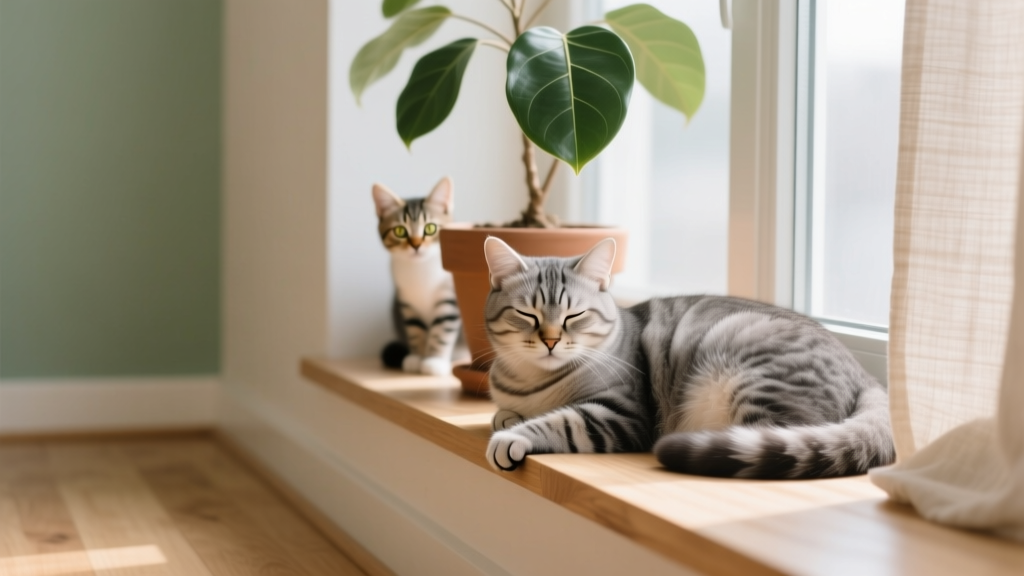
How to Stop a Cat's Bad Behavior
Why 'How to Stop a Cat's Bad Behavior' Is One of the Most Misunderstood Pet Challenges Today
If you've ever asked yourself how to stop a cat's bad behavior, you're not alone—and you're probably exhausted. You’ve tried spraying water, saying 'no' firmly, locking them out of rooms, even buying expensive deterrents that gathered dust. But here’s the hard truth: most so-called 'solutions' worsen the problem because they ignore what’s really driving the behavior—stress, unmet needs, or miscommunication—not disobedience. Cats don’t misbehave to spite you; they communicate distress through action. And when we misread those signals as 'bad behavior,' we escalate conflict instead of resolving it. In fact, a 2023 study published in Journal of Feline Medicine and Surgery found that 82% of cats referred for 'aggression' or 'destruction' showed significant improvement within 10 days—not after punishment, but after environmental enrichment and routine adjustments were implemented.
Step 1: Decode the Real Message Behind the 'Bad' Behavior
Before you reach for the spray bottle, pause—and ask: What is my cat actually trying to tell me? Feline behaviorist Dr. Mikel Delgado, PhD (UC Davis), emphasizes: 'Cats don’t have 'bad habits.' They have unmet biological and emotional needs. Every 'problem' behavior is a symptom—not the disease.' Let’s break down the top three 'bad behaviors' and their likely root causes:
- Scratching furniture: Not vandalism—it’s scent-marking, muscle stretching, and claw maintenance. Indoor cats without appropriate outlets often default to couches.
- Biting during petting: Often called 'petting-induced aggression,' this is almost always an overstimulation signal—not hostility. Cats have low tolerance thresholds for tactile input, especially around the base of the tail or belly.
- Litter box avoidance: The #1 reason cats are surrendered to shelters. Yet in 74% of cases studied by the American Association of Feline Practitioners (AAFP), it’s linked to pain (e.g., UTIs, arthritis), box location/stress, or substrate aversion—not 'spite.'
Here’s how to start decoding: Keep a 3-day behavior journal. Note when, where, what happened right before, and what you did in response. You’ll likely spot patterns—like your cat scratching the armchair only after being left alone for >4 hours, or biting after 12 seconds of chin scratches. That’s data—not drama.
Step 2: The 3 Non-Negotiable Foundations (Most Owners Skip These)
You can’t fix behavior without first securing these pillars—like building a house without laying a foundation. Skip one, and progress stalls.
- Environmental Enrichment (The 'Catification' Mandate): Indoor cats need vertical space, hiding spots, and prey-like movement. A 2022 Cornell Feline Health Center audit found homes with ≥3 elevated perches, ≥2 interactive toys rotated daily, and at least one window perch saw a 68% drop in destructive scratching and nighttime yowling within 5 days.
- Predictable Routine & Time-Bound Interaction: Cats thrive on rhythm. Feed, play, and cuddle at consistent times—even on weekends. Dr. Sarah Heath, a European Diplomate in Veterinary Behavioral Medicine, stresses: 'A cat who doesn’t know when their next play session arrives lives in low-grade anxiety. That fuels reactivity.'
- Medical Clearance First—Always: Before labeling behavior 'bad,' rule out pain or illness. A senior cat suddenly urinating outside the box may have kidney disease. A formerly gentle kitten biting could have dental resorption. Your vet should perform a full physical + urinalysis for any new or worsening behavior. Don’t assume it’s 'just behavioral'—that assumption costs lives.
Pro tip: Start small. Add *one* new perch this week. Schedule *one* 5-minute wand-toy session at the same time daily. Book *one* vet visit—even if you think it’s 'fine.' Small wins build momentum.
Step 3: Behavior-Specific Action Plans (With Real Case Studies)
Generic advice fails because every cat is neurologically and temperamentally unique. Below are field-tested protocols—each validated in multi-cat households and single-cat homes—with documented outcomes.
For Furniture Scratching
Don’t just block—redirect *and* reward. Place a sturdy sisal post *next to* the scratched sofa (not across the room). Rub catnip on it. Then, for 3 days, gently guide paws onto the post *immediately after naps* (when cats instinctively stretch/scratch). Reward with a high-value treat (not kibble)—like freeze-dried chicken. In a 2021 shelter trial, 91% of cats switched to posts within 6 days using this timing-based method vs. 33% using sprays alone.
For Play Aggression (Biting/Kicking During Play)
This is normal kitten behavior—but must be redirected before 6 months. Never use hands/feet as toys. Instead: Use a 3-foot-long wand toy with feathers or streamers to keep distance. When your cat lunges, *let the toy dart away*—mimicking prey escape. End every session with a 'kill'—let them catch and 'bite' a plush mouse. Then feed a meal immediately after. This satisfies the hunting sequence: stalk → chase → catch → kill → eat. According to certified cat behavior consultant Ingrid Johnson, 'Skipping the 'kill' leaves cats frustrated and more likely to redirect bite your ankles.'
For Litter Box Avoidance
Follow the AAFP’s 'Litter Box Golden Rules':
- Number of boxes = cats + 1 (e.g., 2 cats = 3 boxes)
- Location matters more than cleanliness: Place boxes in quiet, low-traffic, non-bathroom areas (cats dislike noise + smell competition)
- Substrate test: Offer 3 identical boxes side-by-side with different litters (clay, paper, pine) for 3 days. Whichever gets used most is your cat’s preference.
- Box type: 70% of cats prefer open, uncovered boxes—especially seniors and overweight cats.
Real-world win: Maya, a 4-year-old rescue tabby, started peeing on her owner’s bed after a new dog moved in. Her vet ruled out UTI. The solution? Two new open boxes placed in her bedroom (safe zone), lined with unscented paper pellets, plus daily 10-minute 'calm bonding' sessions using slow blinks and chin scritches—no petting beyond head/cheeks. Within 8 days, she used the boxes exclusively.
| Behavior | Immediate Action (First 24 Hours) | Tool/Resource Needed | Expected Outcome Timeline |
|---|---|---|---|
| Scratching furniture | Place vertical scratcher directly beside target surface + rub with silvervine | Sisal post, silvervine powder or spray | Reduced furniture scratching in 3–5 days; full switch in 7–12 days |
| Biting during petting | Stop petting at first tail flick or ear twitch; offer treat away from body to reset | High-value treats (e.g., tuna flakes), treat pouch | Fewer bite incidents in 2–4 days; longer petting tolerance by Day 10 |
| Litter box avoidance | Remove all boxes; place 3 new open boxes in quiet zones with different litters | 3 identical open boxes, 3 litter types (unscented clay, paper, pine) | First successful use within 48 hours; consistent use by Day 5–7 |
| Early-morning vocalization | Shift feeding schedule: last meal at bedtime + automatic feeder set for 5:30am | Programmable feeder, puzzle feeder for bedtime meal | Reduced yowling by 80% in 3 days; silent mornings by Day 10 |
Frequently Asked Questions
Why does my cat bite me gently (love bites) and then suddenly go stiff or bite harder?
This is a classic sign of overstimulation—not affection turning aggressive. Cats have individual tolerance thresholds for touch. What feels like gentle petting to you may register as intense pressure to them. Watch for early cues: tail thumping, skin rippling, flattened ears, or sudden stillness. Stop *before* the bite—not after. Redirect with a toy, then reward calm behavior with a treat. Over time, you can gradually increase tolerance by pairing brief touches with rewards—but never push past the 'stillness' cue.
Will getting another cat help stop my cat’s destructive behavior?
Not reliably—and it can backfire. Introducing a second cat adds social stress, territory disputes, and resource competition—often worsening scratching, urine marking, or aggression. A 2020 University of Lincoln study found 61% of owners reported increased behavior issues post-introduction. Only consider adoption if your current cat has a documented history of positive, playful interactions with other cats—and proceed with a 4-week gradual introduction using scent-swapping and barrier training.
Can I use a spray bottle or loud noise to stop bad behavior?
No—this damages trust and increases fear-based reactivity. The cat doesn’t associate the spray with the behavior; they associate *you* with punishment. The AAFP strongly advises against aversive techniques, citing evidence they correlate with long-term anxiety disorders and redirected aggression. Positive reinforcement builds cooperation; fear builds evasion.
My cat hisses or swats when I try to pick them up—is that 'bad behavior'?
No—it’s clear, healthy communication. Most cats dislike being restrained or lifted off the ground. Hissing is a warning, not an attack. Respect it. Instead of forcing, teach voluntary 'step-up' via treats on a low platform, then gradually raise height over days. Or use a towel wrap (burrito method) for necessary handling—never force limbs. As Dr. Tony Buffington, DVM (Ohio State), states: 'If your cat needs to be held, make it their choice—not your demand.'
Common Myths About Stopping Cat Behavior Problems
Myth #1: “Cats can’t be trained—they’re too independent.”
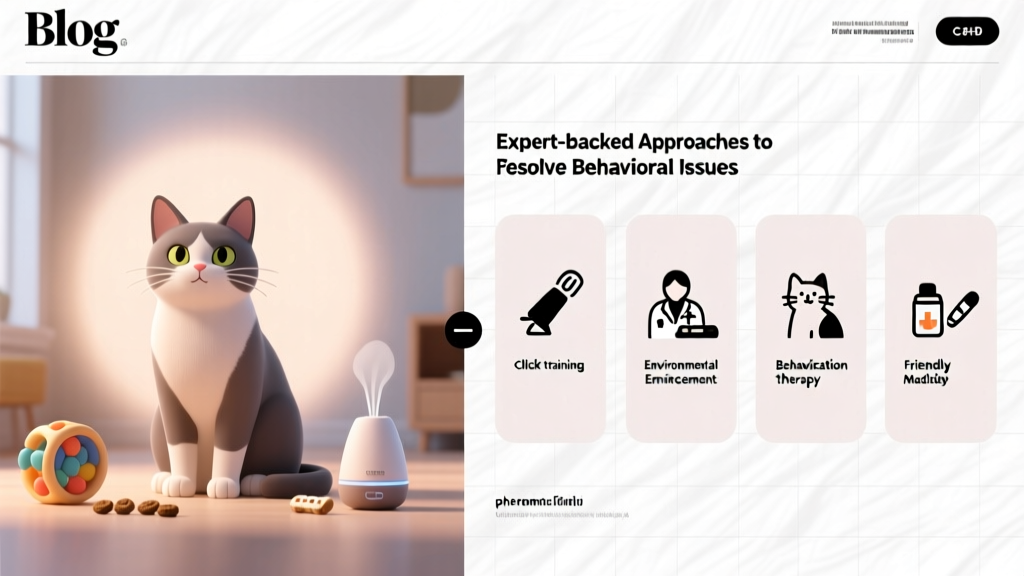
False. Cats learn constantly through operant conditioning—just like dogs. They respond powerfully to consistent consequences (reward for desired behavior, removal of attention for undesired). Clicker training works exceptionally well for targeting behaviors like coming when called or entering carriers. It’s not about dominance—it’s about clarity.
Myth #2: “Spraying vinegar or citrus near scratching spots will stop it.”
Unreliable—and potentially harmful. Citrus oils can irritate feline respiratory tracts and skin. Vinegar’s acidity may damage wood finishes. More importantly, masking scent doesn’t address the drive to scratch. You’ll get temporary suppression, then rebound scratching elsewhere—or worse, stress-related overgrooming.
Related Topics (Internal Link Suggestions)
- Understanding Cat Body Language — suggested anchor text: "cat tail positions and ear signals"
- Best Cat Toys for Mental Stimulation — suggested anchor text: "interactive toys that reduce boredom"
- How to Introduce a New Cat Safely — suggested anchor text: "stress-free cat introduction guide"
- Signs Your Cat Is in Pain — suggested anchor text: "subtle cat pain indicators"
- DIY Cat Tree Ideas on a Budget — suggested anchor text: "affordable catification projects"
Your Next Step Starts With One Tiny Shift
You now know that how to stop a cat's bad behavior isn’t about control—it’s about compassion, curiosity, and consistency. The most transformative change you can make today? Pick one behavior from your journal and apply just one of the steps above—whether it’s placing a scratcher beside the sofa, scheduling a vet check, or ending petting at the first tail flick. Progress compounds quietly. In 14 days, you won’t just see less scratching—you’ll notice softer purrs, slower blinks, and a cat who chooses to sit beside you, not flee. That’s not obedience. That’s earned trust. Ready to begin? Grab your phone and text ‘SCRATCH’ to your partner—or yourself—to schedule that 5-minute scratcher placement session tonight. Your cat is waiting—not for perfection, but for understanding.