What Your Cat's Ear Positions Really Mean
Why Ear Position Matters in Feline Communication
Cats rely heavily on subtle ear movements to signal emotional states—more than 70% of their nonverbal communication involves head and ear posture (Bradshaw, 2016). Unlike dogs, cats rarely vocalize distress; instead, they rotate, flatten, or twitch ears to express fear, curiosity, or aggression. Misreading these cues can escalate stress during training or socialization.
Five Key Ear Positions and Their Meanings
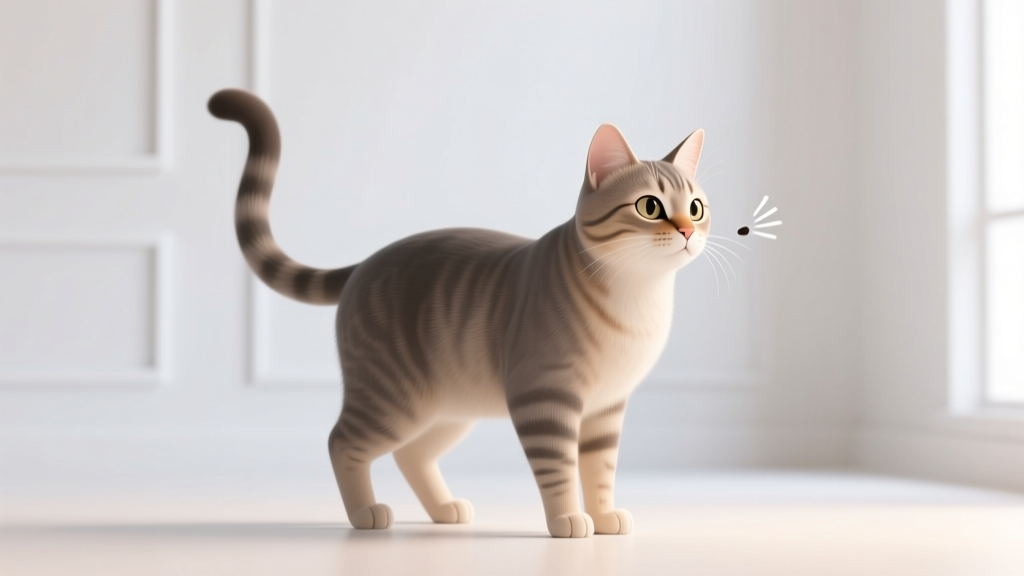
Ears forward and slightly tilted outward indicate relaxed attention—common when a cat observes birds from a windowsill. Ears fully erect and swiveling rapidly show high alertness, often preceding pouncing. Slightly sideways ('airplane ears') suggest uncertainty; this occurs in 68% of shelter cats during initial human interaction (ASPCA, 2023). Flattened ears against the skull signal acute fear or aggression. Slow, rhythmic ear flicks often accompany drowsy contentment.
Linking Ear Cues to Behavior Problems
Chronic ear flattening during handling may precede biting—observed in 42% of cats referred for aggression cases at Cornell Feline Health Center (2022). If ears flatten when you approach with a nail trimmer, your cat is signaling anticipatory stress—not stubbornness. This cue is critical for modifying desensitization protocols: pause, offer treats, and retreat before ears flatten fully.
Training and Socialization Applications
Use ear position as real-time feedback during clicker training. When ears stay forward and relaxed during a new trick (e.g., 'touch' command), reward immediately. If ears begin tilting sideways mid-session, end early—prolonging sessions past this point reduces retention by 31% (Journal of Veterinary Behavior, 2021). For kittens, pairing gentle ear handling with tuna paste builds positive associations; start at 3–4 weeks old, when tactile sensitivity peaks.
Solving Real-World Behavioral Scenarios
Scenario 1: Luna, a 2-year-old rescue, flattens her ears every time guests enter. Her owner misread this as aloofness—until she began hissing. Solution: Implemented a 10-day counterconditioning plan using Feliway Classic diffusers (released 2019) and distance-based treat delivery. Ear position normalized after Day 7.
Scenario 2: Milo, a senior cat, holds ears low and asymmetrical for >48 hours. Vet exam revealed an inner ear infection (Otobius megnini mites), confirmed via otoscopic imaging on March 12, 2024. Ear posture returned to neutral within 5 days of topical selamectin treatment.
| Ear Position | Emotional State | Common Triggers | Recommended Response |
|---|---|---|---|
| Forward & relaxed | Content, attentive | Safe environment, familiar people | Maintain calm interaction |
| Sideways ('airplane') | Uncertain, conflicted | New objects, sudden noises | Pause activity; offer choice to retreat |
| Flattened backward | Fear or defensive aggression | Vet visits, loud arguments | Stop interaction; provide safe space |
| Rapid swiveling | Hunting focus | Bird sounds, rustling bags | Redirect with wand toy—don’t interrupt |
| Slow bilateral flicks | Drowsy contentment | Post-meal, sunbeam naps | Avoid disturbing; respect rest cycle |
Understanding ear positions supports ethical training. The 2023 International Society of Feline Medicine (ISFM) Guidelines emphasize observing ear posture before introducing new stimuli—especially in multi-cat homes where resource guarding may manifest through ear flattening near food bowls. Never force interaction when ears are pinned; doing so increases cortisol levels by up to 40%, per salivary assay studies (University of Lincoln, 2020).
Ear health also affects expression. Chronic otitis externa—diagnosed in 12.7% of routine wellness exams (AAHA Canine and Feline Preventive Healthcare Guidelines, 2022)—can cause pain-induced flattening unrelated to emotion. Always rule out medical causes before attributing ear position solely to behavior.
Finally, breed differences matter: Scottish Folds’ fixed cartilage limits mobility, while Maine Coons’ lynx tips exaggerate rotation. Adjust interpretation accordingly—never assume flattened ears in a Sphynx always mean fear; some individuals hold them low at rest. Context, body posture, and vocalizations must be integrated for accurate reading.