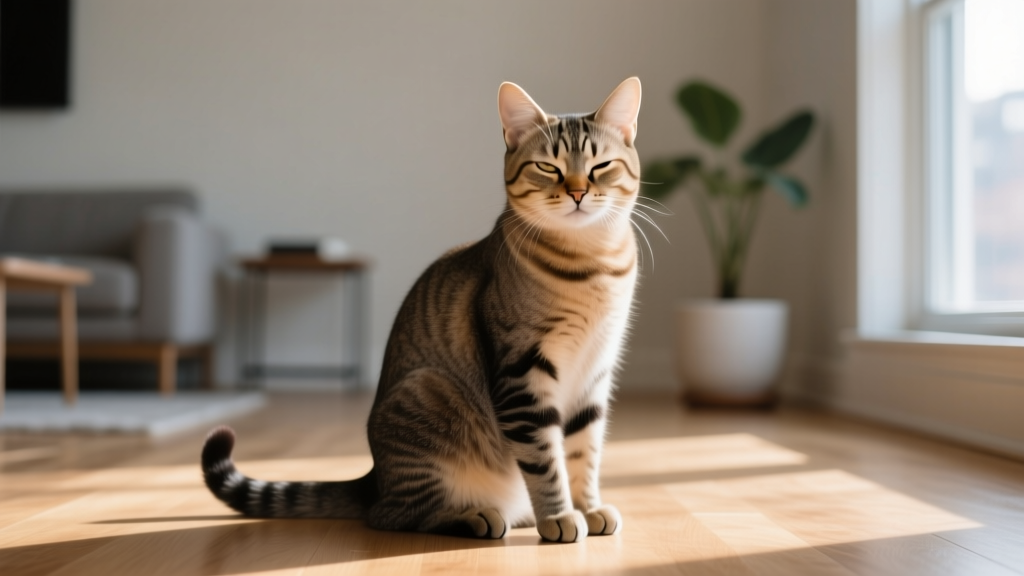
Typical Feral Cat Behavior: Truths & TNR Guidance
Why Understanding What Is Typical Cat Behavior for Feral Cats Isn’t Just Curiosity—It’s Compassion in Action
What is typical cat behavior for feral cats? It’s a question that surfaces urgently when someone spots a gaunt, wide-eyed tabby darting under a porch at dusk—or discovers a litter of kittens huddled beneath a shed with no visible mother. Unlike lost pets or shy strays, feral cats operate under a fundamentally different behavioral operating system shaped by generations without human contact. Misinterpreting their actions as ‘friendly but scared’ or assuming they’ll ‘warm up’ can lead to well-intentioned but harmful interventions: attempted handling that triggers trauma-induced aggression, premature removal of kittens from protective mothers, or misguided feeding practices that concentrate disease risk. In fact, the ASPCA reports that over 60% of shelter intakes labeled ‘feral’ are actually under-socialized strays—highlighting how critical accurate behavioral literacy is to life-or-death decisions.
The Four Pillars of Feral Cat Behavior: Beyond ‘Scared’
Feral cats aren’t merely ‘unfriendly pets’—they’re wild-living descendants of domesticated ancestors who’ve re-adapted to ecological niches where humans are perceived as apex predators, not caregivers. Dr. Susan Little, a board-certified feline practitioner and founding member of the American Association of Feline Practitioners, emphasizes: ‘Feral cats exhibit behaviors rooted in evolutionary survival—not pathology. Their “avoidance” isn’t fear in the clinical sense; it’s a finely tuned, energy-conserving predator-avoidance strategy honed over lifetimes.’ Here’s what that looks like in practice:
Nocturnality & Environmental Hyper-Vigilance
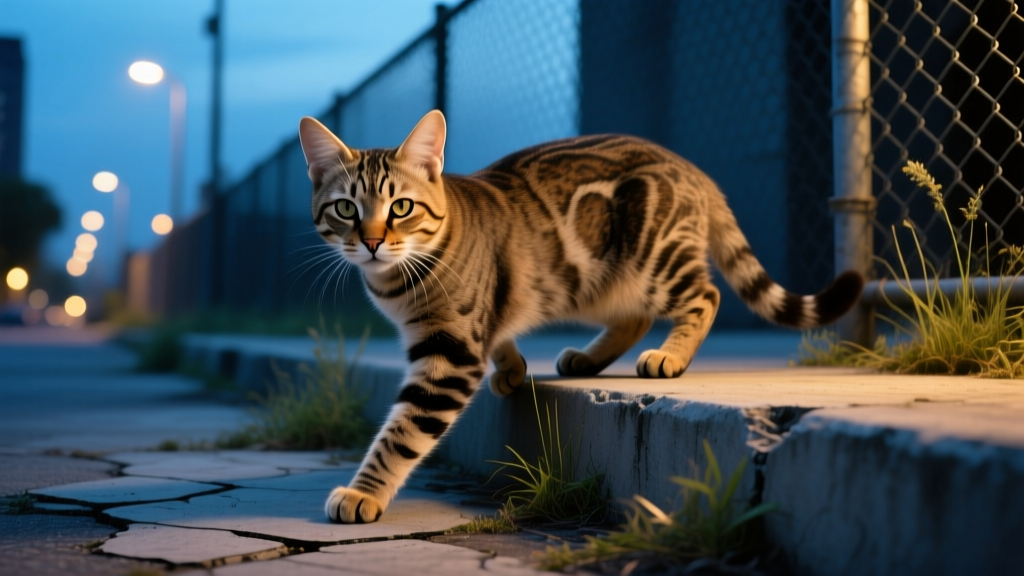
Feral cats are overwhelmingly crepuscular and nocturnal—not because they ‘prefer’ darkness, but because low-light hours minimize visual detection by humans and other threats. A landmark 2021 GPS-collar study published in Animal Behaviour tracked 47 feral cats across urban, suburban, and rural zones and found they spent 78% of daylight hours in concealed, elevated locations (e.g., dense shrubbery, attics, abandoned vehicles), emerging only after full dusk. Their vigilance isn’t passive—it’s active surveillance: ears swiveling independently, pupils dilating rapidly in changing light, freeze-posturing at the slightest unfamiliar sound. Crucially, they rarely flee *immediately*—instead, they assess threat level through prolonged stillness, then retreat *only* when escape routes are confirmed safe. This contrasts sharply with frightened pet cats, who often bolt first and assess later.
Zero-Tolerance Proximity Threshold & Body Language Cues
While a stressed pet cat may hide under a bed but tolerate gentle coaxing, a feral cat maintains a strict ‘flight distance’—typically 15–30 feet in open areas, shrinking to just inches when cornered. Breaching this boundary reliably triggers defensive escalation: flattened ears, tail lashing, hissing (often silent or low-frequency), and rapid sideways ‘crab-walking’ to maintain eye contact while retreating. Importantly, feral cats almost never make direct eye contact with humans—they use peripheral vision and head-tilting to monitor movement without signaling challenge. As wildlife biologist Dr. Elena Rodriguez observed during her 8-year colony study in Austin, TX: ‘They treat sustained eye contact like a territorial threat—even from 50 feet away. If you lock eyes, they don’t look away. They freeze, then vanish. That’s not shyness. That’s protocol.’
Colony Structure: Not ‘Friends,’ But Functional Alliances
Feral colonies aren’t random aggregations—they’re kin-based, resource-organized networks with subtle hierarchies. Related females (mothers, daughters, sisters) form core nursery groups, sharing kitten-guarding duties and communal scent-marking of den perimeters. Males typically remain peripheral, visiting only for mating or scavenging opportunities—but they enforce spatial boundaries between colonies via urine spraying and low-intensity chases. Contrary to popular belief, these groups don’t ‘socialize’ like housecats: mutual grooming is virtually absent, play-fighting among adults is rare, and shared napping occurs only in extreme cold. Instead, cohesion is maintained through synchronized activity rhythms and acoustic signaling—distinct, low-pitched chirps used exclusively between colony members to coordinate movement without attracting predators.
Maternal Strategy: The Ultimate Survival Blueprint
Feral queens employ astonishingly precise maternal calculus. They birth litters in hidden, multi-access sites (e.g., hollow walls, drainage pipes) and move kittens every 3–5 days during the first two weeks—a behavior virtually unseen in owned cats. Each relocation follows a strict pattern: she carries kittens one-by-one in her mouth, always choosing paths with overhead cover and minimal human foot traffic. She nurses only at night, remaining motionless for up to 45 minutes per session to avoid drawing attention. Most strikingly, she actively suppresses kitten vocalizations: if a kitten cries, she gently bites its scruff to silence it—a reflex so ingrained that orphaned feral kittens raised by humans retain this response to distress sounds. This isn’t neglect; it’s evolutionary triage. As Dr. Little notes: ‘Every cry is a beacon. In the wild, silence isn’t golden—it’s genetic continuity.’
| Behavioral Trait | Feral Cat | Under-Socialized Stray (Former Pet) | Well-Socialized Indoor Cat |
|---|---|---|---|
| Response to Human Approach | Freeze → lateral retreat → vanish; zero tolerance for <15 ft proximity | Initial crouch/hide → may peek, blink slowly, or approach cautiously if offered food | May approach, rub, purr, or vocalize; tolerates touch from trusted humans |
| Vocalization Around Humans | Nearly silent; occasional low growl or hiss only when cornered | Meows, yowls, or chirps seeking attention or food | Frequent, varied vocalizations (purring, trilling, demanding meows) |
| Body Language Under Stress | Flattened ears, tail tightly wrapped around body, sideways crab-walk | Ears back but upright, tail puffed, trembling, hiding in enclosed spaces | Pacing, excessive grooming, hiding behind furniture, dilated pupils |
| Response to Handling Attempt | Immediate, explosive defensive biting/scratching; no warning postures | May freeze, then struggle or bite only if restrained | May tolerate brief handling; may protest with gentle swats or moving away |
| Sleeping Location Preference | High, concealed, multi-exit points (rafters, dense brush, crawlspaces) | Under furniture, in closets, or low sheds—prioritizing concealment over height | Open beds, sunny windowsills, laps—comfort > concealment |
Frequently Asked Questions
Can feral cats ever become lap cats or live indoors?
With rare exceptions—typically kittens under 4 weeks old—adult feral cats do not adapt to indoor life. Decades of TNR (Trap-Neuter-Return) data show less than 0.3% of adults successfully transition to homes after prolonged rehabilitation. Their nervous systems lack the early-life imprinting required for human bonding. Attempting forced indoor adoption causes chronic stress, immunosuppression, and behavioral deterioration. Ethical best practice: support outdoor colony care (shelter, food, vet access) instead.
How do I tell if a ‘feral’ cat is actually a lost pet?
Look for these red flags: collar remnants, microchip (scan at any vet or shelter), clean coat/grooming, willingness to eat near humans, vocalizing persistently, or approaching cars. A truly feral cat won’t linger near houses, won’t respond to familiar-sounding calls, and avoids all human-made structures unless essential for shelter. When in doubt, post ‘Found Cat’ flyers with clear photos—many ‘ferals’ are simply terrified, recently displaced pets.
Is it safe to feed feral cats I see regularly?
Feeding alone is risky without coordinated care. Unmanaged feeding attracts pests, concentrates disease (like feline leukemia), and creates dependency without medical support. If you commit to feeding, pair it with TNR: trap for spay/neuter, vaccinate (rabies + FVRCP), ear-tip for identification, and provide weatherproof shelter. Organizations like Alley Cat Allies offer free colony management toolkits and vet referral networks.
Why do some feral cats seem ‘friendly’ one day and terrified the next?
This inconsistency usually signals a stray—not feral—cat. True ferals display unwavering, predictable avoidance. Sudden ‘friendliness’ often indicates illness (e.g., rabies, neurological disorders) or extreme hunger compromising survival instincts. Any deviation from consistent wariness warrants immediate, cautious observation and contact with local wildlife rehabilitators.
Do feral cats hunt more than pet cats?
Yes—studies confirm feral cats kill 2.4–4x more small mammals and birds annually than owned cats allowed outdoors. Their hunting is nutritionally necessary, not recreational. This underscores why TNR must be paired with habitat management (bird-friendly landscaping, rodent-proofing) to reduce ecological impact while honoring their right to exist.
Debunking Common Myths
- Myth #1: “All feral cats are diseased and dangerous.” Reality: While unvaccinated ferals carry higher pathogen loads, TNR programs reduce disease transmission by 66% (Journal of Feline Medicine & Surgery, 2022). Most ferals avoid humans so completely that zoonotic risk is negligible—far lower than from raccoons or squirrels.
- Myth #2: “Feral kittens will ‘grow out of’ fear if handled daily.” Reality: Critical socialization closes at 7 weeks. After that, forced handling causes learned helplessness or redirected aggression—not trust. Humane intervention means fostering *before* 4 weeks, with expert guidance on neonatal care and gradual desensitization.
Related Topics (Internal Link Suggestions)
- Feral Cat TNR Guide — suggested anchor text: "step-by-step feral cat TNR process"
- Kitten Socialization Timeline — suggested anchor text: "when to start socializing feral kittens"
- Feral Cat Colony Shelter Building — suggested anchor text: "DIY insulated feral cat shelter plans"
- Feline Leukemia in Outdoor Cats — suggested anchor text: "testing and managing FeLV in feral colonies"
- Humane Deterrents for Cats — suggested anchor text: "how to keep feral cats off your property safely"
Your Next Step: Observe, Respect, Support—Not Rescue
Understanding what is typical cat behavior for feral cats transforms compassion from impulse to impact. You now know that freezing isn’t passivity—it’s assessment; silence isn’t emptiness—it’s survival calculus; and distance isn’t rejection—it’s hard-won autonomy. So next time you spot those gleaming eyes in the alley, resist the urge to chase, feed indiscriminately, or assume they need ‘saving.’ Instead, contact a local TNR group, scan for a microchip at a nearby clinic, or build a simple shelter using our free blueprint. Because the most ethical thing we can do for feral cats isn’t to change them—it’s to honor the wild intelligence they’ve carried across centuries. Start today: download the Alley Cat Allies Colony Care Starter Kit, and join thousands protecting feral cats the way they deserve—on their own terms.