How to Discourage Cat Behavior the Right Way
Why 'How to Discourage Cat Behavior' Is One of the Most Misunderstood Pet Questions Today
If you've ever Googled how to discourage cat behavior, you’ve likely hit a wall of conflicting advice: spray bottles, citrus sprays, shouting, even 'time-outs'—most of which not only fail but actively damage your bond and increase anxiety. The truth? Cats don’t misbehave out of spite or defiance—they communicate unmet needs through behavior. And when we misinterpret those signals as 'bad habits,' we respond with tactics that escalate stress, trigger aggression, or cause silent suffering. In fact, a 2023 study in the Journal of Feline Medicine and Surgery found that 68% of cats referred for 'problem behaviors' had underlying medical conditions—or environmental stressors—that were never assessed before punishment-based interventions began.
This isn’t about training a dog. It’s about decoding feline ethology—the science of natural cat behavior—and aligning your home, routine, and responses with what your cat biologically needs to feel safe, stimulated, and understood. Let’s replace frustration with fluency—and punishment with precision.
Step 1: Diagnose Before You Discourage — Rule Out Medical & Environmental Triggers
Before reaching for any deterrent, pause and ask: Is this behavior new? Sudden? Context-specific? A cat who starts urinating outside the litter box isn’t ‘marking territory’—they may have interstitial cystitis, arthritis making box entry painful, or litter aversion due to odor buildup. According to Dr. Sarah Hargrove, DACVB (Diplomate of the American College of Veterinary Behaviorists), 'Over 40% of so-called “behavior problems” resolve completely once medical causes are ruled out—even with simple diagnostics like urinalysis, bloodwork, and orthopedic exams.'
Here’s your diagnostic checklist:
- Medical red flags: Increased vocalization at night (possible hyperthyroidism or hypertension), sudden aggression (dental pain or CNS issues), excessive grooming (allergies or dermatitis)
- Environmental stressors: New pets, construction noise, rearranged furniture, uncovered windows facing stray cats ('inter-cat conflict'), or inconsistent feeding schedules
- Resource deficits: Fewer litter boxes than cats + 1, food bowls placed near noisy appliances, no vertical space in multi-cat homes
Tip: Keep a 7-day behavior log—note time, location, duration, antecedent (what happened right before), and consequence (your response). Patterns emerge fast. One client, Maya in Portland, logged her 3-year-old Maine Coon’s nighttime yowling and discovered it always followed her turning off the hallway light at 10 p.m.—a cue he associated with impending isolation. Switching to a dimmable nightlight reduced episodes by 92% in under a week.
Step 2: Redirect, Don’t Repress — Harness Natural Instincts With Precision
Cats scratch to mark territory, stretch muscles, and shed nail sheaths—not to destroy your sofa. Punishing scratching teaches fear, not furniture etiquette. The solution? Strategic redirection grounded in instinctual motivation.
Start with the 'Triple Anchor Method':
- Anchor the behavior to a place: Place a sturdy, sisal-wrapped post *next to* the scratched surface (not across the room)—cats prefer to scratch where they enter/exit zones.
- Anchor it to a time: Scratch immediately after naps or meals—when endorphins are high and stretching is instinctive.
- Anchor it to a reward: Use feather wands or treat-dispensing toys *only* at the post—not as bribes, but as celebratory play that reinforces the location.
Veterinary behaviorist Dr. Tony Buffington emphasizes: 'Redirecting works because it satisfies the biological drive while attaching positive emotion to the alternative. That’s how neural pathways rewire—not through suppression, but substitution.'
For chewing cords: Offer frozen mint-scented cat grass in a heavy ceramic pot (safe, stimulating, and cold—ideal for teething kittens or oral-soothing adults). For knocking objects off shelves: Install rotating puzzle feeders on wall-mounted shelves—turning destruction into enrichment-driven 'hunting.'
Step 3: Deterrents Done Right — Science-Backed Tools That Respect Feline Sensory Realities
Not all deterrents are equal—and many popular ones backfire. Citrus sprays? Overstimulate sensitive olfactory receptors, causing nausea or avoidance of entire rooms. Sticky tape? May traumatize paws or generalize fear to carpet textures. Here’s what actually works—and why:
| Deterrent Type | How It Works | Evidence Level | Best For | Risk Notes |
|---|---|---|---|---|
| Double-sided tape (e.g., Sticky Paws) | Mechanical aversion—unpleasant texture on paws | Medium (anecdotal + vet clinic trials) | Countertops, couch arms, keyboards | Avoid near bedding; remove weekly to prevent fur matting |
| Feliway Optimum diffuser | Releases synthetic analogues of facial pheromones + stress-reducing feline appeasing pheromone (FAP) | High (peer-reviewed RCTs show 58–72% reduction in urine marking & aggression) | Litter box areas, multi-cat tension zones, post-vet-stress recovery | Requires 2–4 weeks for full effect; replace cartridges every 30 days |
| Ultrasonic motion sensors (e.g., Ssscat) | Emits harmless, high-frequency hiss upon detection—mimics natural feline warning sound | Medium-High (2022 University of Lincoln field study) | Specific off-limits zones (e.g., laundry room door, plant stands) | Never use near sleeping areas or elderly/deaf cats; pair with positive alternative access |
| Aluminum foil + crinkly paper | Combines auditory + tactile surprise—low-intensity startle without fear conditioning | Low-Medium (owner-reported efficacy) | Temporary barrier for new boundaries (e.g., freshly potted plants) | Remove within 72 hours; replace with permanent enrichment solution |
Crucially: Every deterrent must be paired with an approved alternative. If you block the kitchen counter, provide a dedicated 'cat counter'—a wide, low shelf with a soft mat, window perch, and daily interactive play session. Without replacement, deterrence creates frustration, not learning.
Step 4: Consistency, Timing & Your Role — The Human Variable That Makes or Breaks Success
Here’s what most guides omit: discouraging cat behavior isn’t about the cat—it’s about your consistency, timing, and emotional regulation. Cats learn through classical and operant conditioning—but only if consequences follow behavior within 1–2 seconds. Yelling 30 seconds after a knock-down? Your cat associates your anger with whatever they’re doing *then*—not the earlier action. That’s why calm, immediate, predictable responses are non-negotiable.
Try the '3-Second Reset': When you catch unwanted behavior, freeze for 3 seconds—breathe, lower your shoulders, soften your gaze—then redirect or withdraw attention. This breaks the escalation loop and models calmness your cat absorbs neurologically.
Also critical: Consistency across all household members. One person rewarding begging at the table while another scolds undermines learning faster than any single mistake. Hold a 15-minute 'Cat Protocol Meeting'—agree on rules (e.g., 'no feeding from plates,' 'all play ends with a treat on the floor'), assign roles (who refills Feliway? Who rotates toys?), and post a visual chart on the fridge.
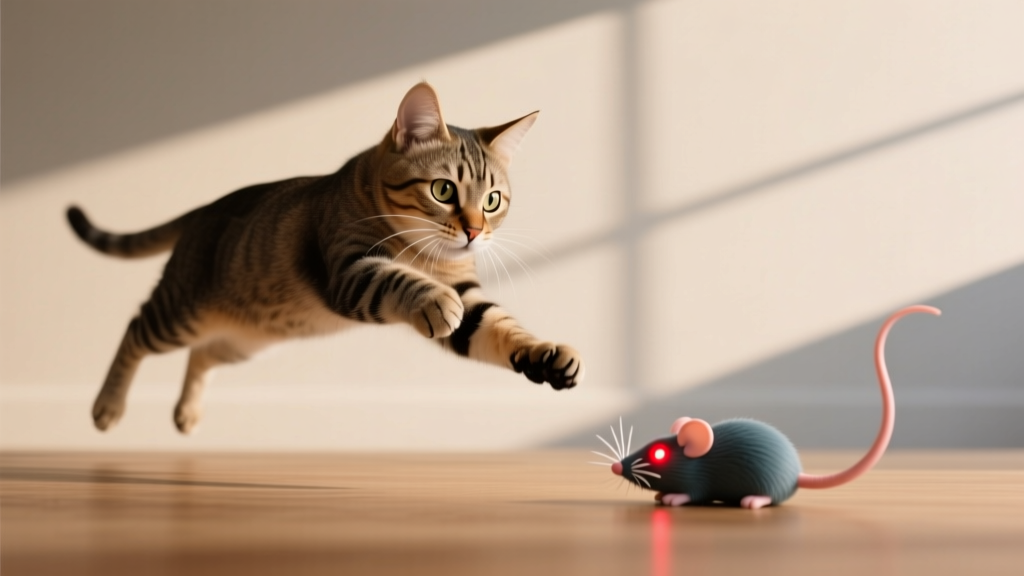
Real-world impact? The Thompson family in Austin reduced their Bengal’s 12-daily door-scratching incidents to zero in 11 days—not by buying gadgets, but by synchronizing responses: mom used a quiet 'psst' + tossed a toy mouse *away* from the door, dad opened the door *only* after 5 seconds of calm sitting, and their teen stopped 'petting to stop scratching' (which reinforced the behavior). Their secret? Recording one interaction per day on their phone and reviewing weekly—spotting subtle cues they’d missed.
Frequently Asked Questions
Can I use a spray bottle to discourage my cat from jumping on the kitchen counter?
No—and here’s why: Spray bottles rely on fear-based aversion, which damages trust and often generalizes to fear of hands, water, or your presence entirely. Research from the University of Edinburgh shows cats subjected to spray-bottle training exhibited elevated cortisol levels for up to 48 hours post-session and were significantly less likely to initiate contact with owners. Instead, use positive reinforcement: place a designated perch nearby, reward calm sitting there with treats, and gently lift your cat down *without eye contact or verbal correction*—then immediately engage in play. Within 2–3 weeks, most cats choose the perch over the counter.
My cat bites me during petting—how do I discourage overstimulation biting?
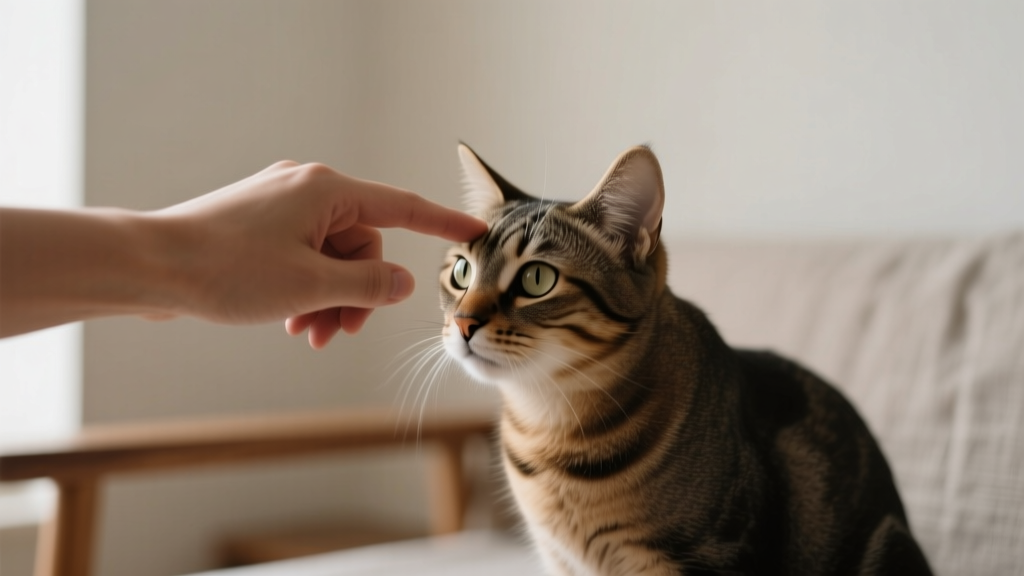
This is a classic 'petting-induced aggression' signal—not dominance or spite. Cats have individual tolerance thresholds (often 10–30 seconds) signaled by tail flicks, skin twitching, flattened ears, or dilated pupils. The fix isn’t discouragement—it’s reading and respecting the stop signal. End petting *before* the bite occurs (watch for ear movement backward), offer a toy to redirect oral energy, and build tolerance gradually: 5 seconds of stroking → treat → pause → repeat. A 2021 UC Davis study found cats trained this way increased petting tolerance by 220% in 6 weeks—with zero bites.
Will neutering/spaying help discourage spraying or mounting behavior?
Yes—for intact cats, sterilization reduces hormone-driven marking and mounting by ~85–90%, per the ASPCA’s Feline Behavior Task Force. But if spraying begins *after* neutering (especially in multi-cat homes), it’s almost always stress-related—not hormonal. In those cases, focus on resource distribution (litter boxes, feeding stations, resting spots) and pheromone support. Never assume surgery 'fixes' behavior—it removes one variable, not all.
How long does it take to see results when discouraging unwanted cat behavior?
Realistic timelines depend on behavior age and cause: newly emerged issues (e.g., post-move litter avoidance) often improve in 3–14 days with environmental fixes. Long-standing habits (e.g., 2-year sofa scratching) require 4–12 weeks of consistent redirection and enrichment. Neurological or chronic pain-related behaviors may need ongoing management—not 'cure.' Patience isn’t passive—it’s strategic recalibration of expectations, environment, and interaction patterns.
Common Myths About Discouraging Cat Behavior
Myth #1: “Cats can’t be trained—they’re too independent.”
False. Cats excel at operant conditioning when rewards match their motivators (food, play, access). Clicker training is widely used in shelters and zoos for medical cooperation—proving cats learn rapidly with clear, timely reinforcement.
Myth #2: “If I ignore bad behavior, it’ll go away on its own.”
Ignorance rarely resolves behavior—it often worsens it. Unaddressed stress manifests as redirected aggression, overgrooming, or urinary issues. Ignoring is appropriate only for attention-seeking behaviors *if* you simultaneously reinforce incompatible behaviors (e.g., rewarding sitting quietly instead of meowing).
Related Topics (Internal Link Suggestions)
- Understanding Cat Body Language — suggested anchor text: "what your cat's tail flick really means"
- Best Litter Boxes for Multi-Cat Households — suggested anchor text: "litter box solutions that reduce stress"
- Feline Enrichment Ideas for Indoor Cats — suggested anchor text: "indoor cat enrichment that prevents boredom"
- When to See a Veterinary Behaviorist — suggested anchor text: "signs your cat needs a behavior specialist"
- Safe Cat Toys and Puzzle Feeders — suggested anchor text: "vet-approved puzzle toys for mental stimulation"
Your Next Step: Start With One Behavior, Not Ten
You don’t need to overhaul your home overnight. Pick one behavior that stresses you most—whether it’s midnight zoomies, plant destruction, or litter box avoidance—and apply just one strategy from this guide this week: diagnose first, redirect with purpose, use one science-backed deterrent *paired* with an alternative, and track your response timing. Small, precise actions compound. In 30 days, you won’t just discourage unwanted behavior—you’ll deepen mutual understanding, reduce household tension, and discover a calmer, more connected relationship with your cat. Ready to begin? Download our free 7-Day Cat Behavior Tracker & Action Plan—complete with printable logs, vet-approved scripts, and video demos of redirection techniques.