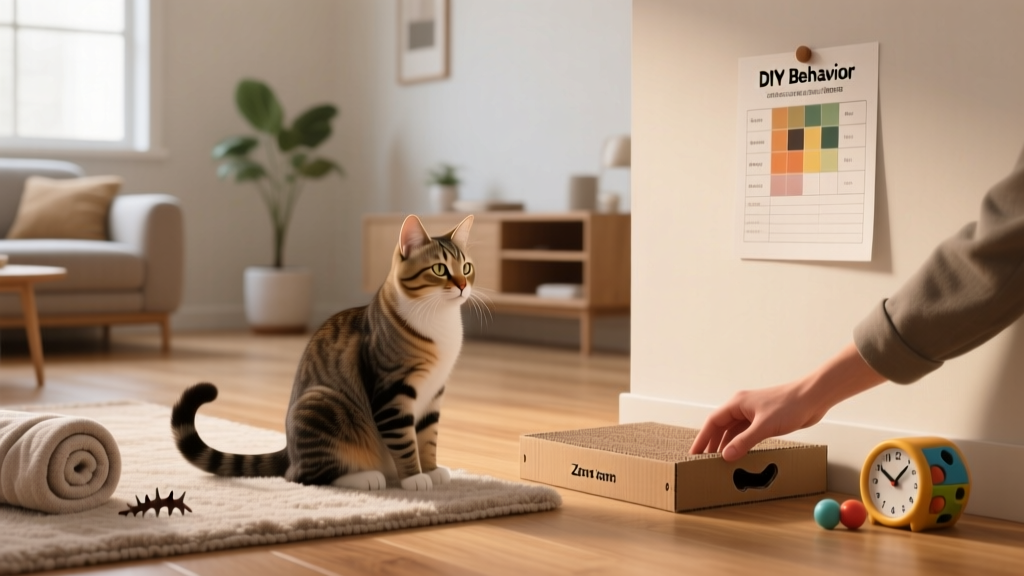
How to Correct Cat Behavior DIY
Why DIY Cat Behavior Correction Isn’t Just Convenient—It’s Critical for Your Cat’s Well-Being
If you’ve ever Googled how to correct cat behavior DIY, you’re not alone—and you’re already taking the most important first step: choosing compassion over coercion. Unlike dogs, cats don’t respond to dominance-based corrections; punishing scratching, litter box avoidance, or aggression doesn’t fix the root cause—it erodes trust, increases stress hormones like cortisol, and can even trigger redirected aggression or urinary tract issues. In fact, a 2023 study published in Journal of Feline Medicine and Surgery found that 68% of cats referred for ‘problem behaviors’ showed significant improvement within two weeks when owners implemented environmental enrichment and positive reinforcement—no medication or professional trainer required. This guide delivers exactly that: actionable, vet-vetted, truly DIY solutions grounded in feline ethology—not folklore.
Step 1: Decode the ‘Why’ Before You Fix the ‘What’
Cats don’t misbehave—they communicate unmet needs. Dr. Mikel Delgado, certified applied animal behaviorist and researcher at UC Davis, puts it plainly: ‘Every “bad” behavior is a symptom. If you treat only the symptom, you’ll chase your tail forever.’ So before grabbing citrus spray or a water bottle, pause and ask: What need is this behavior fulfilling? Here’s how to diagnose three top offenders:
- Scratching furniture? Not defiance—it’s scent-marking, muscle stretching, and claw maintenance. A cat scratches to leave pheromone signals (via glands in their paws) and shed old nail sheaths. Removing the scratching post without replacing it with something equally appealing is like asking a human to stop stretching after sitting all day—then blaming them for ‘acting out.’
- Litter box avoidance? Often tied to pain (arthritis, UTIs), substrate aversion (clumping vs. non-clumping), location stress (near noisy appliances or high-traffic zones), or cleanliness thresholds (cats prefer pristine boxes—many owners scoop only once daily, but 73% of cats require twice-daily scooping, per Cornell Feline Health Center).
- Midnight zoomies or biting during petting? These are classic signs of overstimulation or under-stimulation. Cats have finite tolerance windows—often just 3–5 seconds of sustained petting before neural overload triggers a bite reflex. Meanwhile, nocturnal bursts frequently stem from daytime boredom: indoor cats sleep 14–16 hours a day, but they still need 20–30 minutes of active, predatory-style play daily.
Start a ‘Behavior Log’ for 3 days: note time, location, what happened immediately before/after, your cat’s body language (dilated pupils? flattened ears? tail flicks?), and your own actions. You’ll likely spot patterns—like your cat attacking your ankles every evening at 6:15 p.m., right after you sit down to dinner. That’s not random—it’s a predictable, solvable signal.
Step 2: The 4-Pillar DIY Framework (Backed by Veterinary Behaviorists)
Veterinary behavior specialists at the American College of Veterinary Behaviorists (ACVB) recommend a consistent four-part framework for how to correct cat behavior DIY. It’s not about ‘training’—it’s about engineering success:
- Prevent: Remove opportunities for the unwanted behavior (e.g., cover furniture with double-sided tape, close bedroom doors at night).
- Redirect: Offer a superior alternative that satisfies the same need (e.g., a sturdy sisal post *next to* the sofa, not across the room).
- Reinforce: Reward the desired behavior *within 1 second*—not after, not ‘later.’ Use high-value treats (freeze-dried chicken, tuna flakes) or 5-second play sessions.
- Modify Environment: Adjust lighting, sound, vertical space, and predictability. Cats thrive on routine and control. A single new plant or rearranged shelf can spike anxiety.
Case in point: Maya, a 3-year-old rescue tabby, was biting her owner’s hands during lap time. Using this framework, her owner discovered Maya’s ‘petting threshold’ was 4 seconds. She started using a feather wand to redirect before the bite occurred, then rewarded calm licking or head-butting with a treat. Within 9 days, Maya initiated 3x more gentle head-butts and zero bites. No collar, no spray, no vet visit—just observation and consistency.
Step 3: Targeted Fixes for Top 5 DIY-Solvable Behaviors
Not all behaviors are equal—and some absolutely require veterinary evaluation first (e.g., sudden spraying in a previously clean cat may indicate FLUTD). But these five are highly responsive to DIY intervention when done correctly:
- Scratching inappropriate surfaces: Place cardboard or sisal posts *within 12 inches* of the target furniture. Rub with catnip or silvervine. After scratching, reward with a treat *while they’re still at the post*. Never drag your cat to it—let curiosity lead.
- Waking you at 4 a.m. for food: Switch to an automatic feeder programmed to dispense 3 small meals between midnight–5 a.m. Pair with 15 minutes of vigorous play *right before your bedtime* to mimic the ‘hunt-eat-groom-sleep’ cycle.
- Aggression toward other pets: Use ‘parallel play’—feed both animals on opposite sides of a closed door, gradually decreasing distance over 10 days. Never force face-to-face interaction.
- Chewing cords or plants: Spray bitter apple (non-toxic, vet-approved) on cords; provide safe alternatives like wheatgrass or catnip chew toys. Block access *completely* for 2 weeks while introducing substitutes.
- Attention-seeking meowing: Ignore *all* vocalizations during the day—then reward silence with affection *only when they’re quiet for 10+ seconds*. Consistency is non-negotiable: if you give in once, the behavior strengthens.
Crucially: never use punishment (yelling, squirt bottles, clapping). According to Dr. Karen Overall, ACVB diplomate, ‘Punishment teaches cats to fear *you*, not the behavior—and often shifts the problem elsewhere, like hiding or urinating outside the box.’
Step 4: The DIY Behavior Troubleshooting Table
| Behavior | Most Likely Cause | Immediate DIY Action | Expected Timeline for Change | Red Flag Requiring Vet Visit |
|---|---|---|---|---|
| Urinating outside the litter box | Stress (new pet, construction), UTI, box aversion | Add 1 extra box (N+1 rule), switch to unscented, low-dust litter, place box in quiet corner away from washer/dryer | 3–7 days for stress-related cases; up to 14 days if retraining | Blood in urine, straining, crying in box, lethargy |
| Excessive grooming or bald patches | Anxiety, allergies, pain (e.g., dental disease) | Introduce daily 5-min interactive play, add Feliway diffuser, check for fleas with flea comb | 1–3 weeks for stress reduction; monitor for skin lesions | Open sores, scabs, foul odor, or limping |
| Attacking ankles/feet | Under-stimulation, play aggression, hunting instinct | Two 10-min predatory play sessions daily (use wand toys mimicking birds/mice); end with treat to simulate ‘kill’ | Improvement in 3–5 days; full resolution in 10–14 days | Sudden onset in senior cats (>10 yrs)—could indicate hyperthyroidism or arthritis pain |
| Growling/hissing at visitors | Fear-based, lack of early socialization, territorial stress | Keep cat in safe room pre-arrival; offer treats *only* when guest is present (even if cat stays hidden); never force interaction | Gradual desensitization over 2–6 weeks | New aggression toward family members—rule out neurological issues |
| Bringing dead ‘gifts’ (toys, bugs, etc.) | Instinctual teaching behavior—even solo cats do this | No action needed. Praise calmly when they drop item, then quietly remove it. Never punish—this is natural feline communication. | N/A—normal behavior, not a problem to fix | If bringing live rodents or birds into home regularly, assess outdoor access safety |
Frequently Asked Questions
Can I use a spray bottle to stop my cat from jumping on counters?
No—and here’s why it backfires. Spraying startles your cat, but they rarely associate the water with the counter-jumping itself. Instead, they learn: ‘When I’m near the counter, something scary happens.’ This damages trust and often causes them to avoid you entirely—or jump higher to escape detection. Far more effective: make the counter consistently unappealing (double-sided tape, aluminum foil, motion-activated air canisters like Ssscat®—which release harmless compressed air, not noise or chemicals) *and* provide a superior alternative: a dedicated perch near a window with a cozy bed and bird feeder view. Consistency for 10–14 days typically resolves it.
My cat suddenly started peeing on my bed—what does that mean?
Sudden marking on bedding is almost always stress- or medical-related—not spite. First, rule out UTIs, kidney disease, or diabetes with a vet visit (urinalysis is quick and affordable). If medical causes are cleared, consider recent changes: new roommate, renovation, new pet, even a different laundry detergent (cats detect scent residues intensely). Bedding holds your scent—their way of ‘reclaiming’ security. Clean with enzymatic cleaner (e.g., Nature’s Miracle), block access temporarily, and reintroduce calming aids like Feliway Classic diffusers. Most cases resolve within 2 weeks with environmental support.
Will clicker training work for cats?
Absolutely—and it’s one of the most powerful DIY tools available. Unlike dogs, cats aren’t inherently eager to please, but they *are* brilliant operant learners. Start by ‘charging’ the clicker: click + treat (high-value, pea-sized) 10x/day for 2 days. Then shape simple behaviors: click when they look at the target (a spoon), then when they touch it, then when they follow it. Clicker training builds confidence, reduces anxiety, and makes future behavior modification faster. Dr. Ingrid Johnson, feline behavior consultant, notes: ‘A well-clicked cat will voluntarily offer behaviors you haven’t even taught yet—because they’ve learned that engagement = reward.’
Is it okay to use essential oils or citrus sprays as deterrents?
No—many are toxic to cats. Tea tree, eucalyptus, peppermint, and citrus oils can cause liver damage, respiratory distress, or neurological symptoms (tremors, seizures) even in small amounts. The ASPCA Animal Poison Control Center reports a 40% annual rise in essential oil toxicity cases in cats. Safer alternatives: plain white vinegar diluted 50/50 with water (for surfaces), or pet-safe bitter apple spray. Always test on a small area first and monitor for drooling or pawing at mouth.
How long should I wait before seeking professional help?
If you’ve consistently applied evidence-based DIY methods for 3 weeks with zero improvement—or if the behavior escalates (e.g., biting breaks skin, urine marking spreads to multiple rooms, or aggression targets children)—consult a board-certified veterinary behaviorist (find one at dacvb.org). Early intervention prevents entrenchment. Also seek help immediately if behavior change coincides with appetite loss, weight loss, vomiting, or lethargy—these signal underlying illness.
Common Myths About DIY Cat Behavior Correction
Myth #1: “Cats can’t be trained—they’re independent and stubborn.”
Reality: Cats are highly trainable—but motivation differs. They respond best to food, play, or access to preferred locations—not praise or affection alone. Studies show cats learn faster than dogs in certain associative tasks when rewards match their drive (e.g., food for food-motivated cats, play for high-energy kittens).
Myth #2: “Rubbing a cat’s nose in their accident will teach them the litter box.”
Reality: This is cruel and counterproductive. Cats don’t connect the punishment to the act—they only associate the smell of urine with your anger or the confined space. It increases fear and can cause them to eliminate in hidden, hard-to-clean places instead.
Related Topics (Internal Link Suggestions)
- Best Cat Calming Products That Actually Work — suggested anchor text: "vet-recommended calming aids for anxious cats"
- How to Introduce a New Cat to Your Resident Cat — suggested anchor text: "stress-free multi-cat household guide"
- Homemade Cat Toys That Stimulate Natural Hunting Instincts — suggested anchor text: "DIY predatory play toys"
- Signs Your Cat Is in Pain (Subtle Behaviors Owners Miss) — suggested anchor text: "hidden cat pain indicators"
- Feline Environmental Enrichment Checklist — suggested anchor text: "free printable cat enrichment planner"
Your Next Step Starts Today—No Expert Needed
You now hold everything required to begin correcting cat behavior DIY—no expensive gadgets, no confusing jargon, no guilt-inducing advice. Remember: progress isn’t linear. Some days your cat will use the scratching post perfectly; other days, they’ll shred your favorite armchair. That’s normal. What matters is consistency, compassion, and observing *with curiosity*, not judgment. Grab a notebook, pick *one* behavior to focus on this week, and implement just the ‘Prevent + Redirect’ steps from the 4-Pillar Framework. Track it for 7 days. Chances are, you’ll see subtle shifts—a longer stretch on the post, one fewer 4 a.m. wake-up, a gentler head-butt instead of a bite. Those micro-wins compound. And when you do, celebrate. You’re not just fixing behavior—you’re deepening a bond built on mutual understanding. Ready to build your custom plan? Download our free 7-Day DIY Behavior Tracker (includes printable log sheets and video demos of each technique) below.