Indoor Cat Calorie Needs: Feeding Guide
Why Indoor Cats Need Fewer Calories
Indoor cats burn 20–35% fewer calories than outdoor or free-roaming cats due to reduced activity and environmental stimulation (National Research Council, 2006). A typical 10-lb adult indoor cat requires only 180–220 kcal/day—compared to 240–280 kcal for an outdoor counterpart. Without portion control, this energy gap contributes to obesity in 60% of U.S. indoor cats (Association for Pet Obesity Prevention, 2023).
Calorie Guidelines by Life Stage
Kittens (under 6 months) need ~250–300 kcal/day to support rapid growth. Adult cats (1–7 years) require 180–220 kcal/day depending on lean body mass—not just weight. Senior cats (7+ years) often need 150–200 kcal/day due to decreased metabolic rate and muscle loss. Pregnant or nursing queens may need up to 450 kcal/day during peak lactation.
Food Reviews: Top Low-Calorie Options
Blue Buffalo Weight Control Dry (2024 formula) delivers 290 kcal/cup with added L-carnitine and high fiber. For wet food, Wellness Complete Health Grain-Free Salmon (2025 batch) provides 85 kcal/3-oz can—ideal for hydration and satiety. Both are AAFCO-certified for adult maintenance and avoid artificial preservatives.
Homemade Diets: Risks and Requirements
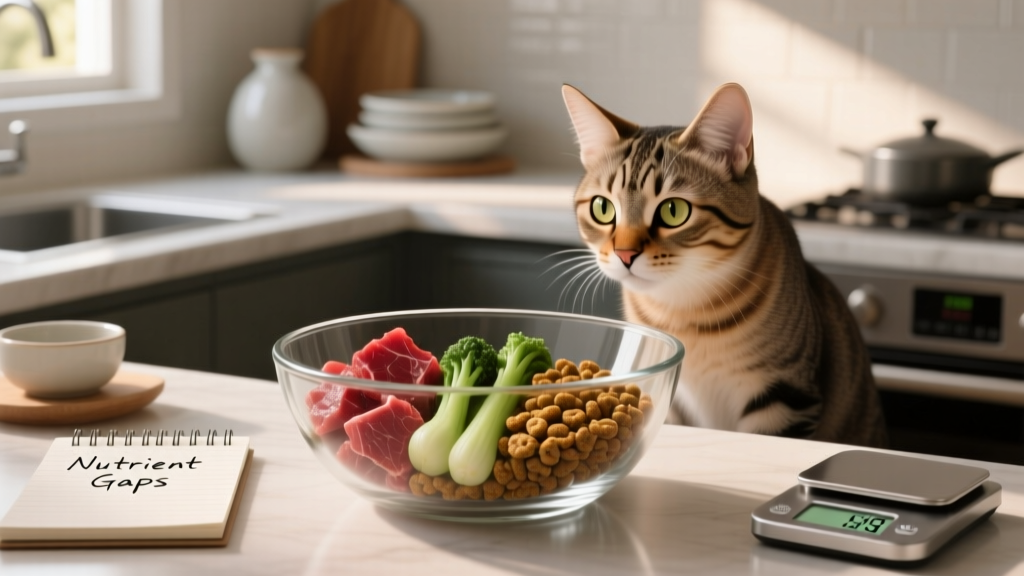
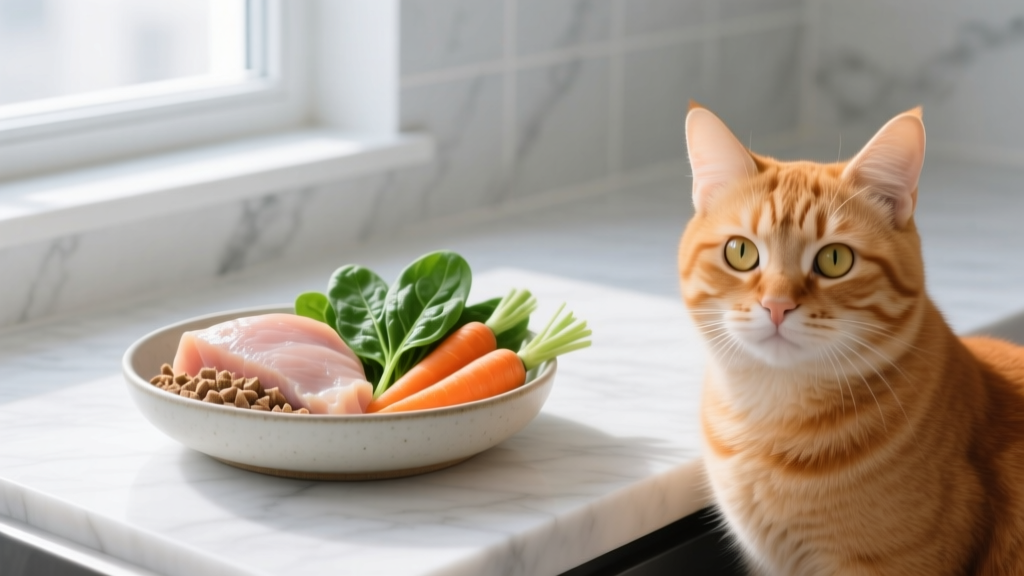
Homemade meals must include taurine (≥0.25% on dry matter basis), arachidonic acid, and vitamin A—all missing from plain cooked chicken or beef. A 2022 study in Journal of Feline Medicine and Surgery found 89% of unfortified homemade recipes lacked at least one essential nutrient. Always consult a board-certified veterinary nutritionist before starting; BalanceIT Feline Supplement (v. 4.2, released March 2024) is clinically validated for home-prepared diets.
Supplements and When They Help
Omega-3s (EPA/DHA ≥200 mg/day) support joint health in sedentary cats—especially beneficial for overweight individuals. Probiotics like FortiFlora (Purina, 2023 formulation) improve gut motility and reduce inflammation linked to obesity. Vitamin B12 supplementation is recommended only for cats with confirmed deficiency, commonly seen in chronic kidney disease patients over age 12.
Consider Luna, a 9-year-old domestic shorthair who gained 3 lbs after moving indoors full-time. Her vet prescribed Hill’s Science Diet Metabolic + Urinary Dry (2024 formula), reducing her intake to 1/3 cup twice daily (195 kcal total). She lost weight steadily over 14 weeks without hunger signs.
Then there’s Milo, a neutered 5-month-old kitten adopted into an apartment. His owner mistakenly fed adult food at adult portions, causing rapid weight gain. Switching to Royal Canin Kitten Indoor Wet (2025 line) at 2.5 oz twice daily (265 kcal) plus 1/8 cup dry (50 kcal) stabilized his growth curve within 6 weeks.
| Life Stage | Weight (lbs) | Daily Calorie Target | Sample Feeding Plan |
|---|---|---|---|
| Kitten (4 mo) | 4.2 | 275 kcal | 2 × 2.5 oz Wellness Kitten Wet (170 kcal) + 1/16 cup dry (35 kcal) |
| Adult (3 yr) | 9.5 | 205 kcal | 1 × 3 oz Blue Buffalo Adult Wet (85 kcal) + 1/4 cup dry (120 kcal) |
| Senior (11 yr) | 8.8 | 170 kcal | 2 × 2 oz Wellness Senior Wet (120 kcal) + 1 tbsp dry (50 kcal) |
Always measure food using a digital scale—not scoops—as cup measurements vary by kibble density. Reassess caloric needs every 3 months or after weight changes exceeding 5%. Monitor body condition score monthly: ribs should be palpable with slight fat covering, and a visible waistline should be present when viewed from above.
"Overfeeding by just 10 kcal/day—less than one kibble piece—can lead to a 1-lb annual weight gain in a 10-lb cat." — Dr. Sarah Waddell, DVM, DACVN, 2023
Calorie needs shift with seasonal behavior, medical conditions, and sterilization status. Neutered cats require ~20% fewer calories than intact peers. Cats with hyperthyroidism may need 30% more; those with diabetes benefit from consistent, timed low-carb meals. Work with your veterinarian to adjust based on individual health metrics—not generic charts alone.